Physiological Adaptations (HSC SSCE Biology): Revision Notes
📚Revision Notes
Physiological Adaptations
What are physiological adaptations?
Physiological adaptations are changes in how an organism's body functions that help it survive in its natural environment. Unlike structural adaptations (which relate to physical features), physiological adaptations involve changes in metabolism or body processes at the cellular, tissue, organ, or system level.
These adaptations give organisms specific advantages in particular environmental conditions. For example:
- The intertidal marsh crab has gills and kidneys that concentrate and excrete excess salt
- Plant cells in growing stem tips are sensitive to the hormone auxin, causing them to grow toward light
Note
The abiotic factors in an environment determine which plants can survive there, which in turn affects which animals can live in that area. Some species have evolved physiological adaptations to survive where abiotic factors create strong selection pressures.
Physiological adaptations in plants
Temperature adaptations
Surviving cold environments
Plants in extremely cold environments, such as alpine areas, face the danger of ice crystals forming inside and between their cells. Ice crystals can pierce cell membranes, killing the cells and ultimately the entire plant.
Alpine plants have developed several strategies to cope with low temperatures:
Example
Anti-freeze compounds
Some alpine plants produce organic compounds that act like anti-freeze, lowering the temperature at which the cytoplasm or cell sap in the vacuole freezes. This prevents ice crystal formation that would otherwise damage or destroy cells.
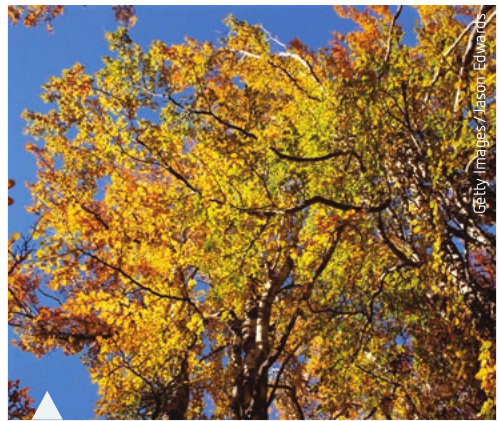
Leaf fall and dormancy: In response to low temperatures, deciduous trees lose their leaves in winter and enter a period of dormancy (reduced metabolic activity). This helps them survive not only extremely low temperatures, but also water shortages and reduced sunlight availability.
The deciduous beech (Nothofagus gunnii), found in Tasmania, is one of the few indigenous Australian winter-deciduous trees. It loses its leaves in late April and May after they turn vibrant autumn colours.
Important
The abscission (falling off) of leaves occurs in response to shorter days in autumn. The decreased daylight period leads to a waterproof layer forming at the base of each leaf. Without water, photosynthesis cannot occur, and the pigment anthocyanin becomes visible as chlorophyll breaks down, giving the leaves their spectacular autumn colours.
Vernalisation: Some plants flower in response to low temperatures. This process is called vernalisation. For example, tulip bulbs must be exposed to between weeks and months of intense cold before they will flower. This is an adaptation to northern hemisphere winters in central Asia. Australian gardeners often store tulip bulbs in a refrigerator during winter before replanting them in spring to ensure they flower.
Note
Many plant responses to temperature change (such as leaf fall and flowering) result from temperature and/or light changing the concentration of hormones in plants. These responses are important both for individual plant survival and for the continuation of the species.
Salt adaptations
Salt, even in relatively small concentrations in soil water, can damage cell structure and metabolism. Plants adapted to saline environments are called halophytes.
Halophytes use two main strategies to survive in high-salt environments:
Salt tolerance (salt accumulation)
Salt-tolerant plants (such as sea grass and mangroves) can maintain normal metabolic functioning even when their cells accumulate sodium and chloride ions. They minimise salt toxicity by:
- Increasing water content in large vacuoles to dilute the salt
- Storing excess salt away from sensitive cells
Example
Examples of salt-tolerant plants:
Succulents: These plants minimise salt toxicity by increasing water content in large vacuoles, where the accumulation of excess salt is balanced with additional water drawn into the cells.
Pickleweed (Salicornia): Uses the same method as other succulents but also actively transports salts from the cytoplasm using a sodium-potassium pump on the vacuole membrane.
Pigface (Carpobrotus glaucescens): Tolerates salt by increasing water uptake to dilute the salt and storing excess salt in locations away from sensitive cells.
Salt avoidance (salt exclusion)
Salt-avoidant plants (salt excluders) minimise the salt concentrations in cells through structural and physiological adaptations that stop salt from entering at the roots.
Example
The saltbush (Atriplex vesicaria)
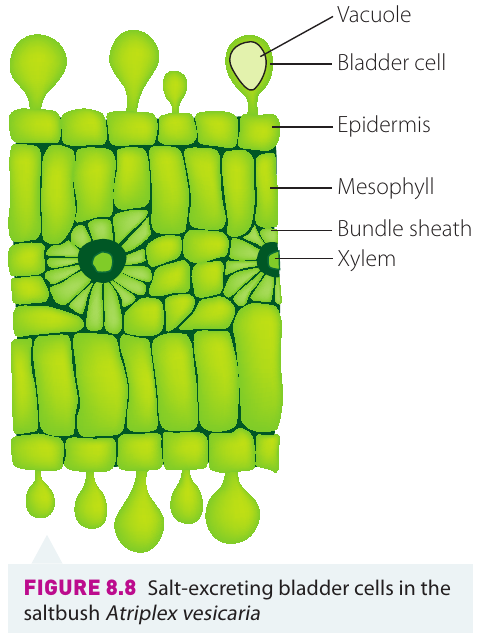
The saltbush is a salt excluder. It actively transports excess sodium and chloride ions into bladder cells situated on the tips of hairs on the leaf surface. When the bladder cell reaches capacity, it bursts, releasing the salts into the environment.
Palmer's grass (Distichlis palmeri) also actively secretes salts from specialised cells to avoid high salt concentrations within the cells.
Mangroves: combining both strategies
Mangroves are extremely well adapted to changing salt concentrations, using both salt-avoidance and salt-tolerance strategies in their high-salt environment.
Important
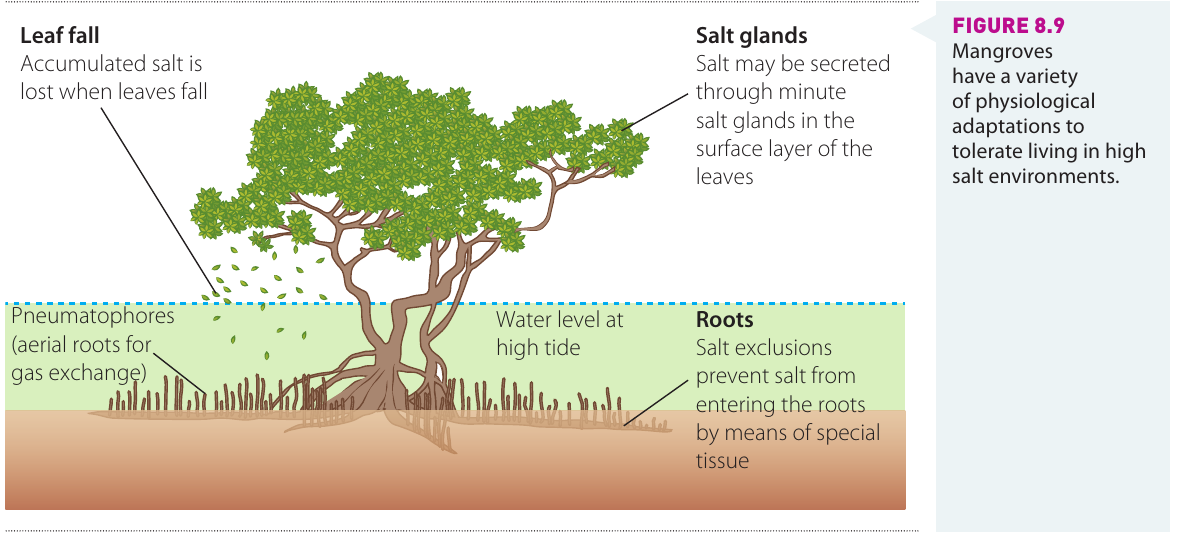
The river mangrove (Aegiceras corniculatum) demonstrates multiple adaptation strategies:
Tolerate high solute concentrations: It can survive with higher than normal concentrations of solutes in its cells.
Lose salt through leaf and bark fall: Salt that accumulates in bark and leaves is lost when the bark strips off the tree or the leaves fall.
Actively secrete salt: Salt can be actively secreted through glands on the leaf surface.
Exclude salt at the roots: Research shows that up to 97% of salt can be excluded at the roots, significantly reducing the amount of salt entering the plant's cell tissues.
Physiological adaptations in animals
Animals, like plants, have physiological adaptations that enable them to survive in their natural environment. Because animals can move between environments, they may be exposed to a wide range of environmental conditions.
Water adaptations
Different environments present different water challenges for animals.
Desert environments
The spinifex hopping mouse (Notomys alexis) and some other desert mammals can reduce water loss by excreting highly concentrated urine. They achieve this by reabsorbing most of the water from their urine back into their bloodstream.
Note
These animals can also use the water produced as a by-product of cellular respiration (approximately grams per gram of carbohydrate). This is how the desert hopping mouse produces enough metabolic water to supply its needs.
Freshwater environments
Freshwater fish face the opposite problem to desert animals. Because they have a higher concentration of ions in their tissues than the surrounding water, water molecules tend to enter their tissues by osmosis.
To counter this, freshwater fish:
- Rarely drink water
- Have a high kidney filtration rate, which produces large amounts of dilute urine
Temperature adaptations
Surviving cold environments
Countercurrent heat exchanger: Penguins can live in very cold environments such as Antarctica. In common with many aquatic birds, penguins have a countercurrent heat exchanger system to keep their extremities warm.
Important
Blood travelling through the arteries to the foot warms the blood returning to the body in the adjacent veins. The outgoing blood to the foot is cooled in the process, but not enough to affect cell activities. Because the temperature gradient between the foot and the surroundings is reduced, less heat is lost.
Blubber insulation: Penguins, seals, polar bears, and whales convert a large proportion of their diet into a thick layer of fat called blubber, which insulates them from the cold. The layer of blubber in polar bears can be up to cm thick. Polar bears are so well insulated by their blubber that they cannot run very far, or they will overheat.
Surviving hot environments
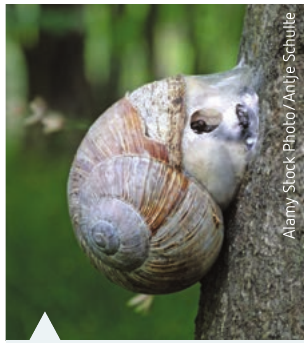
Aestivation: Some animals survive hot summers by reducing their metabolic rate so that their body temperature is lowered to that of the environment. This is called aestivation and is the opposite of hibernation.
Aestivation enables animals to:
- Retain water
- Ration fat storages
- Conserve energy
Example
Examples of aestivation:
Land snails (Helix genus): Will move into the shade, seal the opening to their shell with a mucus-type material, and aestivate.
Cane toad: A pest species rapidly spreading across Australia, the cane toad will aestivate by burrowing underground and sealing itself in a water-tight mucus cocoon.
Investigation 8.3: A secondary-source investigation into physiological adaptation
This investigation helps you research and understand physiological adaptations in Australian organisms.
What to do:
- Work in pairs and choose one Australian plant and one Australian animal to research
- One person works on the plant, the other on the animal
- Use resources such as journals, books, and the Internet to research one physiological adaptation that helps overcome an environmental problem
- Each person produces a one-page report with photos and diagrams that:
- States the environmental problem the adaptation overcomes
- Shows the mechanisms the organism uses to overcome this problem
- Peer review each other's reports, providing at least two positive comments and one area for improvement
Summary
Key Points to Remember:
-
Physiological adaptations are changes in how an organism's body functions that help it survive in its environment, involving changes in metabolism at cellular, tissue, organ, or system levels.
-
Plants adapt to cold through anti-freeze compounds, leaf fall and dormancy in deciduous trees, and vernalisation (flowering after cold exposure).
-
Plants adapt to salt through either salt tolerance (accumulating salt in vacuoles with extra water) or salt avoidance (excluding salt at roots or excreting it through specialised cells). Mangroves use both strategies.
-
Animals adapt to water challenges by producing concentrated urine (desert animals) or dilute urine (freshwater fish) to maintain proper water balance.
-
Animals adapt to temperature extremes through countercurrent heat exchangers and blubber for cold environments, and aestivation (reduced metabolic rate) for hot environments.