Biotechnology in Agriculture (HSC SSCE Biology): Revision Notes
📚Revision Notes
Biotechnology in Agriculture
Introduction to biotechnology and genetic diversity
Biotechnology can have different effects on the genetic diversity of a species. The impact depends entirely on how these technologies are applied and for what purpose. Understanding these effects is crucial for sustainable agricultural practices.
Genetic diversity refers to the variety of different genetic traits within a population or species. The gene pool is the complete set of all genes and their variations present in a population. Biotechnology can either expand or contract this gene pool, with important consequences.
Note
The relationship between biotechnology and genetic diversity is complex and depends on both the application method and the time scale being considered. What appears beneficial in the short term may have different long-term consequences.
Short-term effects on genetic diversity
When biotechnology introduces new genes into a population, it immediately increases genetic diversity. These newly introduced genes broaden the gene pool by adding genetic variants that weren't previously present in that population. For example, when scientists insert a herbicide-resistance gene into a crop plant, they're adding a new genetic option that expands the range of traits available.
Long-term effects on genetic diversity
Over longer time periods, the picture becomes more complex. If farmers consistently choose to grow only plants with certain desirable genes (like herbicide resistance or high yield), these selected genes gradually replace other gene variants in the population. As this happens repeatedly across many generations, the gene pool narrows. Even though we started by adding genetic diversity, we end up reducing it because only a limited set of "desirable" genes remain in use.
Important
This pattern - short-term increase followed by long-term decrease - is particularly important to understand when considering the sustainability of agricultural biotechnology. The temporal dimension is critical to evaluating the true impact of these technologies.
Selective breeding and genetic variation
Darwin's observations
Charles Darwin, famous for his theory of natural selection, was also an experienced breeder who worked with pigeons. Through his breeding experiments, Darwin discovered important principles about how selection affects populations. He used his results from artificial selection (deliberate human breeding choices) to help explain how natural selection works in wild populations.
Darwin recognised that both natural and artificial selection work through the same basic mechanism: they determine which individuals successfully reproduce and pass their characteristics to the next generation.
How selection affects genes
Selection operates on the phenotype - the observable physical and behavioural characteristics of an organism. When a farmer chooses which plants to breed based on their appearance or performance, they're selecting phenotypes. However, this selection directly affects which genotypes (genetic compositions) get passed to future generations.
Note
Here's how it works:
- A farmer observes plants and selects those with desirable traits (phenotype selection)
- These selected plants reproduce, passing their genes to offspring
- The genes responsible for those desirable traits become more common
- Over time, the gene pool changes to favour these selected genotypes
Key principle: Selection acts on phenotype but determines which genotypes are passed on, directly affecting the gene pool.
The problem with pure breeds
Important
Selective breeding frequently leads to reduced genetic variation, especially when producing "pure-bred" species or highly "pedigreed" animals. These organisms have been bred for generations to express certain desirable traits consistently.
While this creates uniformity in appearance and performance, it also means:
- Many gene variants have been eliminated from the population
- The remaining individuals are genetically very similar
- The population has less ability to adapt to new challenges
- There's increased risk if conditions change
Case study: genetically modified soybeans
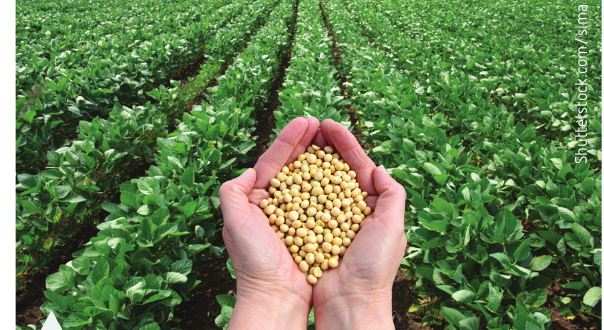
Soybeans provide an excellent example of how biotechnology is used in modern agriculture, along with the biodiversity concerns that arise.
Why soybeans matter
Soybeans are nutritionally important, providing protein, minerals and fatty acids. They're used to manufacture numerous food products including:
- Soy milk
- Flour
- Protein supplements
- Tofu
Beyond food, soybeans are also used in animal feed and industrial products like particle board, adhesives, oils, waxes, lubricants and foam. This makes soybeans an economically vital crop, particularly in Brazil, the USA and Argentina.
Creating GM soybeans
In , the chemical company Monsanto developed "RoundUp Ready" soy - soybeans genetically modified to resist the herbicide glyphosate (the active ingredient in RoundUp herbicide). This was achieved through recombinant DNA techniques.
Example
Worked Example: GM Soybean Production Process
The genetic modification of soybeans follows a precise sequence of steps:
Step 1: Scientists identified and extracted desired genes from the bacterium Agrobacterium tumefaciens
Step 2: These genes were inserted into a bacterial plasmid (a small circular piece of DNA)
Step 3: A gene gun was used to shoot the plasmids into the nuclei of soy plant cells
Step 4: The plant cells incorporated the bacterial genes into their own DNA
Step 5: These modified cells were grown into complete plants
This process is similar to the technique used to produce Bt cotton (cotton modified to produce its own insecticide). Other companies now produce similar herbicide-resistant crops using comparable recombinant technologies.
How glyphosate resistance works
The inserted genes allow the soybean plants to tolerate glyphosate herbicide. This means farmers can spray their fields to kill weeds without harming the GM soy plants. In theory, this should reduce the total amount of herbicide needed and make weed control more efficient.
Environmental concerns
The widespread adoption of GM soybeans has raised several environmental concerns, particularly regarding biodiversity:
Habitat destruction:
- In Brazil, large areas of rainforest have been cleared to create soybean plantations
- This directly destroys biodiversity by eliminating diverse rainforest ecosystems
- The replacement of complex rainforest with monoculture soy plantations dramatically reduces species diversity
Important
Herbicide impacts:
- The extensive use of glyphosate in these plantations may affect sensitive rainforest ecosystems
- While glyphosate is considered safe for human consumption in small amounts, studies in the USA have found that residual glyphosate levels in GM soy products can be quite high, depending on farming practices
- This is now being monitored more carefully
Herbicide resistance in weeds:
- Some weed species have evolved resistance to glyphosate
- Plantations affected by resistant weeds may require spraying with additional herbicides
- This increases both the residual herbicide in soy products and the environmental herbicide load
Note
Gene dispersal concerns:
- GM seeds could potentially spread beyond plantation boundaries
- This is tightly controlled to prevent resistant strains from affecting ecologically sensitive areas
- The consequences of uncontrolled spread could be significant for biodiversity
Water contamination:
- Run-off of glyphosate into neighbouring rainforests and aquatic environments is possible
- Sensitive organisms could be affected even at low herbicide concentrations
- This threatens biodiversity in ecosystems adjacent to plantations
Evaluating biotechnology's impact on biodiversity
When assessing how biotechnology affects biodiversity, several important factors must be considered:
What to evaluate
Crop biodiversity: Consider the genetic diversity within the agricultural crop itself. Are we maintaining diverse genetic variants, or are we creating fields of genetically identical plants?
Ecosystem biodiversity: Examine the biodiversity of surrounding natural ecosystems. How do agricultural practices affect neighbouring habitats and species?
Time scale: Always consider both short-term and long-term effects, as these can differ significantly.
Key considerations
Note
The introduction of a new genotype through biotechnology creates an interesting paradox:
- Initially, adding a new gene increases biodiversity by expanding the gene pool
- Over time, if this genotype becomes dominant because of its advantages, it may reduce biodiversity by replacing natural genetic variants
- Large numbers of identical organisms with particular beneficial characteristics can crowd out genetic diversity
Important
This temporal pattern makes it essential to think beyond immediate effects and consider long-term ecological consequences. Evaluating biotechnology requires a multi-dimensional approach that considers both spatial and temporal scales.
Remember!
Summary
Key Points to Remember:
- Biotechnology can both increase and decrease genetic diversity - the outcome depends on how it's used and the time scale considered
- In the short term, introducing new genes increases biodiversity by broadening the gene pool
- In the long term, selecting for specific beneficial genes can decrease biodiversity as identical organisms replace genetic variants
- Selection (natural or artificial) acts on the phenotype but ultimately determines which genotypes are passed on, directly affecting the gene pool
- GM crops like RoundUp Ready soybeans offer agricultural benefits but raise concerns about habitat destruction, herbicide use, and ecosystem impacts that must be carefully evaluated for their effects on biodiversity