Reproductive Technologies (HSC SSCE Biology): Revision Notes
📚Revision Notes
Reproductive Technologies
Introduction
For thousands of years, humans have been improving agricultural animals and plants through traditional breeding methods. Modern advances in understanding DNA and gene expression have enabled scientists to develop more sophisticated reproductive technologies. These techniques allow us to create genetic changes that benefit agriculture, conservation, and society.
Note
This note explores the main reproductive technologies used today, including selective breeding, artificial insemination, in vitro fertilisation, and artificial pollination. We'll examine how each process works and understand their effects on genetic diversity and populations.
Selective breeding
Selective breeding is a traditional technique where breeders mate animals or plants with desirable characteristics to produce offspring with favourable traits.
How selective breeding works
The process involves choosing a male with at least one desirable trait and breeding it with a female that has different desirable characteristics. The goal is to produce offspring that inherit the best features from both parents.
Example
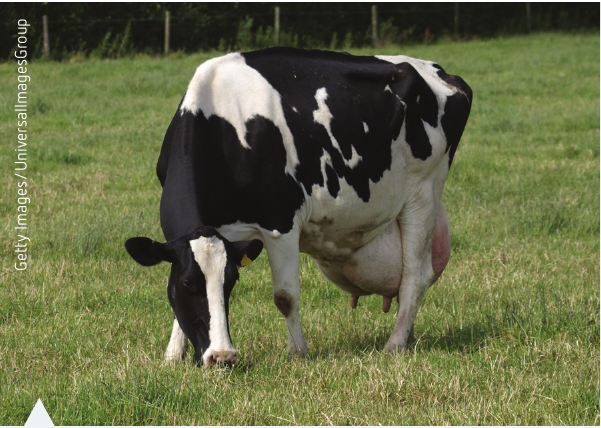
Practical Example: Crossing a Friesian Bull with a Jersey Cow
- Friesian cattle: Known for producing large quantities of milk
- Jersey cattle: Known for producing creamy, high-fat milk
- Offspring: Some calves will produce large amounts of creamy milk
Breeders select the offspring with both desirable traits and use them for further breeding. This continues across generations to strengthen these characteristics in the population.
Important features of selective breeding
In selective breeding, both parents are different varieties of the same species, which means the offspring are fertile and can reproduce. This allows desirable traits to be passed on to future generations.
Note
The technique can produce hybrid vigour, where offspring show improved characteristics compared to either parent. However, it also carries risks.
Disadvantages of selective breeding
While selective breeding has benefits, it also has some drawbacks:
Important
Potential Problems with Selective Breeding:
-
Undesirable genes may be inherited alongside desirable traits. For example, cows bred for very large udders may develop walking difficulties and painful ulcers where the udder contacts the legs.
-
Time-consuming and expensive when using whole animals, as it requires:
- Transporting large animals over long distances
- Housing and caring for breeding animals
- Waiting for animals to mate successfully
- Long gestation periods
-
Risk of injury during mating or transport
-
No guarantee of success - animals may not mate, or pregnancy may not occur
To overcome these limitations, modern reproductive technologies such as artificial insemination and in vitro fertilisation have been developed.
Artificial insemination
Artificial insemination (AI) is a reproductive technique where sperm is collected from a chosen male and inserted into selected females without natural mating.
The process
Artificial insemination involves several key steps:
- Sperm collection: Semen is collected from the male using mechanical stimulation or an artificial vagina
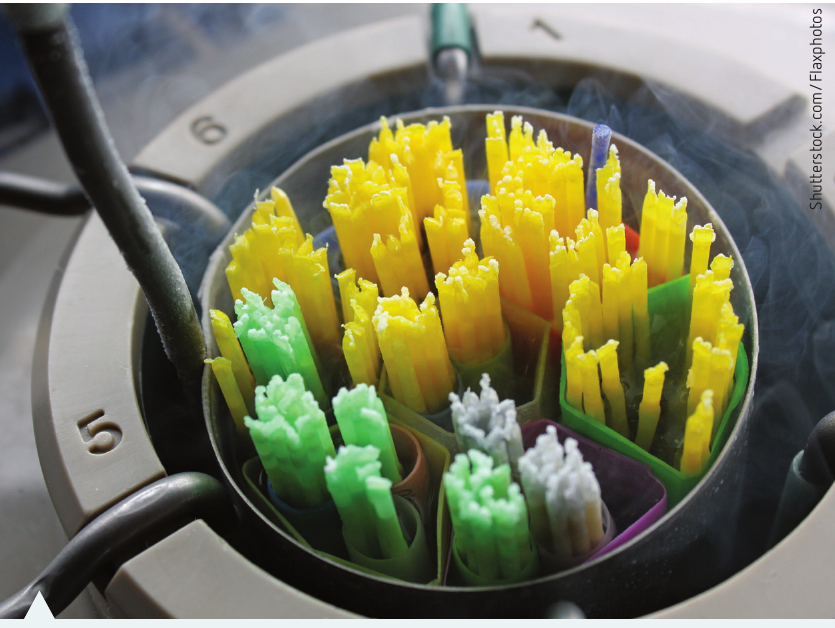
- Processing: The collected semen is divided into small portions called semen straws
- Storage: Semen straws are chilled and then frozen in liquid nitrogen for long-term storage and transportation
- Transfer: When ready, a semen straw is thawed and placed in a sterile AI 'gun'
- Insemination: The gun is carefully inserted into the female's vagina to the cervix, where the semen is deposited
Note
Historical Development
Early attempts at artificial insemination in dogs were recorded in the 1700s, but the technique only became commercially viable from the 1980s onwards. This development occurred because scientists discovered effective methods for storing and transporting frozen sperm.
Outcomes and advantages
Artificial insemination offers several significant benefits:
Transport advantages: Frozen sperm can be shipped worldwide without moving large animals. This is safer, cheaper, and more practical than transporting live animals.
Multiple offspring: One male can sire offspring with many females. A single ejaculate can be divided into hundreds of semen straws, allowing widespread breeding.
Extended breeding: Because semen can be frozen indefinitely, males can produce offspring many years after death.
Example
Impressive Breeding Records:
- Dutch bull Sunny Boy: Produced 1.7 million units of semen in the 1990s, with offspring born years after his death
- American bull Toystory: Holds the current record with 2.4 million units of semen produced, siring 500,000 daughters in 50 countries
- Only 50 bulls worldwide have produced more than one million units of semen
Conservation applications: Artificial insemination helps increase populations of endangered species.
Note
Notable Conservation Successes:
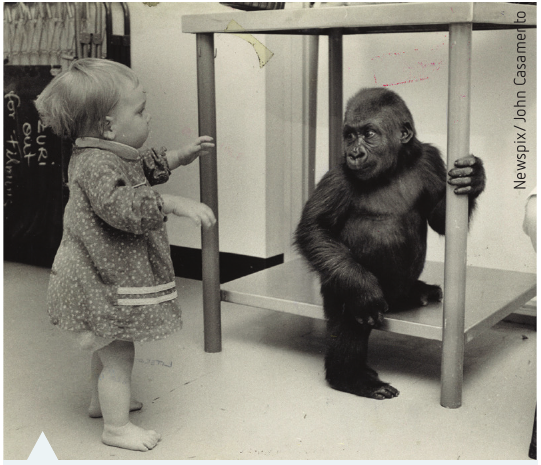
- Mzuri the gorilla: Born in June 1984 at Melbourne Zoo, the first gorilla born using artificial insemination (conducted by Professor David Galloway, University of Melbourne)
- Grey nurse sharks: Researchers at Monash University developed AI techniques for sharks to help conserve this endangered species on Australia's east coast
Disadvantages of artificial insemination
Despite its benefits, artificial insemination has some limitations:
- Specialised equipment required: The process needs specific tools and storage facilities
- Time-consuming: Proper technique requires training and careful execution
- Risk of injury: Incorrect insertion can harm the female
- Reduced genetic diversity: This is the most significant concern
Impact on genetic diversity
Important
Critical Concern: Genetic Diversity Reduction
Artificial insemination significantly alters the genetic composition of populations worldwide. When a small number of males (like the 50 elite bulls) sire hundreds of thousands of offspring globally, genetic diversity decreases dramatically.
How this works:
- The same alleles from a few males spread through populations worldwide
- Less variation exists in the gene pool
- Populations become more genetically similar
- This reduces the population's ability to adapt to environmental changes or resist diseases
Selective pressure changes: With artificial insemination and selective breeding, allele frequencies in the population are determined by human choices rather than natural selection. Survival and reproduction depend on traits useful to humans (like milk production) rather than fitness in the natural environment or reproductive success.
However, because offspring are fertile, these new allele combinations can pass to future generations, permanently altering the population's genetic makeup.
Current use
Despite concerns about genetic diversity, the advantages of artificial insemination outweigh the disadvantages for many applications. It has become the primary assisted reproductive technology for cattle, sheep, pigs, and sport horses worldwide.
In vitro fertilisation
In vitro fertilisation (IVF) is a reproductive technique where an egg is fertilised by sperm outside the mother's body in an artificial environment, such as a Petri dish.
The IVF process
The procedure involves several stages:
- Egg collection: Eggs are harvested from the female
- Fertilisation: Eggs are fertilised with sperm in a laboratory dish
- Culturing: The resulting zygotes are grown until they reach an early developmental stage
- Transfer or storage: Embryos are either:
- Transferred into the biological mother
- Transferred into a surrogate mother
- Frozen in liquid nitrogen for later use or research
Direct embryo transfer
The final stage of IVF involves transferring the embryo into the uterus using a thin tube called a catheter. The catheter deposits the embryo into the uterine lining, where it can implant and develop.
Integration with MOET
IVF is often combined with Multiple Ovulation Embryo Transfer (MOET) to maximize breeding from high-quality female cattle.
Note
MOET stimulates a female to produce multiple eggs in one cycle rather than the usual single egg. This technique allows cows that normally give birth once per year to become elite breeders, especially when surrogate mothers carry the embryos.
When IVF is used
This method is commonly employed when one or both parents have decreased fertility. IVF overcomes natural reproductive barriers and enables breeding that would otherwise be impossible.
Effects of in vitro fertilisation
IVF has significant impacts on populations and genetic diversity:
Important
Three Major Effects of IVF:
1. Reduced genetic diversity
Large numbers of viable embryos are produced from a small selection of parent animals with desirable traits. This concentrates specific alleles in the population and reduces overall genetic variation.
2. Inheritance of infertility genes
Genes that cause reduced fertility, which would not naturally pass to future generations, now get inherited by IVF offspring. This raises an important question: are humans breeding infertility into populations by assisting reproduction?
This is the opposite of natural selection, where genes that enhance fertility increase in frequency. With IVF, genes that reduce fertility can now persist and spread in populations.
3. Altered population genetics through sperm banks
Sperm banks allow people (and livestock breeders) to select donors based on preferred traits. This selection process can:
- Increase the frequency of certain desirable genes (such as academic ability or physical attractiveness in humans; production traits in livestock)
- Reduce the frequency of genes considered unfavourable
- Eliminate certain alleles from the gene pool entirely
The concern: When certain genes are eliminated, other important alleles may be lost as well. Traits like creativity, disease resistance, or behavioural characteristics might disappear unintentionally from the population.
Artificial pollination
Artificial pollination is a selective breeding technique for plants where pollen is manually transferred from the anthers to the stigma of flowers.
Historical use
Artificial pollination is an ancient technology with a rich history:
Note
Historical Timeline:
- 870 BCE: An Assyrian carving shows artificial pollination of date palms
- 19th century: Gregor Mendel used artificial pollination in his famous pea plant experiments
- Australian history: Scientists like William Farrer used it for wheat hybridisation
- Modern era: Thousands of new plant varieties have been created using this technique in the past century
The process
The technique involves carefully removing the stamens from a flower and manually transferring pollen to the stigma. This can be done in two ways:
Self-pollination: Pollen is transferred to the stigma of the same flower or another flower on the same plant
Cross-pollination: Pollen is transferred to the stigma of a flower on a different plant
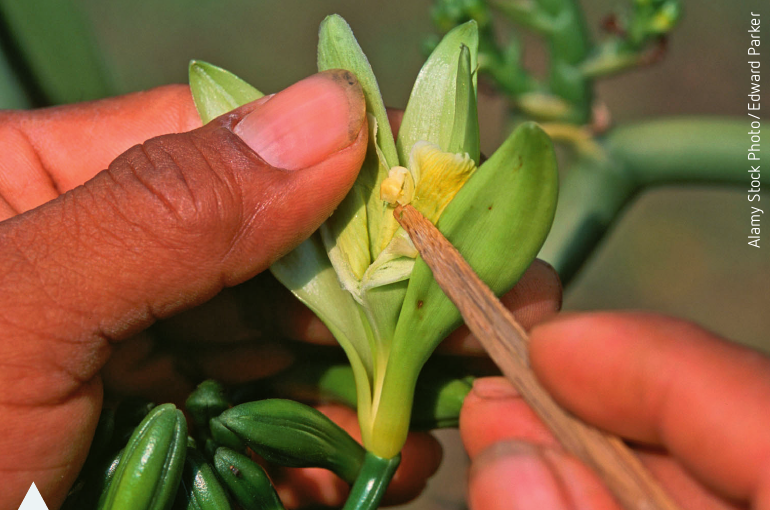
This gives plant breeders complete control over which plants reproduce and which genetic combinations are created.
Agricultural importance
Artificial hand pollination is a crucial horticultural technique that enables production of offspring with specific favourable characteristics, such as:
- Disease-resistant fruit
- Higher crop yields
- Better seed quality
- Improved flavour or appearance
Humans have used this method for thousands of years to artificially pollinate almond crops and date crops, ensuring greater yields.
Outcomes of artificial pollination
Benefits compared to natural pollination:
Many crop plants worldwide depend on insect pollination for reproduction. However, insufficient pollination reduces fruit and seed yield and affects offspring quality in both growth rate and herbivore resistance.
Example
Research Example: Gooseberry Pollination Study
Research comparing hand-pollinated and insect-pollinated gooseberries found that insect-pollinated plants had:
- Larger fruit
- Greater seed germination rates
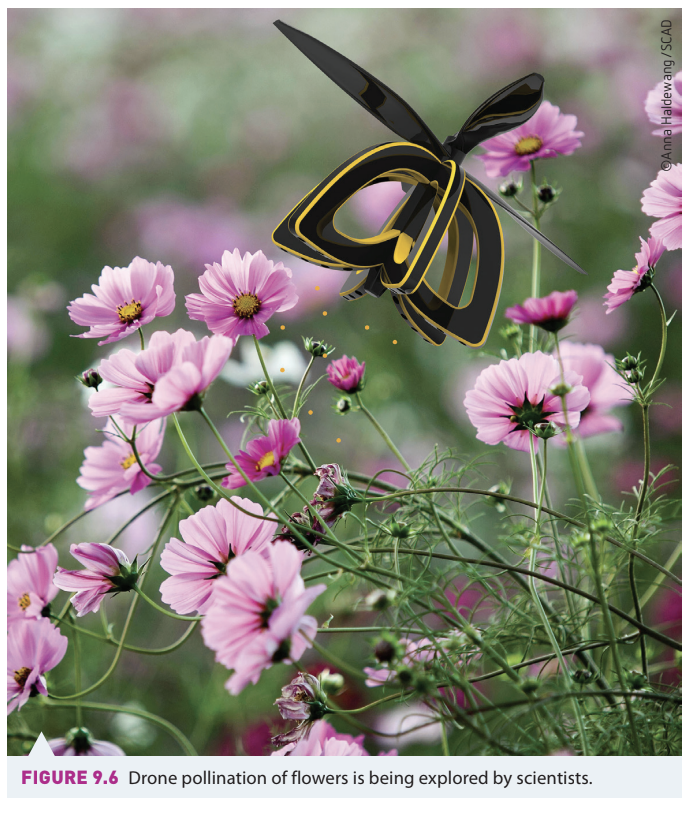
Modern solutions: As bee populations decline globally, scientists are developing drone pollinators with sticky surfaces that carry pollen directly to flowers for precise pollination.
Hybrid plant production:
Artificial pollination is commonly used to create hybrid plants with improved characteristics.
Example
Successful Hybrid Examples:
- Maize (corn): Hybrids show increased growth rate, greater uniformity, and higher yields
- Wheat: The Federation variety was created by crossing Purple Straw variety 14A with Yandilla (a Fife-Indian wheat variety)
Risk of overuse
While artificial pollination creates beneficial plant varieties, overuse can lead to crops that are too genetically similar.
Important
Warning: The Danger of Reduced Biodiversity
Overuse of artificial pollination can make crops too genetically similar, which reduces biodiversity and makes crops more vulnerable to disease.
Example: The 1970 Corn Blight
The 1970 corn blight in the USA occurred because corn plants were too genetically similar. When a disease appeared, it spread rapidly through the population because plants lacked genetic diversity to resist it.
Impact on genetic variability
Unlike artificial insemination and IVF (which reduce genetic diversity), artificial pollination increases genetic variability when used to create hybrid species.
How this works:
- New combinations of alleles are introduced into the gene pool
- Hybrid offspring may have traits not seen in either parent
- If hybrids are fertile, these new gene combinations pass to future generations
- The frequency of new alleles increases in the population
- The genetic composition of the population changes
Note
Important Distinction:
In hybridisation within a species, the resulting hybrids are fertile. This differs from hybridisation across species, where offspring are usually infertile (like mules from horse × donkey crosses).
Because hybrids produced through artificial pollination within a species are fertile, new allele combinations can pass to subsequent generations, permanently altering the population's genetic diversity.
Remember!
Summary
Key Points to Remember:
-
Selective breeding involves mating animals or plants with desirable traits to produce offspring with favourable characteristics. Both parents are varieties of the same species, so offspring are fertile.
-
Artificial insemination collects sperm from chosen males and inserts it into selected females. This technology overcomes transport problems, allows one male to sire many offspring, and enables post-death reproduction. However, it significantly reduces genetic diversity in populations worldwide.
-
In vitro fertilisation (IVF) fertilises eggs with sperm outside the body, then transfers embryos to mothers. Often combined with MOET, IVF helps animals with fertility problems reproduce. However, it reduces genetic diversity, allows infertility genes to be inherited, and alters population genetics through sperm bank selection.
-
Artificial pollination involves manually transferring pollen from anthers to stigmas. Unlike animal reproductive technologies, it increases genetic diversity by creating fertile hybrids with new allele combinations.
-
All reproductive technologies alter gene pools by changing allele frequencies in populations. The key difference is whether they increase (artificial pollination) or decrease (AI, IVF) genetic diversity.