Asexual vs Sexual Reproduction (HSC SSCE Biology): Revision Notes
📚Revision Notes
Asexual vs Sexual Reproduction
Introduction to reproduction
Reproduction is one of the most important characteristics of living organisms. It ensures the continuation of life by allowing organisms to pass their genetic information to the next generation. Even though individual organisms eventually die, reproduction allows the species to survive through successive generations.
Note
Key concepts:
- Gene pool: All the genetic material within a population
- Reproductive success: The ability of an individual to produce fertile offspring that survive to reproductive age and produce their own offspring
- Biological fitness: A measure of how likely particular genes (alleles) will appear in future generations; this is a property of genes in a population rather than of individuals
The two types of reproduction
Living organisms use two main strategies to reproduce: asexual reproduction and sexual reproduction.
Asexual reproduction
Note
Asexual reproduction involves only one parent and produces offspring that are genetically identical to each other and to the parent. Since only one parent is needed, this method is often simpler and requires less energy than sexual reproduction.
Sexual reproduction
Note
Sexual reproduction typically involves two parents who produce offspring containing a mix of genes from both parents. As a result, offspring differ genetically from each other and from both parents. In rare cases, organisms can be hermaphrodites (having both male and female reproductive organs), and if self-fertilisation occurs, sexual reproduction can involve just one parent.
Sexual reproduction: advantages and disadvantages
Advantages
Important
The greatest advantage of sexual reproduction is genetic diversity. Because offspring inherit different combinations of genes from their parents, they show variation. Some offspring may possess random variations that make them better suited to new or changing environmental conditions. These individuals may have a selective advantage, allowing them to out-compete others in the population. This variation increases the chances that at least some individuals will survive environmental changes, helping ensure the survival of the species.
Disadvantages
Sexual reproduction requires a much greater investment of time and energy compared to asexual reproduction. Organisms must:
- Find a mate
- Engage in courtship behaviour
- Produce gametes
- Copulate or otherwise bring gametes together
Note
These processes can make organisms more vulnerable to predators. Because sexual reproduction is so demanding, it is often the first process to be reduced or stopped during times of environmental stress or hardship.
How sexual reproduction works: chromosomes and gametes
Chromosomes: diploid and haploid
Every species has a characteristic number of chromosomes in its cells. For example:
- Humans: chromosomes
- Camels: chromosomes
- Tomatoes: chromosomes
- Chickens: chromosomes
Most organisms have two sets of chromosomes arranged in pairs. This is called the diploid number (). Body cells (somatic cells) are diploid.
To prevent the chromosome number from doubling each generation during sexual reproduction, organisms produce special reproductive cells called gametes (sex cells like sperm and eggs). Gametes contain only one set of chromosomes, called the haploid number ().
Important
Key terms:
- Diploid (): Cells containing two complete sets of chromosomes (one set from each parent)
- Haploid (): Cells containing only one set of chromosomes
- Gametes: Specialised reproductive cells (sperm and eggs) that are haploid
Meiosis: producing gametes
Note
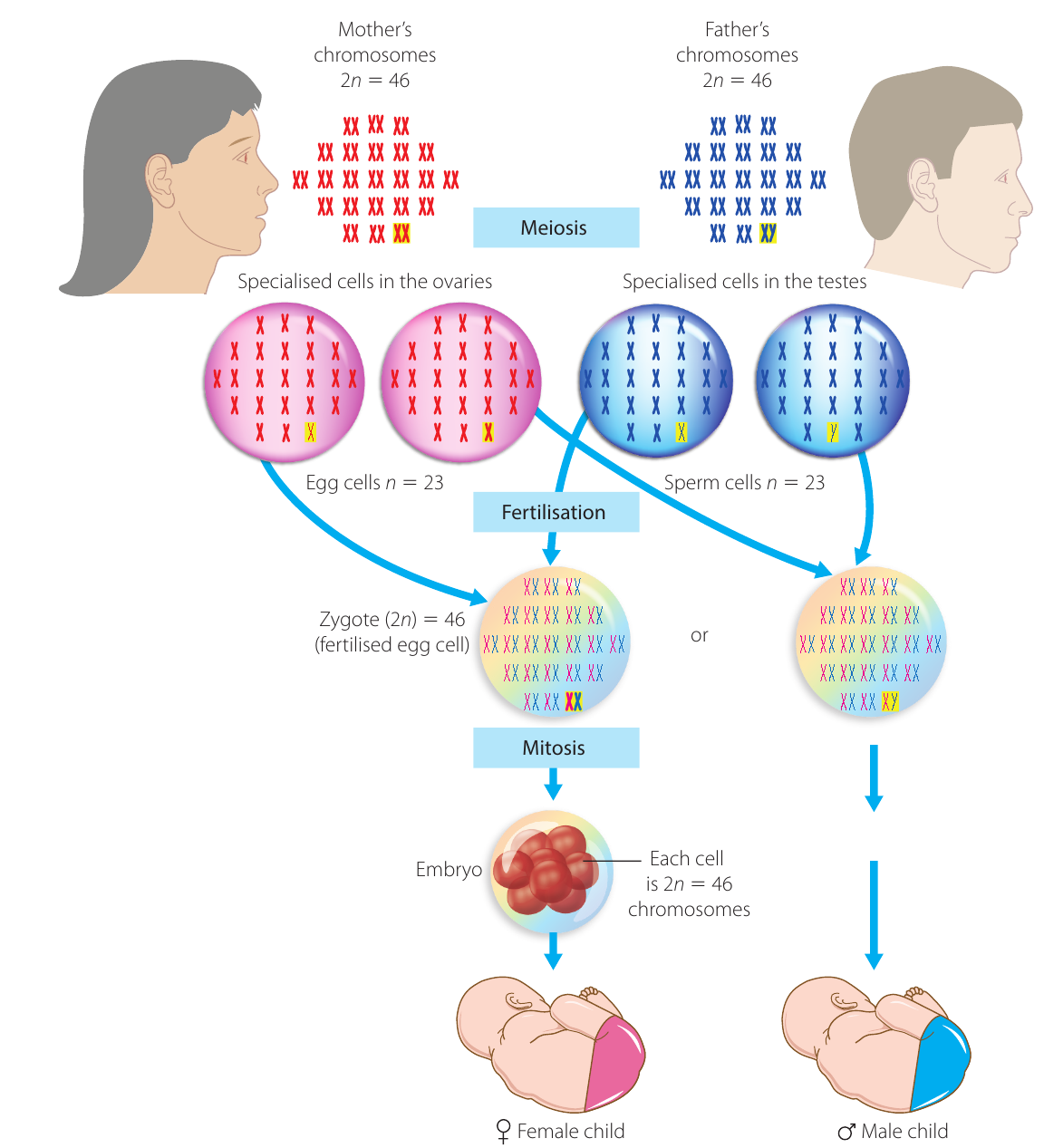
Meiosis is a special type of cell division that occurs in reproductive organs. It produces gametes by reducing the chromosome number by half. When a diploid cell divides by meiosis, it produces four haploid gametes.
In humans:
- Body cells are diploid: chromosomes
- Gametes are haploid: chromosomes
Fertilisation: restoring the diploid number
During fertilisation, a male gamete (sperm) fuses with a female gamete (egg or ovum). This fusion creates a zygote (fertilised egg). The zygote is diploid because it receives one set of chromosomes from each parent.
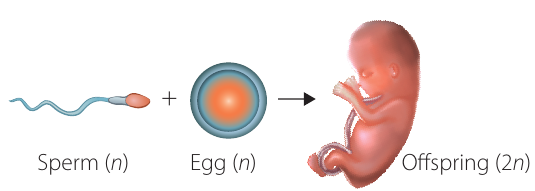
The zygote then divides by mitosis (normal cell division) to produce an embryo. All the cells in the embryo are genetically identical and diploid.
Important
Important: Fertilisation and meiosis are reciprocal processes:
- Meiosis reduces chromosome number from diploid to haploid
- Fertilisation increases chromosome number from haploid to diploid
Sexual reproduction in animals
Animals have evolved different reproductive strategies depending on their environment. The key differences relate to where fertilisation occurs (external or internal) and where the young develop.
External fertilisation
External fertilisation occurs when male and female gametes unite outside the body, typically in water. This type of fertilisation is common in aquatic organisms such as:
- Marine invertebrates (e.g. coral)
- Fish
- Amphibians (e.g. frogs)
Characteristics of external fertilisation:
- Large numbers of gametes: Millions of eggs and sperm are released because many will not successfully unite or will be eaten by predators
- Synchronised release: Environmental cues (temperature, day length, tides) and chemical signals (pheromones) help coordinate the simultaneous release of gametes
- Aquatic environment: Gametes need water to prevent dehydration and to help them meet
- Little or no parental care: Once gametes are released, there is typically no further investment from parents
- Wide dispersal: Fertilised eggs may be carried far from parents, reducing competition but also increasing vulnerability to predation
Examples:
Example
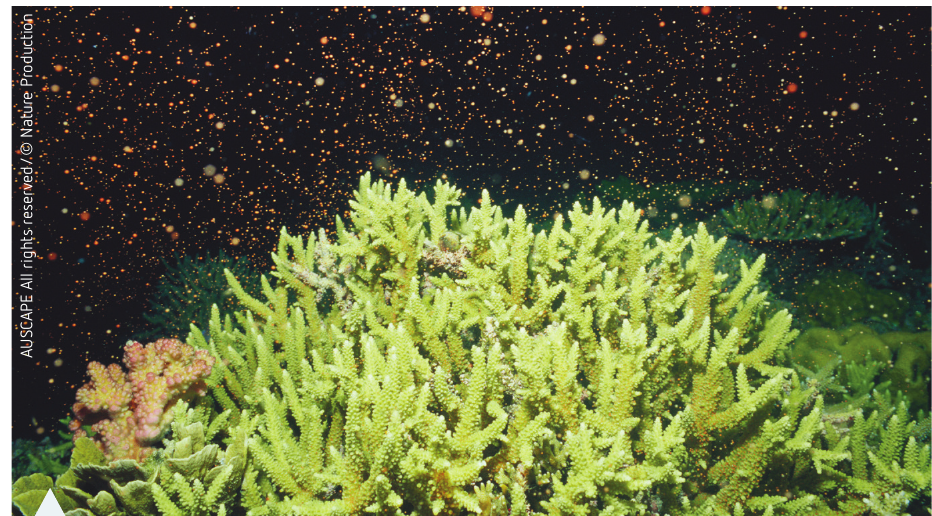
Worked Example: Staghorn coral
Coral polyps release millions of sperm and egg bundles into the sea during mass spawning events. Environmental cues synchronise spawning across large areas of reef. Although millions of larvae are produced, most are eaten by predators and only a tiny fraction reach adulthood.
Example
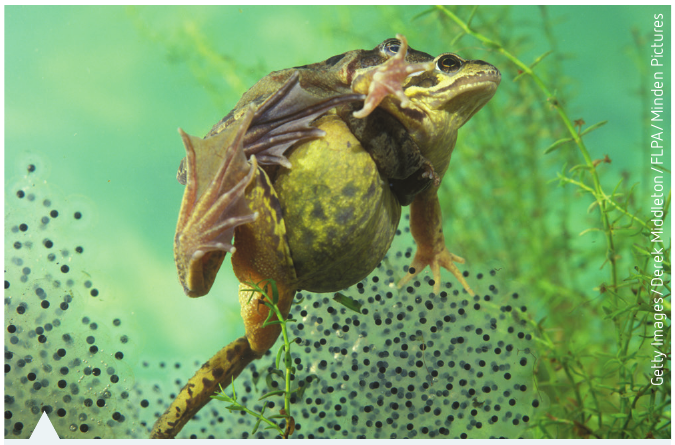
Worked Example: Frogs and toads
During mating, the male grasps the female and releases sperm onto the eggs as the female releases them into water. The eggs develop into tadpoles in the aquatic environment. Large numbers of eggs are produced, but many tadpoles are eaten before reaching maturity.
Internal fertilisation
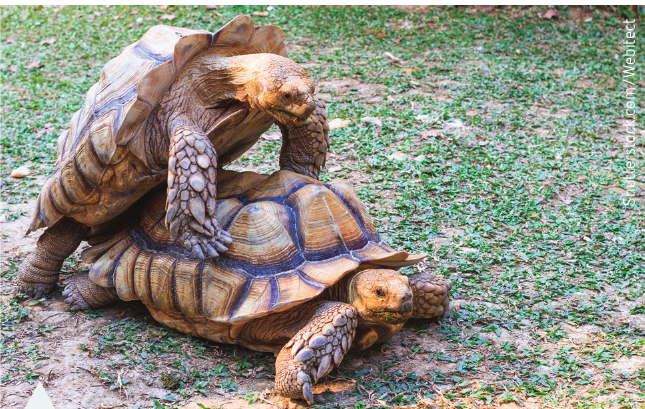
Internal fertilisation occurs when gametes unite inside the female's body. This adaptation is essential for organisms living in terrestrial environments because it prevents gametes from drying out. Internal fertilisation is found in:
- Most terrestrial invertebrates (e.g. insects)
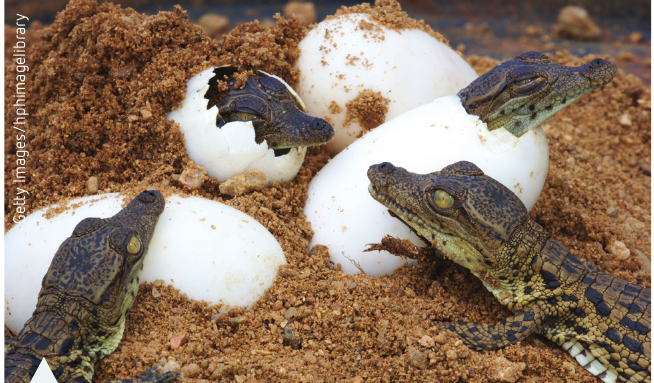
- Reptiles
- Birds
- Mammals
Characteristics of internal fertilisation:
- Fewer gametes: Because fertilisation is more likely to succeed in the protected internal environment, fewer eggs need to be produced
- Copulation required: Males must transfer sperm into the female's reproductive tract, which requires finding a mate and mating behaviour
- Protected environment: Developing embryos are initially protected inside the female's body from predators, dehydration, and temperature extremes
- Parental care more common: Many species with internal fertilisation provide care for eggs or young
- Less frequent breeding: Due to higher energy costs, breeding tends to be seasonal rather than continuous
Developmental strategies following internal fertilisation:
After internal fertilisation, different animal groups show different developmental patterns:
Note
Oviparous (egg-laying):
- Fertilised eggs are laid outside the mother's body
- Eggs contain yolk to nourish the developing embryo
- Examples: most reptiles, all birds, monotremes (platypus, echidna)
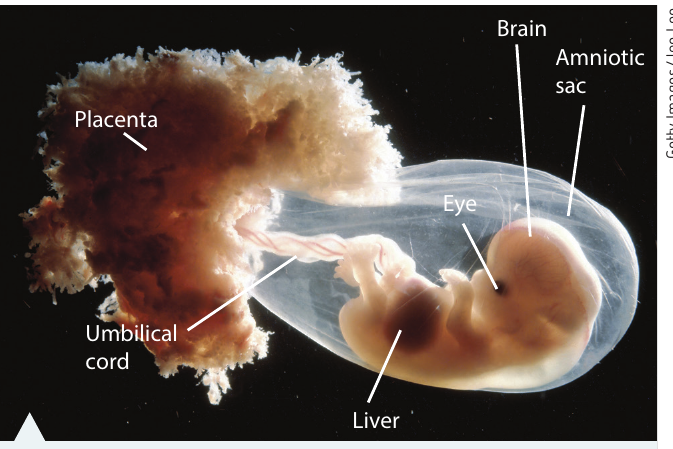
Viviparous (live birth):
- Embryo develops inside the mother's body
- Embryo receives nutrients from mother through a placenta
- Young are born live and relatively mature
- Examples: most mammals (placental mammals)
Ovo-viviparous (intermediate):
- Eggs with yolk are retained inside the mother's body
- Embryos develop using yolk for nutrition
- Young hatch inside the mother and are born live
- Examples: some snakes and sharks
Comparison of external and internal fertilisation
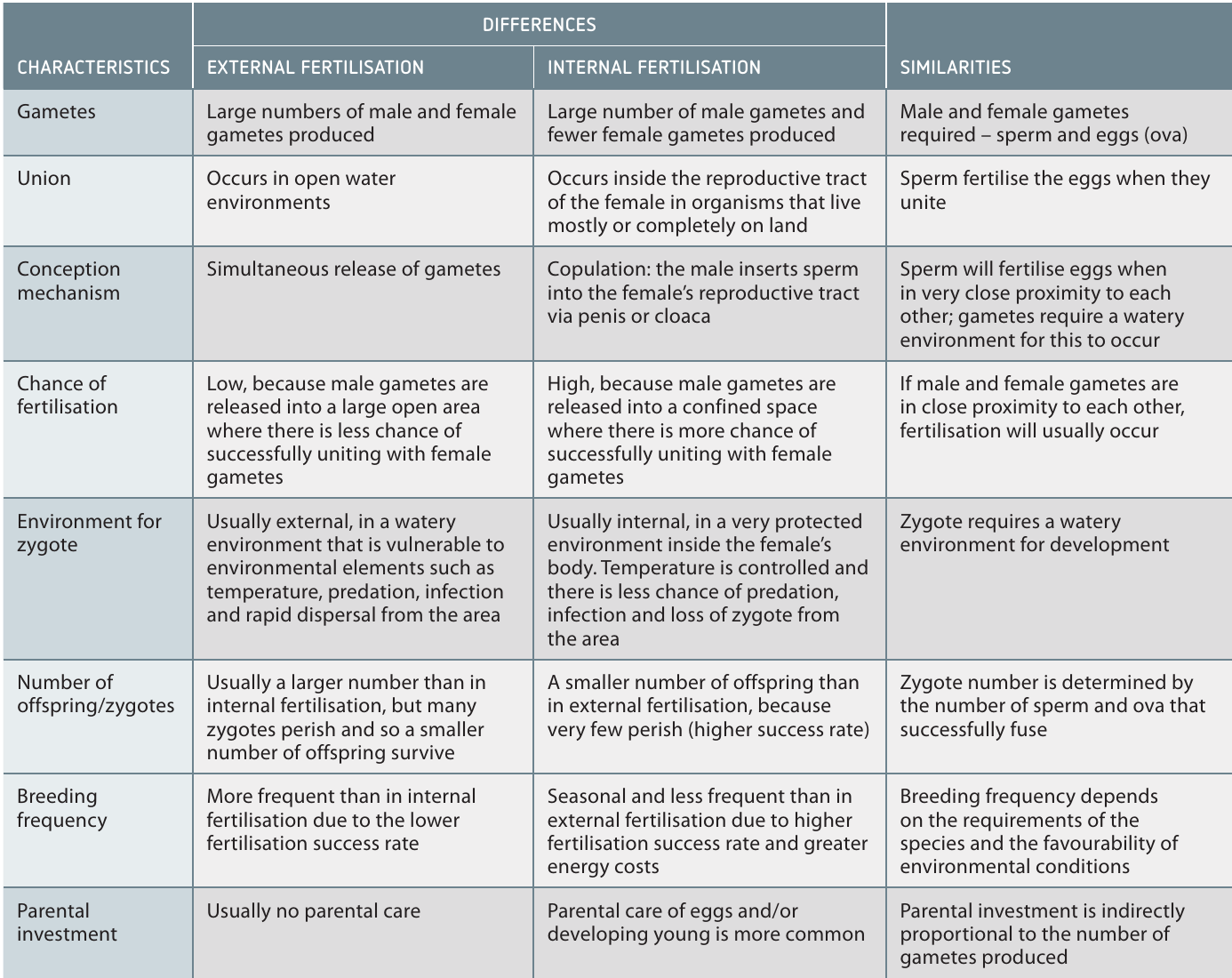
The following table summarises the key differences and similarities between external and internal fertilisation:
Summary
Key Differences:
- External fertilisation produces many gametes with little parental care
- Internal fertilisation produces fewer gametes with more parental investment
- External fertilisation occurs in aquatic environments; internal fertilisation in terrestrial environments
- External fertilisation has lower success rates but allows wide dispersal
- Internal fertilisation has higher success rates but requires more energy
Similarities:
- Both require male and female gametes (sperm and eggs)
- Both result in fertilisation when sperm and egg unite
- Both require a watery environment (external in the environment, internal in the reproductive tract)
- In both cases, the number of offspring is balanced against survival rates
Sexual reproduction in plants
Plants face unique challenges for sexual reproduction because they cannot move to find mates. They have evolved various strategies using external agents to transfer gametes and disperse seeds.
Flower structure
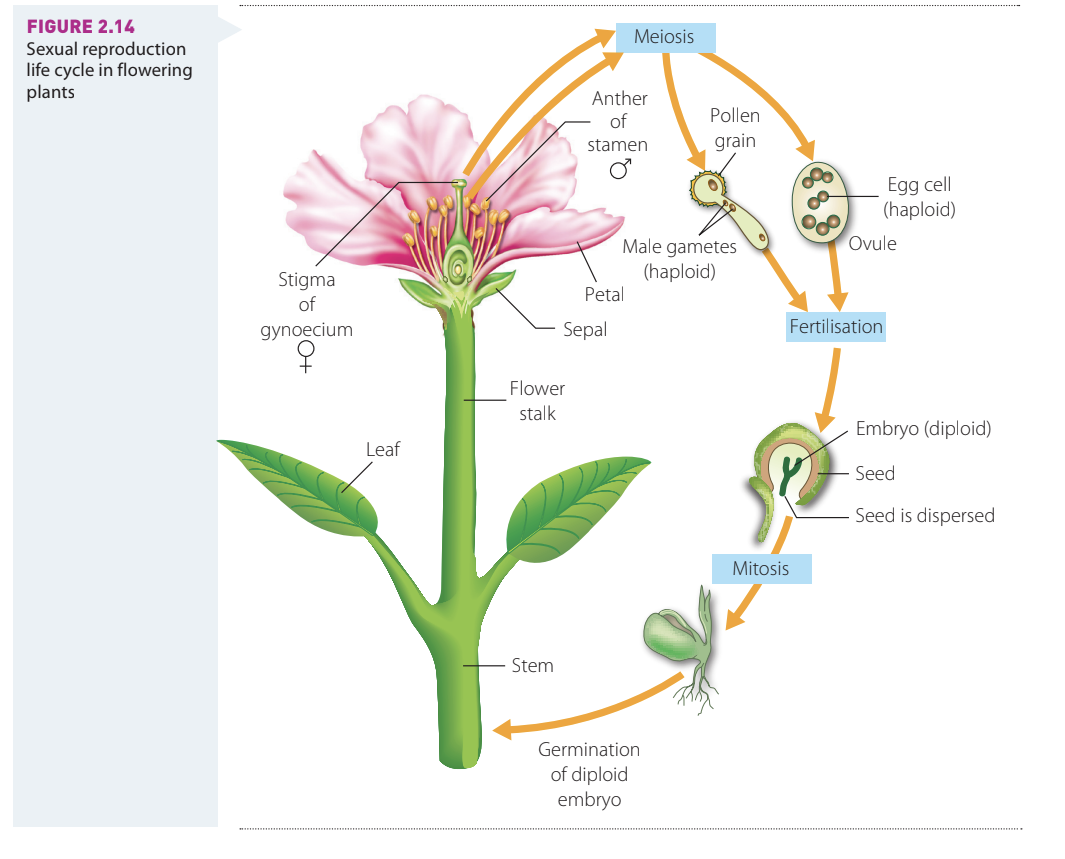
Flowers are the reproductive organs of flowering plants (angiosperms). A typical flower contains:
Note
Male parts (stamen):
- Anther: Produces pollen grains containing male gametes
- Filament: Stalk supporting the anther
Female parts (carpel or gynoecium):
- Stigma: Sticky surface where pollen lands
- Style: Connects stigma to ovary
- Ovary: Contains ovules (which contain egg cells)
Non-reproductive parts:
- Petals: Often colourful to attract pollinators
- Sepals: Protect the flower bud before it opens
Pollination
Pollination is the transfer of pollen from an anther to a stigma. Once pollen lands on a stigma, it germinates and grows a pollen tube down the style to reach an ovule in the ovary. The male gamete travels through the pollen tube to fertilise the egg cell inside the ovule.
Types of pollination:
Note
-
Self-pollination: Pollen from one flower fertilises the same flower or another flower on the same plant
- Requires less energy (no need for colourful petals or nectar)
- Useful when pollinators are scarce
- Produces less genetic variation
-
Cross-pollination: Pollen from one plant fertilises flowers on a different plant
- Increases genetic variation in offspring
- Requires external agents (wind, water, animals)
- Some plants prevent self-pollination by having pollen and stigma mature at different times
Pollination agents:
Plants rely on different agents to carry pollen:
Wind pollination:
- Flowers are small, greenish, without petals or scent
- Produce large amounts of light, powdery pollen
- Anthers hang outside flowers on long filaments
- Stigmas are large and feathery to trap pollen
- Very inefficient (much pollen wasted)
- Example: grasses
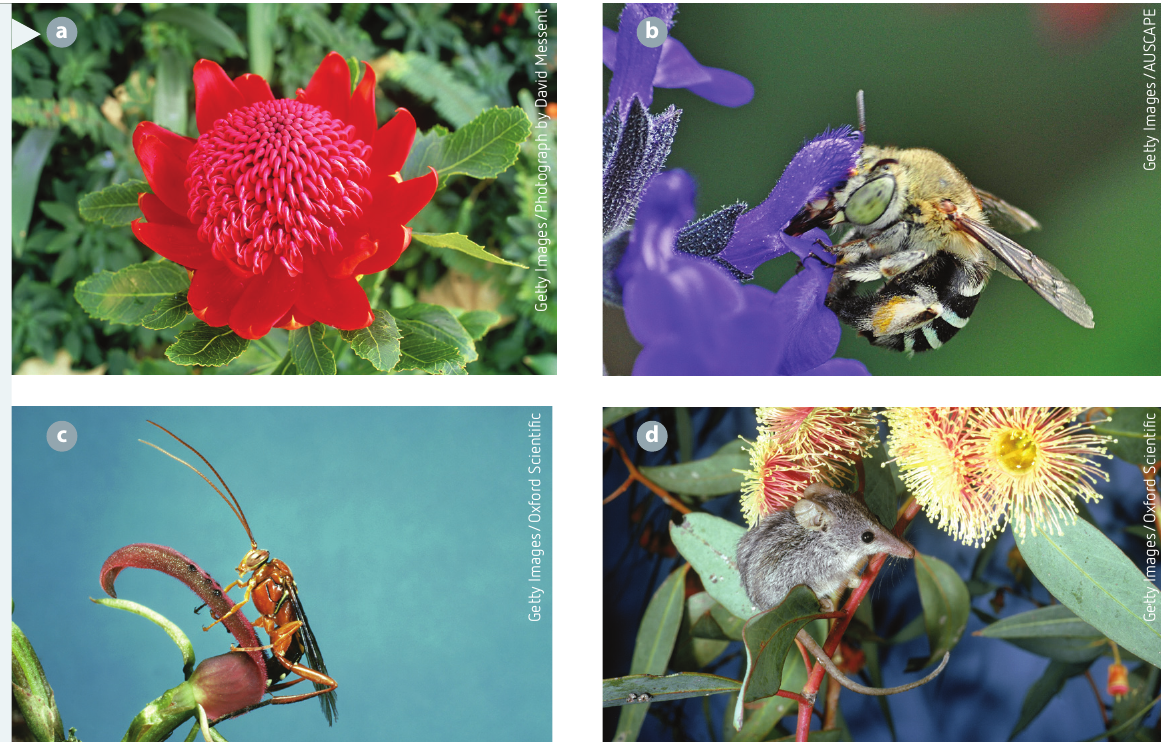
Animal pollination:
- More efficient than wind pollination
- Flowers produce nectar as a reward
- Flowers have colours, scents, and shapes adapted to specific pollinators
Insect pollination:
- Flowers are colourful (yellow, blue, purple)
- Often scented
- Produce smaller amounts of sticky pollen
- Examples: many garden flowers
Bird pollination:
- Flowers are red or orange (colours birds can see well)
- Often tubular shaped
- Produce large amounts of nectar
- Usually no scent (birds have poor sense of smell)
- Examples: bottlebrush (Callistemon), grevillea
Mammal pollination:
- Some Australian flowers pollinated by bats, possums, or small rodents
- Examples: banksia, some bottlebrush species
Fertilisation and seed development
After a pollen grain lands on a stigma, the male gamete fertilises the egg cell inside the ovule. The fertilised ovule develops into a seed containing a plant embryo. The ovary surrounding the ovule grows into a fruit.
Seed dispersal
Seed dispersal is important because it:
- Prevents overcrowding and competition for resources (light, water, nutrients)
- Allows the species to colonise new areas
- Increases chances of survival if local environment changes (fire, disease)
Dispersal mechanisms:
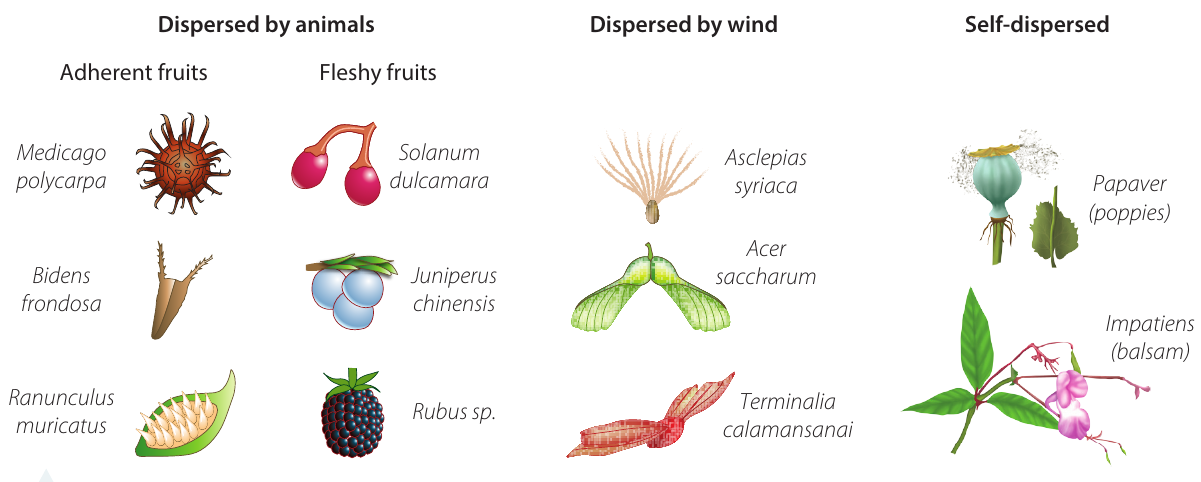
Plants have evolved different adaptations for seed dispersal:
Note
Wind dispersal:
- Seeds are light with wings or parachute-like structures
- Examples: dandelions, maple seeds, milkweed
Water dispersal:
- Seeds or fruits float and are carried by water currents
- Often have waterproof coatings
Animal dispersal:
- Adherent fruits: Have hooks or barbs that attach to animal fur
- Fleshy fruits: Animals eat the fruit and disperse seeds in their droppings
- Examples: berries, apples
Self-dispersal:
- Plants have explosive mechanisms to shoot seeds away
- Examples: poppies, balsam (Impatiens)
Germination
When a seed lands in suitable conditions (adequate water, oxygen, and warmth), it germinates. The embryo inside begins to grow:
- The radicle (young root) grows down to absorb water and nutrients
- The plumule (young stem) grows up and develops leaves for photosynthesis
- Once established, the seedling grows into an adult plant that can reproduce
Summary
Key Points to Remember:
-
Asexual reproduction involves one parent producing genetically identical offspring, while sexual reproduction involves two parents (usually) producing genetically varied offspring
-
The main advantage of sexual reproduction is genetic diversity, which helps populations adapt to environmental changes and increases species survival chances
-
Sexual reproduction requires meiosis to produce haploid gametes () and fertilisation to restore the diploid number () in offspring
-
External fertilisation (in aquatic environments) produces many gametes with little parental care, while internal fertilisation (in terrestrial environments) produces fewer gametes with more parental investment
-
In plants, sexual reproduction relies on external agents for pollination (wind or animals) and seed dispersal, with flower structures adapted to their specific pollinators