Applying Analysis Techniques (HSC SSCE Chemistry): Revision Notes
📚Revision Notes
Applying Analysis Techniques
Introduction to quantitative analysis
Quantitative analysis involves determining how much of a specific substance is present in a mixture. While this revision note focuses on volumetric analysis (also called wet analysis), modern chemistry also uses many instrumental methods to identify and measure substances.
Volumetric analysis is a classical technique dating back to the 19th century. It uses solutions and titrations to analyse mixtures. The term "wet analysis" reflects its reliance on liquid solutions.
Instrumental methods are modern techniques that often provide faster and more accurate results than traditional wet chemistry. These include spectroscopy, chromatography, and electrochemical methods.
Note
Quantitative analysis has widespread applications across many fields:
- Industries: food and beverage production, mining, pharmaceuticals
- Healthcare: drug development and testing
- Environmental monitoring: water quality, pollution levels
- Forensics: evidence analysis
- Chemical biology: research applications
Analysis techniques used in industry
Food and beverage industry
Titration techniques are widely used in the food and beverage sector to determine:
- Salt or sugar content in products
- Concentration of vitamins (C and E)
- Amount of preservatives like sulfur dioxide ()
Wine industry applications
The wine industry provides excellent examples of how both classical and modern analytical techniques work together in quality control and production monitoring.
Alcohol content monitoring
Winemakers must monitor alcohol production during fermentation as part of quality control. Legal requirements mandate that the final alcohol level be measured and displayed on the bottle label.
During fermentation, the mixture's density decreases because ethanol has a lower density ( at ) compared to water (). A hydrometer can track these density changes. Alternatively, a back titration can measure the alcohol content.
Methanol detection
Gas chromatography (GC) detects ethanol and other alcohols, including methanol. While methanol is naturally produced during fermentation in small amounts, it is highly toxic and can cause fatal poisoning or permanent brain damage at low doses.
Important
Strict regulations limit methanol content:
- White wine: less than of ethanol content
- Red wine: less than of ethanol content
Higher methanol levels usually indicate illegal tampering or adulteration of the wine.
Infrared spectroscopy for alcohol measurement
A near-infrared spectrometer measures alcohol content more quickly and reliably than traditional methods, contributing to better quality wines. The instrument uses a specific wavelength range of 1150–1200 nm, which ensures other wine constituents don't interfere with the measurement. This means the same procedure works for all wine types (white or red, sweet or dry).
Acidity measurement
Wine acidity is one of the main factors contributing to taste. It balances residual sugar and alcohol. Wine contains more than 40 organic acids (weak acids). The acidity level is measured through titration, specifically called titratable acidity in the wine industry.
Note
Titratable acidity consists of acids that can be titrated by a strong base solution through reaction with their free carboxylic acid groups (—COOH).
The pH of the fermentation mixture is important because:
- Yeast enzymes have an optimum pH for activity
- Acid levels help the microbial action of (the main preservative)
- Acidity supports desirable microorganisms
- It enhances the wine's colour and flavour
Modern laboratories commonly use automatic titrators – devices designed to automatically complete the titration process using digital probes for measurements.
Sulfur dioxide analysis
Sulfur dioxide is added to wine to kill or inhibit unwanted yeasts and bacteria, and to protect the wine from oxidation. When is added to wine, three forms exist:
- Molecular
Note
Only the free forms of sulfites play a preservative role in wine. Therefore, measuring both free and total sulfites is important. Results are expressed as 'ppm free /ppm total ' to denote which measurement is free and which is total.
A redox titration using iodine with starch as the indicator measures free . To determine total , sodium hydroxide is added first to break down the complexes binding the sulfur dioxide, then the mixture is titrated.
Mining industry
In the mining industry, metals, alloys, and ores are analysed to determine their exact composition. Various chemical and instrumental methods are used:
- Assaying: traditional testing methods
- Atomic absorption spectroscopy (AAS): instrumental analysis
- Spectroscopy: various types for different purposes
- Titrations: wet chemical analysis
Wet analysis process
The first step involves dissolving the ore using specific acids or acid combinations, depending on the ore's chemical properties.
Example
Examples of ore dissolution:
- Nitric acid () dissolves ores of Cd, Cu, Mo, Co, Ni
- Combination of and dissolves fused and chrome ores
A series of titrations then determine the percentage composition of the ore, depending on which metals are present. However, modern spectroscopic methods are now more commonly used than wet chemistry because they are more accurate and less time-consuming.
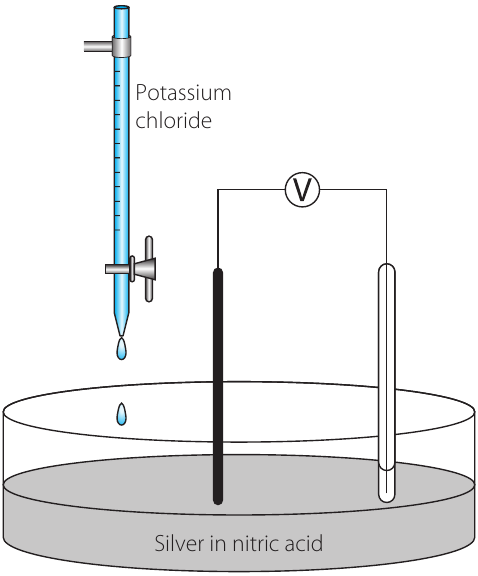
Potentiometric titration
This specialized titration determines the purity of silver, gold, and palladium without requiring a chemical indicator. Instead, scientists measure the electric potential (voltage) across the solution.
The principle: ions in solution are conductive. More ions present means higher conductivity. Two electrodes measure the potential across the solution.
Example
Procedure for measuring silver in an alloy:
- Weigh the silver sample
- Dissolve in nitric acid to form silver nitrate solution
- Add potassium chloride solution via burette
- Silver ions precipitate as silver chloride
- Electrodes detect the end point by measuring changes in electrical conductivity
- As silver ions precipitate, conductivity decreases (fewer ions present)
- Calculate the mass of silver from the volume of potassium chloride used
- Compare to the original sample mass to determine percentage purity
Acid mine drainage monitoring
Monitoring acid mine drainage is very important in the mining industry. Wastewater from mines contains high acidity due to sulfuric acid produced from pyrite oxidation. This acidic water must be neutralized with calcium oxide before land reclamation after mining.
Note
Analysis methods:
- Acidity is determined by titrating against a standard solution
- Alkalinity is determined by titrating against a standard hydrochloric or sulfuric acid solution
Pharmaceutical industry
Chemical analysis is vital throughout the pharmaceutical industry, from drug development to final product quality control. It assesses:
- Stability of drug molecules
- Quantification of impurities
- Drug content in marketed products
Common analytical techniques:
- Acid-base titrations: often used for salicylic acid and benzoic acid determinations
- Spectroscopy: infrared, atomic absorption, mass spectrometry
- Chromatography: thin layer, gas, and high-performance liquid chromatography
- Electrophoresis: separation technique
Indigenous peoples of Australia use of acids and bases
Aboriginal peoples have lived within Australia's natural environment for thousands of years. Through systematic observation and trial-and-error applications over generations, they investigated and utilized hundreds of native plant species for food and medicinal purposes. They identified and exploited the chemical and physical properties of materials for various purposes.
Note
While Indigenous Australians did not use the terms 'acid' and 'base', their use of plants and natural substances demonstrated a practical understanding of these compounds' properties. Modern pharmacological analysis has identified active ingredients in Australian plants used by Indigenous peoples. Many traditional medicines have contributed to developing modern pharmaceuticals widely used today.
Example
Example: The corkwood tree (Duboisia myoporoides)
The corkwood tree, used by Aboriginal groups as a narcotic and poison, led to the discovery of a drug controlling pupil dilation, now widely used in eye surgery.
Uses of the soap tree (Alphitonia excelsa)
The Kuku Yalanji people of the Daintree, along with other Indigenous peoples, have many medicinal uses for the soap tree.
Traditional preparation:
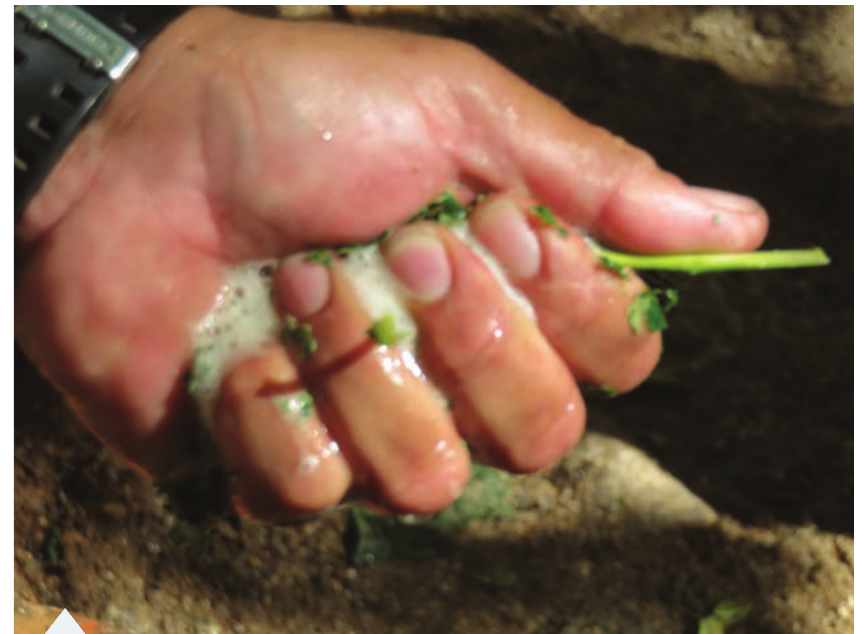
They prepare a lather by crushing and rubbing leaves with a little water. The lather is rubbed on the skin as a cleanser and antiseptic for treating rashes and ringworm.
Traditional medicinal applications before colonization:
- Young leaf tips were chewed for upset stomach
- Leaves were applied to sore eyes
- Warm water infused with leaves was applied across the head to reduce headaches
- Infusion of bark and root was rubbed on the body to relieve muscle aches
- The same infusion was gargled to relieve toothache
Note
Chemical composition:
Modern analysis of the leaves has found:
- Saponins (tend to be acidic): Large molecules with one hydrophilic end and one hydrophobic end, allowing them to act as mild soap by removing dirt particles
- Multiple organic acids: present in wood, bark, and leaves
- Small amounts of methyl salicylate: thought to be responsible for the plant's analgesic (pain-relieving) properties
Treating stings
Many plants were used by Indigenous peoples to treat different types of stings. Plant selection depended on availability in different locations.
Queensland treatments:
- Hop-bush (Dodonaea viscosa): Chewed leaf and juice applied to stingray and stonefish stings, bound for 4–5 days
- Peanut tree (Sterculia quadrifida): Heated leaves placed on sites of insect stings and marine creature bites
Western Australia treatments:
- Pig face (Carpobrotus glaucescens): Leaf juice applied to jellyfish stings
Northern Australia and New South Wales treatments:
- Goat's foot (Ipomoea pes-caprae): Crushed and heated leaves applied directly to stingray and stonefish stings
Coastal areas:
- Grey mangrove/white mangrove (Avicennia marina): Widely distributed along Australian coastline; leaves and young shoots chewed, mixture applied directly to stingray and stonefish sting wounds
Northern tropical Australia:
- Nipan (Capparis lasiantha): Infusion of whole mashed plant in water applied externally to treat snakebite, insect bites, and stings
Important
Active compounds:
Analysis of many plants mentioned in this section has revealed the presence of alkaloids. While alkaloids have diverse medical properties, many are used for pain relief and possess anaesthetic properties.
Use of clay
While Aboriginal peoples' use of ochres and white clay as paints and pigments for domestic and ceremonial purposes is well-known, their use in medicine is less recognized.
Ochre for food preservation:
Ochre preserved food for use during times of shortage. Plant foods such as berries were packed inside ochre balls and buried. These could later be retrieved and used. When coated with ochre, domestic and hunting tools were protected against termites.
Medical applications:
Many Indigenous groups used ochre and clay to treat ailments, either applying it directly to the skin or ingesting it.
- Arnhem Land: Indigenous peoples ate small balls of white clay and pieces of termite mound to cure diarrhoea and stomach upsets
- Other groups: Ate small balls of white clay and ochre to cure gastrointestinal toxins produced by infection
- Many parts of Australia: Clay and sediment covered wounds, providing a physical barrier to infection
Note
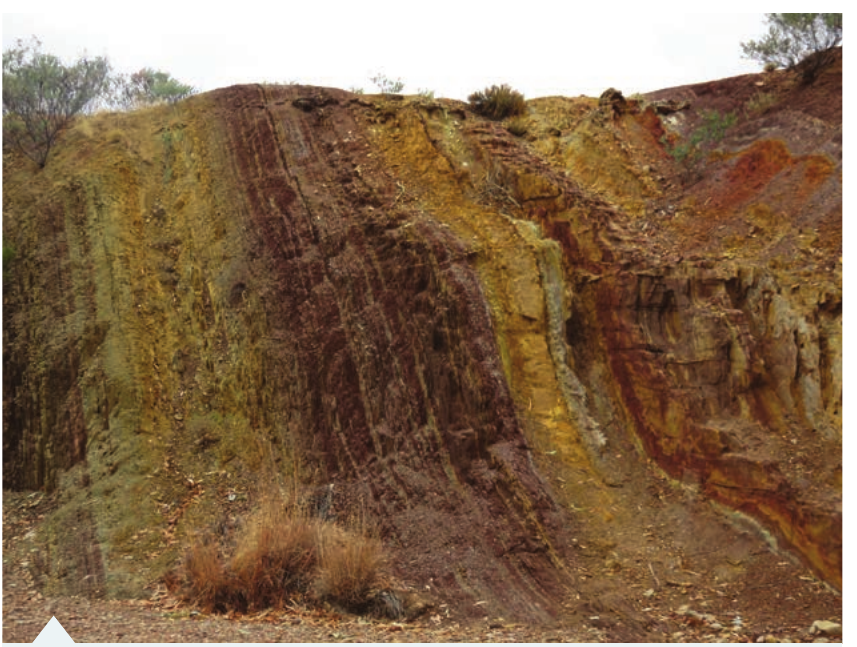
Chemical composition of ochre:
Ochre colors result from the presence of iron oxide or iron hydroxide:
- Yellow ochre: Hydrated iron hydroxide ()
- Red ochre: Anhydrous iron oxide ()
- Brown ochre: Partly hydrated iron oxide ()
- White ochre: Little or no iron; white color comes from kaolin, a white clay mineral ()
Important
Modern medical validation:
In current medicine, ingestion of dried clay minerals or clay suspension is commonly used as a detoxifying agent and to treat gastrointestinal illness.
The alkaline nature of clay and ochre helps neutralize excess stomach acid, similar to modern indigestion tablets. Iron oxide addition provides an essential mineral that may be lacking in diets. Research has shown that kaolin clay can absorb commonly ingested toxins, lowering food toxicity and improving digestive health.
External applications:
Clay has absorption capabilities and has been used externally to remove oils, secretions, toxins, and impurities from the skin.
Ongoing learning:
There is still much to learn from First Nations peoples' pharmaceuticals and their use of natural materials.
Remember!
Summary
Key Points to Remember:
-
Volumetric analysis (wet analysis) is a classical technique using solutions and titrations, while instrumental methods provide faster, more accurate results using modern technology.
-
The wine industry uses multiple analytical techniques: hydrometers and titrations for alcohol content, gas chromatography for methanol detection, infrared spectroscopy for quick alcohol measurement, titration for acidity, and redox titration for sulfite levels.
-
Potentiometric titration measures purity of precious metals (silver, gold, palladium) by monitoring electrical conductivity changes as ions precipitate, eliminating the need for chemical indicators.
-
Aboriginal peoples demonstrated practical understanding of acid-base chemistry through systematic use of plants and minerals for medicinal purposes; modern analysis validates their traditional knowledge by identifying active compounds like saponins, alkaloids, and methyl salicylate.
-
Ochre and clay have alkaline properties that neutralize excess stomach acid; different ochre colors result from various iron compounds (yellow = hydrated hydroxide, red = anhydrous oxide, brown = partly hydrated oxide, white = kaolin with no iron), and modern medicine still uses clay minerals for detoxification and gastrointestinal treatment.