Causes of Inequality in the Global Economy (HSC SSCE Economics): Revision Notes
📚Revision Notes
Causes of Inequality in the Global Economy
Understanding why some countries achieve rapid development while others remain poor has been a central issue in economics for over 50 years. During the globalisation era, these differences have become more pronounced due to increased interaction between prosperous and less prosperous regions.
Development economics attempts to identify and enable the conditions required for sustainable economic growth and development. By comparing high-income and developing economies, economists can identify specific problems faced by poor countries, such as high population growth, low skill levels, weak institutions, and corruption.
Note
In a globalised world, both international relationships and domestic characteristics influence global inequalities. Understanding these interconnected factors is essential for addressing economic disparities between nations.
In a globalised world, both international relationships and domestic characteristics influence global inequalities. These can be categorised into global factors and domestic factors.
Global factors
Global factors are features of the international economic system that contribute to inequalities between countries. While globalisation creates opportunities for growth, some aspects of the global economy entrench rather than reduce inequalities.
Global trade system
Several features of the global trade system reinforce inequalities:
Agricultural protectionism: Wealthy countries protect their domestic agricultural sectors even though they are less competitive than producers in developing nations. Although agricultural support in OECD countries has fallen by almost half since the mid-1980s, it remained at $245 billion in 2021, providing 18% of farmers' income in the EU and double that in Japan and Korea. This severely affects developing countries that export commodities.
Important
Impact of Regional Trading Blocs
Arrangements like the European Union and USMCA can exclude poorer nations from lucrative global consumer markets. Exclusion from trade opportunities has an enormous impact because bilateral agreements are rarely as comprehensive as regional blocs.
Failed trade negotiations: The WTO's Doha Round in the early 2000s was promoted as the "development round" but failed largely because high-income nations resisted concessions that would benefit developing countries. Recent WTO negotiations have focused on much more limited reforms for least-developed countries.
Administrative costs: The complexity and cost of implementing trade agreements tilt benefits toward richer countries. World Bank economists estimate that a 1% increase in administrative costs would decrease gross world product by $75 billion.
Global financial architecture
The global financial system, while intended to enable free flows of funds, can also entrench inequalities:
Investment flows: Historically, long-term investment heavily favoured developed countries. Since the 2000s, developing economies receive around half of global FDI flows, but faster-growing emerging economies like China, Brazil, India and Russia benefit most. The world's 46 least developed countries held just 1.2% of global inward FDI in 2021.
Note
Understanding Short-term Financial Volatility
Short-term financial flows favour prosperous emerging economies, offering better returns for speculators. However, this exposes these regions to economic volatility, as seen in the East Asian crisis (late 1990s) and Latin American crisis (early 2000s). Such crises can set back development for years.
Research by the IMF (2019) found that low-income countries with stronger banking sectors were better able to manage volatility in export earnings.
Tax avoidance: International financial rules have not kept pace with globalisation, tolerating loopholes that benefit the wealthy. According to the OECD, corporate tax avoidance costs countries up to $240 billion annually, with developing countries suffering disproportionately. Over 135 countries were implementing a global plan to reduce this in 2023.
Important
The IMF's Role in Development
The IMF has faced criticism that its "structural adjustment" policies serve rich countries' interests rather than developing countries' needs. While a 2023 review praised the IMF's COVID-19 response, it found the IMF's fiscal policy guidance may have encouraged excessive spending in some countries. Some nations like Belarus, Iran, Zambia and Nicaragua experienced delays in funding due to concerns about their policies, creating perceptions of unequal treatment.
Foreign debt burdens: Total external debt for low- and middle-income economies reached $9.3 trillion in 2021, an 8% increase from 2020. Interest repayments reduce income available for spending on education, health care and infrastructure. Many developing countries spend more on debt servicing than on public health. This prompted initiatives like the Debt Service Suspension Initiative (DSSI).
Global aid and assistance
Development aid efforts by high-income economies remain insufficient to overcome large differences in living standards:
Insufficient aid levels: Development aid reached an all-time high of $204 billion (0.36% of GNI) in 2022. However, this remains only half the 0.7% GNI target promised by high-income economies since the 1970s. Only five OECD Development Assistance Committee members met this target in 2021. Recent aid prioritised settling refugees (14%) and supporting Ukraine (8%).
Note
The Problem of "Phantom Aid"
Critics argue that significant aid does not improve lives of the poor. According to the OECD, almost one in six aid dollars is "technical cooperation" often paid to consultants in donor countries. Another 11% is debt-related, 5% goes to administration. These disbursements reduce funds available for development projects.
Tied aid: Aid that must be spent on goods and services from the donor country reduces effectiveness. For example, when the US provides food support to African countries, it sometimes buys American crops and ships them to Africa at far greater expense than buying locally. A 2021 study found that one in five aid dollars was tied aid.
Important
Common Pitfalls in Aid Distribution
Aid granted without appropriate governance mechanisms may be wasted or have perverse impacts. Former World Bank consultant Dambia Moyo argued that significant aid to African countries was historically misused and contributed to violent conflicts while poverty increased.
Additionally, aid distribution often reflects strategic and military considerations rather than needs of poorest countries. The Quality of Official Development Assistance report consistently finds that multilateral aid agencies are more effective than individual countries providing bilateral aid.
Multilateral aid limitations: While multilateral development aid (distributed by World Bank, IMF and UN) is better targeted at poorest countries, it represents less than one-third of total Development Assistance Committee aid. The WTO's Aid for Trade program assists developing countries overcome structural difficulties limiting their trade capacity.
Global technology flows
Technology can both close gaps and entrench inequalities:
Digital divide: New technologies are adopted faster in economies with better infrastructure, education and existing technology penetration. In 2022, the International Telecommunications Union estimated one-third of the world's population did not use the internet, with 95% of those without it living in developing economies. This limits access to online markets and reinforces economic isolation. The COVID-19 pandemic highlighted the importance of this digital divide.
Note
Technology Priorities and Development Needs
New technologies are largely geared to needs of high-income countries because they choose research priorities. Labour-saving devices and pharmaceuticals for ageing populations are of limited benefit to poorer nations with abundant labour, young populations facing infectious diseases, and limited capital.
Approximately 750 million people (10% of global population) lacked access to electricity in 2020.
Important
Access Restrictions Through Intellectual Property
Intellectual property rights restrict technology transfer to poorer countries who cannot afford developed country prices. The Agreement on Trade-Related Aspects of Intellectual Property Rights (TRIPS) has been criticised for requiring all countries to implement complex intellectual property regimes difficult for developing economies. This became prominent during COVID-19 when developing economies brought a WTO case arguing that vaccine intellectual property should be released for free, opposed by high-income nations with large pharmaceutical industries.
Domestic factors
Domestic factors are characteristics within individual countries that affect their development levels.
Economic resources
The availability and quality of resources for production significantly influences development.
Natural resources: These include non-renewable or renewable energy supplies, fertile agricultural land, water supplies and minerals. Economies with abundant, reliable, cheap natural resources have better development opportunities. Oil-rich countries in the Middle East, Africa and Latin America have achieved higher growth largely through resource exploitation.
Important
The Resource Curse Paradox
Resource abundance can hamper development if it leads to overvalued exchange rates, narrow export bases, and over-reliance on few industries. Countries dependent on natural resource exports face exposure to commodity price downturns.
Labour supply and quality: Labour quality influences development across many economic sectors. High-income countries have highly educated, skilled labour, while low-income nations face high population growth, lower educational attainment and poor health standards reducing productivity.
Example
Success Story: Singapore's Education Investment
Singapore's commitment to creating a highly educated workforce played a central role in developing its sophisticated service-based economy. This demonstrates how investing in human capital can transform an economy's development trajectory.
Contrasting Challenge: South Africa
In South Africa, labour quality is diminished by inadequate education and high HIV/AIDS rates (nearly one in five South Africans aged 15-49), reducing workforce participation and productivity. Barriers to girls' education in many developing countries contribute to lower productivity and workforce participation.
Access to capital and technology: Difficulty accessing capital for investment contributes to lower growth and living standards. Low incomes provide little opportunity for savings that could fund investment. Poorly developed financial systems make business loans difficult to obtain.
Note
Microfinance organisations in many developing economies provide small loans to help the poorest manage farms or start businesses. With small research organisations and limited innovation funds, developing countries have fewer opportunities to develop or licence new technologies.
Entrepreneurial culture: While difficult to quantify, evidence suggests a country's history and social institutions impact economic success. Strong civil society institutions, cultural disapproval of corruption, respect for rule of law, and aspirations towards work, enterprise and personal responsibility support growth and development.
High levels of inequality: Large gaps in income and wealth distribution are common in developing countries, especially those with high poverty concentrations. Oxford University's Poverty and Human Development Initiative found two-thirds of the world's poorest billion people live in middle-income countries, not the poorest countries. High wealth concentration tends to reduce growth and development rates. Understanding differences both within and between countries is essential for understanding overall global inequality.
Institutional factors
Institutional factors ranging from political stability to government policies affect a nation's development capacity.
Political and economic institutions: Institutional factors dramatically influence the economic environment for businesses, investors and consumers. Countries with institutional fragility or violent conflict usually have lower development. By 2030, 85% of those in extreme poverty are forecast to live in countries with "fragile and conflict-affected situations". Today, 2 billion people (roughly a quarter of humanity) live in conflict-affected areas. Political instability, corruption and inadequate law enforcement undermine investor confidence.
Note
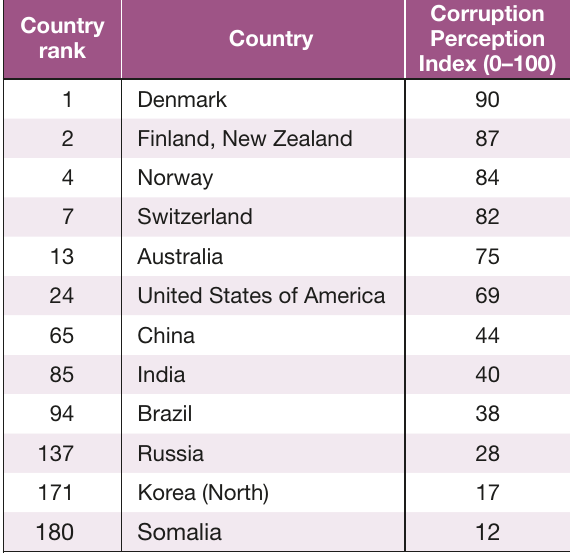
The Corruption Perception Index by Transparency International measures corruption on a scale from 0 (high corruption) to 100 (low corruption). Developed economies generally have lower corruption than developing and emerging economies.
Cultural factors: These are often reflected in legal structures and institutions, influencing economic development. Gender inequality contributes to lower employment, productivity and social development. It represents one of the most widespread horizontal inequalities, with discriminatory laws reducing economic outcomes.
Important
The Economic Cost of Gender Inequality
World Bank research (2022) found that the mortality ratio of women to men is 2.3% lower in countries outlawing domestic violence. In Tanzania, abuse victims experience 60% lower lifetime earnings. The Women, Business and the Law 2023 report found women globally have only three-quarters of men's economic rights. Only 34 women's rights reforms passed in 2022, the lowest in 20 years. This increased women's vulnerability to crises like COVID-19, which pushed 47 million more women into extreme poverty.
Economic policies: Government economic policies substantially impact development, particularly how they balance market forces and government intervention. If all decisions are left to markets, countries may achieve high growth without improving education, health care and quality of life. Excessive government control can constrain entrepreneurship and innovation.
Example
Balancing Markets and Government: Success Stories
Countries with highest human development (like Switzerland and Australia) typically have both strong market economies and significant government investment in human development.
Impact of Economic Systems: Eastern European Transition
When under communist rule (1945-1989) with command economies, Latvia and Poland experienced slower development than after transitioning to market economies. This demonstrates how economic systems fundamentally shape development outcomes.
An IMF paper found that developing economy governments are less able to reduce inequality because they have less comprehensive tax systems and public services. A 2022 Bank for International Settlements paper found inequality increases faster after recessions, with inequality remaining higher five years post-recession than pre-recession levels.
Government responses to globalisation: Government policies relating to trade, financial flows, investment, transnational corporations and participation in regional and global organisations influence an economy's ability to benefit from integration. Benefits include economic restructuring, efficiency gains, access to foreign capital and technology, and access to overseas markets. East Asian economies most open to trade and foreign investment experienced the strongest growth in recent decades.
Summary
Key Points to Remember:
- Global inequality results from both global factors (international economic structures) and domestic factors (characteristics within countries)
- The global trade system, through protectionism, exclusionary blocs and complex agreements, often favours wealthy nations
- Financial flows heavily favour developed and emerging economies, while least developed countries receive minimal investment
- Foreign aid remains below promised levels, and much "phantom aid" and "tied aid" reduces effectiveness
- The digital divide limits developing countries' access to technology and online markets
- Domestic factors including natural resources, labour quality, capital access and entrepreneurial culture significantly affect development
- Institutional factors such as political stability, corruption levels, gender equality and government policies play crucial roles in determining development outcomes
- Understanding both global and domestic causes is essential for addressing inequality in the global economy