Child Soldiers (HSC SSCE Legal Studies): Revision Notes
📚Revision Notes
Child Soldiers
Introduction
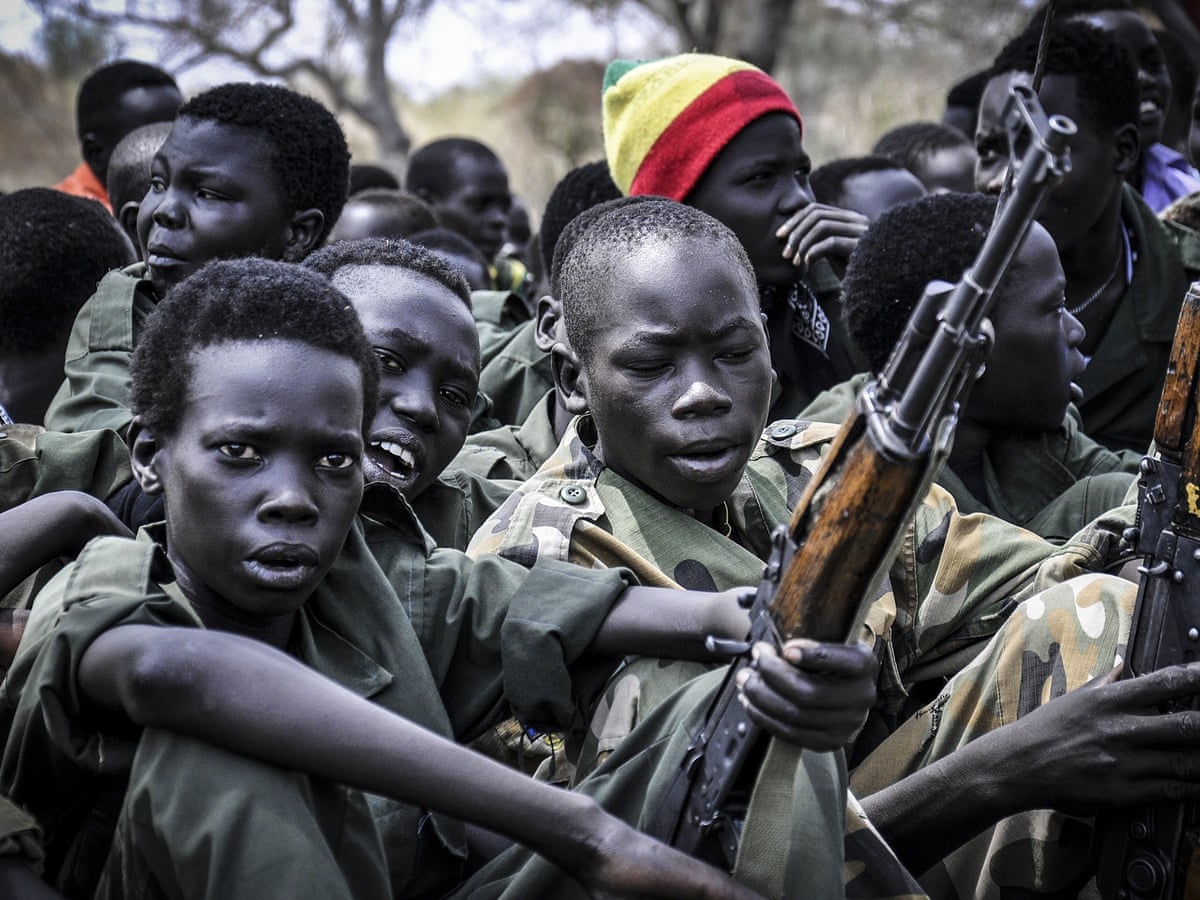
Child soldiers represent a serious contemporary human rights violation affecting thousands of children worldwide. A child soldier is defined as a person under the age of 18 who participates, directly or indirectly, in armed conflict as part of an armed force or group, in either armed or supporting roles.
While children are entitled to the same human rights protection as adults under the Universal Declaration of Human Rights (UDHR), they face particular vulnerabilities. Children typically have less power in society and are more susceptible to victimisation and human rights abuses. Article 25 of the UDHR recognises this by stating that children are "entitled to special care and assistance". The 1959 Declaration of the Rights of the Child expanded on this protection, emphasising that children need "special safeguards and care, including appropriate legal protection, before as well as after birth".
Note
The recognition that children require special protection reflects their developmental vulnerability and limited capacity to protect themselves from exploitation and abuse. This principle forms the foundation for all international child protection frameworks.
Despite significant progress in children's rights, many children globally continue to suffer violations including denial of education, unfair trials, violence, and cruel punishment. In some regions, children are recruited into armed forces as child soldiers.
Historical context
Children have participated in military campaigns throughout history, even when such use was widely condemned. Historical examples include:
- The Children's Crusade of medieval Europe (1212)
- Drummer-boys under Napoleon at the Battle of Waterloo
- Young militia in the Spanish Civil War
- Hitler Youth in Nazi Germany during World War II
- John Clem in the American Civil War
- Chinese child soldiers in Burma during World War II
Throughout the 20th century, international campaigns sought to stop children's participation in armed conflict and raise awareness of their exploitation. However, the practice remains widespread in unstable regions today.
Important
Despite centuries of moral condemnation, the use of child soldiers has persisted across different cultures, conflicts, and time periods. This historical pattern demonstrates that moral disapproval alone is insufficient without strong legal frameworks and enforcement mechanisms.
The contemporary issue
Nature of the problem
The use of child soldiers constitutes a form of contemporary slavery (forced or bonded labour under threat of violence) and human trafficking (commercial trade in human beings for slavery purposes, using force, coercion or deception). Children in armed conflict face:
- High levels of danger and abuse
- Significant psychological trauma
- Frequent injury or death
- Sexual exploitation (particularly girls)
Many children are claimed to join "voluntarily", but this typically involves coercion, force, deception, or circumstances where the child sees no alternative for survival.
Important
The Myth of "Voluntary" Recruitment
When armed groups claim children join "voluntarily," this almost always involves:
- Coercion or threats to the child or their family
- Deception about what joining will entail
- Desperate circumstances where the child sees no other option for survival
- Psychological manipulation of vulnerable children
True voluntary consent requires full understanding and genuine freedom of choice - conditions that children in conflict zones rarely possess.
Why children are targeted
Armed groups recruit children for several strategic reasons:
- Free and expendable labour - children represent a low-cost resource
- Easier to manipulate - children are psychologically vulnerable and may be more easily controlled through indoctrination
- Willing to take risks - children may lack full understanding of danger
- Tactical advantage - opposing forces may be less willing to suspect or attack children
- Vulnerability - children can be drawn into conflicts they are too young to resist or fully understand
Recruitment methods
Recruiters can include:
- Government forces
- Paramilitary organisations
- Rebel groups
Recruitment locations and methods:
- Abduction from homes, streets, or schools
- Physical kidnapping by recruiters
- Forced conscription by governments
- Press-ganging (forced conscription, historically used in England during the 1800s)
- Economic or social pressure (children believing the group will provide food or security)
Technological factors
Recent advances in weaponry have contributed to increased child soldier use. Small arms and lightweight automatic weapons are simpler and lighter for children to operate. Some armed groups administer drugs to make child soldiers more dangerous or less fearful.
Note
In Sierra Leone, children were reportedly given mixtures of gunpowder and cocaine before battle to reduce fear and increase aggression. This drug use compounds the psychological trauma these children experience and makes their behaviour more unpredictable and dangerous.
Extent of the issue
Global statistics
Calculating exact numbers is difficult because:
- Many children serve in rebel forces where reliable data is unavailable
- Some countries have inadequate age verification procedures
- Low birth registration rates in some regions enable inadvertent or deliberate recruitment
Estimated figures:
- 2007: UN and Human Rights Watch estimated – children serving in armed conflicts
- 2007: UN reported armed groups worldwide using child soldiers
- Current estimates: Many tens of thousands across Africa, Asia, the Middle East, and South America
Geographic distribution
Recent conflicts involving child soldiers include:
- Sri Lanka
- Uganda (Lord's Resistance Army - over children kidnapped)
- Colombia
- Myanmar (Burma)
- Iraq
- Israel and Occupied Palestinian Territories
- Sudan
- Democratic Republic of Congo
Demographics
Age ranges:
- Majority: – years old
- Some countries: children under years
- Extreme cases: children as young as years old
Gender distribution: In countries like Uganda, Sri Lanka, and Nepal, one-third or more of recruited children were girls. Girls face additional risks including:
- Rape and sexual harassment
- Being given to commanders as "wives" under forced marriage arrangements
- Sexual slavery
Important
Legal Status and War Crimes
- Recruitment of children under years constitutes a war crime under international law
- Between ages –, recruitment may be legal under some national laws despite international condemnation
- The Optional Protocol to the Convention on the Rights of the Child sets the standard at years for direct participation in hostilities
Conditions and treatment
Child soldiers typically endure:
- Hazardous tasks (laying land mines, explosives, suicide missions)
- Harsh living conditions
- Inadequate healthcare
- Food deprivation
- Cruel and brutal treatment (beatings, humiliation)
- Severe punishment for mistakes or escape attempts
- Inability to leave without facing punishment
- Forced or indoctrinated commission of atrocities (sometimes against own families or neighbours)
- Stigmatisation in communities, making return home impossible
Note
The stigmatisation child soldiers face upon return is a critical barrier to reintegration. Communities may view them as perpetrators rather than victims, particularly if they were forced to commit atrocities against their own people. This creates a cycle of exclusion that can drive children back to armed groups.
Forms of use
Child soldiers are exploited in three main ways:
1. Direct involvement in armed conflict
Children are armed with weapons and expected to participate actively in fighting.
2. Indirect involvement through support roles
Children serve as:
- Messengers
- Scouts
- Cooks
- Porters
- Servants
- Land mine layers or clearers
- Sexual slaves
3. Use for political advantage
Children are exploited for:
- Propaganda purposes
- Human shields (placement of civilians in or around military targets to deter enemy attacks)
Case studies
Example
Case Study: Democratic Republic of Congo - Lucien (age 11)
A militia group abducted Lucien and eleven classmates from school. After being tied up and stabbed in the stomach for resisting, Lucien submitted to military training. Sixty children underwent severe training, with those resisting being beaten.
Lucien witnessed deaths from starvation and illness, with twelve children sharing one plate of maize daily. After several years in captivity, Lucien escaped and now lives with a host family.
Key elements: School abduction, physical violence for resistance, starvation conditions, limited food rations, eventual escape
Example
Case Study: Burma - Aung (age 11)
Army recruiters picked up Aung while travelling home. When he tried to refuse, soldiers threatened him with six years' imprisonment. Believing he had no choice, Aung joined. During training, he was repeatedly beaten.
At age he was sent into combat, and at he witnessed his unit murder fifteen women and children. At , Aung escaped to Thailand, found illegal work, and feared discovery that would result in arrest and endanger his family.
Key elements: Forced recruitment through threats, underage combat deployment, witnessing atrocities, ongoing fear after escape
Example
Case Study: Uganda - Charlotte (age 14)
Lord's Resistance Army (LRA) rebels abducted Charlotte and 139 other girls from their Catholic boarding school dormitories. They were marched to a military camp in Sudan. Charlotte received 35 days of military training before being sent to fight government forces.
She was given to an older male soldier as a "wife" and gave birth to two children in captivity, nearly dying during her first delivery. After eight years, Charlotte and her children escaped and reunited with her family. She has returned to school.
Key elements: Mass school abduction of girls, forced marriage, sexual slavery, childbirth in captivity, long-term captivity, successful reintegration
Example
Case Study: Colombia - Estelle (age 11)
Estelle "voluntarily" joined FARC guerrillas at age to escape physical and sexual abuse at home. She believed FARC would offer protection and support. However, upon joining, she was told that attempting to escape would result in a death sentence.
Before managing to escape at age , Estelle was forced to kill and lived in constant fear of being killed.
Key elements: "Voluntary" recruitment driven by desperation, false promises of protection, death threats preventing escape, forced participation in killing
Legal responses
International responses
Although child soldier use has historically been condemned as morally wrong, a proper international legal framework only emerged recently.
Geneva Conventions and Additional Protocols (1977)
The Geneva Conventions are four treaties adopted between 1864–1949 to regulate armed conflict conduct and limit its effects. In 1977, Additional Protocols first addressed child soldiers specifically, setting the minimum age for recruitment or use at 15 years for both government and non-government parties. This standard is now customary international law and cannot be violated anywhere globally.
Convention on the Rights of the Child (1989)
One of the most important international human rights treaties, now almost universally adopted. Article 38 addresses children in armed conflict by:
- Restating the minimum recruitment age at years
- Discouraging recruitment of children under years
- Creating obligations to minimise harm to all children during armed conflicts
Rome Statute of the International Criminal Court (1998)
Established a permanent court to try persons for war crimes, crimes against humanity, and genocide. Recruiting children under 15 years into armed forces or using them in hostilities was specifically designated as a war crime triable by the International Criminal Court (ICC). The Rome Statute entered into force on 1 July 2002.
Note
The Rome Statute's designation of child recruitment as a war crime represented a significant breakthrough. For the first time, individuals could be held personally criminally responsible in an international court for using child soldiers, not just morally condemned.
Worst Forms of Child Labor Convention (1999)
Prohibits forced or compulsory recruitment of children under for direct use in armed conflict, defining it as one of the worst forms of child labour alongside other slavery forms and sexual exploitation. Over countries have ratified this treaty.
Optional Protocol to the Convention on the Rights of the Child (2000)
The most important and comprehensive treaty on child soldiers, entering into force in 2002. The Optional Protocol:
- Sets minimum age for direct participation in hostilities or compulsory recruitment at 18 years
- Raises absolute minimum voluntary recruitment age to 16 years
- Requires safeguards for recruitment
- Calls for government cooperation to end child soldier use
- Provides for support and rehabilitation of former child soldiers
- Has been ratified by over countries
Important
Reservations Undermine Standards
Many countries including Australia and the US signed with reservations lowering the recruitment age to years. These reservations weaken the treaty's effectiveness and demonstrate the gap between international ideals and national practices, even among developed nations that advocate for children's rights.
Domestic responses
Australia
Criminal Code Act 1995 (Cth) amendments: Following ratification of the Rome Statute (2002) and Optional Protocol (2006), Sections 268.68 and 268.88 were added to criminalise:
- Use, conscription or enlistment of children under years for armed groups or forces (excluding national armed forces)
- Use, conscription or enlistment of children under years for national armed forces
Australian Defence Force (ADF) recruitment:
- Minimum compulsory conscription age under s 59 Defence Act 1903 (Cth): years
- Minimum voluntary recruitment age: years (with birth certificate and written parental consent)
- ADF must fully inform children of duties and ensure "genuinely voluntary basis"
- Application age: years and months
- Interest registration: from age years
Note
In 2007, almost young people under served in ADF, though no records exist of under-18s being deployed to operation areas. A 2005 ADF Ombudsman report recommended reviewing costs and benefits of accepting children for enlistment with a view to raising the age to years. The Defence Department rejected this, claiming it would "severely restrict the quality and quantity of recruits".
United States
The Child Soldiers Accountability Act (2008) allows the US to:
- Prosecute individuals domestically who knowingly recruited children or served as child soldiers (in or outside the US)
- Deny entry to such people
The US Army acknowledged that nearly seventeen-year-old soldiers were deployed to Iraq and Afghanistan between 2003–2004. Recent years have seen dramatic increases in under-18 military recruitment due to increased bonuses and lowered educational requirements.
Other domestic prosecutions
Few known domestic prosecutions exist for child soldier recruitment or use, with exceptions including:
- Some cases in the Democratic Republic of Congo (DRC)
- Truth commissions in Sierra Leone, Timor-Leste, and Liberia that addressed child soldier issues
Case study: Prosecutor v. Thomas Lubanga Dyilo
Example
Landmark Case: Prosecutor v. Thomas Lubanga Dyilo
Background: In 2006, Thomas Lubanga Dyilo of the DRC became the first person arrested under an ICC warrant. In 2009, his trial became the ICC's first ever trial. As a rebel militia leader, he was accused of conscripting child soldiers during 2002–2003 conflicts in the DRC.
Context: Conflict in north-eastern DRC involved competition for land, later entangled with larger conflicts over mineral and diamond deposits involving ethnic groups from Rwanda and Uganda. Many children were recruited into armed groups on all sides. Without accountability, widespread atrocities occurred including killing and horrific sexual violence. By 2004, approximately four million people had died from disease, starvation, and direct killings.
Lubanga allegedly served from 2002 as commander-in-chief of the Patriotic Forces for the Liberation of Congo. In March 2004, the DRC government authorised the ICC to investigate and prosecute international crimes relating to the conflict.
Charges: Lubanga faced the following war crimes:
- Enlisting and conscripting children under years and using them to participate actively in hostilities (international armed conflict context, September 2002–June 2003) - Article 8(2)(b)(xxvi) Rome Statute
- Enlisting and conscripting children under years and using them to participate actively in hostilities (non-international armed conflict context, June–August 2003) - Article 8(2)(e)(vii) Rome Statute
Human rights organisations claimed Lubanga maintained around child soldiers aged – years. He reportedly ordered every family in his controlled territory to donate money, a cow, or a child to his militia.
Trial process:
- Arrest: March 2005
- Transfer to ICC in The Hague: March 2006
- Multiple preparatory hearings to determine evidence, victim and witness testimony, and trial procedures
- Eight legal representatives represented victims
- Trial commencement: 26 January 2009
- By early 2010, prosecution and defence cases completed, with witness testimonies heard
The trial received extensive international attention and controversy, with the world watching to assess the ICC's effectiveness in achieving justice for victims.
Significance: This case represents a landmark in international criminal law, being the first ICC prosecution specifically for child soldier war crimes. It tests the court's power to hold individuals accountable and serves as a potential deterrent for future offenders.
Non-legal responses
International responses
United Nations agencies
Monitoring role: The UN plays a crucial role in monitoring child soldier use worldwide. The International Labour Organization (ILO) and UN Children's Fund (UNICEF) conduct research and studies on the problem, provide recommendations to the UN and member states, and promote treaty obligations.
UN Security Council resolutions: Recent resolutions (particularly 2004 and 2005) have:
- Condemned child soldier use
- Called for rigorous monitoring and reporting systems of abuses
- Enabled regular research, monitoring and reporting on compliance by all countries
- Increased exposure of abuses
Non-governmental organisations (NGOs)
International NGOs conduct important work in:
- Monitoring and reporting on the issue
- Educating the public
- Lobbying governments and international organisations for action
Coalition to Stop the Use of Child Soldiers: The most significant international NGO, formed in May 1998 by leading humanitarian and human rights organisations including Amnesty International and Human Rights Watch.
Note
Purpose of the Coalition:
- Preventing recruitment and use of children as soldiers
- Securing demobilisation of child soldiers
- Ensuring rehabilitation and reintegration into society
Activities:
- Public education on the issue
- Research and monitoring
- Periodic "Global Reports" on all countries
- Lobbying individual governments and international organisations (particularly the UN)
- Active links with UNICEF, ILO, and the International Committee of the Red Cross
Headquarters: London
The Coalition represents a unique model as an organisation comprising many member organisations with a common purpose.
Domestic responses
NGO activities
Many domestic NGOs work on children's rights issues, including child soldiers, particularly in countries where recruitment is a significant problem.
Red Hand Day campaign
A strong international movement enabling local groups, individuals, schools, and institutions to participate in global efforts to raise awareness. Red Hand Day occurs on 12 February annually to commemorate and draw attention to child soldiers.
Activities include:
- Fundraising
- Showing support
- Educating others
- Lobbying governments for action
The campaign has proved hugely successful with worldwide participation, particularly in schools.
Rehabilitation programmes
Groups and individuals assist former child soldiers by:
- Helping relocate families
- Supporting return to education
- Providing vocational training
- Facilitating reintegration into life
Important
Rehabilitation programmes are critical because they address not only the immediate needs of former child soldiers but also help break the cycle that might lead to re-recruitment. Without support for education, vocational training, and psychological recovery, former child soldiers remain vulnerable to returning to armed groups.
Media role
The media plays an important role in:
- Informing the public about child soldier existence and problems
- Creating films, books, and documentaries
Note
Example: Blood Diamond
The 2006 film Blood Diamond focused on horrific aspects of the diamond trade in parts of Africa, including child soldier recruitment and use in diamond-related conflict areas. Films with wide audience appeal effectively focus global attention on the issue and can influence consumer behaviour and policy decisions.
Effectiveness of responses
Progress and challenges
According to the Coalition to Stop the Use of Child Soldiers, progress has been made but significant challenges remain. Their 2008 Global Report states:
Ultimately, if the international community is to make good its promise to protect children from military exploitation, the level of political will, the amount of human and financial resources, the adherence to established best practice and the quantity as well as the quality of collaborative effort and imaginative endeavour must all be multiplied.
Despite significant international efforts, particularly over the last decade with groundbreaking human rights treaties, progress has been slow. Tens of thousands of children currently involved in armed forces have yet to feel the impact.
Enforcement mechanisms
Strengths:
- Establishment of the ICC and first trial for child soldier charges is encouraging
- International framework is stronger than ever before
- Treaties have been rapidly and widely ratified
Weaknesses:
- ICC prosecutions represent only "the tip of the iceberg"
- More must be done to make child recruitment less attractive
- Enforcement mechanisms need strengthening
- Political will is needed at all levels
Important
The Enforcement Gap
While the international legal framework for protecting children from military exploitation is now comprehensive and widely ratified, enforcement remains the critical weakness. The ICC can only prosecute a handful of high-profile cases, leaving thousands of recruiters and commanders unpunished. This gap between law and enforcement allows the practice to continue.
Root causes
Effectiveness will be limited unless root causes are addressed:
- Poverty - economic conditions that make children vulnerable
- Ongoing conflicts - instability creating opportunities for recruitment
- Lack of rule of law - weak legal systems unable to prevent or prosecute violations
- Human rights deficits - broader issues of rights protection in affected countries
Tackling these underlying issues is essential for long-term prevention of child soldier exploitation.
Note
Exam guidance: Evaluating effectiveness
When evaluating effectiveness of responses to child soldiers:
- Consider both legal (treaties, prosecutions) and non-legal (NGOs, media, education) measures
- Assess the gap between international standards and on-the-ground reality
- Analyse enforcement challenges in conflict zones with weak governance
- Discuss the importance of addressing root causes alongside legal mechanisms
- Use specific examples (Lubanga case, specific countries) to support arguments
- Consider resource and political will constraints
When analysing the issue:
- Link child soldier use to broader concepts of human trafficking and contemporary slavery
- Examine the vulnerability factors that make children targets
- Consider the tension between state sovereignty and international intervention
Summary
Key Points to Remember:
- Child soldiers are persons under 18 participating in armed conflict in armed or supporting roles
- Recruiting children under years is a war crime under international law; under years violates Optional Protocol standards
- Children are exploited in three main forms: direct combat, support roles, and political advantage (including as human shields)
- Key international instruments: Geneva Conventions (1977), Convention on the Rights of the Child (1989), Rome Statute (1998), and Optional Protocol (2000)
- The ICC trial of Thomas Lubanga Dyilo represents the first international prosecution specifically for child soldier war crimes
- Effectiveness remains limited due to enforcement challenges and the need to address root causes (poverty, conflict, weak rule of law)
- Coalition to Stop the Use of Child Soldiers is the primary international NGO working on this issue through monitoring, advocacy, and education
- Both legal (treaties, prosecutions) and non-legal (NGOs, media, rehabilitation programmes) responses are necessary but require greater political will and resources to achieve meaningful protection for children