Origins (HSC SSCE Studies of Religion): Revision Notes
📚Revision Notes
Origins
Introduction to Hinduism
Hinduism refers to India's primary religious tradition and differs significantly from other major world religions. Unlike Christianity, Islam, or Buddhism, Hinduism has no single founder or specific time of establishment. Its origins extend into the distant past, with some adherents considering it eternal.
Hinduism is not a single, unified religious tradition but rather a complex collection of beliefs and practices that have developed over thousands of years. The tradition encompasses multiple layers and influences, including:
- Animism – the belief that spirits inhabit all objects and influence both people and natural events
- Vedism – the early religious system of India that eventually developed into Hinduism
- Bhakti movement – a devotional movement within Hinduism
The diversity within Hinduism is extensive, ranging from the Vedic tradition to various regional expressions. Four significant divisions of popular Hinduism are commonly recognised: Vaishnava (followers of Lord Vishnu), Shaiva (followers of Shiva), Shakti (followers of the goddess Devi), and Smartas (who recognise five deities as equals). This diversity means that any study of Hinduism can only reflect general ideas, as the tradition varies considerably across different regions and communities.
Important
The extensive diversity within Hinduism means that generalizations about the tradition must be approached with caution. What is true for one Hindu community or region may not apply to another, making comprehensive statements about "Hinduism" inherently limited.
Early inhabitants of the Indus valley
There are competing theories about how India's major religious traditions developed. One older theory suggests that India experienced an invasion or migration of people groups from outside. Another theory proposes that local inhabitants developed sophisticated cultures in India thousands of years before any proposed invasion, and that modern Indian civilisation developed from these indigenous communities. Archaeological discoveries during the twentieth century have provided important evidence supporting the antiquity of these civilisations.
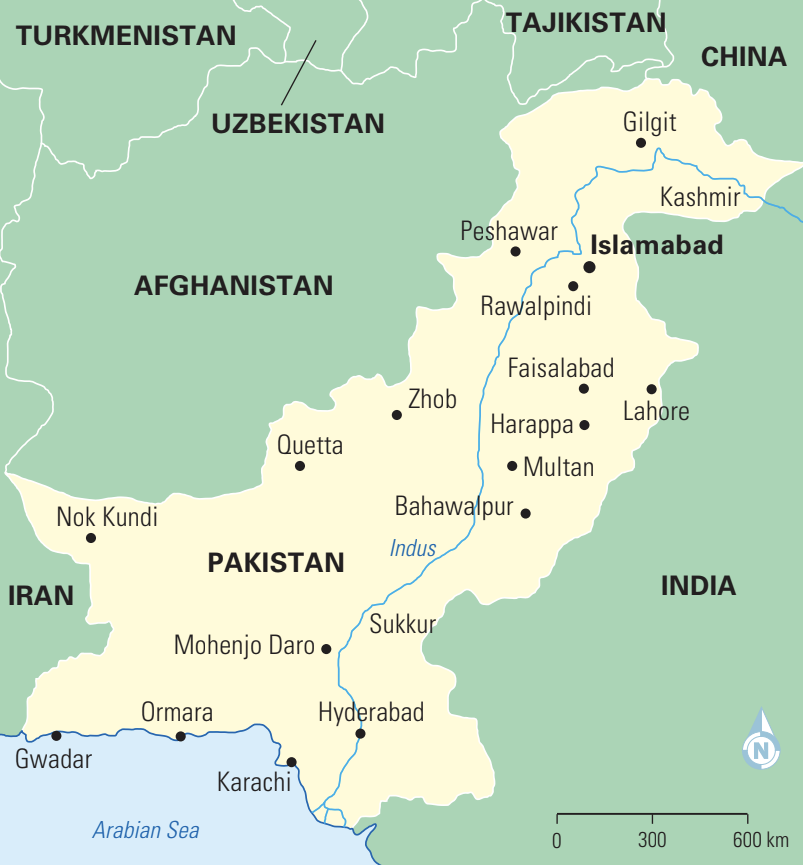
Harappan civilisation (from 3200 BCE)
Archaeological excavations in 1926 revealed large ancient cities along the Indus valley. The two most significant settlements were Harappa and Mohenjo Daro, located approximately 500 kilometres apart. These cities date back to at least 2700 BCE, though they are likely much older. Evidence suggests that Harappan culture may have continued to influence India for thousands of years.
The ruins demonstrate remarkably sophisticated urban planning. Archaeologists have discovered numerous clay seals and tablets bearing writing, though this script remains undeciphered. Some scholars even question whether these symbols represent an actual language.
Note
The Great Bath of Mohenjo Daro
One particularly significant religious site at Mohenjo Daro is a large ceremonial bath, measuring 3 metres deep. This structure was designed to be fed by a well and included drainage systems. The purpose of this bath remains uncertain – it may have been used for ritual washing or could relate to agricultural practices, as cattle motifs are carved into the walls.
While considerable uncertainty exists about Harappan religious practices, some scholars suggest connections to modern Hindu traditions. The concept of ritual bathing may have ancient roots, as contemporary Hindu shrines include drains that allow priests to wash deities with various liquids, including milk and clarified butter (ghee) during worship ceremonies (puja). The sacred status of cattle in modern India may also trace back to Harappan culture.
Some researchers speculate that an early deity similar to the Hindu god Shiva was worshipped during this period. This religion and culture has often been identified as Dravidian – referring to a language and cultural group believed to be indigenous to the Indian subcontinent. Dravidian religion is often characterised as animistic with an emphasis on nature worship. However, the relationship between Dravidian and later Indo-Aryan influences on Hinduism remains a subject of intense scholarly debate.
The arrival of Indo-Aryan people (circa 1500 BCE)
One influential theory about Hinduism's development centres on the migration of people speaking Indo-Aryan languages, sometimes called the Aryans. This theory suggests that around 1500 BCE, groups of Indo-European people migrated to India from the north, possibly originating from Central Asia, Russia, Eastern Europe, or even Scandinavia.
According to this theory, these nomadic peoples possessed advanced military technology, particularly spoked-wheeled chariots, which gave them significant military advantages. They herded cattle and gradually expanded outward from their original homeland. Groups moving westward became the ancestors of Europeans, whilst others migrated into India from the north, bringing similar languages with them. This theory helps explain the linguistic connections between Western European and Indian languages in terms of vocabulary and grammar.
Important
The Aryan Debate
Recent Western and Indian scholars have challenged this invasion or migration theory. An alternative view suggests that India developed independently without external invasion or migration. Some scholars propose that the Aryans were present in India all along and that the Indo-European homeland was actually northern India.
Evidence supporting this alternative theory includes India's third great river, the Sarasvati, which flowed between the Indus and Ganges rivers. Satellite evidence suggests this river may have dried up around 1900 BCE. The disappearance of this water source would have forced civilisations along its banks to relocate. According to this theory, the Aryans left India and spread towards Europe, rather than entering from outside.
Both theories attempt to explain the close linguistic connections between Western European and Indian languages. The debate continues amongst scholars, with no definitive consensus reached.
The Vedic period (prior to 1500 BCE)
During the Vedic period, the religious tradition known as Vedism or Brahmanism began developing into a form that prefigures classical Hinduism. A crucial component of this tradition is a collection of ancient texts called the Vedas. These texts were composed in Sanskrit, an ancient Indian language used for liturgy and various aspects of life.
Considerable debate surrounds the dating of the Vedas. They initially developed as an oral tradition rather than written texts, making precise dating difficult. Less certain theories place the oldest Vedas as far back as 4000 BCE, though more widely accepted scholarship dates them between 1500 and 800 BCE.
Note
The Four Vedas
The Rig Veda (sometimes spelled Rg Veda or Rgveda) is considered the oldest of the four main Vedic texts based on its linguistic style and because other texts quote it, whilst it does not reference them. The other three Vedas are the Sama Veda, Yajur Veda, and Atharva Veda. These texts encompass various literary styles and genres. The oldest portions are prayers likely chanted during sacrificial rituals. The Rig Veda Samhita contains 1,028 hymns, with abbreviated versions appearing in the Sama and Yajur Vedas.
Each Veda includes a philosophical text called the Upanishads, with commentaries added later. The Upanishads hold equal importance to the earlier Vedic hymns and represent a significant development in Hindu thought.
The Atharva Veda differs notably from the other three texts. Rather than containing prayers related to rituals and sacrifice, it includes remedies to ward off evil and incantations for good health. Some scholars suggest it may not be Aryan in origin, potentially providing evidence that Indian religious traditions mixed practices from different cultural sources from an early period.
Scholars believe priests used the Vedas in ritual contexts, a practice that continues today. Ritual sacrifice, particularly homa (giving offerings to a sacred fire), involves burning goods such as clarified butter in a sacred fire. These sacrifices were performed to maintain cosmic order. Priests consider the Vedas to contain both eternal truth and eternal sound. The sound 'om' (or 'aum'), which begins most Vedic prayers, is regarded as the primordial sound of creation itself.
Vedic period transforms into Upanishadic period (circa 800 BCE)
The Upanishads are believed to have developed from approximately 800 BCE onwards. These texts address the relationship between Brahman (the ultimate reality or transcendent principle – the underlying consciousness pervading the universe) and atman (the individual soul or Hindu self). The Upanishads introduced many fundamental Hindu concepts.
These compositions are more personal and speculative in nature compared to the earlier Vedic hymns. They develop themes found in the Vedic material but explore them through philosophical debates and dialogues. The Upanishads form the foundation of Indian philosophical speculation.
Note
The Meaning of Upanishad
The word 'upanishad' means to 'sit by a master' and refers to the 'secret connection between things'. These texts take the form of dialogues between teachers and disciples as students learn profound truths. The Upanishads first developed the concept of karma – the effects of one's actions in life, whether good or bad, and the natural consequences that follow from these actions.
Possible rapid development of religious life
The Upanishadic period witnessed a possible expansion in religious building activity throughout India. Scholars interpret this as evidence of the Vedic religion spreading more broadly amongst the population. The rise of cities (urbanism) may have contributed to this development.
India's numerous deities – with numbers ranging from 33 gods in heaven to 330,000 gods, or even 33 million according to some accounts – continued to be worshipped in their variety. However, certain families or systems of gods grew in popularity, particularly the manifestations (avatars) of Lord Vishnu and the family of Shiva.
Over time, various traditions evolved from the ritually focused Vedic religious culture towards 'renouncer' traditions. This shift is evident in the asceticism of emerging Buddhism and Jainism, and the rise of the sannyasi (renunciate) in Hinduism.
The Upanishadic period was followed by approximately 1,000 years of continuous religious development, known as Hinduism's classical period, extending from about 500 BCE to 500 CE. During this era, India's great religious epics were codified from earlier myths, written, rewritten, and edited. From this period of intense activity, Hinduism emerged in a form similar to contemporary expressions.
Challenges in studying Hinduism
Several important challenges accompany the study of Hinduism that students should understand:
Important
Hinduism is not a unified system
Rather than representing a single, coherent set of beliefs, Hinduism encompasses a collection of vastly different religious practices labelled as one tradition. This diversity has developed over thousands of years and includes significant variations. When discussing Hinduism, acknowledging this diversity is essential.
Important
Hinduism is a complete worldview
Hinduism is not merely a religion involving worship – it constitutes a complete way of living and perceiving the world. German philosophers use the term 'Weltanschauung' (worldview) to describe such all-encompassing perspectives. In English, the word 'civilisation' comes close but is not exact. Some individuals recognise their cultural heritage as Hindu but do not believe in the sacred or supernatural aspects of the tradition. They are atheists, yet maintain a deeply Hindu cultural perspective.
Note
The term 'Hindu' has external origins
The word 'Hindu' derives from the Persian word 'Sindhu', which described the Indus River and surrounding region. Muslim administrators and the Hindu population themselves used this term around the fourteenth century CE. The word 'Hindus' also identified people in India who were not Muslim, Buddhist, or Christian – those who followed traditional Indian systems of life. These systems are often based on concepts of samsara (reincarnation) and karma.
Later, the British found the term useful when conducting censuses of their empire, needing a category to identify people living in South Asian regions they were conquering. Thus, the term 'Hindu' was largely imposed from outside rather than emerging from within the tradition itself.
Sanatana dharma
In the nineteenth and twentieth centuries, Hindu thinkers adopted 'sanatana dharma' as a common term to describe Hinduism. Sanatana literally means 'eternal', having no beginning and no end. The word dharma has no direct equivalent in Western languages and is commonly misunderstood when translated as 'religion'.
Note
Multiple Meanings of Dharma
The meaning of dharma varies depending on context and can include:
- Morality
- Virtue
- Religion
- Religious merit
- Justice
- Right
- Duty
- Conduct
- Good work according to a right or rule
- Everlasting religion, truth, or law
Sanatana dharma often refers to the duties and religiously ordained practices of Hinduism. It may be considered a philosophical interpretation of the religion rather than simply its expression. Adherents link concepts such as reincarnation, karma, and the practice of yoga to attaining connection with the divine. Other conditions, such as the stages of human life, are also related to sanatana dharma.
Summary
Key Points to Remember:
- Hinduism has no single founder or date of origin – it developed over thousands of years from multiple influences including animism, Vedism, and devotional movements
- The Harappan civilisation (from 3200 BCE) provides the earliest archaeological evidence of sophisticated urban culture in the Indus valley, with possible connections to later Hindu practices
- Competing theories exist about Indo-Aryan migration (circa 1500 BCE): some scholars propose external migration or invasion, whilst others suggest indigenous development
- The Vedas are ancient sacred texts composed in Sanskrit, initially as oral traditions, containing hymns, prayers, and rituals fundamental to Hindu practice
- The Upanishadic period (from circa 800 BCE) marked a shift towards philosophical speculation, introducing key concepts like Brahman (ultimate reality), atman (individual soul), and karma (consequences of actions)
Key Terms:
- Animism – belief that spirits inhabit all objects
- Vedism – early religious system that developed into Hinduism
- Dravidians – indigenous people of the Indian subcontinent
- Aryans – Indo-European people who possibly migrated to India circa 1500 BCE
- Vedas – earliest sacred texts of Hinduism
- Sanskrit – ancient liturgical language of India
- Homa – ritual offerings to sacred fire
- Om – primordial sound of creation
- Brahman – ultimate reality pervading the universe
- Atman – individual soul
- Karma – consequences of one's actions
- Upanishads – philosophical texts exploring relationship between Brahman and atman
- Sanatana dharma – eternal duty/law; term used by Hindus to describe their tradition
Exam Guidance:
When evaluating the origins of Hinduism, examiners look for acknowledgement of the diversity and complexity of the tradition. Strong answers will discuss competing theories (such as the Aryan migration debate) whilst recognising scholarly uncertainty. Always demonstrate awareness that Hinduism is not a monolithic tradition with a single origin story, but rather a collection of traditions that developed over millennia.