Environmental Selection Pressures (VCE SSCE Biology): Revision Notes
📚Revision Notes
Environmental Selection Pressures
Introduction
The rough-skinned newt (Taricha granulosa) is a remarkable amphibian that produces a powerful chemical in its skin called tetrodotoxin. This nerve agent blocks the transmission of nerve signals, leading to paralysis, asphyxiation, and ultimately death. Tetrodotoxin is approximately 100,000 times more toxic than cyanide and can kill a predator in under 20 minutes. This raises an interesting question: why would such a small creature need such a lethal defence mechanism?
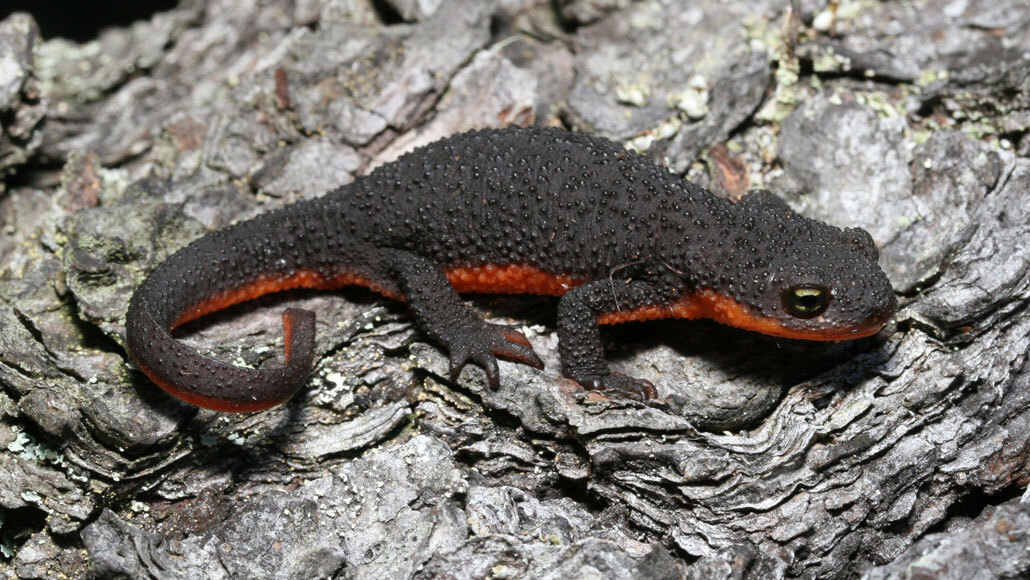
The answer lies in understanding environmental selection pressures and how they drive evolution through natural selection.
What are environmental selection pressures?
Environmental selection pressures are factors in the environment that influence an organism's ability to survive and reproduce. These pressures determine which individuals are best suited to their environment and therefore most likely to pass on their genes.
Common examples of environmental selection pressures include:
- Predation - being hunted by other organisms
- Disease - infections that reduce survival
- Competition - competing for limited resources like food, water, or mates
- Climate change - changes in temperature, rainfall, or other environmental conditions
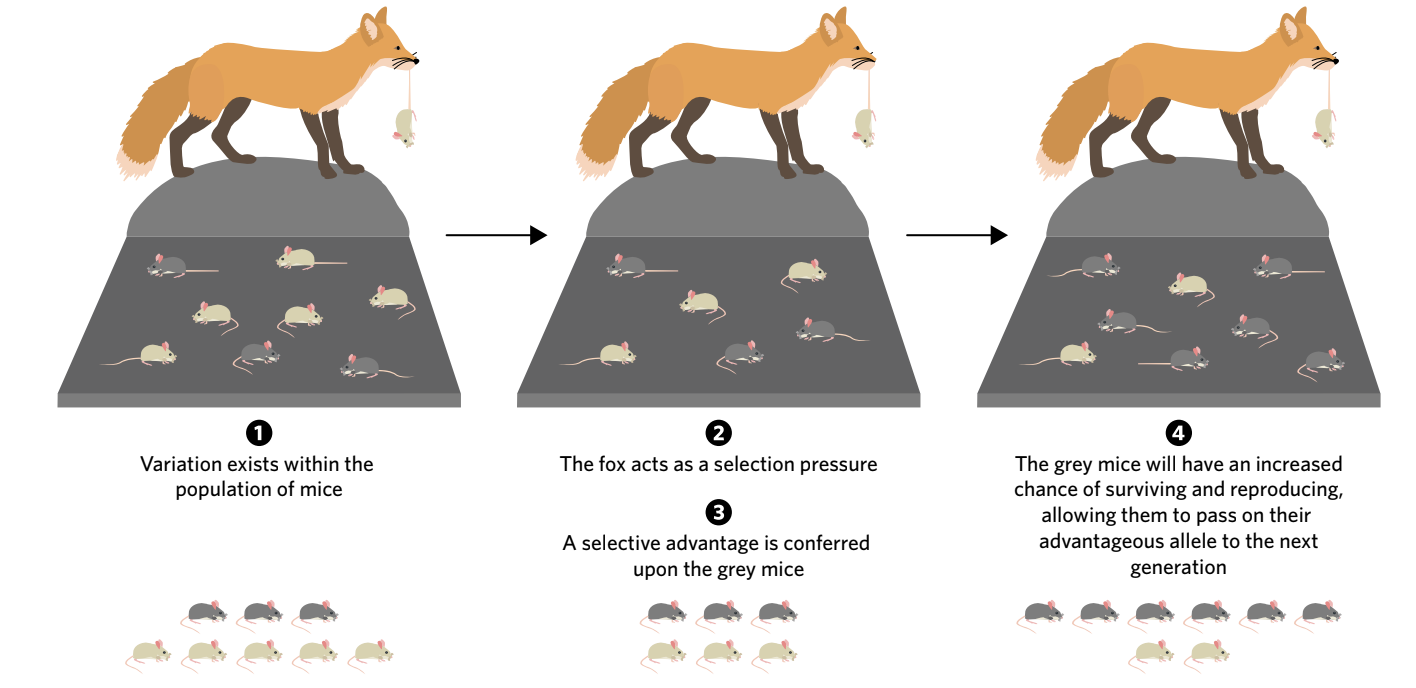
Through these pressures, natural selection occurs. This is the mechanism by which organisms better adapted to their environment have increased chances of surviving and passing on their alleles to the next generation.
Note
Natural selection acts as a filter, allowing organisms with advantageous traits to thrive while those with disadvantageous traits struggle to survive and reproduce. Over time, this process shapes entire populations and drives evolutionary change.
Key concepts in natural selection
Genetic fitness refers to how well an organism survives and reproduces in its environment. Organisms with higher fitness possess an advantageous phenotype - a physical, biochemical, or behavioural trait that increases survival and reproduction in their specific environment.
When an organism has a beneficial allele that helps it survive a particular environmental pressure, it has a selective advantage. This advantage means the organism is more likely to reproduce and pass on its alleles to offspring.
Over time, the allele frequency (the proportion of a particular allele in the gene pool) changes. Advantageous alleles become more common, while disadvantageous alleles become less common or disappear entirely.
The four conditions of natural selection
For natural selection to occur, four essential conditions must be met:
| Condition | Description |
|---|---|
| Variation | Individuals in a population vary genetically, which leads to phenotypic differences |
| Selection pressure | An environmental selection pressure impacts the survivability of organisms within a population and their ability to reproduce |
| Selective advantage | Individuals with phenotypes that are fitter or more advantageous under the environmental selection pressure are conferred a selective advantage, allowing them to survive and reproduce more successfully |
| Heritability | The advantageous trait must be heritable, allowing it to be passed on from the parents to their offspring. Therefore, over time, the frequency of the advantageous allele will increase |
Important
All four conditions must be present for natural selection to occur. If any one of these conditions is missing, natural selection cannot drive evolutionary change in the population.
Memory aid: Remember VSSH - Variation, Selection pressure, Selective advantage, Heritability
These four conditions work together to drive evolutionary change in populations.
Example: The peppered moth
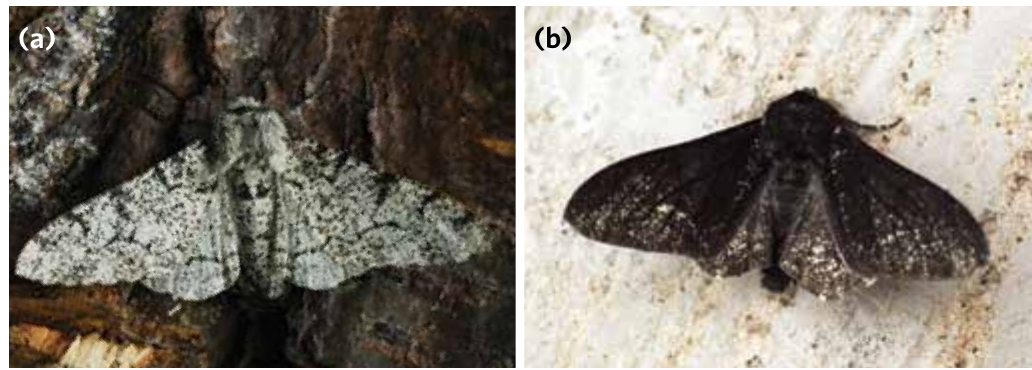
The peppered moth (Biston betularia) provides a classic example of natural selection in action. This species demonstrates how environmental selection pressures can change allele frequencies in a population.
Example
Worked Example: Peppered Moths and Industrial Selection
Let's apply the four conditions of natural selection to understand how peppered moth populations changed during the Industrial Revolution:
1. Variation
The peppered moth population contained genetic variation for body colour. Some moths had white bodies with dark markings, while others had black (melanistic) bodies. This variation existed naturally in the population.
2. Selection pressure
During the Industrial Revolution in England, coal burning produced large amounts of soot that covered trees in industrial areas. This changed the moths' environment dramatically. Additionally, birds that preyed on the moths acted as a selection pressure.
Before industrialisation, white moths were well-camouflaged against light-coloured tree bark and lichens. Black moths were easily visible and frequently eaten by birds. However, when soot blackened the trees, white moths became highly visible against the dark background, while black moths gained excellent camouflage.
3. Selective advantage
In soot-covered environments, black moths had a selective advantage because they could blend into the darkened trees, making them less visible to predatory birds. White moths, now conspicuous against the dark background, were heavily preyed upon.
4. Heritability
Body colour in peppered moths is heritable - it can be passed from parents to offspring through genes. Because black moths survived better and reproduced more successfully, they passed the allele for black colouration to their offspring more frequently. Over successive generations, the frequency of the black allele increased in industrial areas, while the frequency of the white allele decreased.
Result: The proportion of black moths increased from very rare to over 90% in just a few decades in polluted areas.
Exam strategy: Answering natural selection questions
When faced with exam questions about natural selection, apply the four conditions systematically:
Important
Four-Step Approach to Natural Selection Questions:
Step 1 - Variation: Identify what variation exists in the population. What different traits or phenotypes are present?
Step 2 - Selection pressure: Identify the environmental factor(s) affecting the population. What challenges does the environment present?
Step 3 - Selective advantage: Explain which phenotype is advantageous and why. How does this trait help organisms survive and reproduce better than others?
Step 4 - Heritability: State that the advantageous trait is heritable and will be passed to offspring. Explain that over time, the frequency of advantageous alleles will increase while disadvantageous alleles will decrease.
Case study: Cane toads and red-bellied black snakes
This Australian example demonstrates how natural selection can lead to rapid evolutionary change in response to a new environmental pressure.
Cane toads (Rhinella marina) are invasive pests introduced to Australia. They produce a poison that kills most native animals that attempt to eat them. However, research has shown that red-bellied black snakes (Pseudechis porphyriacus) in Queensland have evolved increased tolerance to cane toad poison compared to snakes in areas without cane toads.
Example
Worked Example: Evolution of Toxin Resistance in Red-Bellied Black Snakes
1. Variation
The original population of red-bellied black snakes in Queensland showed genetic variation in their resistance to cane toad toxin. Some individuals had alleles conferring greater resistance than others.
2. Selection pressure
When cane toads invaded, they became an environmental selection pressure. Red-bellied black snakes that ate cane toads were exposed to lethal poison, greatly reducing their survival.
3. Selective advantage
Snakes with alleles providing resistance to cane toad poison had a selective advantage. They could survive eating cane toads, while snakes without these alleles died. This increased their chances of surviving and reproducing.
4. Heritability
The resistance allele is heritable. Resistant snakes survived longer and reproduced more successfully, passing the resistance allele to their offspring. Over multiple generations, the frequency of the resistance allele increased in the Queensland population, making the population overall more resistant to cane toad poison.
How selection pressures affect genetic diversity
Environmental selection pressures don't just determine which organisms survive - they also affect the genetic diversity of populations. Genetic diversity refers to the variation in genetic makeup or alleles within a population.
When natural selection occurs, certain alleles become more common because they provide advantages under current environmental conditions. As these advantageous alleles increase in frequency, genetic diversity tends to decrease. The population becomes more genetically uniform as it adapts to specific pressures.
Note
This creates a trade-off: while natural selection makes populations better adapted to their current environment, it simultaneously reduces the genetic variation that might be needed to adapt to future environmental changes.
Example: Leaf size in plants
Consider a plant population with variation in leaf size. If light becomes limited in their environment, plants with larger leaves may be favoured because larger leaves can capture more light for photosynthesis.
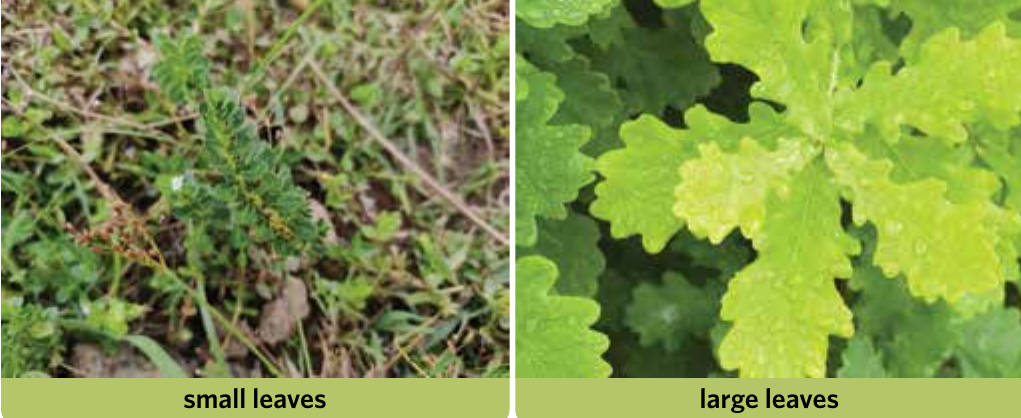
Through natural selection:
- Plants with larger leaves have higher fitness and reproduce more successfully
- The allele(s) for large leaves increase in frequency
- The allele(s) for small leaves decrease in frequency
- Overall genetic diversity decreases as the population becomes dominated by large-leaved plants
The importance of genetic diversity
High genetic diversity is crucial for a species' long-term survival. Here's why:
Better adaptation to change: A population with greater genetic variation has a higher probability of possessing alleles that will help some individuals survive if new selection pressures arise. Different alleles provide different adaptations, so populations with more variation are better equipped to handle environmental changes.
Important
Extinction Risk and Genetic Diversity
Populations with low genetic diversity struggle to adapt to changing environmental conditions. When a new pressure arises (like disease, climate change, or new predators), a genetically uniform population may lack any individuals with suitable adaptations, putting the entire population at risk of extinction.
Key principle: High diversity = High survival chances when the environment changes
Population size matters: Small populations typically have lower genetic diversity than large populations. This makes them more vulnerable to environmental pressures. With fewer individuals, there are fewer alleles present in the gene pool.
Inbreeding problems: Populations with low genetic diversity experience more inbreeding - mating between closely related individuals. Inbreeding can increase the prevalence of harmful recessive alleles, further reducing population fitness and survival.
Returning to the leaf size example
After natural selection has favoured large-leaved plants, the population has reduced genetic diversity. If environmental conditions change - for example, if a drought reduces water availability - the population may struggle to adapt.
During drought, smaller leaves might become advantageous because they lose less water through transpiration. However, because genetic diversity has decreased, few individuals with the small-leaf allele may remain in the population. Without this genetic variation, the population cannot easily adapt to the new pressure, threatening its survival.
Note
This example illustrates why maintaining genetic diversity is essential for long-term species survival. What is advantageous today may become disadvantageous tomorrow as environmental conditions change.
Summary of natural selection
Summary
The Natural Selection Process:
Environmental selection pressures drive natural selection, changing populations over time. The process can be summarised as follows:
- Variation exists in the population due to genetic differences
- Environmental pressures act on the population (predation, disease, competition, climate, etc.)
- Some individuals have advantages - their phenotypes make them better suited to survive the pressures
- Advantageous individuals reproduce more successfully, passing beneficial alleles to offspring
- Allele frequencies change over generations, with advantageous alleles becoming more common
- Genetic diversity decreases as the population becomes more uniform for advantageous traits
- Evolution occurs - the population's genetic makeup changes over successive generations
Evolutionary arms race: Newt and snake
Returning to the rough-skinned newt from our introduction, we can now understand its powerful toxin as the result of natural selection. The common garter snake (Thamnophis sirtalis) is the primary predator of rough-skinned newts. Despite being relatively small (around 55 cm long), these snakes have evolved remarkable resistance to tetrodotoxin.
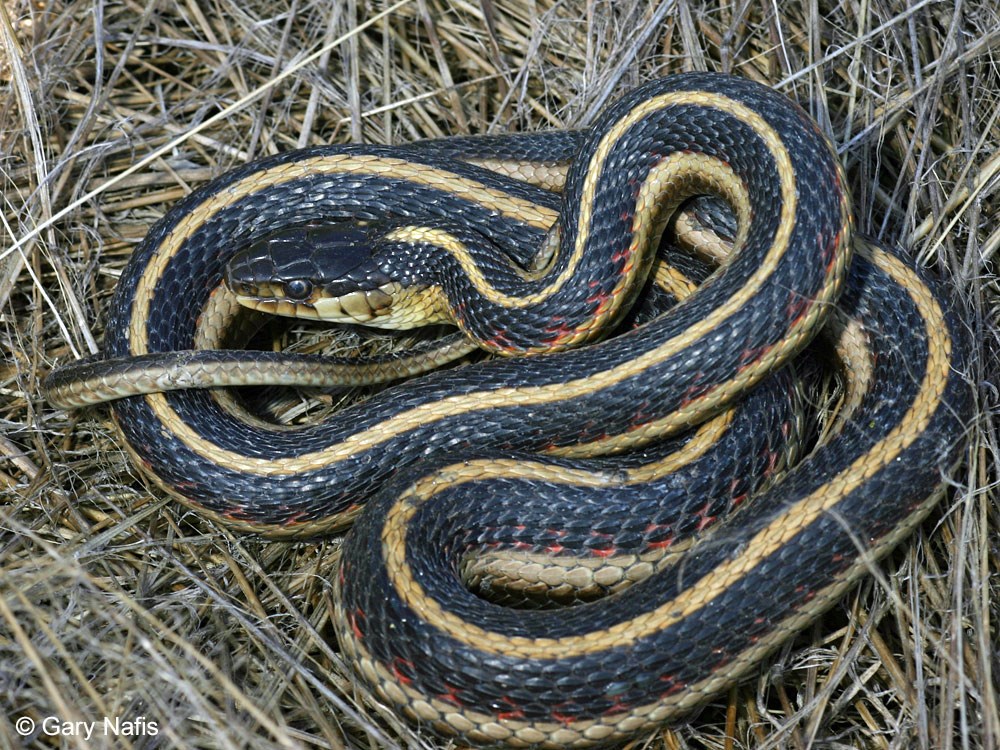
This has created an evolutionary arms race between the two species:
- Newts with higher toxin production have selective advantages because they're less likely to be eaten
- The allele for high toxin production increases in newt populations
- Simultaneously, snakes with greater toxin resistance have selective advantages because they can safely eat toxic newts
- The allele for toxin resistance increases in snake populations
Through natural selection, both species continue to evolve in response to each other - newts producing ever more potent toxins, and snakes developing ever greater resistance.
Note
This co-evolutionary relationship demonstrates that natural selection is an ongoing process. As one species evolves, it creates new selection pressures for other species, driving continuous evolutionary change.
Remember!
Summary
Key Points to Remember:
-
Environmental selection pressures are factors in the environment that affect an organism's ability to survive and reproduce, including predation, disease, competition, and climate change
-
Natural selection requires four conditions: variation in the population, an environmental selection pressure, selective advantage for certain phenotypes, and heritability of advantageous traits
-
Allele frequencies change through natural selection - advantageous alleles become more common, disadvantageous alleles become less common
-
Genetic diversity decreases when selection pressures favour specific alleles, making populations more uniform but potentially less able to adapt to future changes
-
High genetic diversity is essential for species survival because it provides variation that helps populations adapt to new environmental challenges
-
In exam questions, apply the four conditions systematically: identify variation, identify selection pressure, explain selective advantage, and state that advantageous traits are heritable and will increase in frequency