Evolving Pathogens (VCE SSCE Biology): Revision Notes
📚Revision Notes
Evolving Pathogens
Every April, just before flu season, people receive their annual influenza vaccination. After vaccination, our bodies develop an adaptive immune response against the antigens in the vaccine, creating memory cells that provide immunological memory. So why do we need a flu shot every year? Why can't we just rely on the memory cells from one vaccination? The answer lies in how pathogens evolve.

Note
Despite having immunological memory from previous infections or vaccinations, we still need annual flu vaccinations because the influenza virus constantly changes its surface antigens. This means that memory cells from last year's vaccination may not recognise this year's flu strain.
Bacterial resistance to antibiotics
Understanding antimicrobial resistance
Antimicrobial agents play a crucial role in protecting us from harmful pathogens. However, just as we develop new and improved antimicrobial treatments, pathogens are becoming better at fighting back. One of the most serious problems in modern medicine is antimicrobial resistance, where existing treatments no longer work effectively.
Antimicrobial agent is an agent that kills or slows the growth of microorganisms. Examples include antiseptics, disinfectants, antifungals, antivirals, and antibacterial agents.
Antimicrobial resistance is the ability of a microorganism to survive exposure to an antimicrobial agent.
The inappropriate use and overuse of antibiotics have led to the emergence of antibiotic-resistant bacteria, which poses a significant public health risk because these bacteria are extremely difficult to eliminate with existing medications.
How antibiotic resistance develops
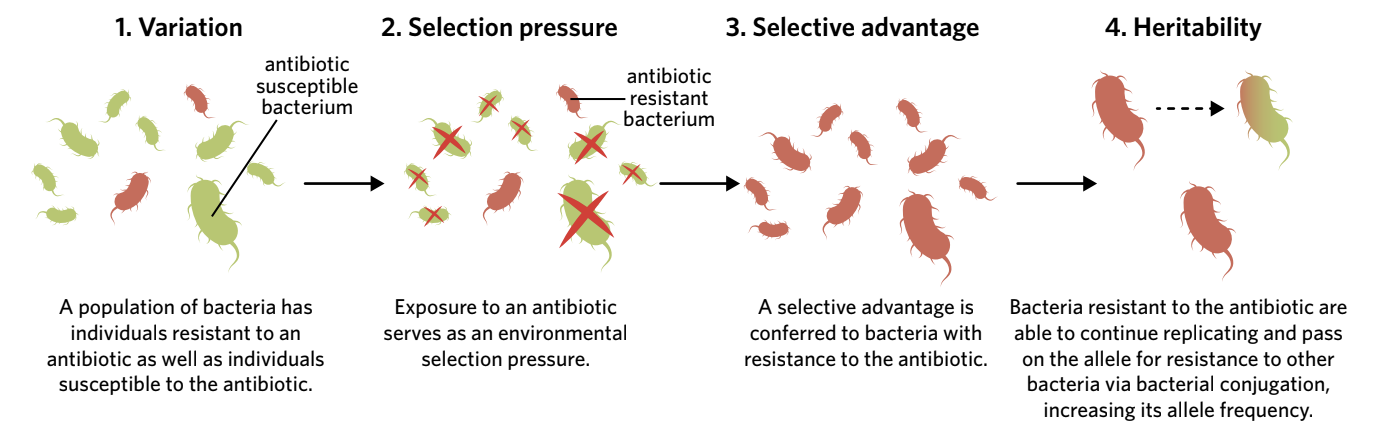
Antibiotic resistance develops through the process of natural selection. When bacteria are exposed to antibiotics, the antibiotic acts as an environmental selection pressure. Bacteria that already possess genes for antibiotic resistance have a selective advantage - they can survive and continue reproducing whilst susceptible bacteria are killed.
This process follows four key stages:
- Variation: Within a bacterial population, some individuals naturally possess resistance to certain antibiotics whilst others are susceptible. This variation already exists before antibiotic exposure.
- Selection pressure: When an antibiotic is introduced, it creates an environmental selection pressure that affects the bacterial population.
- Selective advantage: Bacteria with resistance genes can survive the antibiotic exposure, giving them a selective advantage over susceptible bacteria.
- Heritability: Resistant bacteria continue replicating and pass resistance genes to their offspring. Additionally, through bacterial conjugation, bacteria can exchange genetic material directly with other bacteria, spreading resistance genes even further and increasing their frequency in the population.
Important
Common Misconception: Antibiotics do not cause bacteria to develop resistance. The resistance genes already exist within bacterial populations due to natural genetic variation. Antibiotics simply select for bacteria that already have these resistance genes, allowing them to thrive whilst susceptible bacteria die off.
Bacterial conjugation is the process in which bacteria exchange genetic material via direct cell-cell contact.
Mutation is a permanent change to a DNA sequence.
Mechanisms of antibiotic resistance
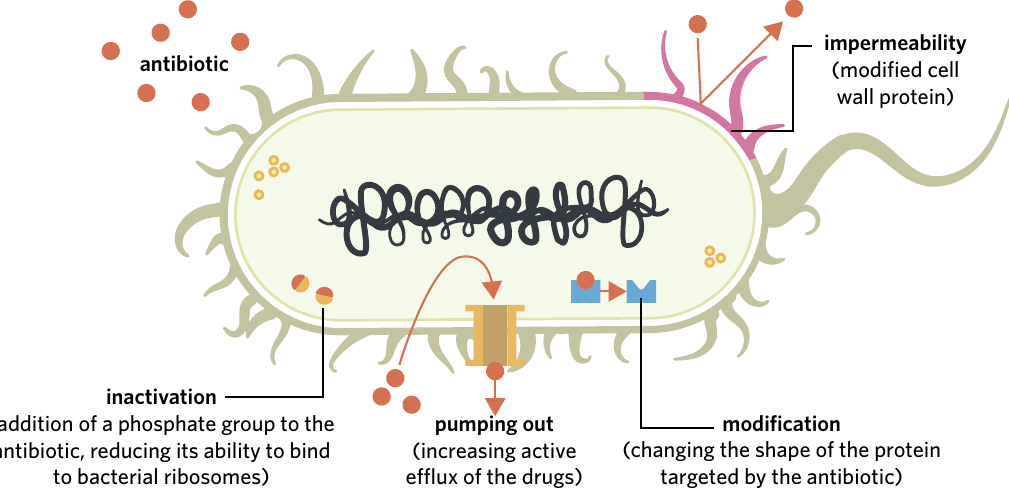
Mutations create new alleles that help bacteria develop various mechanisms to combat antibiotics. These mechanisms include:
- Impermeability: Modified cell wall proteins prevent antibiotics from entering the bacterial cell
- Inactivation: Enzymes modify the antibiotic by adding chemical groups (such as phosphate groups), reducing the antibiotic's ability to bind to its target (such as bacterial ribosomes)
- Efflux pumps: Active transport proteins pump antibiotics out of the bacterial cell before they can take effect
- Target modification: The shape of proteins normally targeted by antibiotics is changed, preventing the antibiotic from binding effectively
Note
Bacteria may use one or more of these resistance mechanisms simultaneously, making them particularly difficult to treat. This is why highly resistant bacterial strains pose such a significant challenge to modern medicine.
Factors contributing to antibiotic resistance
Several factors accelerate the development of antibiotic-resistant bacteria:
- Inappropriate compliance with treatment: When patients stop taking antibiotics prematurely (for example, when feeling better), the course may not eliminate all pathogenic bacteria. Surviving bacteria can continue replicating and have more time to accumulate mutations that may confer resistance.
- Inappropriate use of antibiotics: Prescribing antibiotics when they are not needed. For example, antibiotics cannot treat viral infections like the common cold or flu, but prescribing them in these cases exposes normal flora (naturally occurring, non-pathogenic microbes in the body) to antibiotics, which can select for resistance.
- Widespread use of antibiotics: The general increased use of antibiotics raises the probability that individuals will harbour antibiotic-resistant bacteria, which can then be selected through natural selection.
Normal flora are naturally occurring, non-pathogenic microbes present in an organism.
Important
Critical Point: Always complete the full course of antibiotics as prescribed by your doctor, even if you feel better before finishing the medication. Stopping early allows surviving bacteria to continue reproducing and potentially develop resistance.
Treatment strategies
When treating highly resistant bacterial strains, doctors often use combinations of different antibiotics with different mechanisms of action. This increases the chances of destroying the bacteria. For example, one antibiotic might target bacterial protein synthesis by inhibiting ribosomes, whilst another might target DNA replication by inhibiting DNA polymerases. This strategy ensures that even if bacteria are resistant to one antibiotic, another can still destroy them.
The evolution of antibiotic resistance
Example
Worked Example: The Evolution of Penicillin Resistance
Penicillin, discovered in 1928 by Alexander Fleming, was the world's first antibiotic. It was extremely effective against many bacterial infections by interfering with bacterial cell wall synthesis. However, shortly after its introduction, penicillin-resistant strains began emerging.
Step 1: Initial resistance emerges A gene encoding an enzyme called penicillinase appeared, which conferred resistance by breaking down penicillin's structure and inactivating it.
Step 2: New antibiotic developed In response, researchers developed methicillin, a penicillinase-resistant antibiotic.
Step 3: Resistance develops again Yet once again, resistance developed and methicillin became obsolete.
Step 4: Current situation Today, methicillin can no longer be used due to widespread resistance, and penicillin use is limited to certain populations and diseases. Highly resistant strains such as vancomycin-resistant Staphylococcus aureus (VRSA) and methicillin-resistant Staphylococcus aureus (MRSA) are extremely difficult to treat, resulting in high mortality rates.
Viral antigenic drift and shift
How viruses adapt and change
Like bacteria, viruses constantly adapt and change, allowing them to increase their virulence and resistance against both the immune system and existing medications. Viral surface antigens frequently undergo changes to avoid detection by immunological memory cells developed from past infections or vaccinations. This makes any medications targeting specific viral surface antigens ineffective. Consequently, developing effective, long-term vaccinations and medications against viruses is extremely difficult.
Virulence is the potential of a pathogen or disease to cause serious illness or harm.
Two mechanisms contribute to the modification of viral surface antigens:
Antigenic drift
Antigenic drift involves small and gradual mutations in the genes encoding for viral surface antigens.
Initially, memory cells generated from previous infections or vaccinations can still recognise these slightly mutated surface antigens. However, as mutations continue to accumulate over time, a new viral subtype eventually forms that memory cells no longer recognise.
Antigenic shift
Antigenic shift involves sudden and significant mutations in the genes encoding for viral surface antigens.
This commonly occurs when two or more different viral strains co-infect the same host and combine through viral recombination, forming a completely new subtype. Natural immunity to this new virus subtype is likely to be uncommon, making it extremely infectious, with the potential to cause an epidemic or pandemic.
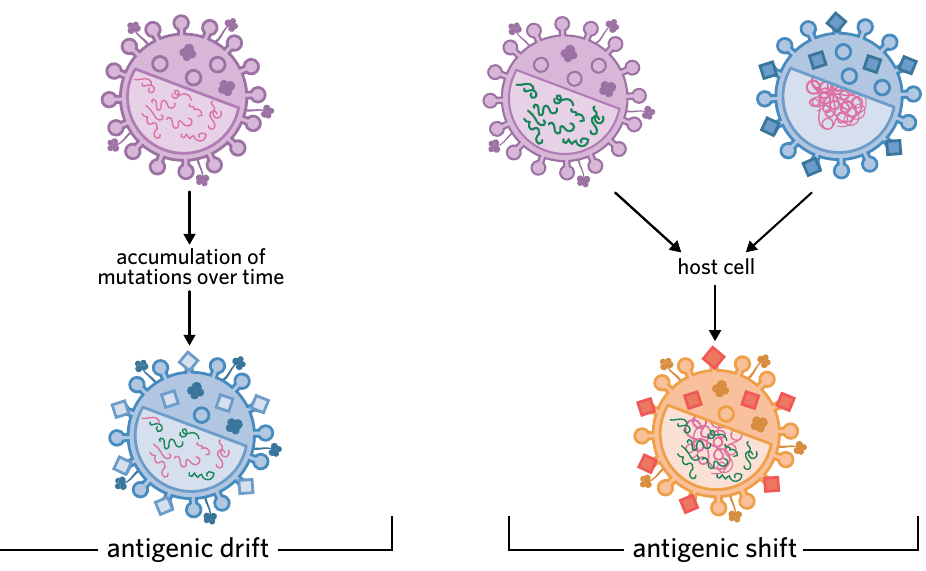
Viral recombination is the combination of surface antigens from two or more different strains of a virus to form a completely new virus subtype.
Epidemic is a dramatically increased occurrence of a disease in a particular community at a particular time.
Pandemic is an epidemic that has spread across multiple countries and/or continents.
Note
Key Distinction:
- Antigenic drift = Gradual changes over time (like dripping water)
- Antigenic shift = Sudden changes through recombination (like shifting gears)
Drift allows memory cells to provide some initial protection, whilst shift creates entirely new subtypes that the immune system has never encountered before.
Effects on disease patterns
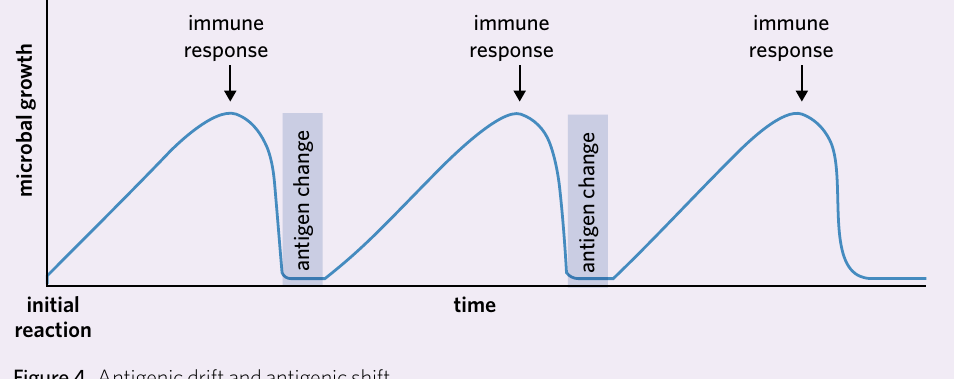
When viruses undergo antigenic changes, they can evade the immune system repeatedly, causing cyclical patterns of infection. After each infection, the immune system mounts a response and eliminates the pathogen. However, when the virus undergoes antigenic change, it can re-infect the same individual because existing memory cells no longer recognise the modified surface antigens.
The common cold
Note
Why we can't develop immunity to the common cold:
The common cold is most commonly caused by rhinoviruses, which infect the upper respiratory tract. Unfortunately, rhinovirus surface antigens mutate constantly, making the development of a universal vaccine or antiviral extremely difficult. This is why treatment is limited to rest and symptomatic relief (such as cough syrup or paracetamol), and why your body cannot develop permanent immunological memory against the common cold, leading to repeated infections year after year.
Influenza virus
Surface antigens of influenza
Researchers battling influenza (seasonal flu) have identified two key surface antigens that can be targeted: haemagglutinin and neuraminidase. When changes occur in either of these surface antigens, the effectiveness of previous vaccinations and existing medications may be reduced or completely eliminated.
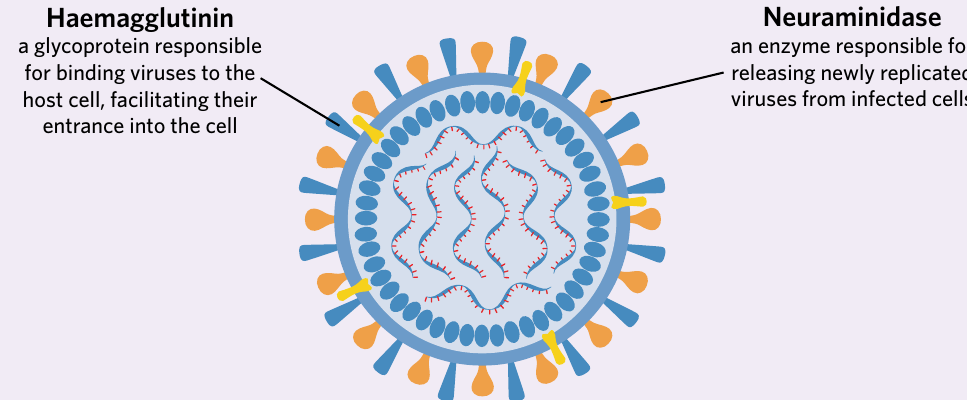
Haemagglutinin is a glycoprotein responsible for binding viruses to host cells, facilitating their entrance into the cell.
Neuraminidase is an enzyme responsible for releasing newly replicated viruses from infected cells.
Effects of antigenic variation on influenza
| Antigenic variation | Consequence |
|---|---|
| Antigenic drift | When small changes occur in influenza surface antigens through antigenic drift, the effectiveness of previously generated memory cells from prior vaccinations gradually decreases until they eventually become ineffective. Therefore, yearly vaccinations against influenza are required to maintain immunity. |
| Antigenic shift | When sudden changes occur in influenza surface antigens through antigenic shift, new viral strains arise through recombination of different strains. Due to their novel nature, newly created viral strains from antigenic shift are highly infectious. For example, the 2009 swine flu pandemic resulted from recombination of classic swine, human, and avian influenza strains. |
The 2009 swine flu pandemic
Example
Worked Example: The 2009 Swine Flu Pandemic
The 2009 swine flu pandemic provides a clear example of antigenic shift in action.
How the pandemic strain evolved: This pandemic strain arose from the recombination of multiple influenza strains over time. Between 1990 and 2009, genetic material from:
- Eurasian swine flu
- Classic swine flu
- Human influenza
- Avian flu
...combined to create first the North American swine flu strain, and eventually the highly infectious 2009 pandemic strain.
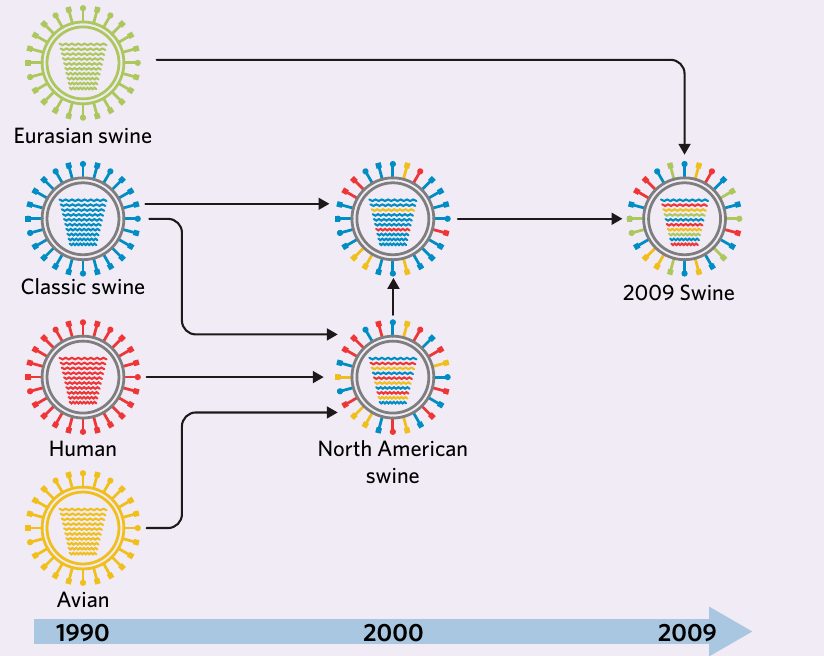
This demonstrates how viral recombination through antigenic shift can create entirely new virus subtypes that the human immune system has never encountered, leading to rapid global spread and pandemic conditions.
Why we need annual flu vaccinations
Unfortunately, due to mutations, influenza surface antigens constantly change from year to year through antigenic drift, and occasionally through antigenic shift. This makes previous vaccinations ineffective, requiring yearly vaccinations against the influenza virus to maintain immunity.
Remember!
Summary
Key Points to Remember:
Bacterial Resistance:
- Antibiotic resistance develops through natural selection when antibiotics act as a selection pressure, giving bacteria with resistance genes a selective advantage
- Bacteria use multiple mechanisms to resist antibiotics including impermeability, inactivation, efflux pumps, and target modification
- Inappropriate use, poor compliance with treatment, and widespread use of antibiotics all contribute to the emergence of resistant bacterial strains
Viral Antigenic Changes:
- Antigenic drift involves small, gradual changes in viral surface antigens
- Antigenic shift involves sudden, significant changes through viral recombination
- Viral antigenic changes make previous vaccinations and treatments ineffective, requiring ongoing development of new vaccines and the need for annual flu vaccinations