Controlling Pathogen Spread (VCE SSCE Biology): Revision Notes
📚Revision Notes
Controlling Pathogen Spread
Introduction
Controlling the spread of disease-causing pathogens is crucial for preventing outbreaks, epidemics, and pandemics. When pathogens evolve to become more contagious or virulent, or when they jump from animal hosts to humans, rapid identification and containment measures are essential.
A pathogen is an agent that causes disease. Understanding how pathogens spread between hosts and how to identify them allows scientists and health professionals to implement appropriate control measures to protect public health.
Note
Disease terminology follows a progression of severity:
- An outbreak is a sudden and unexpected increase in disease occurrence in a local area
- An epidemic is a dramatically increased occurrence affecting a particular community or region
- A pandemic is an epidemic that has spread across multiple countries or continents
Understanding these distinctions helps public health officials coordinate appropriate response levels.
Identifying pathogens
Why identification matters
Before treating someone who is unwell, scientists and health professionals must know exactly which pathogen is causing the patient's symptoms. Accurate identification allows them to:
- Select the appropriate treatment for the patient
- Implement specific measures to limit disease spread to others
- Track and monitor disease outbreaks effectively
Pathogens are frequently evolving and changing. When a pathogen changes in ways that allow it to infect humans or become more contagious (able to be transmitted from one organism to another) or more virulent (having greater potential to cause serious illness or harm), rapid identification becomes critical to preventing an outbreak (a sudden and unexpected increase in disease occurrence).
Important
Why Rapid Identification is Critical
When pathogens evolve new characteristics - particularly increased transmissibility or virulence - every hour counts. Rapid identification enables health authorities to:
- Begin appropriate treatment immediately, improving patient outcomes
- Implement containment measures before widespread transmission occurs
- Alert healthcare facilities and the public about specific risks
- Track the pathogen's spread and mutation patterns
The difference between identifying a pathogen in hours versus days can mean the difference between a contained outbreak and a regional epidemic.
Methods of pathogen identification
Scientists use four main approaches to identify pathogens: Physical, Phenotypic, Immunological, and Molecular methods. Each approach provides different types of information, and often multiple methods are used together for accurate identification.
Physical methods
Physical identification involves using microscopes to visualise pathogens and determine their structure. This allows scientists to observe the size, shape, and other physical characteristics of microorganisms.
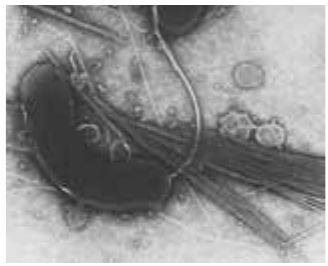
For example, the image above shows Vibrio cholerae bacteria under a microscope. The distinctive curved, rod-like shape helps identify this pathogen that causes cholera.
Note
The Power of Microscopy
While microscopy alone cannot definitively identify most pathogens (many bacteria look similar), it provides valuable preliminary information:
- Helps narrow down possibilities quickly
- Determines whether the pathogen is a bacterium, virus, fungus, or parasite
- Reveals structural features that guide further testing
- Can be performed rapidly with minimal equipment
This makes microscopy an excellent first-step screening tool in pathogen identification.
Phenotypic methods
Phenotypic methods identify pathogens based on their observable characteristics and behaviours. Two main approaches are used:
Selective media: An agar plate designed to allow certain pathogens to grow and multiply whilst inhibiting others. For example, buffered charcoal yeast extract agar is highly selective for Legionella pneumophila, the bacteria causing Legionnaires' disease. If this bacteria is present in a sample and combined with the selective agar, it will grow and multiply, confirming its presence.
Biochemical test panels: A series of tests designed to narrow down a sample's genus and species through systematic testing. Scientists run sequential tests and record how their sample responds to each one.
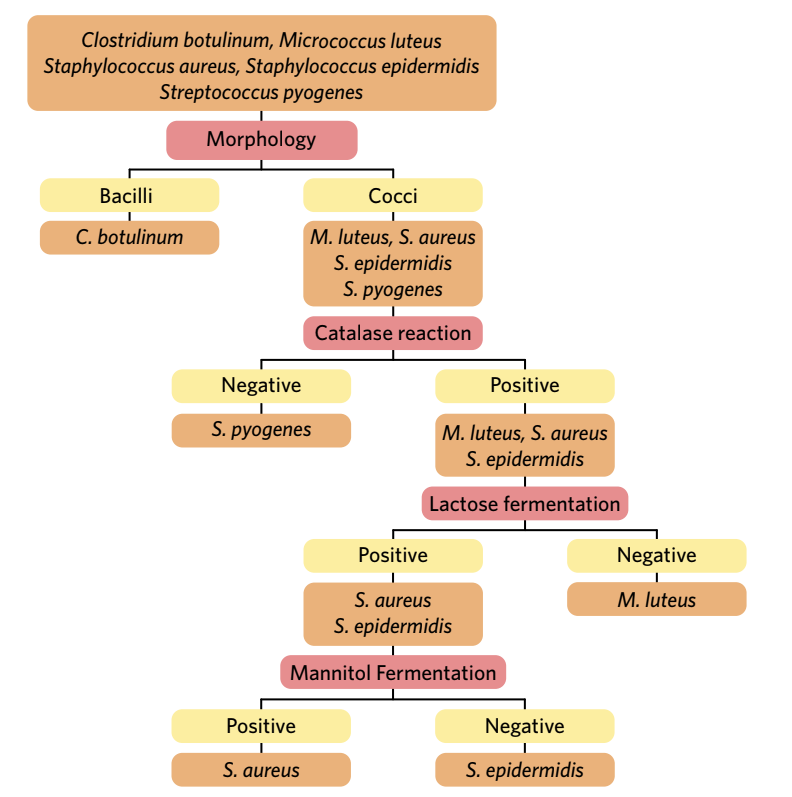
The flowchart above shows how biochemical testing works. Starting with five possible bacterial species, scientists gradually narrow down the options by conducting tests such as:
- Morphology examination (bacilli vs cocci shape)
- Catalase reaction (positive or negative)
- Lactose fermentation ability
- Mannitol fermentation ability
Each test result eliminates some possibilities until the specific species is identified.
Example
Worked Example: Biochemical Identification Process
A laboratory receives a bacterial sample from a patient with suspected food poisoning. Here's how biochemical testing identifies the pathogen:
Step 1: Morphology examination reveals the bacteria are rod-shaped (bacilli)
- This eliminates Staphylococcus aureus and Streptococcus pyogenes (which are cocci)
- Remaining possibilities: E. coli, Salmonella typhi, Shigella dysenteriae
Step 2: Catalase test is positive
- All three remaining bacteria are catalase-positive
- No elimination at this step
Step 3: Lactose fermentation test is negative
- This eliminates E. coli (which ferments lactose)
- Remaining possibilities: Salmonella typhi, Shigella dysenteriae
Step 4: Mannitol fermentation test is positive
- Salmonella typhi is identified (ferments mannitol)
- Shigella dysenteriae does not ferment mannitol
This systematic approach provides definitive identification through sequential elimination.
Immunological methods
Serology is the study of blood serum, typically to determine the presence of antibodies and/or antigens. Serum is the fluid and solute component of blood that excludes blood cells, platelets, and clotting factors.
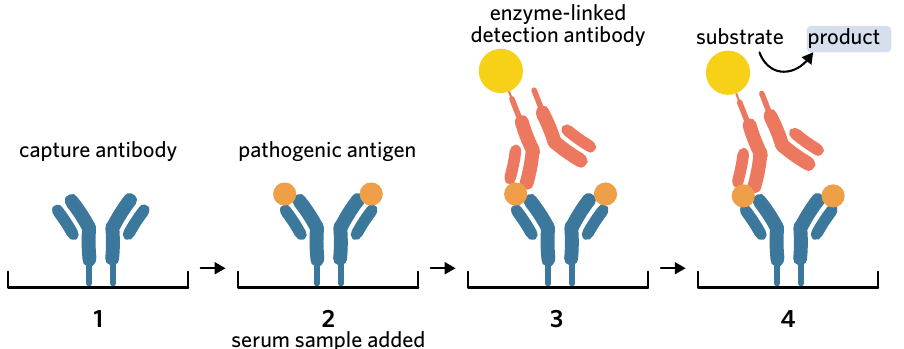
One powerful immunological technique is the enzyme-linked immunosorbent assay (ELISA), an experimental technique used to identify a pathogen by determining the presence of antigens or antibodies in a sample.
The sandwich method of ELISA is particularly useful for detecting pathogenic antigens:
Example
Worked Example: The ELISA Sandwich Method
ELISA works like a molecular "sandwich" to detect pathogens. Here's the step-by-step process:
Step 1: Capture antibodies are attached
- Specific antibodies for the target pathogen are fixed to a plate surface
- These act as the "bottom bread" of the sandwich
- They will only bind to their specific pathogen antigen
Step 2: Patient serum sample is added
- The sample containing potential pathogen antigens is applied
- If pathogen antigens are present, they bind to the capture antibodies
- Unbound materials are washed away
- The antigen becomes the "filling" of the sandwich
Step 3: Detection antibodies are introduced
- A second antibody linked to a colour-changing enzyme is added
- This binds to the antigen-capture antibody complex
- This forms the "top bread" of the sandwich
- Unbound detection antibodies are washed away
Step 4: Substrate addition reveals results
- A substrate is added that reacts with the enzyme
- If the pathogen was present: antigen is sandwiched between antibodies → enzyme is present → colour change occurs (positive result)
- If no pathogen was present: no sandwich formed → no enzyme present → no colour change (negative result)
The intensity of the colour change can even indicate how much pathogen is present in the sample.
The sandwich ELISA process involves four steps:
- Capture antibodies specific to a certain pathogen are attached to a plate
- The serum sample to be tested is applied to the plate. Any pathogen antigens present will attach to the capture antibodies
- A detection antibody linked to a colour-changing enzyme is added. This binds to any antibody-antigen complexes present
- A substrate is added, which reacts with the enzyme on the detection antibody and changes colour. This colour change reveals whether pathogenic antigens were present in the sample
This method is called "sandwich" because the pathogenic antigen is sandwiched between two antibodies.
Molecular methods
Molecular techniques provide detailed genetic information about pathogens, offering the most precise identification available:
Hybridisation-based detection: Labelled segments of genetic material that are complementary to a pathogen's genetic material are added to a sample. If a signal is generated, it confirms the pathogen's presence.
Whole-genome sequencing: Provides comprehensive genetic information about the pathogen, allowing for precise identification and comparison with known pathogen sequences.
Note
The Molecular Advantage
Molecular methods offer several key benefits:
- Precision: Can distinguish between closely related pathogen strains
- Speed: Modern sequencing can identify pathogens in hours
- Mutation tracking: Reveals how pathogens are evolving and spreading
- Drug resistance detection: Identifies genetic markers for antimicrobial resistance
While more expensive than other methods, molecular techniques are increasingly becoming the gold standard for pathogen identification, especially during outbreaks where detailed information is crucial.
Modes of disease transmission
Understanding transmission
For pathogens to continue their life cycle and ensure survival, they must move from one host (an organism that harbours a pathogen) to another. This process is called transmission - the passing of a pathogen from an infected host to another individual or group.
Pathogens can spread through both direct transmission (involving contact or close proximity between an infected and susceptible person) and indirect transmission (occurring without contact or proximity between infected and susceptible persons).
Five key transmission routes
Understanding how pathogens spread is essential for implementing effective control measures. Each transmission route requires different prevention strategies, which is why accurate identification of transmission modes is critical during disease outbreaks.
Airborne transmission
Airborne transmission is the spread of pathogens through air via small particles (traditionally less than in diameter). These tiny particles can:
- Stay suspended in the air for prolonged periods
- Be produced when a person sneezes, coughs, exhales, or talks
- Be inhaled by others even after the original host has left the vicinity
Examples include:
- Influenza virus (flu)
- SARS-CoV-2 (COVID-19)
- Rhinovirus (common cold)
Note
Why Size Matters
The threshold between airborne and droplet particles is significant because it determines how particles behave in air:
- Particles smaller than remain suspended and can travel long distances
- Larger particles fall to the ground or surfaces more quickly due to gravity
- This distinction affects which control measures are most effective (e.g., ventilation vs. surface cleaning)
However, recent research suggests this distinction may be less clear-cut than traditionally thought, with particles of various sizes potentially contributing to both transmission modes.
Droplet transmission
Droplet transmission is the spread of pathogens through air and contaminated surfaces via respiratory droplets. Respiratory droplets are droplets (traditionally larger than ) produced by breathing, talking, vomiting, and coughing containing saliva, mucus, and other substances from the respiratory tract, including pathogen particles.
These droplets:
- Remain suspended in the air for a short period
- Fall to the ground or onto surfaces relatively quickly
- Can infect people who touch contaminated surfaces and then touch mucosal surfaces (eyes, mouth, nose)
Direct physical contact transmission
Direct physical contact transmission is the spread of pathogens through contact between a host and another individual. This can occur through:
- Skin-to-skin touch
- Sharing of bodily fluids
- Sexual contact
- Oral contact (kissing)
- Vertical transmission: spread of pathogens from mother-to-child during gestation, childbirth, or post-birth through close contact and breastfeeding
- Iatrogenic contact: disease caused by medical intervention, such as contamination during medical procedures
Examples include:
- Tinea pedis (athlete's foot fungus)
- Human immunodeficiency virus/HIV (causing AIDS)
- Epstein-Barr virus/EBV (causing infectious mononucleosis)
Indirect physical contact transmission
Indirect physical contact transmission is the spread of pathogens via contaminated objects or vectors. This occurs when there is no direct host-to-host contact. Instead, pathogens spread through:
- Fomites: inanimate objects that, when contaminated with a pathogen, can transmit that pathogen to a new host (e.g., food, water, tissues, needles, door handles)
- Vectors: organisms that are not affected by a disease but spread it between hosts (e.g., mosquitoes)
Example: Plasmodium parasites (causing malaria) spread by mosquitoes
Faecal-oral transmission
Faecal-oral transmission is the spread of pathogens via oral consumption of contaminated faeces. This can occur through:
- Indirect contamination of food or water by infected faeces
- Airborne or droplet routes when faeces is flushed (aerosolisation of pathogens)
Examples include:
- Vibrio cholerae (causing cholera)
- Rotavirus (causing diarrhoea in young children)
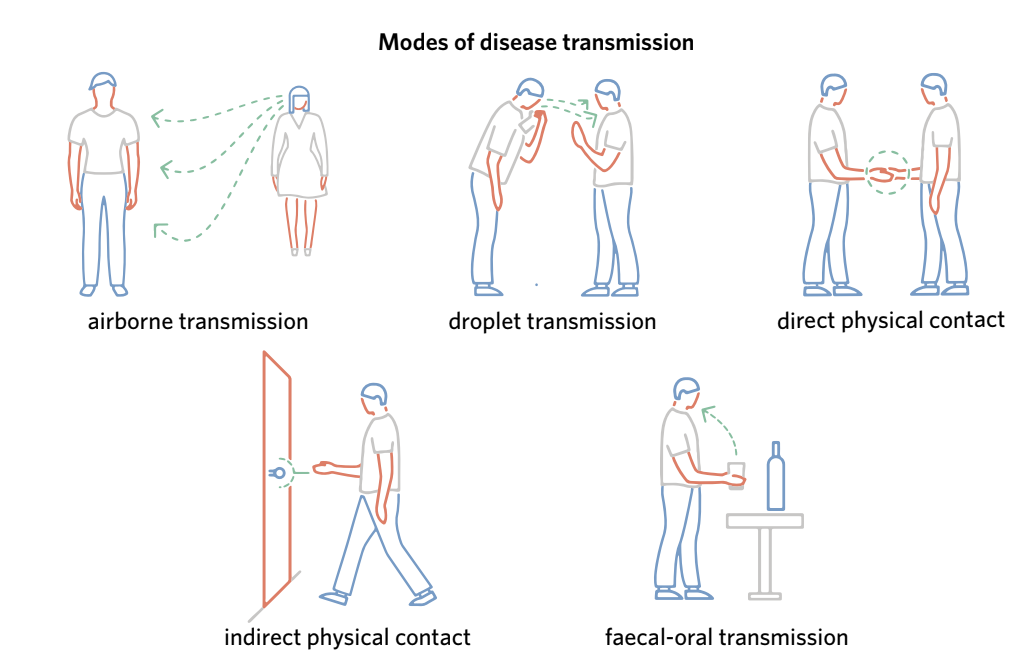
The diagrams above illustrate the five main transmission routes showing how pathogens can spread between individuals through different mechanisms.
Important
Multiple Transmission Modes
Many pathogens use multiple transmission modes simultaneously, making them particularly difficult to control. For example:
- Influenza can spread through both airborne and droplet transmission
- Many faecal-oral pathogens spread indirectly through contaminated food and water
- COVID-19 demonstrates transmission through airborne, droplet, and contact routes
This is why comprehensive control strategies must address multiple transmission pathways simultaneously rather than focusing on just one mode. A pathogen blocked from one transmission route may continue spreading through another.
Controlling disease transmission
Overview of control strategies
Managing disease requires a comprehensive, coordinated approach. Effective disease control is like building a multi-layered defense system - no single measure is perfect, but together they create robust protection against pathogen spread.
Strategies generally include:
- Identification of the pathogen
- Prevention of disease
- Measures to control pathogen spread
- Treatment of infected individuals
Effective disease containment requires coordination between local and national governments, as well as international organisations like the World Health Organisation (WHO). When implemented successfully, these measures can stop disease transmission before it causes mass infections and death.
Prevention strategies
Prevention focuses on stopping pathogen transmission before infection occurs. This proactive approach is almost always more effective and less costly than treating disease after it spreads.
Hygiene and sanitation
- Handwashing with soap and water
- Using antiseptics (substances applied to living tissue to kill or slow microorganism growth) and disinfectants (substances applied to non-living materials to kill or slow microorganism growth)
- Ensuring access to clean water and food
Note
Antiseptics vs Disinfectants: Know the Difference
These terms are often confused but have an important distinction:
- Antiseptics are used on living tissue (skin, wounds) and must be gentle enough not to damage human cells
- Disinfectants are used on non-living surfaces (countertops, equipment) and can be more aggressive chemicals
Using a disinfectant on living tissue could cause chemical burns, while an antiseptic may not be strong enough to properly sterilize equipment. Always use the appropriate agent for the application.
Personal protective equipment (PPE)
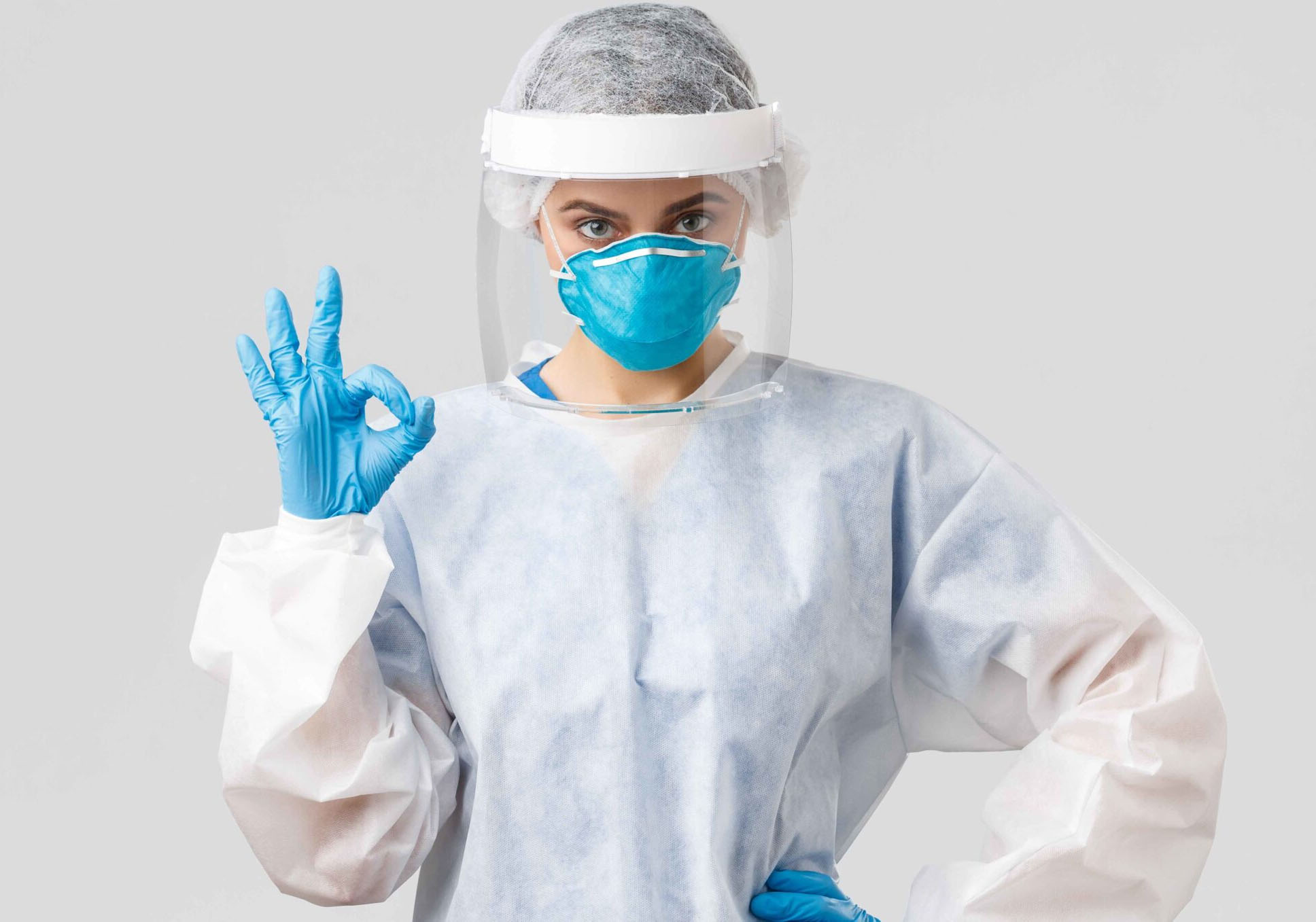
Using protective equipment such as gloves, masks, gowns, and face shields when dealing with sick people creates a physical barrier against pathogen transmission. Different situations require different levels of protection based on the pathogen's transmission mode.
Vaccination
If a vaccine exists for a disease, vaccination programs can provide immunity and prevent infection in populations. Vaccination not only protects individuals but also contributes to herd immunity, protecting those who cannot be vaccinated.
Movement restrictions
Lockdowns and restrictions on people's movement can reduce the chance of spreading disease during outbreaks by limiting contact between infected and susceptible individuals.
Screening
Screening programs help identify infected individuals quickly, enabling rapid response before widespread transmission occurs:
- Routine testing for disease presence in a population allows public health workers to see who is affected and target their response
- Officials may monitor medication sales at pharmacies, looking for changes that indicate increased prevalence of certain symptoms or illnesses
Note
Early Detection Through Screening
Effective screening programs operate on the principle that early detection enables early intervention. By identifying infected individuals before they develop severe symptoms or spread disease widely, health authorities can:
- Isolate cases quickly to prevent transmission
- Begin treatment earlier, improving patient outcomes
- Track disease spread patterns in real-time
- Allocate resources where they're needed most
Modern digital surveillance systems can identify unusual patterns in healthcare data within hours, providing crucial early warning of potential outbreaks.
Quarantine and isolation

Once a person becomes ill or has potential exposure to disease (e.g., returning from an affected area overseas), they may be separated from healthy people to prevent disease spread to the community. The image above shows the crew of Apollo 11 in quarantine after returning from the moon - an example of precautionary isolation.
While quarantine (separating potentially exposed people) and isolation (separating confirmed cases) can be challenging, they remain powerful tools for breaking chains of transmission during outbreaks.
Pathogen identification and transmission control
Using the identification methods described earlier, scientists determine which pathogen is present so they can:
- Initiate appropriate responses
- Implement specific measures to control the identified transmission routes
For example, if a respiratory pathogen threatens an outbreak, measures targeting airborne and droplet transmission (such as mask-wearing and social distancing) will be implemented.
Treatment of infected individuals
Treatment involves using specific medications to target different types of pathogens. Using the correct antimicrobial agent for the specific pathogen type is essential for effective treatment.
Antibiotics
Antibiotics are medications used to kill bacteria or slow their growth. They work by selectively affecting bacterial cells, targeting specific biochemical pathways or components unique to bacteria without damaging human cells.
Antivirals
Antivirals are medications used to treat viral infections. Like antibiotics, antivirals specifically target viruses, interfering with their ability to attach to, replicate in, and exit from host cells.
Fungicides
Fungicides are medications used to treat fungal infections by specifically targeting fungal cells.
Important
Critical: Antimicrobial Specificity
Antibiotics only work against bacteria. They have no therapeutic effect against viruses and should never be prescribed for viral infections.
Common mistakes to avoid:
- Taking antibiotics for viral infections like colds or flu (ineffective)
- Stopping antibiotic treatment early when symptoms improve (promotes resistance)
- Saving leftover antibiotics for future use (wrong dosage/pathogen)
- Taking antibiotics prescribed for someone else (wrong pathogen/dosage)
Inappropriate antibiotic use not only fails to treat viral infections but actively contributes to antimicrobial resistance, one of the greatest threats to modern medicine.
Understanding antimicrobial resistance
Antimicrobial resistance is the ability of a microorganism to survive exposure to an antimicrobial agent. This occurs through natural selection when antibiotics are used inappropriately:
- In a bacterial population, some resistance may occur naturally through random mutations
- When antibiotics are applied, susceptible bacteria die
- Only resistant bacteria survive and reproduce
- The new bacterial colony is resistant to the antibiotic
- The antibiotic becomes ineffective against this bacterial strain
This is why antibiotics must be used appropriately and treatment courses completed as prescribed.
Note
The Global Threat of Antimicrobial Resistance
Antimicrobial resistance is not just a medical problem - it's a global crisis. When common bacteria become resistant to antibiotics:
- Routine infections become difficult or impossible to treat
- Medical procedures like surgery become riskier due to infection threats
- Treatment options become limited and more expensive
- Mortality rates from bacterial infections increase
The World Health Organisation considers antimicrobial resistance one of the top 10 global public health threats. Preserving antibiotic effectiveness through appropriate use is essential for protecting future generations.
Case study: John Snow and the cholera outbreak of 1854

Example
Case Study: John Snow and the Birth of Epidemiology
John Snow was an English physician living in London during the 1854 cholera outbreak. This case demonstrates how identifying pathogens, understanding transmission modes, and controlling spread are vital components of disease management.
Background: At the time, a cholera pandemic was sweeping globally. Most people believed the disease spread through airborne particles called 'miasmata' (bad air). This incorrect theory was hampering effective disease control.
Investigation: John Snow investigated cholera distribution on Broad Street by:
- Speaking to people who had been ill and their families
- Tracing their movements before becoming sick
- Mapping cases to identify geographic patterns
- Looking for common factors linking cases
Discovery: Snow determined that the illness source was contaminated water from the public water pump on Broad Street. The water was being contaminated by an old cesspit that had leaked faecal bacteria into the water supply. This challenged the prevailing 'miasma' theory.
Intervention: Snow's evidence convinced local authorities to remove the pump handle, preventing people from using the contaminated water source. This simple action broke the transmission chain.
Result: Cholera rates rapidly decreased in the area, providing strong evidence for Snow's waterborne transmission theory.
Significance: This event is considered the founding moment of modern epidemiology. It demonstrates how:
- Studying disease patterns reveals transmission routes
- Identifying the pathogen source enables targeted intervention
- Understanding transmission routes (faecal-oral via contaminated water) informs control measures
- Implementing evidence-based control measures (removing access to contaminated water) effectively stops disease spread
Snow's work established the principle that careful observation, data collection, and logical analysis can identify disease causes even before the specific pathogen is known - principles that remain fundamental to public health today.
Summary
Key Takeaways for Controlling Pathogen Spread
Pathogen Identification Methods
- Physical methods: Microscopy to visualize pathogen structure
- Phenotypic methods: Selective media and biochemical testing panels
- Immunological methods: ELISA and serology to detect antigens/antibodies
- Molecular methods: DNA hybridisation and whole-genome sequencing
Five Main Transmission Routes
- Airborne transmission: Particles smaller than that remain suspended in air
- Droplet transmission: Particles larger than that fall to surfaces
- Direct physical contact: Skin-to-skin, bodily fluids, vertical transmission
- Indirect physical contact: Via fomites or vectors
- Faecal-oral transmission: Through contaminated food or water
Comprehensive Disease Control Strategies
- Prevention: Hygiene, PPE, vaccination, and movement restrictions
- Screening: Early detection through routine testing
- Quarantine/Isolation: Separating infected or exposed individuals
- Pathogen identification: Determining which organism is causing disease
- Transmission control: Targeting specific spread routes
- Appropriate treatment: Using correct antimicrobials for pathogen type
Critical Concepts to Remember
- Antimicrobial specificity matters: Antibiotics work only against bacteria, antivirals against viruses, fungicides against fungi
- Inappropriate antibiotic use leads to resistance: Complete prescribed courses and never use antibiotics for viral infections
- Many pathogens use multiple transmission routes: Comprehensive control requires addressing all pathways simultaneously
- Historical lessons remain relevant: John Snow's 1854 cholera investigation established epidemiological principles still used today - identify the pathogen, understand transmission, implement targeted interventions