Covalent Bonding Model (VCE SSCE Chemistry): Revision Notes
📚Revision Notes
Covalent Bonding Model
What is covalent bonding?
When non-metal atoms combine, they form bonds by sharing electrons. This type of bonding is called covalent bonding, and it occurs because non-metallic atoms have relatively high numbers of electrons in their outer shells.
A molecule is a discrete (individually separate) group of atoms with a known formula, bonded together. The molecular formula tells you the number and type of atoms in a molecule. For example, shows that a water molecule contains two hydrogen atoms and one oxygen atom.
Note
Molecular substances are electrically neutral overall. They cannot conduct electricity because they contain no free-moving charged particles. This is a key difference between molecular substances and ionic compounds.
The octet rule
Most atoms become more stable when they have eight electrons in their outer shell. This is called the octet rule. When non-metal atoms bond covalently, they share electrons so that each atom achieves eight electrons in its outer shell (or two electrons for hydrogen, which has only one shell).
The covalent bonds that form between atoms within a molecule are called intramolecular bonds (bonds within a molecule).
Important
The octet rule is fundamental to understanding covalent bonding. Remember: atoms bond by sharing electrons to achieve a stable outer shell of eight electrons (or two for hydrogen). This explains why atoms form specific numbers of covalent bonds.
Single covalent bonds
A single covalent bond forms when two atoms share one pair of electrons (two electrons total), with each atom contributing one electron.
Hydrogen molecules
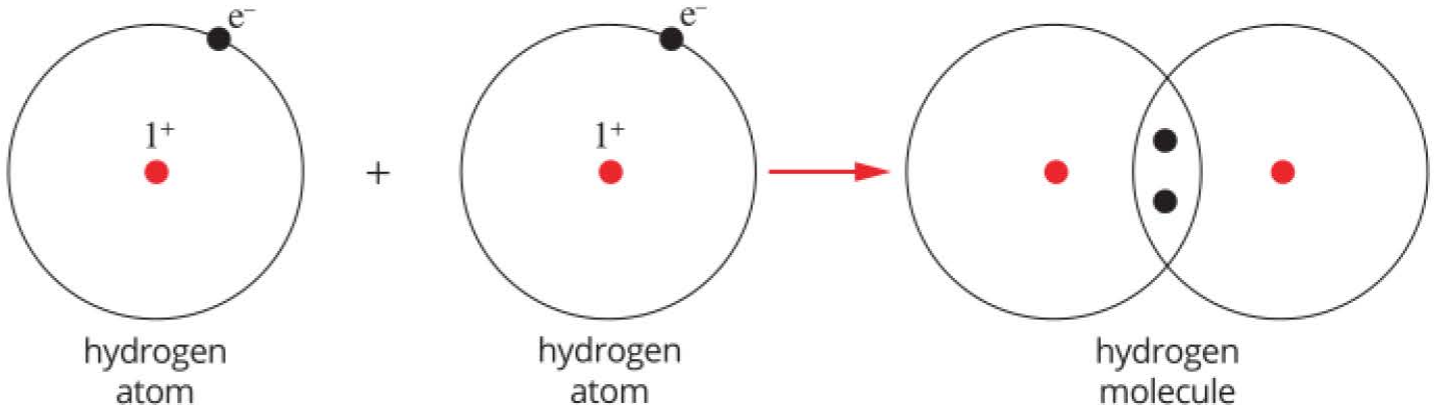
Hydrogen atoms have just one electron. The outer shell of a hydrogen atom can hold a maximum of two electrons, so a hydrogen atom needs one more electron to achieve a stable configuration.
When two hydrogen atoms approach each other, they can each share their single electron. This creates a molecule of hydrogen gas, .
Example
Formation of a Hydrogen Molecule
In the hydrogen molecule:
- Each hydrogen atom shares one electron with the other
- The two electrons form an electron pair that bonds the atoms together
- Both atoms now have access to two electrons in their outer shells
- The atoms are strongly bonded together
A molecule containing two atoms is called a diatomic molecule.
You can represent a hydrogen molecule in different ways:
- Molecular formula:
- Structural formula: (the line represents the single bond)
- Electron dot diagram: showing the shared electrons
In a hydrogen molecule, each electron is attracted to both protons (one in each nucleus). The two electrons spend most of their time between the two nuclei. Even though the two positively charged nuclei repel each other, the electrostatic attraction to the electrons (which are closer) is stronger and holds the molecule together.
Chlorine molecules
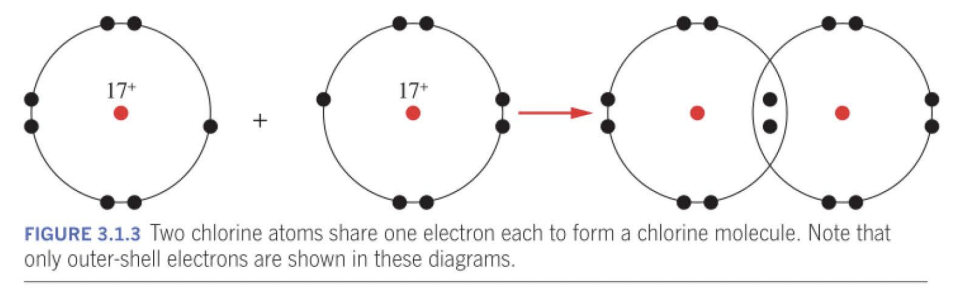
A chlorine atom has the electronic configuration . It needs one more electron to achieve eight electrons in its outer shell.
When two chlorine atoms approach each other, each can share one electron with the other. This forms a chlorine molecule, , with a single covalent bond.
After bonding:
- Both chlorine atoms have eight electrons in their outer shells
- One pair of electrons is shared between them (the bonding pair)
- Each chlorine atom also has six electrons not involved in bonding (three lone pairs)
The Hindenburg disaster
Note
Historical Context: Hydrogen in Airships
Hydrogen's low density once made it seem ideal for use in airships. Zeppelins were rigid airships used for transport in the early 1900s. However, hydrogen is highly flammable. In 1937, the Zeppelin Hindenburg caught fire while attempting to dock in the United States, killing many people on board. This disaster ended the use of hydrogen in passenger airships.

Lewis structures
Lewis structures (also called electron dot structures) are a useful way to represent molecules. They show the valence shell electrons of atoms, which are the only electrons involved in bonding.
Important
Lewis structures help you distinguish between:
- Bonding electrons: electron pairs involved in covalent bonds
- Non-bonding electrons (or lone pairs): electron pairs not involved in bonding
Understanding this distinction is crucial for predicting molecular shapes and properties.
For a chlorine molecule:
- There is one bonding pair (the shared electrons)
- Each chlorine atom has three lone pairs (six non-bonding electrons)
You can represent electrons in Lewis structures using dots, crosses, lines, or a combination. For example, these all show a chlorine molecule:
Note
The dots and crosses help show which electrons came from which atom, but remember that electrons are actually identical. This notation is just a convenient way to track electron sharing.
Double covalent bonds
A double covalent bond forms when two pairs of electrons (four electrons total) are shared between two atoms.
Oxygen molecules
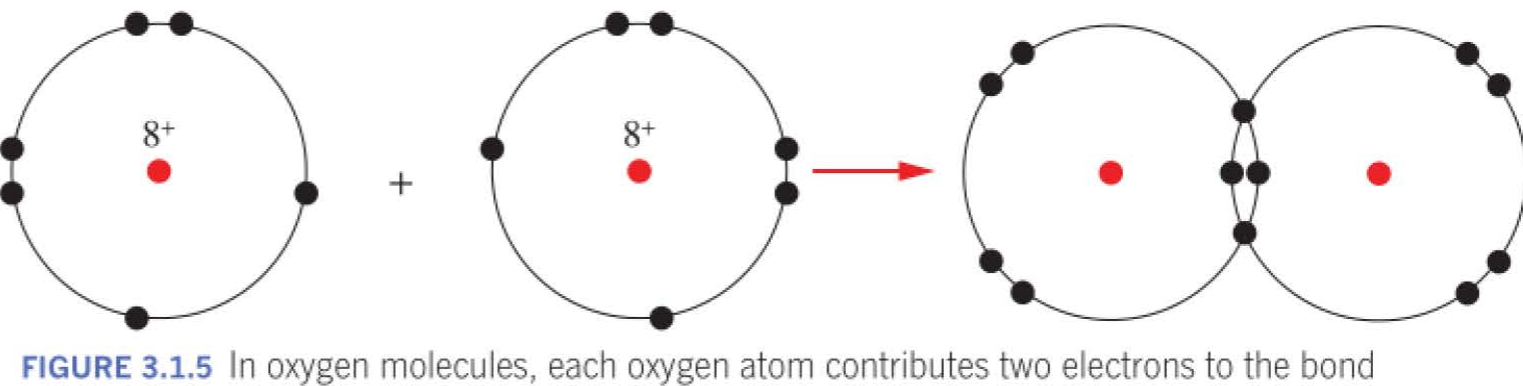
An oxygen atom has the electronic configuration . It needs two more electrons to achieve eight electrons in its outer shell.
When two oxygen atoms bond, each atom shares two of its electrons with the other. This creates a double covalent bond in the oxygen molecule, .
Example
Formation of an Oxygen Molecule
In the oxygen molecule:
- Each oxygen atom contributes two electrons to the bond
- Four electrons (two pairs) are shared between the atoms
- Each oxygen atom now has eight valence electrons
- Four of these are bonding electrons, four are non-bonding electrons
- Each oxygen atom has two lone pairs
The Lewis structure of oxygen shows the double bond:
or
Triple covalent bonds
A triple covalent bond forms when three pairs of electrons (six electrons total) are shared between two atoms.
Nitrogen molecules
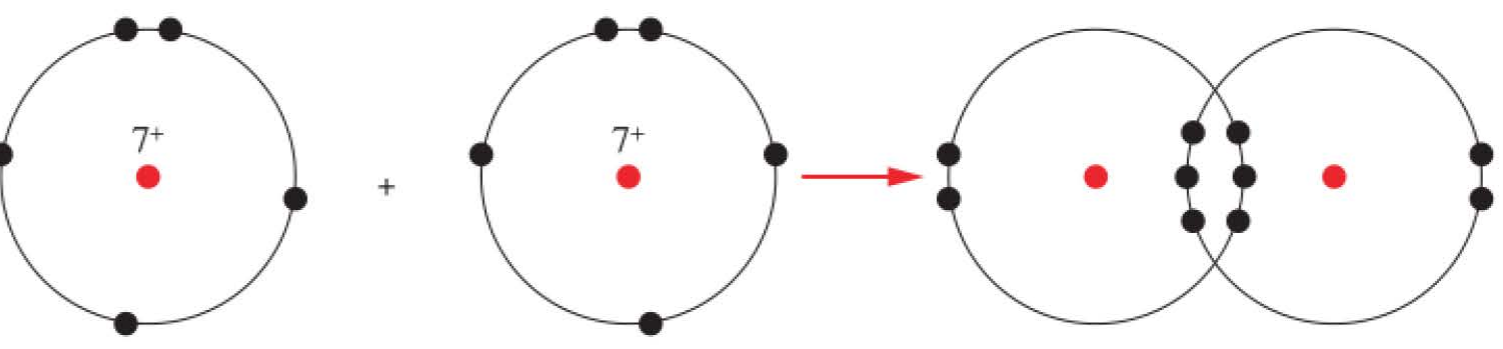
A nitrogen atom has the electronic configuration . It needs three more electrons to achieve eight electrons in its outer shell.
When two nitrogen atoms bond, each atom shares three of its electrons with the other. This creates a triple covalent bond in the nitrogen molecule, .
Example
Formation of a Nitrogen Molecule
In the nitrogen molecule:
- Each nitrogen atom contributes three electrons to the bond
- Six electrons (three pairs) are shared between the atoms
- Each nitrogen atom now has eight valence electrons
- Six of these are bonding electrons, two are non-bonding electrons
- Each nitrogen atom has one lone pair
The Lewis structure of nitrogen shows the triple bond:
Nitrogen's strength and importance
The triple covalent bond in is very strong and difficult to break. This makes nitrogen gas relatively unreactive. Although nitrogen makes up 78% of the air and is essential for life (it's a major component of proteins), very few organisms can use nitrogen gas directly because it's so unreactive.
Note
Nitrogen Fixing and Food Production
Nitrogen-fixing microorganisms can convert nitrogen gas into soluble nitrogen compounds. Plants absorb these compounds, allowing nitrogen to pass up the food chain.
In the early twentieth century, Fritz Haber invented a process to convert nitrogen gas and hydrogen gas into ammonia. Ammonia is used to make synthetic fertilisers, which have allowed humans to grow more food to feed a growing world population.
Molecular compounds
Covalent bonds don't just form between atoms of the same element. They can also form between atoms of different elements to create molecular compounds.
Hydrogen chloride
Hydrogen chloride () is a simple molecular compound. A hydrogen atom needs one electron to fill its outer shell, and a chlorine atom also needs one electron. They can each share one electron to form a single covalent bond.
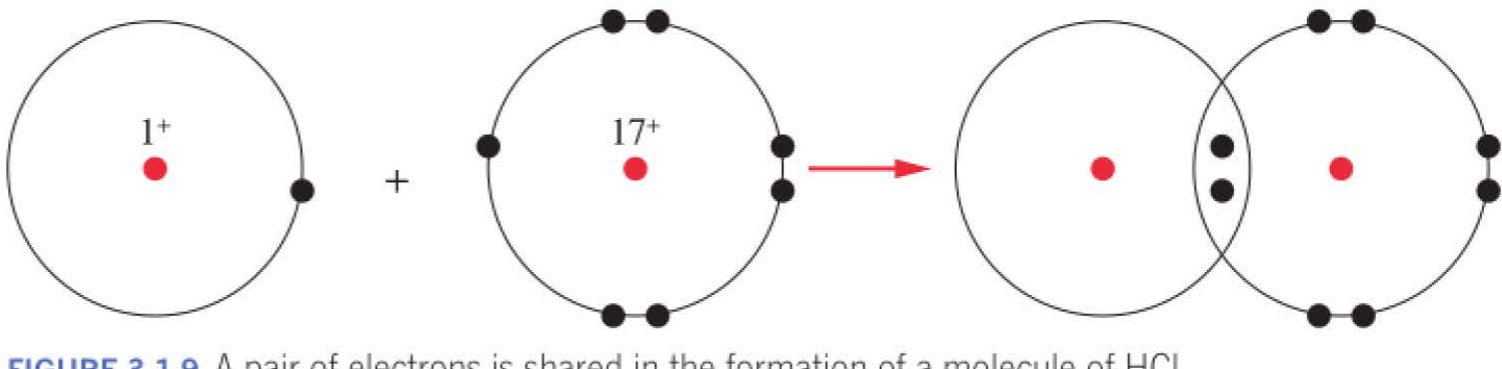
In the hydrogen chloride molecule:
- One electron pair is shared between the hydrogen and chlorine atoms
- The hydrogen atom has two electrons in its outer shell (full)
- The chlorine atom has eight electrons in its outer shell (full)
- The chlorine atom also has three lone pairs
Polyatomic molecules
Polyatomic molecules contain more than two atoms. Let's look at three important examples.
Water ()
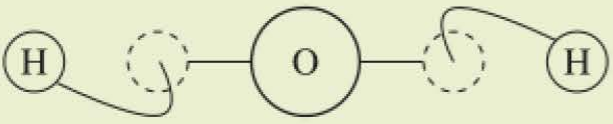
When hydrogen and oxygen combine, one oxygen atom bonds with two hydrogen atoms.
Example
Water Molecule Structure
In a water molecule:
- The oxygen atom shares one electron with each hydrogen atom
- Each hydrogen atom shares one electron with the oxygen atom
- There are two single covalent bonds
- The oxygen atom has two lone pairs (four non-bonding electrons)
The Lewis structure for water:
Methane ()
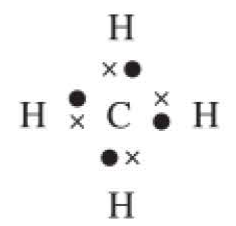
A carbon atom has the electronic configuration . It needs four more electrons to achieve eight electrons in its outer shell. When carbon combines with hydrogen, four hydrogen atoms bond to one carbon atom.
Example
Methane Molecule Structure
In a methane molecule:
- The carbon atom shares one electron with each of the four hydrogen atoms
- Each hydrogen atom shares one electron with the carbon atom
- There are four single covalent bonds
- The carbon atom has eight electrons in its outer shell (all bonding, no lone pairs)
Ethene ()
Ethene is another compound of carbon and hydrogen. In this molecule:
- Each carbon atom shares two electrons with the other carbon atom, forming a double bond
- Each carbon atom also shares one electron with each of two hydrogen atoms
- There are one double covalent bond and four single covalent bonds
How to draw Lewis structures
Follow these steps to draw a Lewis structure:
Step 1: Write the electronic configuration of each atom in the molecule
Step 2: Determine how many electrons each atom needs for a stable outer shell
Step 3: Draw the Lewis structure, ensuring:
- Each atom has a stable outer shell
- Shared electrons are shown between atoms
- Non-bonding electrons are shown as lone pairs
Worked example: Hydrogen sulfide ()
Example
Worked Example: Drawing the Lewis Structure for Hydrogen Sulfide
Step 1: Electronic configurations
- Sulfur:
- Hydrogen:
Step 2: Electrons needed
- Sulfur needs 2 electrons
- Hydrogen needs 1 electron
Step 3: Draw the structure

The Lewis structure shows:
- Two single covalent bonds (one to each hydrogen)
- Two lone pairs on the sulfur atom
Historical development of bonding theories
Before the twentieth century, scientists had limited understanding of chemical bonds. An early theory suggested atoms had 'hooks' and 'eyes' that allowed them to connect!
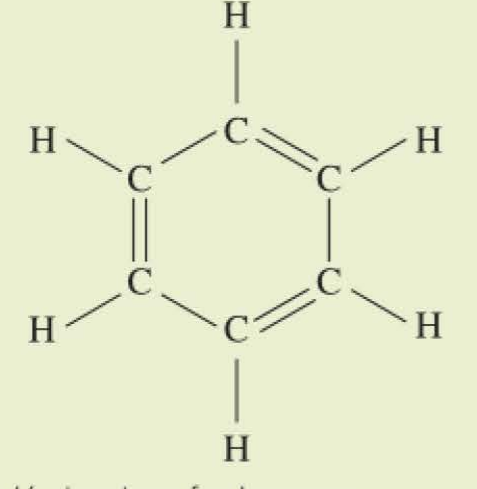
By the nineteenth century, chemists knew atoms combined in set proportions. Friedrich Kekule and Archibald Scott Couper proposed that carbon formed four bonds, and Kekule famously proposed the structure for benzene ().
Note
The Development of Modern Bonding Theory
In the early twentieth century, after the Bohr model of the atom was developed, Gilbert Newton Lewis used dots to represent electrons in atoms. He proposed the octet rule and introduced Lewis structures in his 1916 article "The atom and the molecule."
Lewis originally pictured electrons at the corners of a cube, with bonds forming when cubes shared edges (single bonds) or faces (double bonds). While his cubic model has been replaced by more accurate quantum mechanical models, Lewis structures remain a valuable tool for understanding bonding.
Remember!
Summary
Key Points to Remember:
- Covalent bonding occurs when non-metal atoms share electrons to achieve stable outer shells (usually eight electrons, following the octet rule)
- A single covalent bond involves sharing one electron pair, a double bond shares two electron pairs, and a triple bond shares three electron pairs
- Lewis structures show valence electrons and help distinguish between bonding electrons (shared pairs) and non-bonding electrons (lone pairs)
- Diatomic molecules contain two atoms (like , , , ), while polyatomic molecules contain more than two atoms (like , )
- Molecular substances are electrically neutral and cannot conduct electricity because they have no free-moving charged particles