Fuel Cells (VCE SSCE Chemistry): Revision Notes
📚Revision Notes
Fuel Cells
Introduction to fuel cells
Fuel cells represent an innovative type of galvanic cell that transforms chemical energy into electrical energy through redox reactions. What makes fuel cells particularly special is their ability to generate electricity continuously, as long as fuel is supplied to them. Unlike the batteries you may have studied earlier, fuel cells never "run down" or require recharging—they simply need a steady supply of fuel to keep producing power.
Note
What makes fuel cells unique:
Fuel cells differ fundamentally from conventional batteries. While batteries store a fixed amount of chemical energy that depletes over time, fuel cells act more like generators—they produce electricity continuously as long as fuel flows into them. This means they never need recharging, only refuelling.
These devices use the chemical energy stored in hydrogen or other fuels to produce electricity cleanly and efficiently, with minimal pollution. For instance, when hydrogen powers a fuel cell, the main products are electricity, heat, and water—making them far more environmentally friendly than traditional combustion-based power sources.
The National Aeronautics and Space Administration (NASA) pioneered the practical use of fuel cells, employing them to generate power for satellites, space capsules, and the Space Shuttle program. Fuel cells served as both the primary power supply and source of drinking water for astronauts during the Apollo missions that put humans on the Moon.
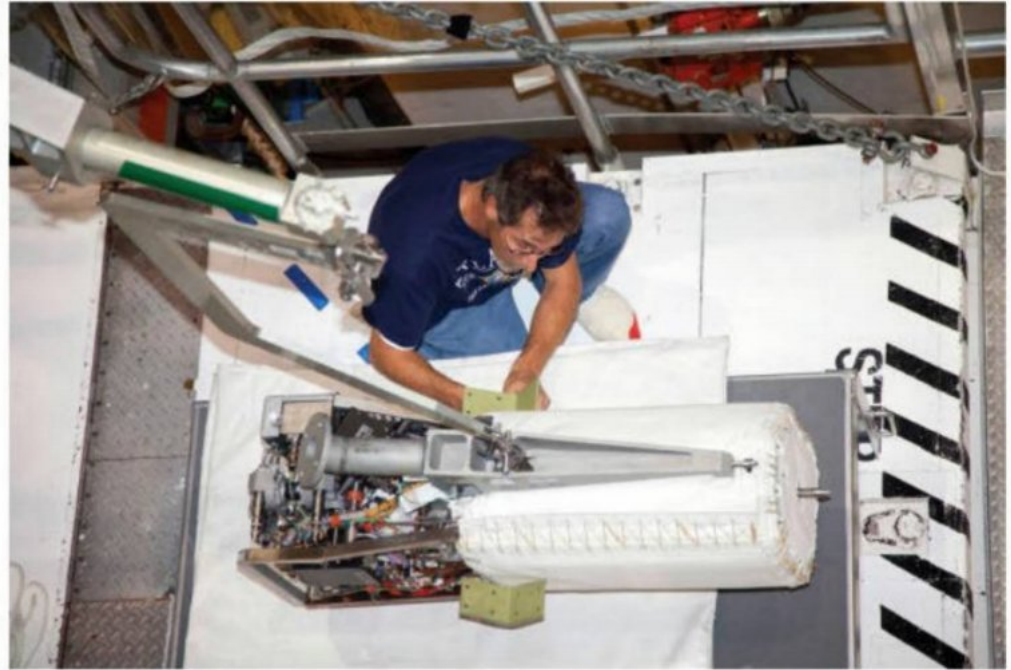
Today, fuel cells form an important component of what scientists call the hydrogen economy—a proposed future energy system in which hydrogen could become a major energy source, potentially replacing fossil fuels. While significant technological and cost breakthroughs are still needed before this vision becomes reality, fuel cells are already being used in various applications including transport (cars, buses, bicycles, and forklifts) and as power sources for buildings and communities.
Structure of hydrogen fuel cells
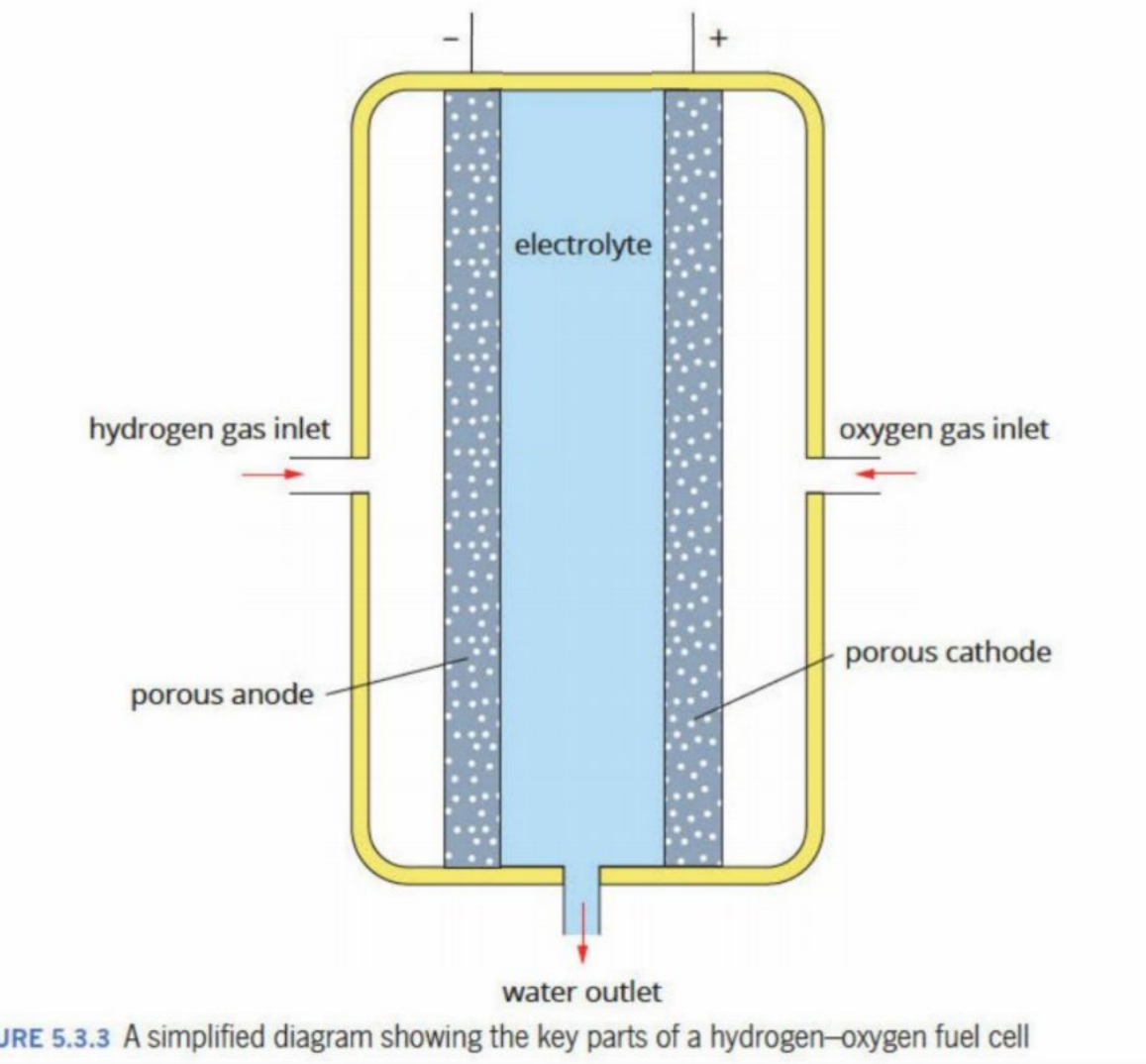
Understanding how fuel cells work begins with examining their basic structure. A hydrogen-oxygen fuel cell consists of several key components working together:
The fuel cell contains two separate compartments: one for hydrogen gas and another for oxygen gas. These compartments are separated by two porous electrodes and an electrolyte solution positioned between them. The electrode at the hydrogen compartment functions as the anode (negative electrode), while the electrode at the oxygen compartment serves as the cathode (positive electrode).
Note
Why porous electrodes matter:
The porous nature of the electrodes is crucial—tiny holes throughout the electrode material allow the hydrogen and oxygen gases to diffuse through and make contact with the ions in the electrolyte solution. This design enables the redox reactions to occur efficiently at the electrode surfaces. The size of the current that can be drawn from a fuel cell depends directly on the surface area of these electrodes.
The electrolyte serves as an ion carrier, transporting ions from one electrode to the other. This movement of ions through the electrolyte, combined with electrons flowing through the external circuit, completes the electrochemical process that generates electricity.
How fuel cells work
The operation of fuel cells centres on redox reactions occurring at the two electrodes. Oxidation of the fuel (such as hydrogen) takes place at the anode, whilst reduction of oxygen occurs at the cathode. The specific reactions depend on whether the fuel cell uses an alkaline or acidic electrolyte.
Important
Key principle to remember:
- At the anode: Oxidation occurs (fuel is consumed)
- At the cathode: Reduction occurs (oxygen is consumed)
- Both types produce the same overall result: hydrogen + oxygen → water
Alkaline fuel cells
Alkaline fuel cells use potassium hydroxide (KOH) solution as the electrolyte. NASA's Apollo program employed this type of fuel cell. The electrochemical reactions proceed as follows:
Example
Alkaline Fuel Cell Reactions:
At the anode (−): Hydrogen gas is oxidised by reacting with hydroxide ions from the electrolyte:
At the cathode (+): Oxygen gas is reduced:
Overall equation:
Notice that hydroxide ions () appear in the half-equations but cancel out in the overall equation.
Each individual cell produces approximately 1 volt. Higher voltages can be obtained by connecting multiple fuel cells in series to form a battery or fuel cell stack. The only by-products of this process are water and heat.
Acidic fuel cells
The most common type of acidic fuel cell uses phosphoric acid as the electrolyte. These fuel cells involve different half-reactions but produce the same overall result:
Example
Acidic Fuel Cell Reactions:
At the anode: Hydrogen gas is oxidised:
At the cathode: Oxygen gas is reduced:
Overall equation:
Here, hydrogen ions () appear in the half-equations but not in the overall equation.
Importantly, both alkaline and acidic fuel cells produce the same final result—the combination of hydrogen and oxygen to form water.
The role of catalysts
Catalysts play a vital role in enhancing fuel cell performance. These substances increase the rate of reaction and boost the current that can be produced. The catalyst at the anode speeds up the oxidation of the fuel gas—platinum metal is commonly used for this purpose. Meanwhile, the cathode catalyst accelerates the reduction reaction and can be made from different materials, such as nickel powder.
Types of electrolytes
Various types of electrolytes have been employed in fuel cells, each offering different advantages:
- Aqueous alkaline solutions, typically potassium hydroxide (KOH)
- Liquid acids such as phosphoric acid ()
- Molten carbonate salts, including sodium carbonate () or magnesium carbonate ()
- Permeable polymer membranes that selectively allow only positive ions to pass through
- Ceramic materials made from metal oxides such as calcium and zirconium compounds
Efficiency of fuel cells
One of the key advantages of fuel cells lies in their superior efficiency compared to conventional power generation methods. Like other galvanic cells, fuel cells convert chemical energy directly into electrical energy, avoiding the multiple energy transformation steps that occur in traditional power stations.
Note
Why direct conversion matters:
Fuel cells achieve higher efficiency because they skip the energy-wasting intermediate steps used in conventional power generation. Traditional power stations convert chemical energy → heat energy → mechanical energy → electrical energy, losing energy at each step. Fuel cells go straight from chemical to electrical energy.
Fuel cells typically achieve efficiencies of 40-60%, which compares favourably with thermal power stations (30-40% efficiency) and internal combustion engines used in cars (25-30% efficiency). The direct conversion process eliminates many of the energy losses associated with heat engines.
Modern fuel cells can achieve even higher efficiencies by capturing and utilising the waste heat they produce. This heat can be used to generate steam for heating purposes or to operate a turbine, potentially raising overall efficiency up to 85%.
Different types of fuel cells
Scientists have developed various types of fuel cells using different electrolytes, electrodes, and operating temperatures. The following table summarises some of the main types:
| Fuel cell type | Electrolyte | Efficiency (%) | Operating temperature (°C) | Application |
|---|---|---|---|---|
| Alkaline fuel cell | Potassium hydroxide | 60 | 90-100 | Space vehicles |
| Methanol fuel cell | Polymer membrane | 40 | 50-100 | Mobile phones, laptop computers |
| Molten carbonate fuel cell | Molten lithium, sodium or potassium carbonates | 50-60 | 600-1000 | Electricity utility |
| Phosphoric acid fuel cell | Liquid phosphoric acid | 40-45 | 175-200 | Electricity utility, transportation |
| Proton-exchange membrane fuel cell | Solid polyperfluorosulfonic acid | 60 | 60-100 | Portable power, transportation |
| Solid oxide fuel cell | Solid zirconium oxide | 50-60 | 600-1000 | Electricity utility |
Different fuel cells are suited to different applications based on their operating characteristics. For example, low-temperature cells work well for portable devices, whilst high-temperature cells are better for large-scale power generation.
Applications of fuel cells
Fuel cells have moved from experimental technology to real-world applications across various sectors. Most major vehicle manufacturers are developing fuel cell vehicles as alternatives to internal combustion engines, attracted by their superior fuel efficiency and lower emissions of greenhouse gases and other pollutants. As of December 2022, more than 56,000 fuel cell cars had been sold worldwide, with manufacturers like Honda, Toyota, and Hyundai launching mass-produced hydrogen fuel cell vehicles.

However, battery-powered electric vehicles have seen more rapid market growth, suggesting that hydrogen fuel cells may occupy a more specialised role in transport in the near future. Some notable applications include:
Note
Current fuel cell applications:
Transport applications:
- Fuel cell cars, buses, and bicycles
- Hydrogen fuel cell trains operating in Northern Germany
- Type 212 class submarines for the German and Italian navies, which can remain submerged for up to three weeks using proton-exchange membrane fuel cells
- Forklifts and other industrial vehicles
Stationary power generation:
- A 59 MW power plant in South Korea providing power and heat for local homes
- 430,000 fuel cells installed in buildings in Japan for combined heat and power
- Technology companies in Silicon Valley installing fuel cells as sustainable power sources
- A 2 MW proton-exchange membrane fuel cell in Yingkou, China, generating 20% of energy for an industrial chemical plant
Emerging applications:
- Research into fuel cells for space exploration vehicles, including the Mars Flyer robotic aircraft
- Emergency backup power systems for buildings and communities
- Portable power for remote locations
Despite these successes, challenges around cost and performance remain. Improvements are still required for hydrogen fuel cells to become truly competitive with other energy technologies across all applications.
Advantages and disadvantages of fuel cells
As fuel cell technology continues to develop, it's important to understand both its benefits and limitations. Scientists and engineers are working to address current disadvantages whilst capitalising on the inherent advantages of this technology.
Advantages
Direct energy conversion: Fuel cells transform chemical energy directly into electrical energy, which is more efficient than the series of conversions in fossil fuel power stations (chemical energy → heat energy → mechanical energy → electrical energy). This direct conversion significantly reduces energy losses.
Clean by-products: When hydrogen serves as the fuel, fuel cells produce only water and heat as by-products. No greenhouse gases such as carbon dioxide are released during operation, making them much cleaner than combustion-based technologies.
Continuous electricity generation: Unlike conventional batteries that need periodic recharging or replacement, fuel cells generate electricity continuously as long as fuel is supplied to them. This makes them ideal for applications requiring reliable, long-term power.
Fuel flexibility: Fuel cells can utilise various fuels, not just hydrogen. This flexibility allows them to adapt to different fuel availability situations and applications.
On-site generation: Electricity can be produced where it's needed, eliminating dependence on connection to an electricity grid. The waste heat can be captured and used for water heating or space heating, further improving overall energy efficiency.
Disadvantages
Important
Key challenges facing fuel cell technology:
While fuel cells offer significant advantages, several obstacles must be overcome before widespread adoption becomes feasible:
Constant fuel supply requirement: Fuel cells need a continuous supply of fuel to operate. Unlike batteries, which store energy internally, fuel cells must be connected to an external fuel source.
High costs: Fuel cells remain expensive, partly because the technology is still developing. Until they are manufactured in larger quantities, they won't benefit from economies of scale that could reduce costs.
Expensive materials: Some types of fuel cells require expensive electrolytes and catalysts (such as platinum), which significantly increase their cost.
Infrastructure requirements: Using fuel cells for transport requires an extensive network of hydrogen filling stations. This infrastructure doesn't yet exist in most places, limiting widespread adoption.
Hydrogen sourcing issues: The hydrogen used in many fuel cells is currently sourced mainly from fossil fuels, which involves energy losses and greenhouse gas emissions during hydrogen production. This undermines some of the environmental benefits.
Storage and safety concerns: Hydrogen is difficult to store safely and efficiently. It requires high-pressure storage tanks or cryogenic cooling, both of which present technical and safety challenges.
Material concerns: Some types of fuel cells use toxic electrolytes, and their electrodes may contain rare, expensive, or harmful materials, raising environmental and sustainability questions.
Remember!
Summary
Key Points to Remember:
-
Fuel cells are galvanic cells that continuously convert chemical energy into electrical energy through redox reactions, operating as long as fuel is supplied.
-
In hydrogen fuel cells, oxidation occurs at the anode (where hydrogen is consumed) and reduction occurs at the cathode (where oxygen is consumed), producing water, heat, and electricity.
-
Fuel cells achieve significantly higher efficiency (40-60%, up to 85% with heat recovery) than thermal power stations (30-40%) or car engines (25-30%) because they convert chemical energy directly to electrical energy.
-
Various types of fuel cells exist using different electrolytes (alkaline, acidic, molten carbonate, polymer membrane, solid oxide), each suited to different applications and operating temperatures.
-
Whilst fuel cells offer major advantages including clean operation and continuous power generation, challenges remain including high costs, infrastructure requirements, and current reliance on fossil fuel-derived hydrogen.