Supplying Energy Sustainably (VCE SSCE Chemistry): Revision Notes
📚Revision Notes
Supplying Energy Sustainably
The challenge of fossil fuels
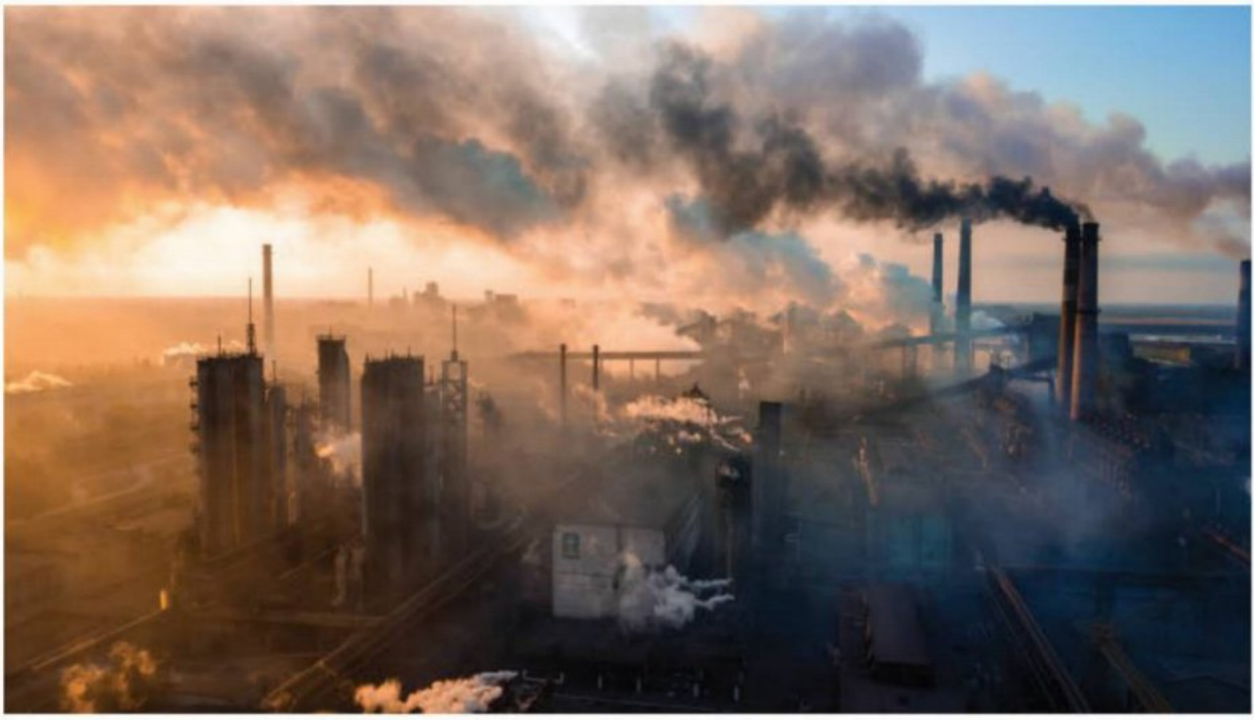
Fossil fuel combustion represents the primary source of greenhouse gas emissions and atmospheric pollutants that contribute to human-caused climate change. There is widespread recognition of the need to improve energy conversion efficiency and reduce both fuel consumption and pollutant emissions. In recent decades, scientists and engineers have been searching for alternative energy sources to protect our planet from further environmental damage.
Note
The transition to sustainable energy sources has become one of the most critical challenges facing humanity. The scientific consensus is clear: we must act urgently to reduce our dependence on fossil fuels to avoid catastrophic climate consequences.
Why we need alternatives to fossil fuels
Traditional power generation and transportation systems rely heavily on burning fossil fuels, which releases large quantities of carbon dioxide and other pollutants into the atmosphere. These emissions are driving global climate change and causing serious environmental harm. To address this crisis, we need to find more sustainable ways to meet our energy needs.
Biofuels as partial alternatives
Biofuels are fuels derived from plants or organic waste materials that can serve as alternatives to fossil fuels. Different types of biofuels offer varying levels of environmental benefits.
Types of biofuels and their benefits
- Bioethanol: Produces approximately less greenhouse gas emissions compared to equivalent fossil fuels
- Biodiesel: Generates about fewer greenhouse gas emissions than traditional diesel
- Solid biofuels: Include materials like wood and dried animal waste
- Biogas: Produced from organic decomposition, though with lower methane content than natural gas
Limitations of biofuels
Despite their environmental advantages, biofuels face significant constraints that limit their potential as complete replacements for fossil fuels.
Important
Land use conflicts: Bioethanol and biodiesel are manufactured from crops, which means they compete with food production for agricultural land. To replace just of global liquid transportation fuels with biofuels by 2050 would require nearly of the world's current crop production. This creates serious concerns about food security and prices.
Energy quality issues: Solid biofuels, whilst not competing with food production, typically have low energy content and don't produce much energy when burned. Similarly, biogas releases less energy per gram than natural gas because of its lower methane content.
Partial solution only: Because of these limitations, biofuels are likely to provide only a partial replacement for fossil fuels rather than a complete solution.
Fuel cells: a more efficient approach
For energy supplies to become truly sustainable and minimise carbon dioxide emissions, developed nations need to look beyond both fossil fuels and biofuels. Fuel cell technology is predicted to play a crucial role in our energy future.
Why fuel cells are more efficient
Fuel cells offer significant advantages over traditional power generation methods because they avoid the energy losses that occur in coal-fired power stations and combustion engines. This results in substantially reduced greenhouse gas emissions.
Note
Energy efficiency comparison:
- Fuel cells: up to efficient
- Thermal power stations: efficient
- Car engines: efficient
The key difference is that fuel cells involve only a single energy transformation (chemical energy electrical energy), whereas power stations and internal combustion engines require multiple energy transformations, each of which loses some energy.
Fuel cell versatility
Whilst fuel cells can be designed to use various fuels including natural gas, methanol, ethanol and ammonia, most are designed to use hydrogen. Hydrogen-oxygen fuel cells produce only water as their product, making them particularly attractive for reducing pollution.
Hydrogen as a fuel for the future
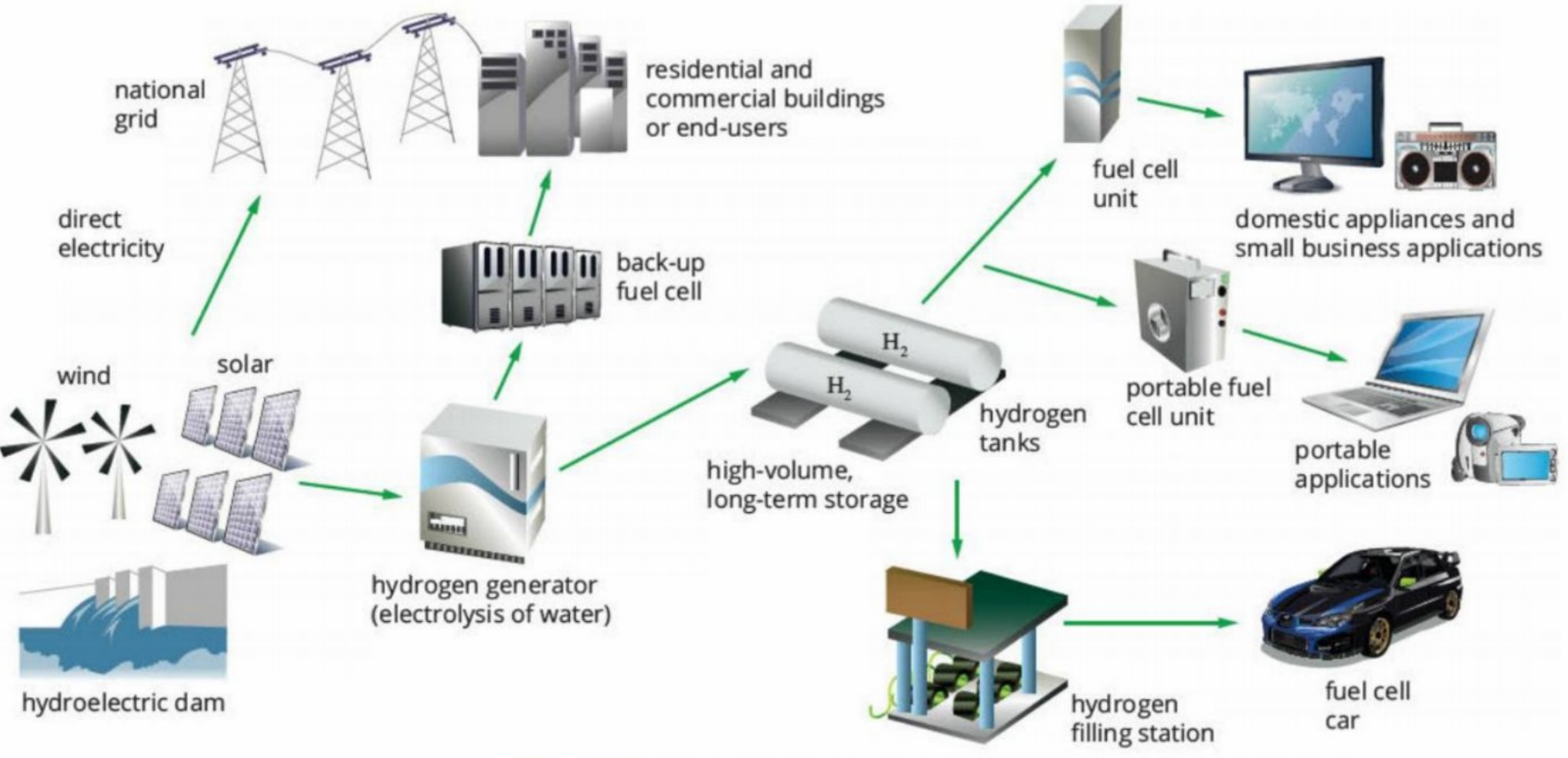
Some scientists envision a future hydrogen economy where hydrogen replaces hydrocarbons as the principal energy source for transport and other applications. In this vision, fuel cells would replace internal combustion engines.
The hydrogen economy concept
The hydrogen economy offers the potential for dramatically reduced greenhouse gas emissions and pollutant production without compromising quality of life. However, this depends on producing hydrogen from renewable sources rather than fossil fuels.
Note
The concept has experienced periods of both enthusiasm and scepticism over past decades. Recently, however, improvements in technology and manufacturing have made fuel cell products more commercially viable. Combined with increased global commitment to limiting climate change, interest in hydrogen-based fuel cell technologies is growing.
Challenges for hydrogen adoption
Widespread use of hydrogen as an energy source presents several challenges:
- Production methods
- Distribution infrastructure
- Storage solutions
- Safety considerations
Hydrogen production methods
Current production: steam reforming
At present, approximately of hydrogen is produced from fossil fuels such as natural gas, oil and coal through a process called steam reforming. In this process, steam reacts with fossil fuel at high temperature in the presence of a nickel catalyst.
For methane:
The carbon monoxide produced can generate additional hydrogen using a copper or iron catalyst:
Limitations of steam reforming
Whilst a fuel cell using hydrogen can be described as a 'zero-emission' device (producing only water, electricity and heat), the production of hydrogen through steam reforming creates significant problems.
Important
The hydrogen has lower energy content than the original fuel, as energy is lost as waste heat during these exothermic reactions. Additionally, steam reforming produces carbon dioxide emissions, similar to burning the fossil fuel directly in a power station or engine. This somewhat negates the environmental benefits of using fuel cells.
Potential bridging solution
Some advocates suggest that carbon dioxide from steam reforming could be captured at source and stored, preventing its release to the atmosphere. Hydrogen from this source has been proposed as a temporary solution to help meet climate objectives whilst the cost of producing hydrogen from renewable sources decreases.
Sustainable hydrogen production
Currently, only two practical methods exist for generating hydrogen sustainably:
- Electrolysis using renewable energy: Using electricity from solar farms, wind farms or other renewable sources to convert water into hydrogen (covered in later chemistry studies)
- Biogas conversion: Collecting methane from landfill sites and converting it to hydrogen through steam reforming
The cost challenge
Hydrogen sourced from renewable sources (often called 'green' hydrogen) is the most desirable option because the energy it produces would be truly sustainable. However, it currently costs approximately twice as much as hydrogen produced from coal and natural gas.
Note
Although relatively little hydrogen is produced from renewable sources at present, the costs of producing green hydrogen are falling rapidly, and production quantities are projected to grow quickly in coming years.
Hydrogen supply, storage and safety
Infrastructure requirements
Widespread adoption of hydrogen as the primary fuel for vehicles and electricity generation would require massive investment in infrastructure, including:
- Modified or new pipelines
- Hydrogen filling stations
- Improved storage facilities
Storage challenges
Although hydrogen has very high energy content by mass ( compared to petrol's ), storage presents significant challenges, particularly for vehicles.
Important
The fundamental problem: Hydrogen is a gas at room temperature.
Current storage methods in cars, trucks and buses:
- Liquid hydrogen (requires very low temperatures)
- Compressed hydrogen (requires high pressure)
The limitation: The energy available per litre of liquid or high-pressure hydrogen is much less than for liquid hydrocarbon fuels like petrol. This means hydrogen vehicles need much larger fuel tanks to achieve a satisfactory driving range.
Materials-based storage solutions
Scientists are investigating alternative storage methods known as materials-based storage, which show considerable promise but require further development. This technique uses materials—either solids or liquids—that can absorb or react with hydrogen and then release it when needed.
Advantages: These methods may allow hydrogen storage in:
- Smaller volumes
- Low pressure
- Temperatures close to room temperature
Metal organic frameworks
Metal organic frameworks (MOFs) represent a promising new class of materials for capturing, storing and delivering gases including hydrogen and carbon dioxide.
Note
Structure: These highly porous, sponge-like materials consist of two components:
- Metal ions
- Organic molecules called 'linkers'
Advantages:
- The choice of metal ion and linker allows control over which gases are captured and the storage capacity
- Large surface area per gram
- Can store significant quantities of , , and other gases
Applications: Beyond hydrogen storage, MOFs have potential uses in:
- Gas separation
- Catalysis
- Drug delivery
- Conducting solids

Safety considerations
Hydrogen use poses unique safety challenges because hydrogen is highly flammable and potentially explosive. Implementation would require:
- Strict codes and standards
- Hydrogen sensors to detect leaks
- Appropriate safety protocols
Note
Important perspective: Multiple studies have concluded that, although the safety concerns differ from those of petrol, using hydrogen as a fuel is no more dangerous than petrol. Experts predict that hydrogen will eventually be used with at least the same level of safety and convenience as current hydrocarbon fuels.
Designing better fuel cells
Fuel cells are likely to play a critical role in developing technologies for:
- Renewable energy generation
- Energy storage
- Energy management
- Greenhouse gas reduction
Scientists continue to optimise electrode materials, electrolytes and cell designs to improve characteristics such as cost, energy storage capacity, safety, lifetime and performance.
Environmental and humanitarian considerations
One important consideration is avoiding materials that pose environmental and humanitarian risks, particularly heavy metals like cobalt and nickel.
Important
The cobalt problem: Cobalt, largely found in Central Africa, has come under scrutiny due to:
- Unsafe mining conditions
- Exploitative labour practices, including child labour
- Workers labouring in harsh and dangerous conditions without protective equipment
- Exposure of local communities to potentially harmful cobalt levels
- Health problems in local populations, including birth defects
Better alternatives: The platinum group metals (platinum, rhodium, palladium) widely used in modern fuel cells are considered to have fewer associated risks than some other metals.
Green chemistry principles
The development of new battery and fuel cell technologies exemplifies the move from a linear economy (products discarded after use) to a circular economy (optimal use and reuse of resources). These developments also demonstrate the importance of creativity and innovation in applying green chemistry principles to design safer and more sustainable products.
Note
Two particularly important green chemistry principles:
- Design for energy efficiency
- Use of renewable feedstocks
Emerging technologies
Society increasingly expects products designed for reuse rather than disposal. Two examples of emerging fuel cell technologies that embody these principles are:
- Microbial fuel cells
- Redox flow batteries
Microbial fuel cells
A microbial fuel cell (MFC) is a device that converts organic material into electrical energy through the action of microorganisms.
How microbial fuel cells work
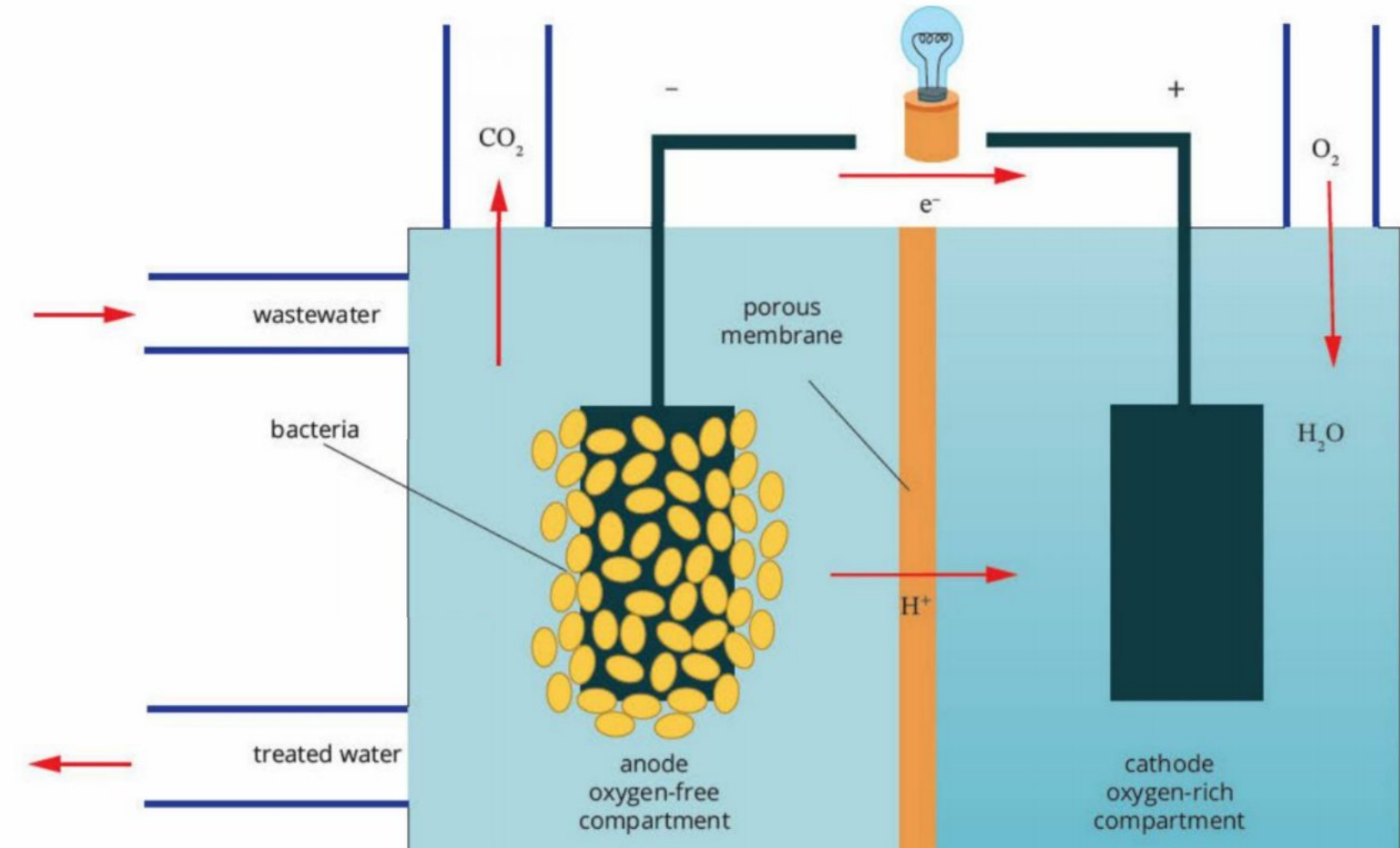
Construction: An MFC contains two compartments separated by a membrane:
Note
-
Anode compartment (oxygen-free):
- Contains microorganisms that form a film on the anode surface
- Microorganisms oxidise organic material (usually to , protons and electrons)
- Microorganisms transfer electrons to the anode
-
Cathode compartment (oxygen-rich):
- Uses an oxidising agent (often oxygen) for the cathode reaction
- Receives electrons from the external circuit
-
Membrane:
- Separates the two compartments
- Allows ion movement to balance charge
Chemical reactions in MFCs
At the anode:
At the cathode:
Advantages of microbial fuel cells
Operating conditions: MFCs operate at or near room temperature, making them practical for many applications.
Fuel sources: They can use low-grade waste materials including:
- Soils and sediments
- Wastewater
- Agricultural waste
Applications:
- Sustainable wastewater treatment
- Contaminant removal
- Low-power electricity generation
Energy efficiency: MFCs achieve energy efficiencies in the range.
Redox flow batteries
Redox flow batteries represent an interesting type of fuel cell under development, offering potential advantages over traditional battery technologies.
Construction and operation
A redox flow battery has several key features:
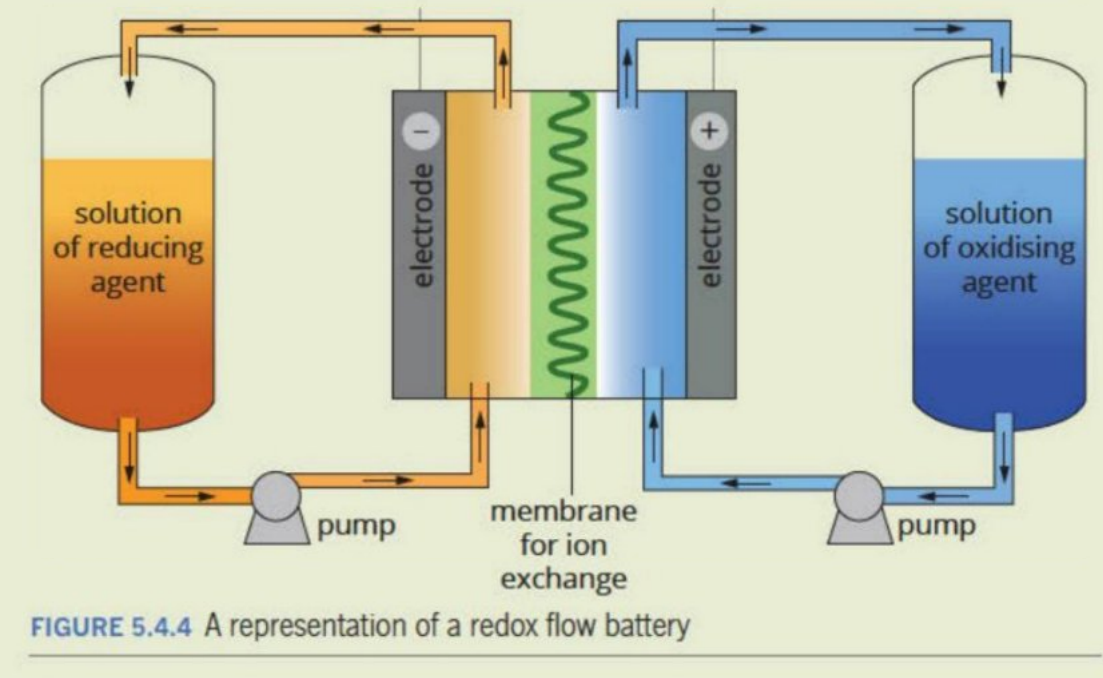
- Two separate compartments containing solutions of reactants
- Storage tanks from which solutions are pumped into the cell
- Membrane between compartments that allows ion exchange whilst preventing contact between solutions
- Reversibility: Can be recharged by applying opposite voltage, causing the reverse reaction
Advantages
- Lower cost: Potentially cheaper energy storage than devices like lead-acid batteries
- Safer materials: Don't contain potentially toxic metals like lead, cadmium, zinc or nickel
- Easy transportability: Can be moved relatively easily
- High efficiency: Some designs achieve up to energy efficiency
- Scalability: Can be joined together for large-scale deployment
Disadvantages
- Complexity: Storage tanks, pumps and flow control units add weight and operational complexity
- Size: Not ideal for small-scale applications
Current applications
The main development focus is on:
- Remote area power systems
- Grid energy storage
- Compensating for fluctuations in renewable energy supply
Types of redox flow batteries
Vanadium redox flow batteries: First developed in Australia nearly 40 years ago, these batteries:
- Offer immediate energy release
- Have long lifespans
- Use vanadium, which is much less toxic than lead or cadmium
- Achieve energy efficiencies up to
Zinc-bromine redox flow batteries: Another type being commercialised that:
- Offers sustained energy output
- Has a lifetime exceeding 10 years
- Has been described as a type of electroplating machine (zinc metal plates onto an electrode during operation)
Summary
Key Points to Remember:
-
Fossil fuel combustion is the dominant source of greenhouse gases driving climate change, necessitating a shift to sustainable energy sources.
-
Biofuels offer reductions in greenhouse gas emissions but face limitations including competition with food production and lower energy content.
-
Fuel cells are significantly more efficient than traditional combustion methods (up to vs ) because they involve only one energy transformation rather than multiple transformations.
-
Hydrogen has enormous potential as a clean fuel, but most hydrogen () is currently produced from fossil fuels through steam reforming. Green hydrogen from renewable sources costs about twice as much but prices are falling rapidly.
-
Emerging technologies like microbial fuel cells and redox flow batteries exemplify green chemistry principles and the shift from a linear to a circular economy, offering sustainable solutions for energy storage and generation.