Medicinal Ingredients from Plants (VCE SSCE Chemistry): Revision Notes
📚Revision Notes
Medicinal Ingredients from Plants
Plants have been fundamental sources of medicines throughout human history, even before the development of written records. This practice was not limited to any single civilization, with diverse cultures in China, the Middle East, and Australia all utilizing different plant species to treat various medical conditions. Today, approximately half of all medicines used globally are derived from plants, and between 50,000 and 80,000 flowering plant species are currently used for some form of medical treatment.
Note
The use of plants as medicine represents one of humanity's oldest scientific practices, predating written history and transcending cultural boundaries across continents.
History of plant medicines
Salicylic acid (aspirin)
Salicylic acid was first identified by Hippocrates, the Greek medical practitioner considered the founder of medicine. He discovered that white powder extracted from willow bark could alleviate pain and fever. Through a simple one-step chemical process, salicylic acid can be converted into acetylsalicylic acid, commonly known as aspirin. This compound is used for pain relief and blood thinning.
Cannabis (CBD)
The use of cannabis for pain relief originated in central Asia or Western China many centuries ago. Although commonly associated with recreational use, cannabis is now registered as a medicine in most countries for treating arthritis and pain. The active ingredient, cannabidiol (CBD), has a complex molecular structure.
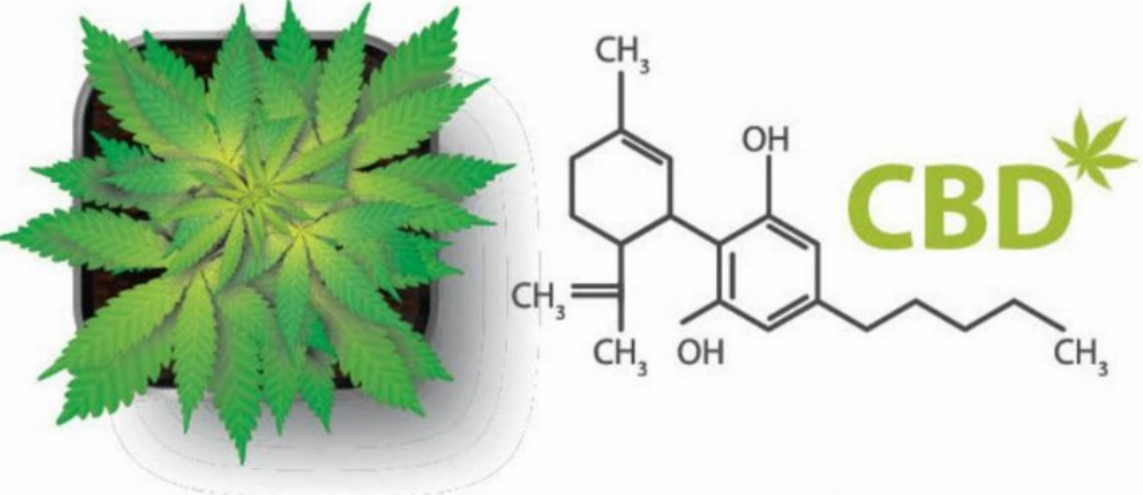
In Australia, the Cann Group became the first company to receive a cannabis research licence and harvested Australia's first approved medicinal cannabis crop in Mildura in 2022. The facility extracts compounds called cannabinoids from the plants to produce oils, tinctures, and capsules.
Morphine
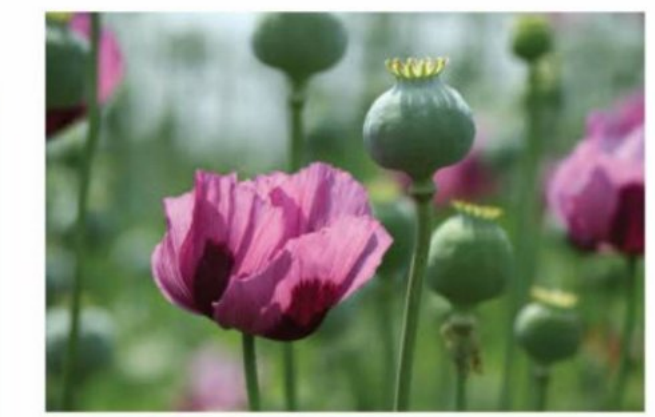
Documented evidence of morphine use for pain relief in the Middle East dates back to approximately 3400 BCE. Morphine is synthesized from opium, which is extracted from the fleshy seed pods of the poppy plant.
Yew tree extracts (Taxol)
Druids and Celtic tribes in Europe historically used yew tree extracts for increased fertility and longevity. While general yew extract is now considered toxic, one component called Taxol has been isolated and found to be highly effective at fighting particular cancers.
Kangaroo apples (bush tomato)
This is one of many plants known to Indigenous Australians for their medicinal properties. Kangaroo apples contain a natural anti-inflammatory steroid that aids cortisone production and is beneficial for treating achy joints, wounds, and encouraging skin rejuvenation.
Important
The use of kangaroo apple requires care because the unripe fruit is bitter and highly toxic—it is only safe to consume when fully ripened.
Today, kangaroo apples are grown in Europe, where extracts are used in cortisone and steroid preparation. This plant was widely used in drier regions of Australia, including by the Wotjobaluk people of Western Victoria.
Digitalis (digoxin)
In 1775, Scottish doctor William Withering observed a patient making a remarkable recovery after using a herbal remedy from a local source. The active ingredient was identified as digitalis, extracted from the foxglove plant, which is used to treat heart irregularities.
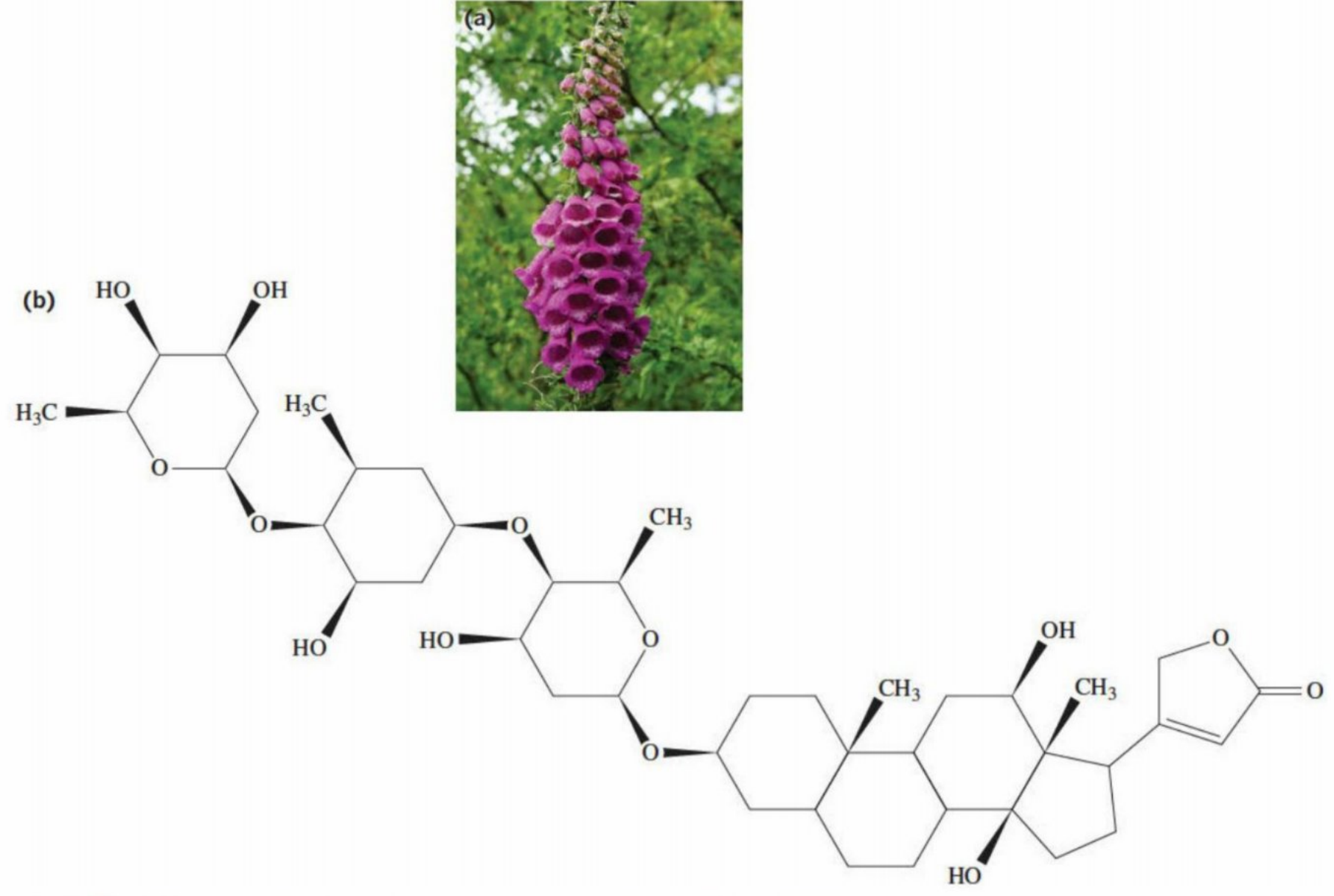
The molecular formula of digoxin is , and it has a complex chemical structure featuring multiple sugar rings connected to a steroid-like component.
Functions of medicinal plants
Note
Definition: A medicinal plant is defined as a plant extract that has a biological impact on the body. Many of these extracts are available in pharmacies as drugs or ointments.
They are used to treat, diagnose, and prevent diseases through various functions, including:
- Lowering blood pressure
- Reducing cholesterol levels
- Relieving pain
- Preventing seizures
- Preventing conception
- Calming anxiety
- Treating skin conditions
The effectiveness of plant extracts in treating medical conditions has been clearly established over time through documented use and modern scientific research.
Case study: The uncha plant
The uncha plant (Dodonaea polyandra) has long been used by the Kuuku I'yu people of Cape York Peninsula in Far North Queensland. To soothe toothache, they apply the leaf and stem of this plant to the gums.
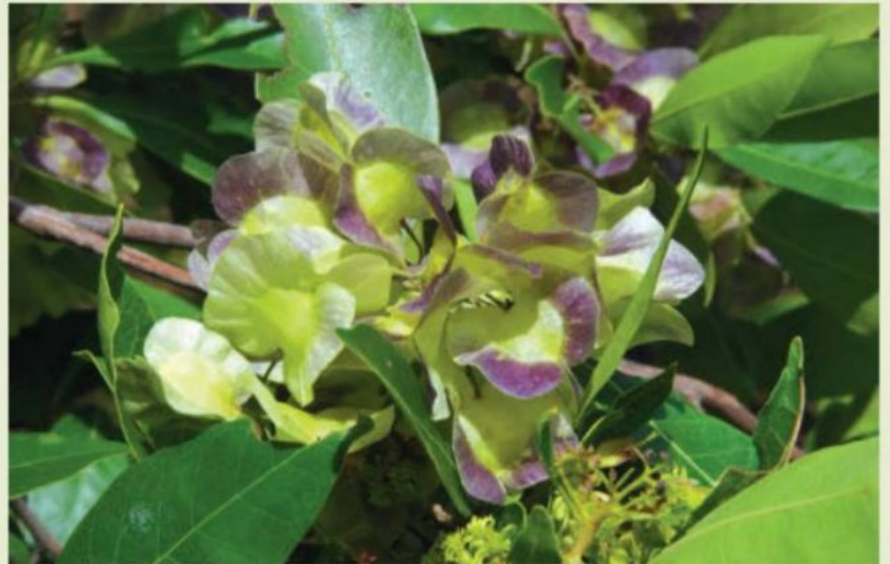
A research team from the University of South Australia, led by Dr Susan Semple, partnered with the Chuulangun Aboriginal Corporation and the Traditional Custodians of the region to investigate the efficacy (effectiveness) of the active agents in the uncha plant. The investigation over several years involved extracting active ingredients using a polar ethanol/water blend as a solvent.

Active ingredients in the uncha plant
The two compounds of most interest identified by the research team are:
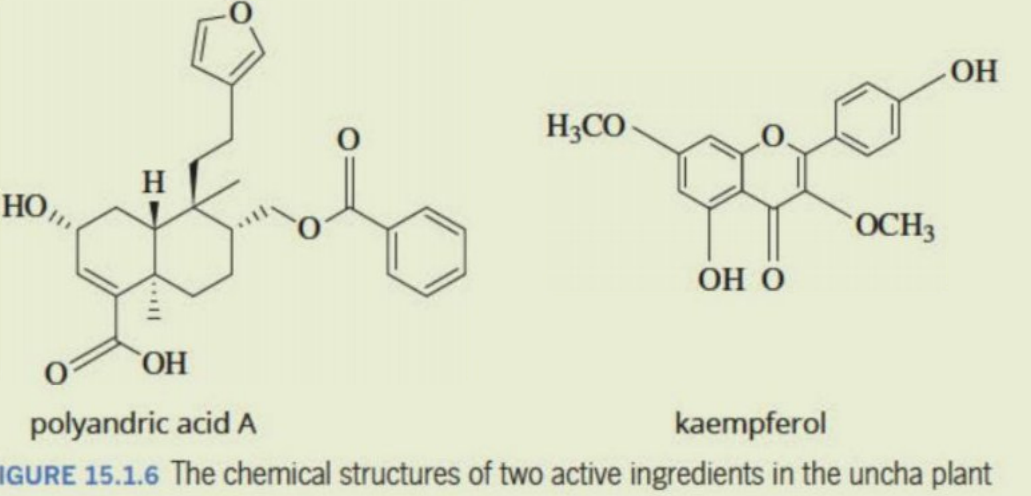
1. Polyandric acid A
Terpenes are natural substances containing the formula . Four different terpenes were isolated by the University of South Australia team. They named the most promising terpene polyandric acid A because it had never been isolated before. The structure of this molecule is complex, requiring a full array of infrared spectroscopy, mass spectroscopy, and NMR to determine the functional groups present and their arrangement. Experiments with mice have demonstrated the effectiveness of polyandric acid A in reducing inflammation.
2. Kaempferol
Kaempferol is a natural flavour found in a wide variety of plants and vegetables, including kale, spinach, tea, and beans. It is a bitter-tasting, yellow, crystalline solid with a melting point around 280°C. It can be extracted from plants using hot ethanol. The kaempferol extracted from the uncha plant has also been shown to have anti-inflammatory properties.
Note
This research demonstrates how traditional Indigenous knowledge can be combined with modern scientific techniques to validate and understand medicinal plant properties.
Extraction and purification of active ingredients
To study plant components and assess their potential as medicines, scientists must:
- Extract the molecules of interest from the plant
- Separate the molecules from each other
- Determine the structure of each component
The two most common methods for extracting components from plants are solvent extraction and steam distillation.
Solvent extraction
When boiling water is poured onto tea leaves, the water draws tannins and other extracts from the solid leaves, creating a coloured solution. This is an example of solvent extraction.
Note
Definition: Solvent extraction is a separation process involving a liquid and a solid. A solid object (the plant) is placed in contact with a liquid (the solvent). The plant components of interest are transferred to the solvent.
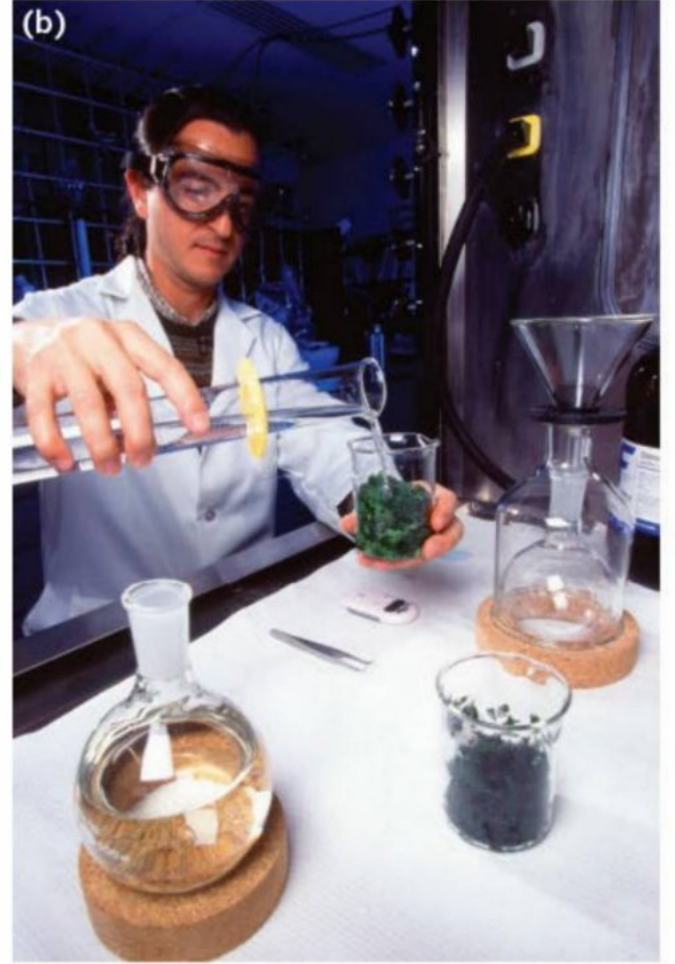
Not all extraction is as simple as brewing tea. For example, pouring boiling water onto hemp seeds will not effectively extract hemp oil. Scientists use various modifications to the extraction process depending on the properties of the substances to be extracted:
Grinding or blending
Breaking up the plant structure by grinding or blending the leaves increases the surface area available for extraction.
Adjusting the solvent
Water is a polar solvent that is typically effective for extracting polar molecules. For non-polar molecules, non-polar solvents are used, and for molecules with low polarity, solvent blends are often employed. The key principle is that the polarity of the solvent should match the polarity of the extract to maximize extraction efficiency.
Adjusting the temperature
If the desired extracts are thermally stable (not damaged by heat), prolonged heating can improve extraction efficiency.
Steam distillation
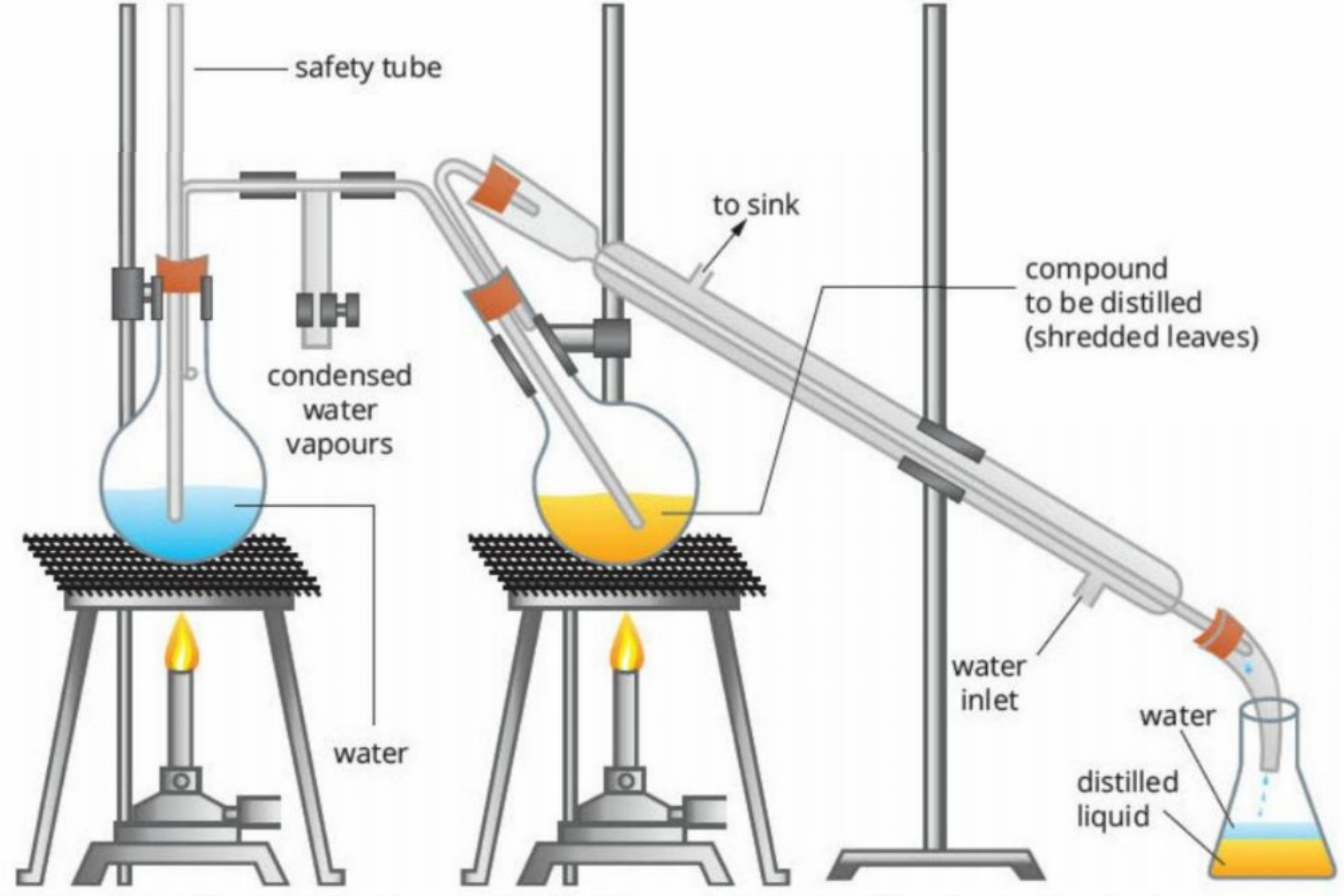
Another process used to extract medicinal compounds from plants is steam distillation. In this technique, a boiler produces a flow of steam that passes through the plant leaves. The hot steam breaks down plant cells and carries plant oils with it. The steam and oils are then condensed. Because the oils are usually non-polar, they are easily separated from the water as they form a distinct layer on top.
Important
This technique is most effective when the active ingredients are volatile (easily evaporated) and thermally stable (not damaged by heat).
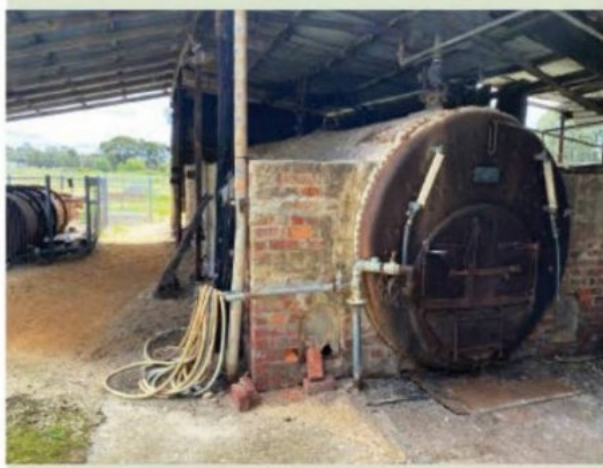
Steam distillation is used commercially in Australia to produce tea-tree oil, eucalyptus oil, and most aromatic oils. It's important to note that plant oils produced this way are not pure substances—they are mixtures of many components.
Example
Case Study: Eucalyptus oil production in Australia
Soon after the First Fleet arrived in 1788, the Surgeon General, John White, noticed that Indigenous Australians had many medical uses for eucalyptus leaves. In 1852, pharmacist Joseph Bosisto opened Australia's first commercial eucalyptus distillery at Dandenong Creek, near Dandenong, Victoria. The oil was exported worldwide.
Uses of eucalyptus oil include:
- Nasal decongestant
- Treatment for asthma
- Relief for respiratory illnesses
- Disinfectant and cleaning agent
- Treatment of skin conditions
The Bosisto factory in Oakleigh and the Euca factory in Altona continue to produce eucalyptus oil and other aromatic oils in Victoria using plantations of Blue Mallee trees in Inglewood and other central Victorian locations, as these trees contain the highest concentration of eucalyptus oil.
Identification of structure and functional groups
Plant extracts obtained through solvent extraction or steam distillation usually contain many different compounds. Chromatographic techniques can separate these mixtures into individual components. Determining the structures of these components is complex and requires multiple analytical instruments.
Spectroscopic analysis of aspirin
As an example of how the structure of a medicine might be determined, we can examine the various spectra for aspirin (2-acetoxybenzoic acid), which has the molecular formula .
Mass spectrometry
The mass spectrum shows a very small molecular ion peak with an ratio of 180, confirming the molecular formula of aspirin. To a trained chemist, the fragmentation pattern also suggests the presence of other groups attached to the carbon ring.
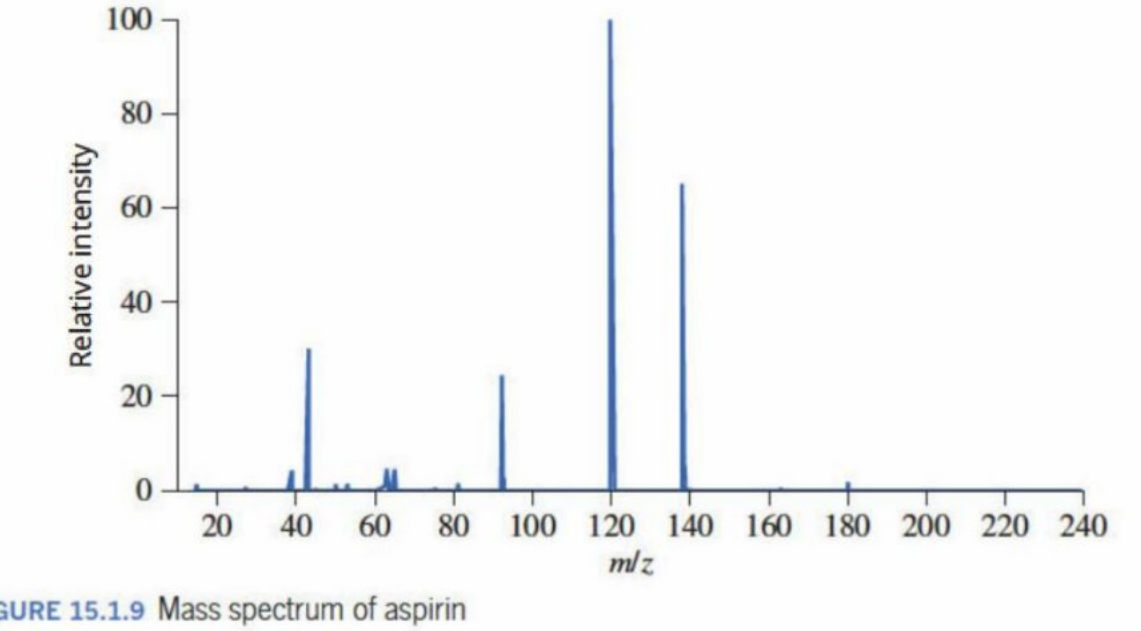
The major peaks in the mass spectrum appear at values of 43, 92, 120, and 138, with the base peak (100% relative intensity) at . These fragments correspond to different portions of the aspirin molecule that break apart during analysis.
Proton NMR spectroscopy
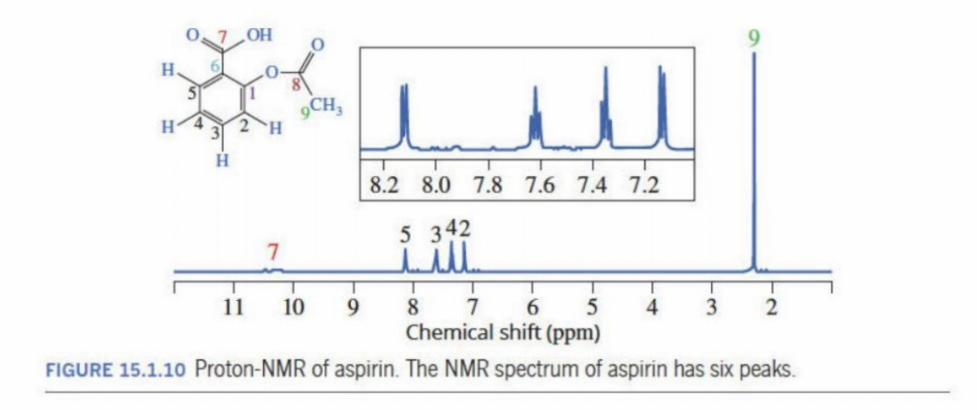
The proton-NMR spectrum for aspirin shows six distinct peaks. The enlargement on the spectrum displays the splitting pattern for peaks between chemical shifts of 7.0 and 8.2 ppm. This pattern allows chemists to determine the environments of hydrogen atoms bonded to the carbon ring. The numbering of peaks is matched to the structure of aspirin to show which environment is responsible for each peak.
Note
Note that there are no hydrogen atoms on carbons numbered 1 and 6 in the structure, which explains why these positions don't produce signals in the proton NMR spectrum.
Infrared spectroscopy
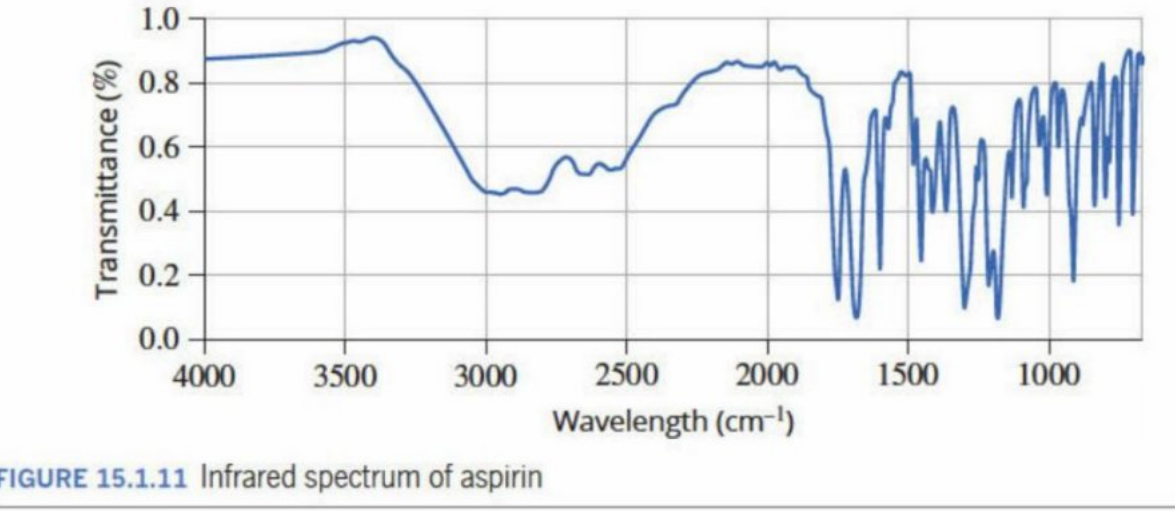
The infrared spectrum is particularly useful for confirming the functional groups present in aspirin:
- Broad absorption around 3000 cm: O-H bond (carboxylic acid)
- Sharp absorption at 1750 cm: C=O bond of an ester
- Sharp absorption at 1700 cm: C=O bond of a carboxylic acid
- Sharp absorption at 1550 cm: C-O bond of an ester
Important
By combining information from all three spectroscopic techniques—mass spectrometry, NMR spectroscopy, and infrared spectroscopy—chemists can definitively determine the structure of medicinal compounds extracted from plants.
Remember!
Summary
Key Points to Remember:
- Approximately 50% of all medicines currently used worldwide are derived from plants, representing between 50,000 and 80,000 flowering plant species.
- Historical examples of plant-based medicines include salicylic acid (aspirin) from willow bark, morphine from poppies, digitalis from foxglove, and cannabidiol (CBD) from cannabis.
- Solvent extraction and steam distillation are the two primary methods for extracting medicinal compounds from plants; the choice depends on the properties of the target compounds.
- In solvent extraction, the polarity of the solvent must match the polarity of the substance being extracted for maximum efficiency.
- Multiple spectroscopic techniques (mass spectrometry, NMR spectroscopy, and infrared spectroscopy) are essential for identifying the structure and functional groups of medicinal compounds extracted from plants.