Designing Polymers for a Purpose (VCE SSCE Chemistry): Revision Notes
📚Revision Notes
Designing Polymers for a Purpose
Introduction to polymer design
When creating polymers for specific applications, chemists can customise the properties of a particular polymer to match exactly what is needed. This customisation is achieved by varying several key factors:
- Chain length: Longer chains generally create stronger intermolecular forces
- Monomer choice: Different monomers produce different polymer properties
- Degree of branching: Branching affects how closely chains can pack together
- Additives: Foaming agents, plasticisers, and antioxidants can modify properties
Note
The ability to fine-tune polymer properties makes them incredibly versatile materials. By carefully controlling these factors during synthesis, chemists can design polymers with properties ranging from flexible and stretchy to rigid and heat-resistant, all from variations of the same basic building blocks.
Forms of polyethene
Polyethene (also called polyethylene) exists in several different forms, each with distinct properties determined by chain length and branching patterns.
Ultra-high molecular weight polyethene (UHMWPE)
UHMWPE consists of extremely long polymer molecules. The extended chain length means that dispersion forces between the chains are much stronger than in shorter polyethene chains. This results in a remarkably tough polymer that can be used for:
- Artificial hip joints
- Safety helmets
- Bulletproof vests
Important
The exceptional toughness of UHMWPE comes from the greatly increased intermolecular forces created by the very long chains. The relationship between chain length and strength is not linear—doubling the chain length more than doubles the intermolecular forces.
Linear low-density polyethene (LLDPE)
LLDPE is formed through copolymerisation—a process where ethene is polymerised together with a small amount of another alkene. A copolymer is a polymer made from at least two different monomers working together.
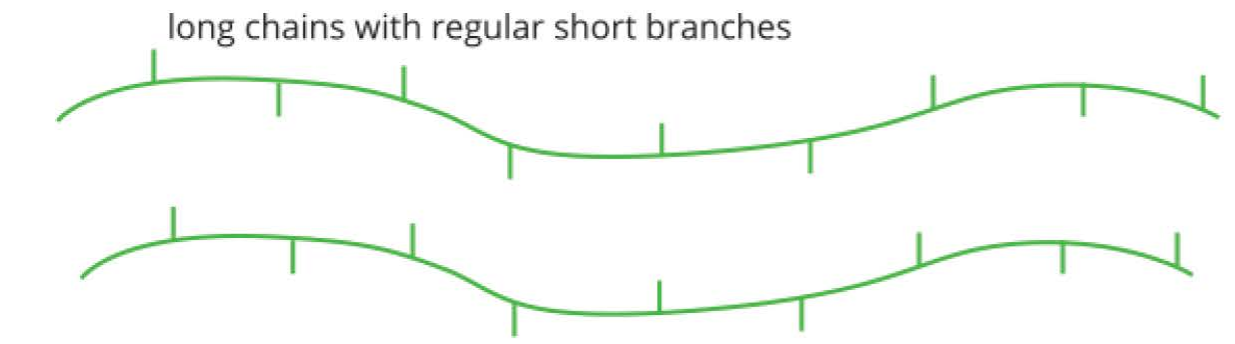
The structure of LLDPE represents a compromise between high-density polyethene (HDPE) and low-density polyethene (LDPE). It features:
- Long main chains like HDPE
- Regular short branches along the chain
- Lower density than HDPE
- Toughness similar to HDPE but at reduced cost
Note
Australian innovation - Alkatane
An Australian-developed LLDPE called Alkatane® is used to manufacture 2 L milk bottles. The toughness of this material has allowed manufacturers to significantly reduce the mass of each bottle, leading to substantial material savings.
Alkatane is produced by copolymerising ethene with a small percentage of but-1-ene using revolutionary metallocene catalysts. The but-1-ene molecules create regular small branches that increase the polymer's strength.
Choice of monomer
Different monomers produce polymers with vastly different properties. One effective strategy is to replace hydrogen atoms on the ethene monomer with more electronegative atoms or larger atomic groups.
Polyvinyl chloride (PVC)
When a chlorine atom replaces one hydrogen atom on ethene, the resulting polymer is polyvinyl chloride (PVC).
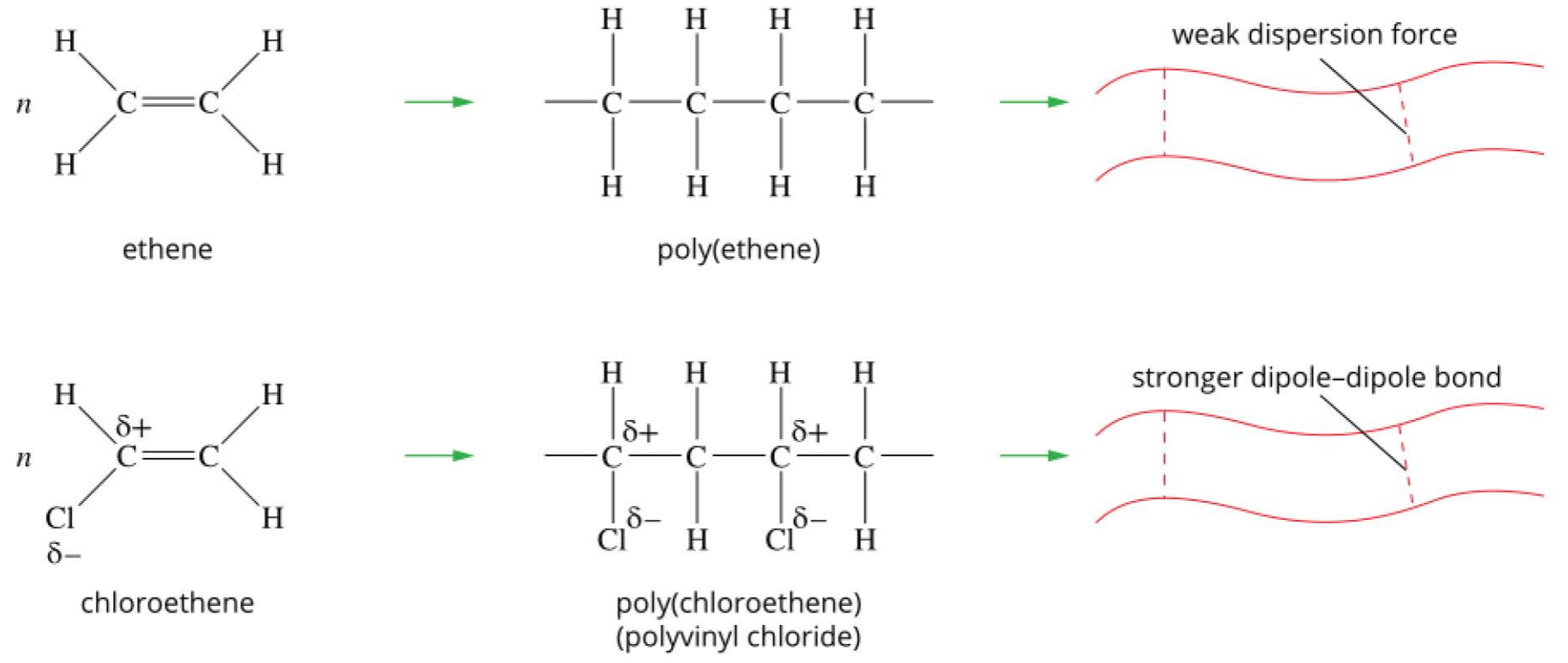
The chlorine atoms create permanent dipoles in the polymer molecules. This introduces dipole-dipole attractions between polymer chains, which are stronger than the simple dispersion forces found in polyethene. The consequences are:
- Higher melting point: The stronger intermolecular forces require more energy to overcome
- Low flammability: PVC will self-extinguish when removed from a flame
Note
Applications of PVC
The enhanced properties make PVC suitable for conveyor belts, cordial bottles, water pipes, and electrical wiring insulation. The combination of durability, low cost, and flame resistance makes it one of the most widely used polymers in construction and industrial applications.
Polytetrafluoroethene (PTFE or Teflon)
When all four hydrogen atoms in ethene are replaced with highly electronegative fluorine atoms, tetrafluoroethene () is formed. This monomer polymerises to create polytetrafluoroethene, commercially known as Teflon™.

The electronegative fluorine atoms reduce the strength of intermolecular bonds with other substances, creating exceptional properties.
Properties of Teflon
Key properties include:
- Non-stick surface: Repels both hydrophobic substances (oils, fats) and hydrophilic substances (water)
- Heat resistance: Melting point of 335°C with operating temperatures up to 260°C
- Chemical resistance: Unaffected by all known chemicals, including strong acids, bases, and organic solvents
- Mechanical strength: Strong and durable, though softer than PVC
- Low friction coefficient: Extremely slippery surface
- Flame resistance: Non-flammable
Note
Historical note
Teflon was first manufactured by the American company DuPont in 1938. Initially used in the atomic bomb project during World War II, its applications expanded after the war to include plumber's tape, non-stick cookware, and even artificial hips and vocal chords. The unique combination of chemical inertness and heat resistance made it invaluable for these diverse applications.
Gore-Tex application
An innovative application of Teflon is in Gore-Tex® fabric, which is a 'breathable' material used in high-quality outdoor clothing.
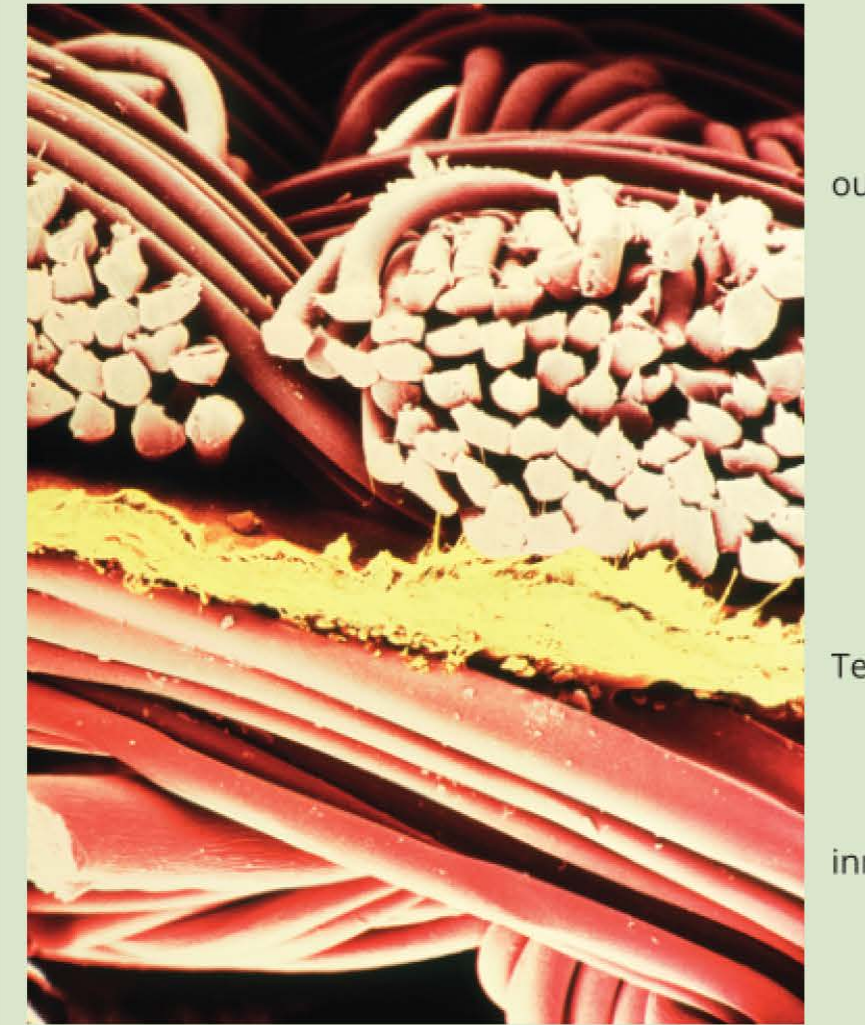

Gore-Tex works through a clever design: liquid water droplets from rain cannot penetrate the fabric, but water vapour molecules from perspiration can escape through tiny pores. This makes it ideal for weatherproof outdoor clothing.
Important
The success of Gore-Tex relies on the difference in size between liquid water droplets and water vapour molecules. The pores in the fabric are small enough to block liquid water but large enough to allow individual water vapour molecules to pass through, creating a material that is both waterproof and breathable.
Commercial addition polymers
Many different addition polymers are commercially available, each with properties suited to specific applications.
Key examples include:
| Polymer | Monomer | Key Properties | Common Uses |
|---|---|---|---|
| Polypropylene (PP) | Propene | Durable, cheap | Artificial grass, dishwasher-safe containers, rope |
| PTFE (Teflon) | Tetrafluoroethene | Non-stick, high melting point | Frying pan coatings, plumber's tape |
| PVDC | Dichloroethene | Transparent, stretchy, self-adhesive | Food wrap |
| Acrylic | Propenenitrile | Strong, forms fibres | Acrylic fabrics |
| Polystyrene (PS) | Styrene | Hard, brittle, low melting point | Toys, packaging, foam |
| Super glue | Methylcyanoacrylate | Polymerises on contact with water | Adhesive |
| Perspex | Methyl methacrylate | Transparent, strong | Glass substitute |
Acrylic polymers
Two closely related monomers—methylcyanoacrylate and methyl methacrylate—produce very different polymers. Methylcyanoacrylate polymerises rapidly on contact with water (making it ideal for super glue), while methyl methacrylate forms perspex, a transparent and strong material used as a glass substitute.
Note
The dramatic difference in behavior between these similar monomers demonstrates how small structural changes can have profound effects on polymer properties. The cyanoacrylate group in methylcyanoacrylate is highly reactive with water, triggering rapid polymerisation, while methyl methacrylate requires controlled conditions for polymerisation.
Other modifications to polymers
Even after selecting a monomer, chemists have developed additional techniques to further diversify polymer properties.
Bulky side groups
Bulky side groups attached to polymer chains prevent the chains from sliding easily over one another or packing closely together. This inhibits the formation of crystalline regions that would otherwise refract light. The result is an amorphous (non-crystalline) material that is often transparent.
Polystyrene
The styrene monomer contains a bulky phenyl group (a flat ring of six carbon atoms).
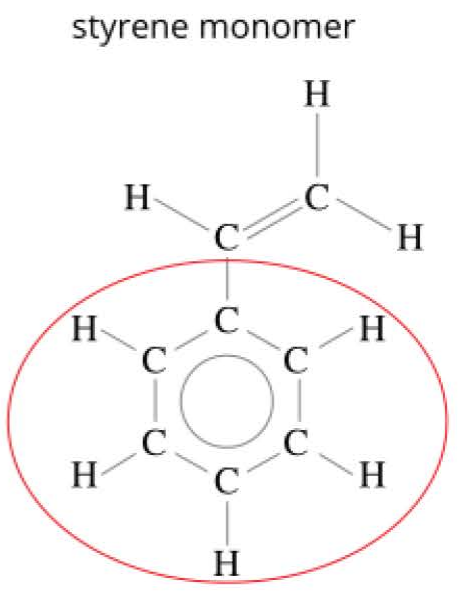
When styrene polymerises, the phenyl groups () are covalently bonded to every second carbon atom along the polymer backbone.

This creates polystyrene (PS), which has the following characteristics:
- Hard but quite brittle
- Low density
- Relatively transparent
Applications: Food containers, picnic sets, refrigerator parts, CD and DVD cases.
Important
The transparency of polystyrene arises because the bulky phenyl groups prevent regular packing of the polymer chains. Without regular crystalline regions to scatter light, the material remains relatively transparent. This is why polystyrene is commonly used for see-through food containers and packaging.
Foamed polymers
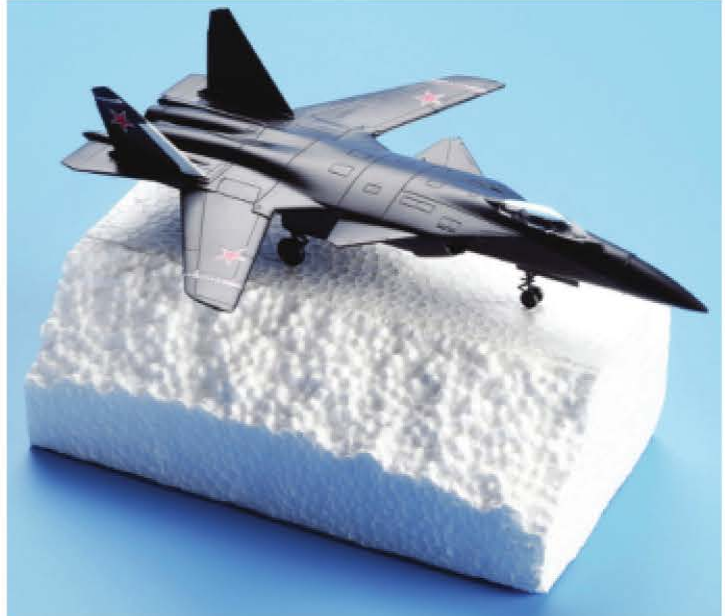
Foaming dramatically changes a polymer's physical properties. Foamed polymers are created by blowing a gas through melted polymer material.
Example
Example: Polystyrene foam
Polystyrene foam is produced by introducing pentane gas into melted polystyrene beads. The beads swell up to create a lightweight, insulating, shock-absorbing foam used for:
- Take-away hot drink containers
- Beanbag filling
- Packaging materials
The same polymer (polystyrene) can therefore exist as either a rigid plastic or a lightweight foam, depending on processing. The foamed version typically has only 5-10% the density of the solid polymer.
Specialty copolymers
Mixing different monomers through copolymerisation creates specialty polymers with unique property combinations.
Ethene tetrafluoroethene (ETFE)
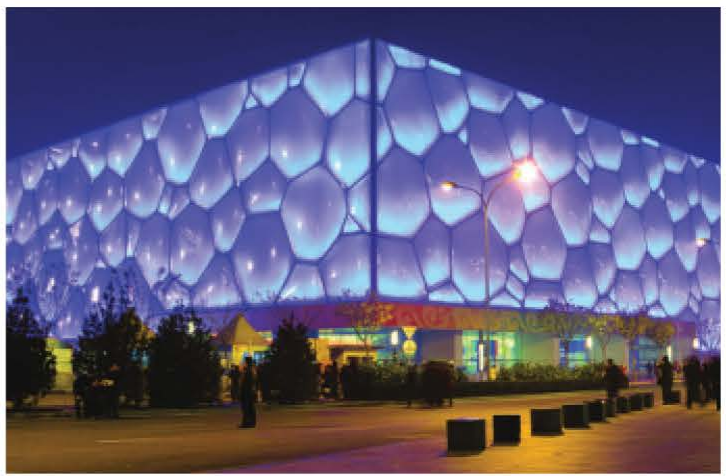
The Water Cube Stadium built for the 2008 Beijing Olympic Games used ETFE, a copolymer of ethene () and tetrafluoroethene (). The stadium features over 100,000 m² of thin ETFE 'bubble walls' that:
- Allow more light penetration than traditional glass
- Weigh only 1% of the mass of glass
- Provide better thermal insulation
- Reduce energy costs
Note
This innovative building was designed by a consortium including two Australian companies: PTW Architects and Arup. The use of ETFE represented a breakthrough in architectural materials, combining the transparency of glass with the lightweight properties and flexibility of plastics.
Styrene-butadiene rubber (SBR)
Formed from styrene () and butadiene (), SBR's properties can be varied by changing the monomer ratio. When the monomers are present in approximately equal amounts, an elastomer similar to natural rubber is produced. The styrene component increases abrasion resistance, making it ideal for car tyres.
Acrylonitrile-butadiene-styrene (ABS)
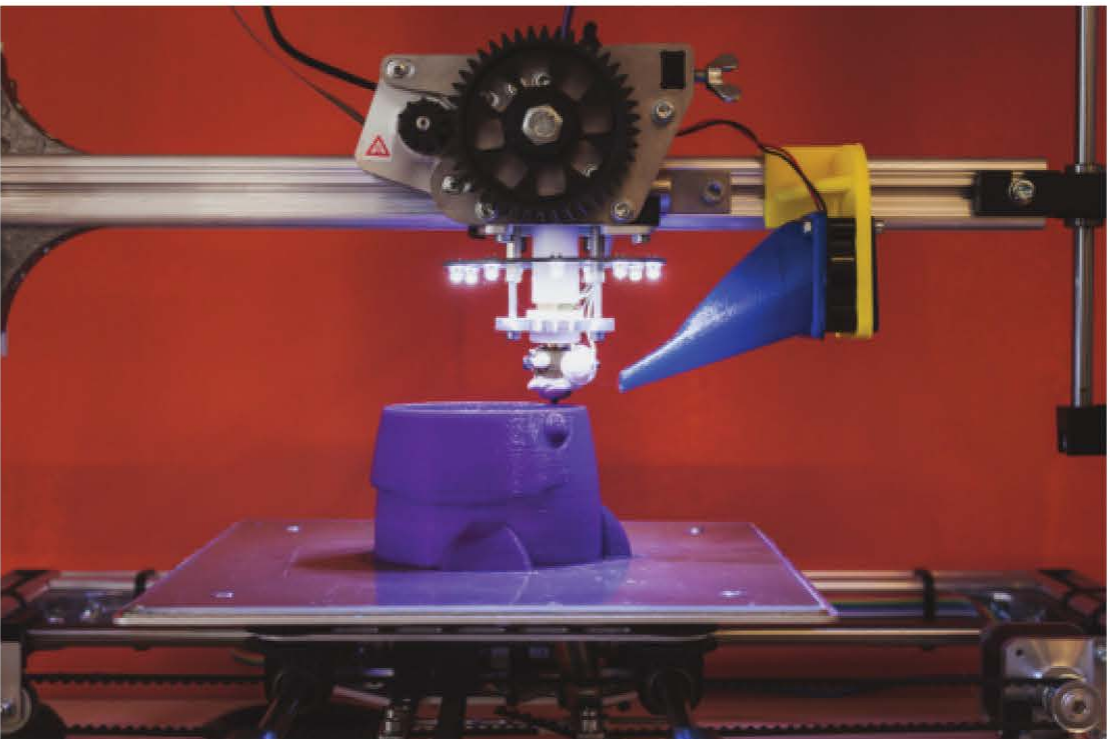
Adding a third monomer, acrylonitrile (), to the styrene-butadiene mixture produces ABS. This polymer is:
- Rigid and strong
- Easily melted
- Popular for making Lego® blocks
- Widely used in 3D printing
Note
In 3D printing, a thin cord (filament) of ABS is melted and built up in layers to create solid objects. The combination of strength, easy melting, and ability to fuse layers together makes ABS one of the most popular materials for consumer 3D printing applications.
Advantages and disadvantages of polymers
Polymers have become dominant materials in modern society, but it's important to understand both their benefits and drawbacks.
Advantages
- Versatility: Available in an enormous variety of forms with distinctive properties to suit almost any application
- Chemical resistance: Generally biologically inert and resistant to corrosion and chemical attack
- Easy processing: Can be easily shaped through moulding techniques
- Low density: Lightweight compared to many traditional materials
- Mechanical strength: Good strength-to-weight ratio
- Modifiable properties: Can be enhanced through foaming, adding plasticisers, or other modifications
- Recyclability: Many polymers can be recycled
Disadvantages
- Non-renewable source: Most are derived from petroleum, a finite resource
- Non-biodegradable: Microorganisms cannot break down most synthetic polymers, leading to environmental persistence
- Limited thermal stability: Thermoplastic polymers have restricted temperature ranges
- Mechanical weaknesses: Some products crack, scratch, or break easily
- Toxic combustion products: When burnt, many plastics release toxic gases including hydrogen chloride, hydrogen cyanide, and dioxins
- Plasticiser leaching: Some plasticisers can migrate from containers or wraps, potentially posing health risks
- Recycling challenges: Thermosetting polymers are currently difficult to recycle
Important
The environmental impact of polymers is a growing concern. While their durability is advantageous during use, it becomes problematic when disposed of. Most synthetic polymers can persist in the environment for hundreds of years, contributing to plastic pollution in oceans and landfills. This has led to increased research into biodegradable polymers and improved recycling technologies.
Summary
Key Points to Remember:
-
Polymer properties can be customised by varying chain length, monomer choice, branching, and additives to meet specific application requirements.
-
Choice of monomer is crucial: Replacing hydrogen atoms with more electronegative atoms (like chlorine or fluorine) dramatically changes polymer properties through stronger intermolecular forces.
-
Copolymerisation creates specialty polymers by combining two or more different monomers, allowing fine-tuning of properties such as strength, flexibility, and thermal resistance.
-
Structural modifications matter: Bulky side groups prevent close packing (creating transparency), while foaming creates lightweight insulating materials from the same base polymer.
-
Polymers offer many advantages including versatility, chemical resistance, and easy processing, but also present challenges including non-biodegradability and dependence on non-renewable petroleum resources.