Recycling Plastics (VCE SSCE Chemistry): Revision Notes
📚Revision Notes
Recycling Plastics
The problem of plastic waste
Each year, Australians use over 1.5 million tonnes of different plastic materials. Managing the disposal of these waste polymer materials has become a major environmental challenge for our society.
Note
The very properties that make plastics useful—their durability, resistance to chemicals, and light weight—are the same characteristics that create serious environmental problems.
Plastics break down extremely slowly in the environment. Once thrown away, they can remain in the environment for hundreds of years. Their low density means waste plastic occupies more space in landfills compared to other types of waste, filling up limited landfill capacity and littering natural environments.
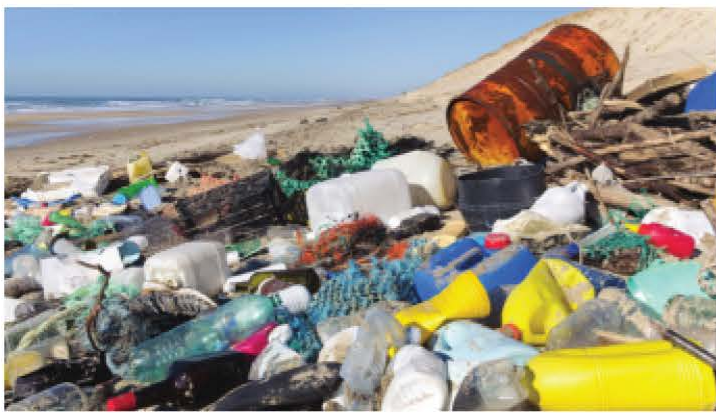
Environmental impact of plastic waste
Biodegradation and persistence
Synthetic polymers degrade very slowly through natural processes. When discarded, these materials persist in the environment for extremely long periods—possibly hundreds of years. This long-lasting pollution creates visible waste problems in both terrestrial and marine environments.
Note
Unlike organic materials that decompose naturally, synthetic polymers are resistant to the biological processes that break down natural substances. This resistance, which makes them so useful during their intended life, becomes a major liability once they become waste.
Harm to marine life
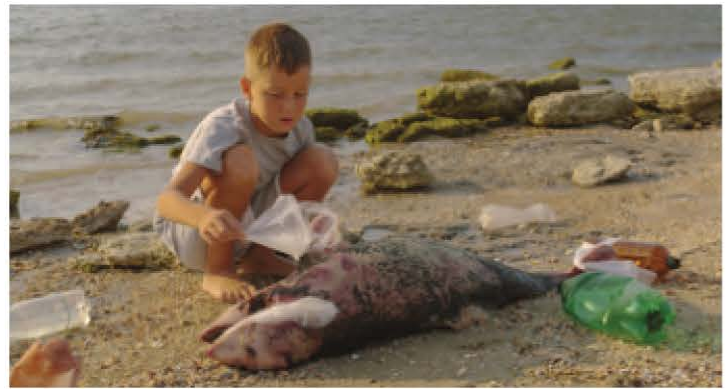
Plastic waste poses a serious threat to marine species. Animals can become entangled in plastic debris or mistake plastic items for food, leading to injury or death.
Important
Marine animals often cannot distinguish between plastic objects and their natural food sources. Sea turtles, for example, frequently mistake plastic bags for jellyfish, their primary food source, leading to fatal consequences.
Microplastics: an emerging concern
Beyond visible plastic pollution, scientists have identified another environmental issue: microplastics. Rather than fully degrading, plastic items often break apart into progressively smaller fragments. When these pieces become smaller than mm in width, they are classified as microplastics. These tiny particles are often invisible to the naked eye, and researchers are currently investigating their impact on marine organisms and ecosystems.
Important
The invisibility of microplastics makes them particularly concerning. Once plastic fragments reach this size, they can be ingested by small marine organisms, entering the food chain and potentially affecting larger animals—including humans who consume seafood.
The ideal solution would be to significantly reduce the amount of plastic waste we create. While this sounds straightforward, implementing such a reduction is far more complex than it initially appears.
Products made from recycled plastics
Growing awareness of disposal problems has led to increased collection of waste plastic for recycling purposes. Different recycling approaches exist depending on the desired end product.
Mechanical recycling
Mechanical recycling occurs when a polymer is remoulded into a new product while its chemical structure remains unchanged. This process only works with thermoplastic polymers.
Note
The limitation to thermoplastic polymers is crucial. Thermoplastics can be melted and reshaped multiple times because their molecular chains can move freely when heated. In contrast, thermosetting polymers form permanent cross-links during manufacturing and cannot be remoulded once set.
Some recyclers process mixed plastics by shredding them into pellets, then remoulding these pellets into general-purpose products such as:
- Garden furniture
- Retaining walls
- Outdoor tables and benches
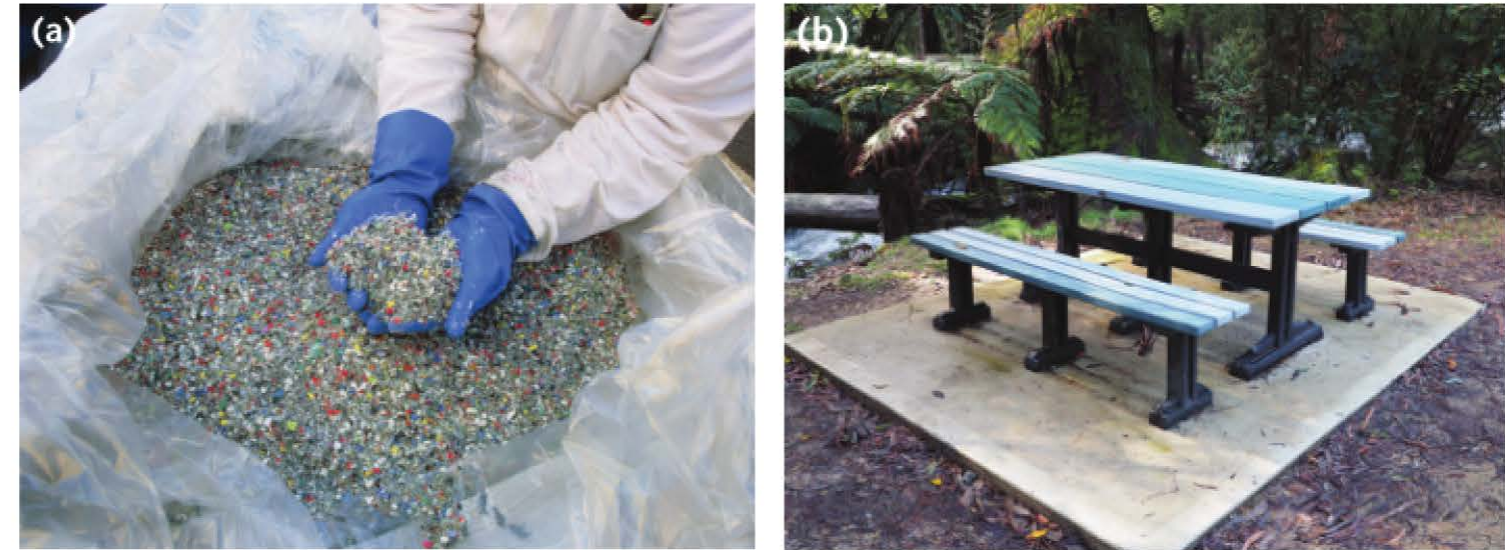
Other recyclers separate waste plastics into individual polymer types to create higher-quality recycled items. For example, artificial clothing fibres can be produced from recycled PET bottles. The recycling processes described here all represent mechanical recycling—the polymer's molecular structure stays the same, but it takes on a different physical form.
Example
Worked Example: From Bottle to Clothing
Step 1: PET bottles are collected and sorted The recycling facility separates PET bottles from other plastics using their recycling code.
Step 2: Cleaning and shredding Bottles are cleaned to remove labels and contaminants, then shredded into small flakes.
Step 3: Melting and extrusion The PET flakes are melted and extruded through spinnerets to create synthetic fibres.
Step 4: Spinning into yarn These fibres are spun into polyester yarn suitable for weaving into fabric for clothing.
The entire process maintains PET's chemical structure—only its physical form changes from bottle to fibre.
Identification of recyclable plastics
Recycling code system
An international numbering system helps identify different types of plastic for recycling purposes. If a product is recyclable, the corresponding recycle code is typically printed on it. The seven recycling codes are:
| Code | Polymer | Common products |
|---|---|---|
| 1 - PETE | Polyethene terephthalate | Soft drink bottles, water bottles, shampoo bottles, take-away food containers |
| 2 - HDPE | High-density polyethene | Garbage bins, fuel tanks, hard hats, banners, water pipes, food storage containers |
| 3 - PVC | Polyvinyl chloride | Plastic wrap, cordial bottles, electrical wire covers, water pipes, floor tiles |
| 4 - LDPE | Low-density polyethene | Plastic wrap, squeeze bottles, ice cream containers, plastic tubing, shopping bags |
| 5 - PP | Polypropene | Rope, clothing, flip-top bottle lids |
| 6 - PS | Polystyrene | Yoghurt containers, fridge shelves, drink cups, insulating beads, packaging |
| 7 - OTHER | Various | Polycarbonates, ABS, Teflon, copolymers, nylon, other condensation polymers |
Note
Most plastics with these codes are recyclable, though some items like plastic wrap and expanded polystyrene foam are not practical to recycle due to contamination issues and the high cost of processing relative to the value of the recycled material.
Recycling success rates
The effectiveness of recycling varies significantly between countries and polymer types. Statistics from 2019 reveal striking differences:
- Norway recycled an impressive 97% of its PET plastic
- Australia recycled only 21% of its PET plastic
- Norway recycles less than 40% of its polyethene
Important
These figures reveal a crucial insight: recycling success depends heavily on both the material properties and the recycling infrastructure. PET drink bottles can be easily identified, separated, and remoulded into products of similar quality to the original material, making them more economically viable to recycle than polyethene products.
Innovative recycling solutions
Governments and industries continue developing new approaches to improve plastic recycling rates.
Soft plastics recycling
Soft plastics like plastic wrap cannot be placed in regular recycling bins. However, innovative collection schemes have emerged. The recycling company Replas partnered with major supermarkets Coles and Woolworths to establish collection points for soft plastic at their stores.
Note
This partnership demonstrates how industry collaboration can address specific recycling challenges. By providing dedicated collection points where customers already shop, the scheme makes it convenient for consumers to recycle soft plastics that would otherwise end up in landfill.
Polyrok: recycled plastic in construction
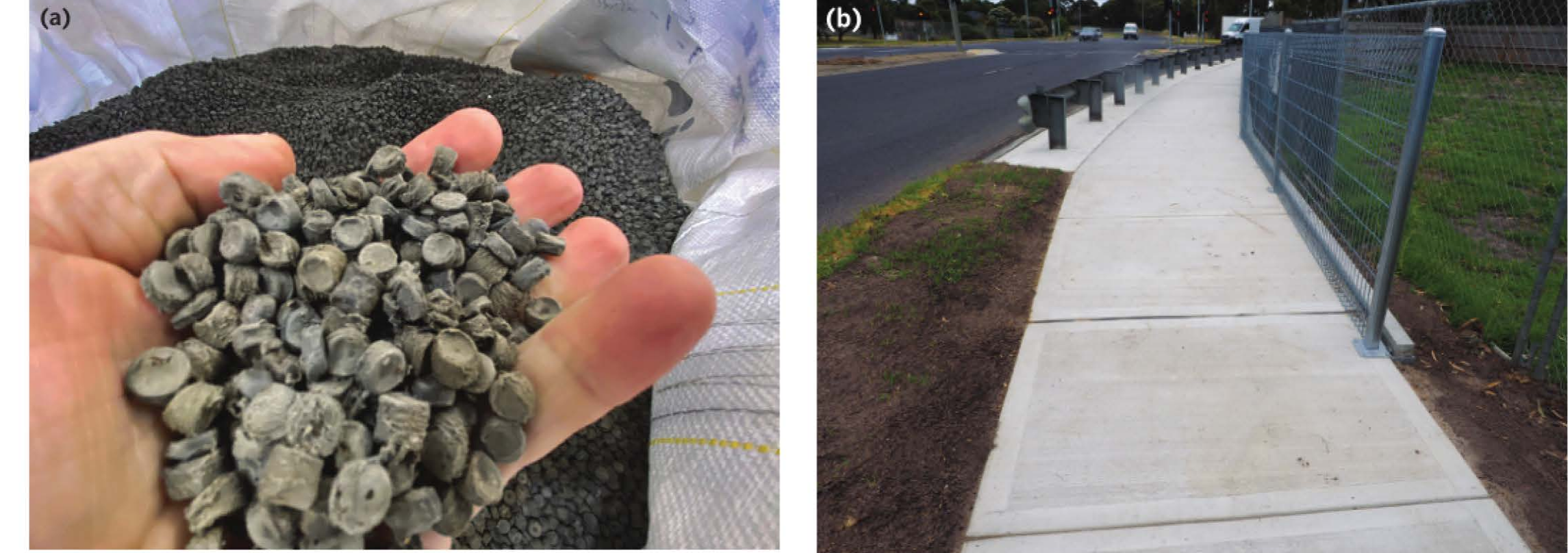
Replas converts collected soft plastic into Polyrok, an innovative construction material. Polyrok serves as an additive to concrete, replacing the traditional mineral aggregates normally used. This application demonstrates how recycled plastic can be incorporated into infrastructure projects like footpaths and road surfaces.
Note
Innovation in Action
Polyrok represents a clever solution to two problems simultaneously: it provides a use for difficult-to-recycle soft plastics while also reducing the need for mined mineral aggregates in concrete production. This dual benefit makes the technology particularly valuable for sustainable construction.
Making smarter packaging choices
The complexity of sustainable packaging
Modern take-away food packaging illustrates the complexity of making environmentally responsible choices. A typical collection of take-away items might include:
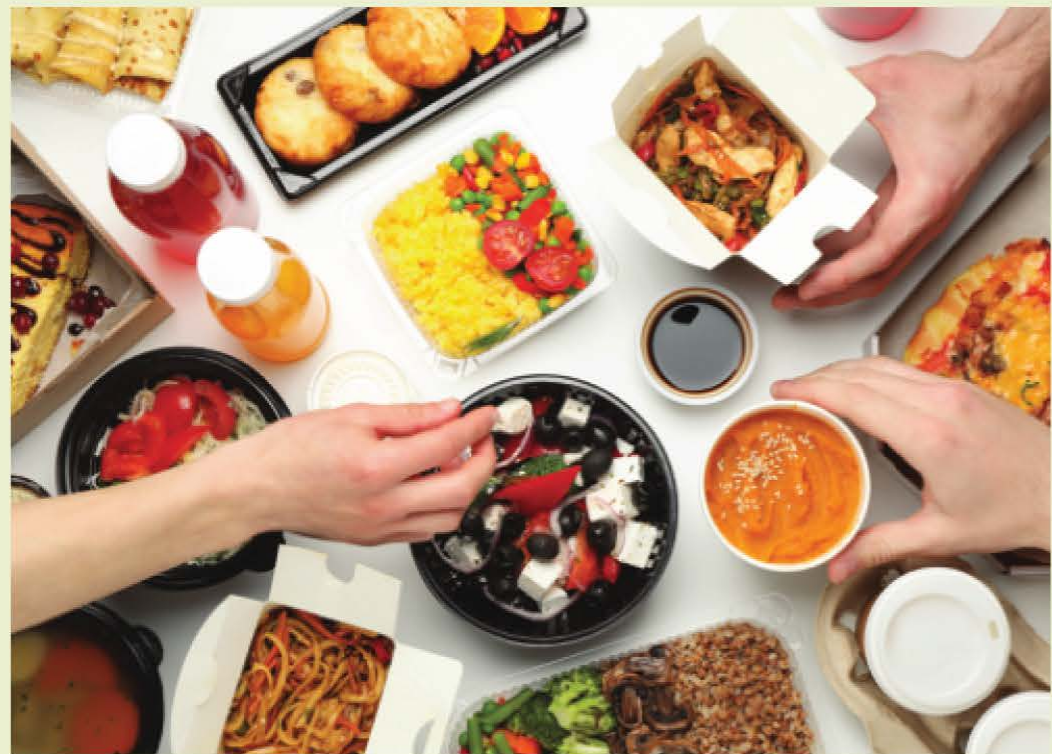
- A "biodegradable" coffee cup lid that remains unchanged after 5 years in landfill
- A starch-based container made from potatoes that dissolves back to liquid starch after 1 minute in water
- A biopolyethene cup made from ethanol (sourced from sugar waste) that will not degrade in landfill
- A compostable spoon made from crude oil that degrades in 2-3 months
- A PET drink container that will not degrade but can be reformed into polyester fibre
- A fork made from crude oil without a recycle number
Important
This variety highlights a critical challenge: products labeled as "biodegradable," "compostable," or "sustainable" can behave very differently depending on disposal conditions. A biodegradable cup lid may persist for years in a landfill where conditions don't support decomposition, while a compostable spoon requires specific industrial composting conditions to break down properly. Consumers play a crucial role in ensuring these materials reach the right disposal pathway.
CSIRO strategies for progress
The CSIRO advises that addressing plastic disposal requires pursuing multiple strategies simultaneously. Recycling alone cannot solve the problem. The following five approaches all need attention:
Revolutionising packaging and waste systems
Innovation in packaging design can reduce waste. Emerging examples include:
- Yoghurt containers suitable for use as seedling pots
- Biscuit packaging that dissolves in water
- Return to paper straws and bamboo disposable cutlery
Reducing the amount of packaging used decreases the material requiring disposal. Technological advances like laser sorting on assembly lines enable automatic sorting of recyclable materials, significantly lowering the labour costs of recycling.
Behaviour change and incentives
Successful incentive schemes encourage proper waste disposal. The South Australian container refund system demonstrates this approach. Increasing the number of bins supplied to Victorian households represents another positive change. Each new initiative requires accompanying public education campaigns to explain how the system works.
Note
Incentive-based programs work because they provide an immediate, tangible benefit for environmentally responsible behaviour. The container refund system, for example, gives people a financial reason to return bottles and cans rather than discarding them, dramatically increasing collection rates.
Waste innovation
New technologies create value from waste materials. Examples include:
- Using recycled materials like Polyrok in construction
- Technologies that generate new polymers from waste
- Processes that produce oil from waste plastic
Supporting best practice and standards
Industry requires clear standards to follow, covering areas such as:
- Quality requirements for polymers in contact with food
- Necessary durability specifications for products
Information for decision making
Individual industries often struggle with waste issues independently. Central government bodies can provide valuable support by informing industries about potential solutions and sharing successful approaches.
Summary
Key Strategies for Addressing Plastic Waste:
The CSIRO emphasizes that no single approach will solve plastic waste problems. Success requires coordinated action across all five strategic areas:
- Packaging innovation - Redesigning products to use less material and enable easier recycling
- Behaviour change - Implementing incentive systems that reward proper disposal
- Waste innovation - Developing technologies that create value from waste materials
- Industry standards - Establishing clear guidelines for quality and safety
- Information sharing - Providing industries with knowledge about solutions and best practices
Each strategy reinforces the others, creating a comprehensive approach to reducing plastic pollution.
Remember!
Summary
Key Points to Remember:
- Mechanical recycling remoulds polymers into new products without changing their chemical structure, and only works with thermoplastic polymers.
- Plastics persist in the environment for hundreds of years, and their low density means they occupy significant space in landfills.
- Microplastics are plastic fragments smaller than mm that pose emerging environmental risks to marine ecosystems.
- The international recycling code system (numbers 1-7) helps identify different plastic types for recycling, though recycling success rates vary greatly between countries and polymer types.
- Addressing plastic waste requires multiple simultaneous strategies: revolutionising packaging systems, changing behaviour through incentives, innovating waste technologies, supporting industry standards, and providing decision-making information.