Synthesis of Starch, Glycogen, and Lipids (VCE SSCE Chemistry): Revision Notes
📚Revision Notes
Synthesis of Starch, Glycogen, and Lipids
Introduction
Living organisms require energy storage molecules to maintain their functions. Two major classes of biological molecules serve this purpose:
- Complex carbohydrates: starch and glycogen, which are polymers built from glucose monomer units
- Lipids: commonly known as fats and oils, formed from reactions between carboxylic acids (fatty acids) and alcohols
Note
These energy storage molecules are essential for survival - carbohydrates provide quick energy release, while lipids offer long-term energy storage with more than twice the energy density of carbohydrates.
Synthesis of carbohydrates
What are carbohydrates?
Carbohydrate molecules consist of carbon, hydrogen, and oxygen atoms. They typically follow the general formula , where and are whole numbers. Carbohydrates exist in a wide range of sizes, from small molecules with relative molecular masses of 100-200 to very large polymers exceeding one million in mass.
The main structural component of plants is the polymer cellulose, which contains over half the world's organic carbon. Major food crops like corn, rice, and wheat are rich in starch, another important carbohydrate that serves as a nutrient. Nutrients are substances that provide nourishment for growth or other chemical processes within an organism.
Photosynthesis
Glucose (), one of the simplest carbohydrates, forms in green plant cells through photosynthesis:
This endothermic reaction converts the Sun's energy into chemical potential energy stored in glucose molecules. Living organisms use glucose as an energy source. Since animals cannot perform photosynthesis, they must consume plants or other animals to meet their energy requirements.
Important
The photosynthesis equation is fundamental to understanding all carbohydrate synthesis. Six molecules of carbon dioxide and six molecules of water are converted into one glucose molecule and six oxygen molecules, requiring light energy input.
Monosaccharides
The smallest carbohydrates are called monosaccharides. These white, sweet-tasting solids dissolve readily in water. The three most common monosaccharides are glucose, fructose, and galactose, shown in the diagram below:
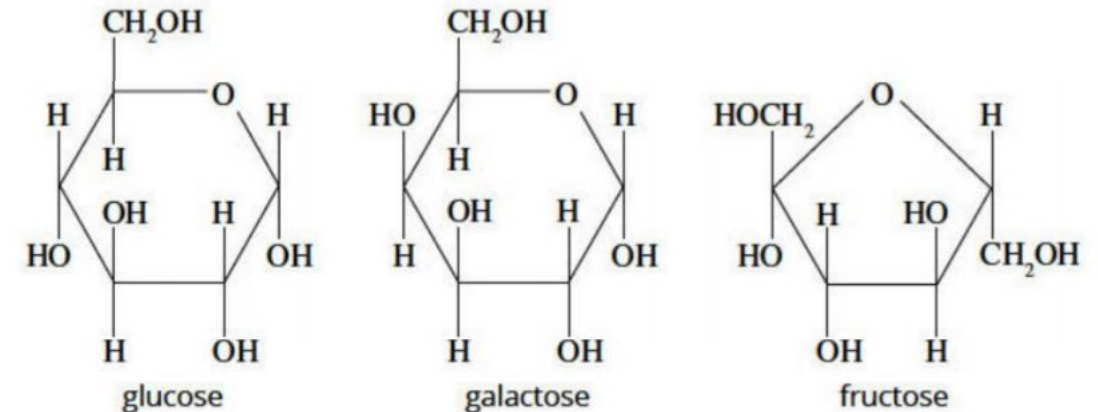
All three monosaccharides share the same molecular formula, , making them structural isomers. While their structures appear similar, the positions of hydroxyl groups () differ between them. These subtle structural variations lead to significant differences in their biological functions.
Note
The multiple polar hydroxyl groups in monosaccharides allow them to form hydrogen bonds with water molecules, explaining their high water solubility. This is why sugars dissolve so easily in water-based solutions like blood and plant sap.
Glucose occurs in all living things, particularly in fruit juices, plant sap, and animal blood and tissues. As a product of photosynthesis, glucose functions as a key energy source for most life forms.
Fructose is found in many fruit juices and honey. Like glucose, its main role is as an energy source in the body.
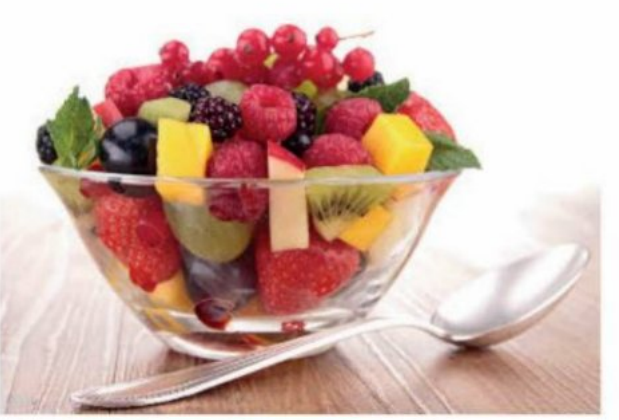
Galactose does not occur freely in nature but appears as a component of larger carbohydrates such as lactose, the main sugar in milk.
Disaccharides
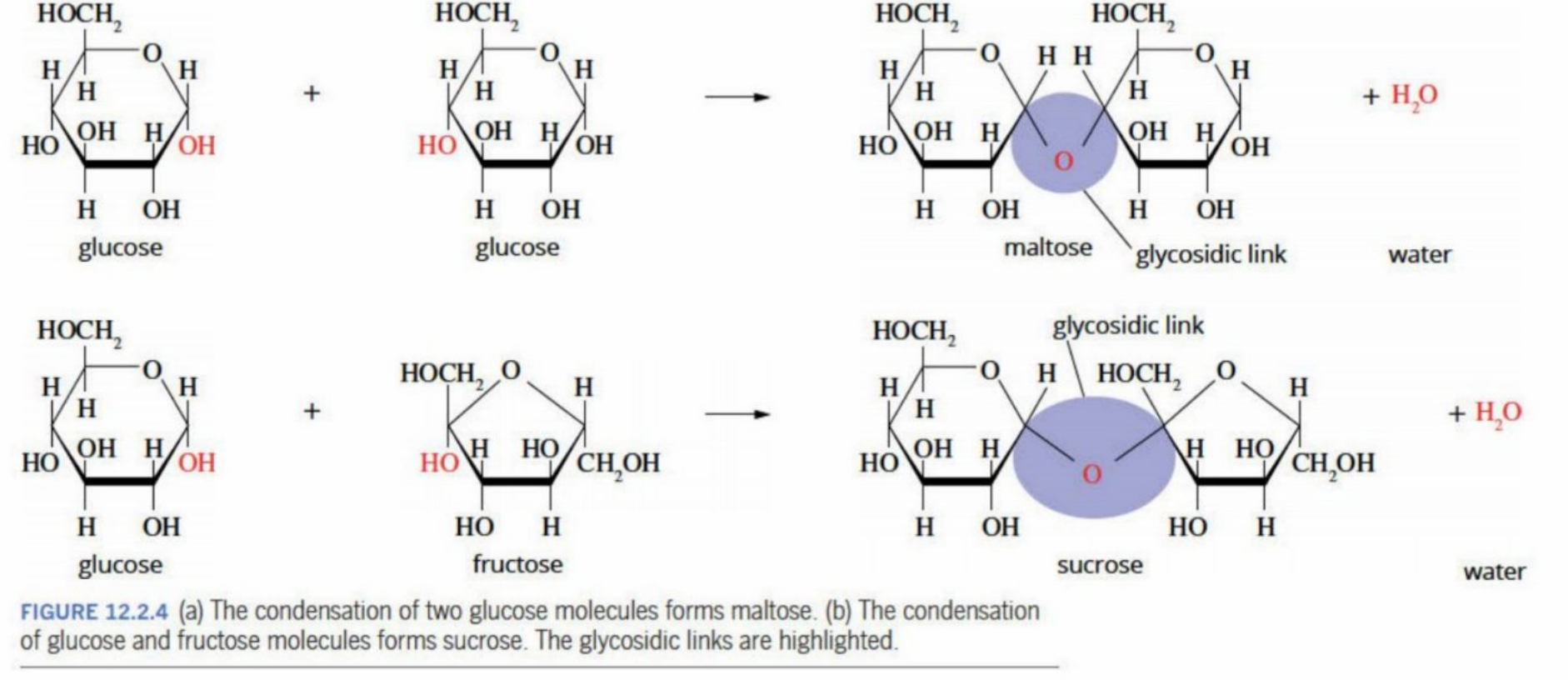
Disaccharides form when two monosaccharide molecules react together. A condensation reaction occurs between hydroxyl functional groups on neighbouring molecules, producing a water molecule as a by-product.
The two monosaccharide units connect through an oxygen atom, creating an ether functional group. When this linkage occurs in carbohydrates, it is called a glycosidic link. The diagram below shows how two important disaccharides form:
Note
Formation of Disaccharides
When two monosaccharides undergo condensation:
- Hydroxyl groups () on adjacent molecules react
- A glycosidic link forms between the molecules through an oxygen atom
- Water () is released as a by-product
This process is reversible - disaccharides can be broken down into monosaccharides through hydrolysis by adding water.
Maltose is added to foods as a sweetener. Barley has a high maltose content and serves as a raw material for beer fermentation in the brewing industry.
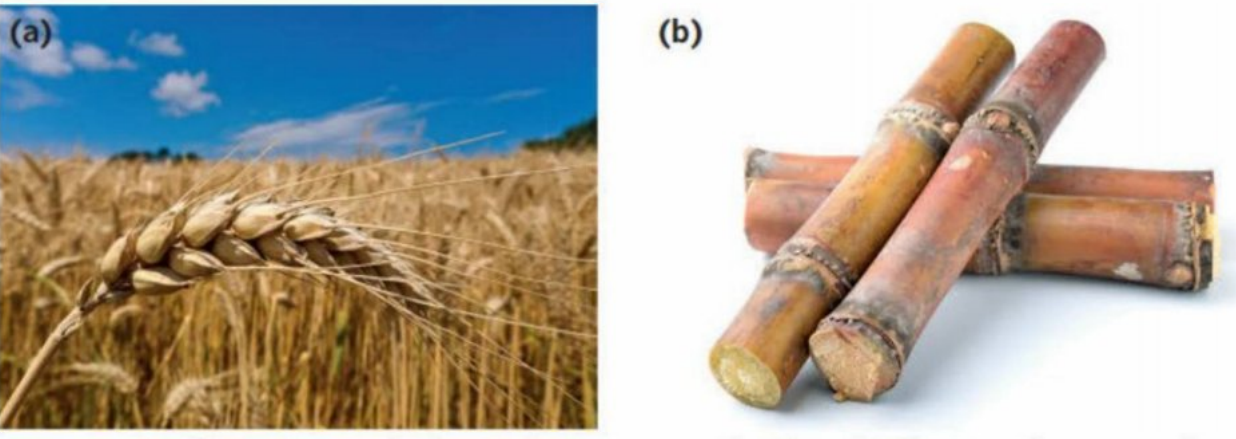
Sucrose, commonly known as table sugar, is the most popular sweetener among simple sugars. Crops such as sugar beet and sugarcane contain high sucrose concentrations.
Sweetness of sugars
Different carbohydrates vary significantly in sweetness despite their similar structures. Scientists compare sweetness using sucrose as a reference, assigned a value of 1.00. The table below shows comparative sweetness values:
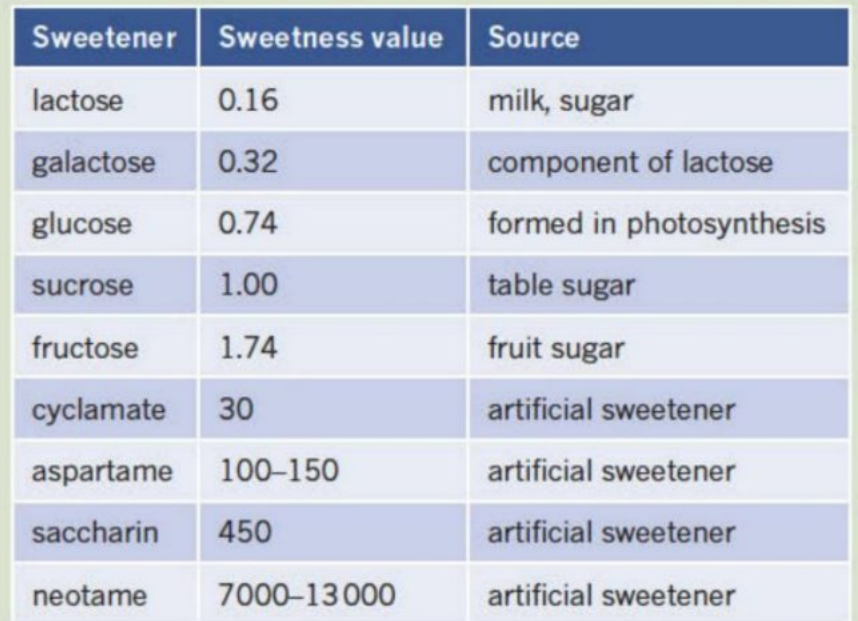
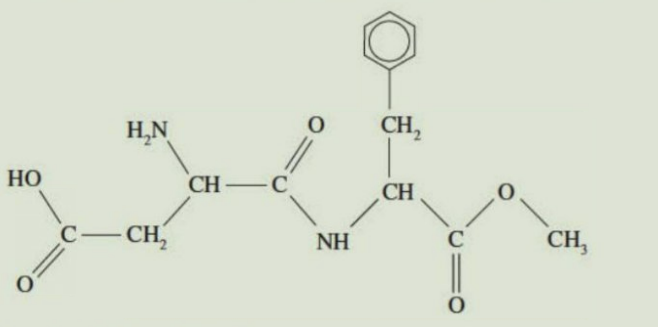
Lactose has approximately one-sixth the sweetness of sucrose. Artificial sweeteners require much smaller quantities to achieve the same sweetness as sugars. Aspartame (food additive 951) is used in diet soft drinks and sugar-substitute tablets. Its structure differs significantly from carbohydrates:
Polysaccharides
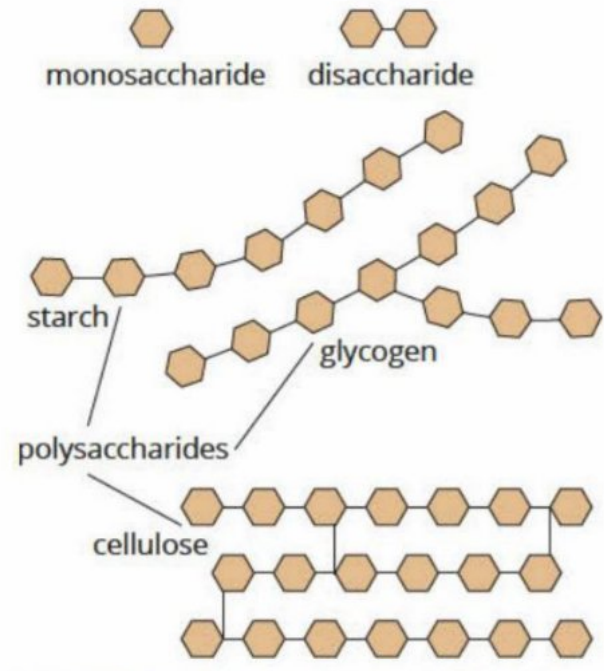
Condensation reactions between monosaccharides can continue beyond disaccharide formation, producing polymers called polysaccharides. These molecules can contain thousands of monosaccharide units. These reactions occur at normal body temperature, promoted by specific enzymes, with reaction rates regulated by complex biological feedback pathways.
Polysaccharides are generally insoluble in water and tasteless. The three most important biological polysaccharides are starch, glycogen, and cellulose. Despite being polymers of the same monomer (glucose), they have very different properties.
Important
Key Properties of Polysaccharides
Unlike monosaccharides and disaccharides, polysaccharides:
- Are not sweet-tasting
- Have very low or no water solubility
- Serve structural or storage functions rather than providing quick energy
- Require enzyme-catalyzed reactions for synthesis and breakdown
These differences arise because the many hydroxyl groups become locked inside the polymer structure through glycosidic links.
Synthesis of starch
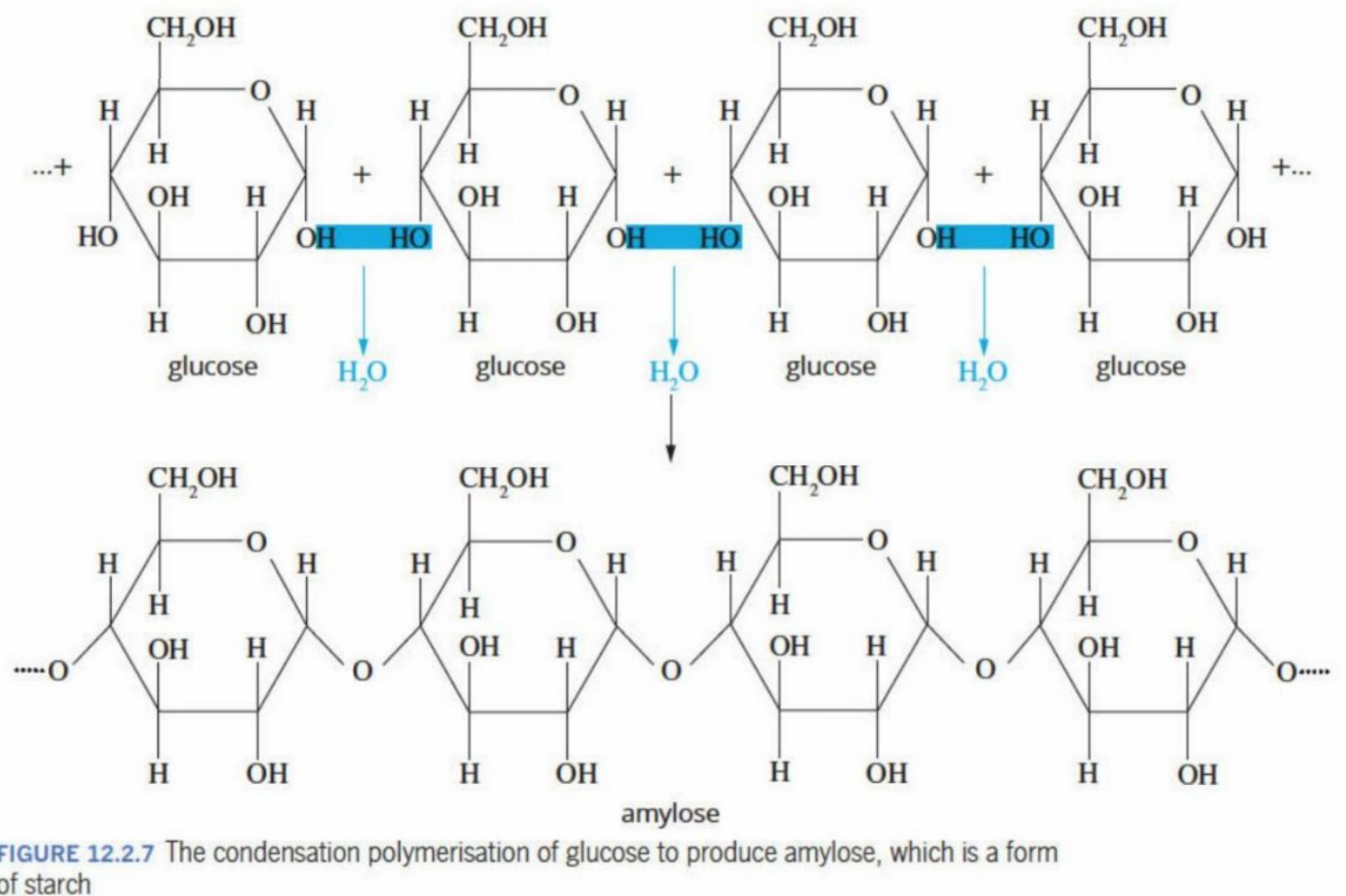
Plants produce and polymerise glucose molecules to form starch through condensation reactions. This polymerisation creates glycosidic links between glucose molecules and produces many water molecules as by-products. Plants use starch to store energy. When energy is needed, plants break down starch back into glucose and utilise it to maintain their functions.
Foods such as potatoes and sago have high starch content. When starch forms a linear polymer, it is called amylose:
A second form of starch, amylopectin, forms when some glucose molecules undergo condensation reactions between hydroxyl groups at different positions around the glucose rings. This creates occasional branches in the structure. The branches occur approximately every 20-24 glucose units:
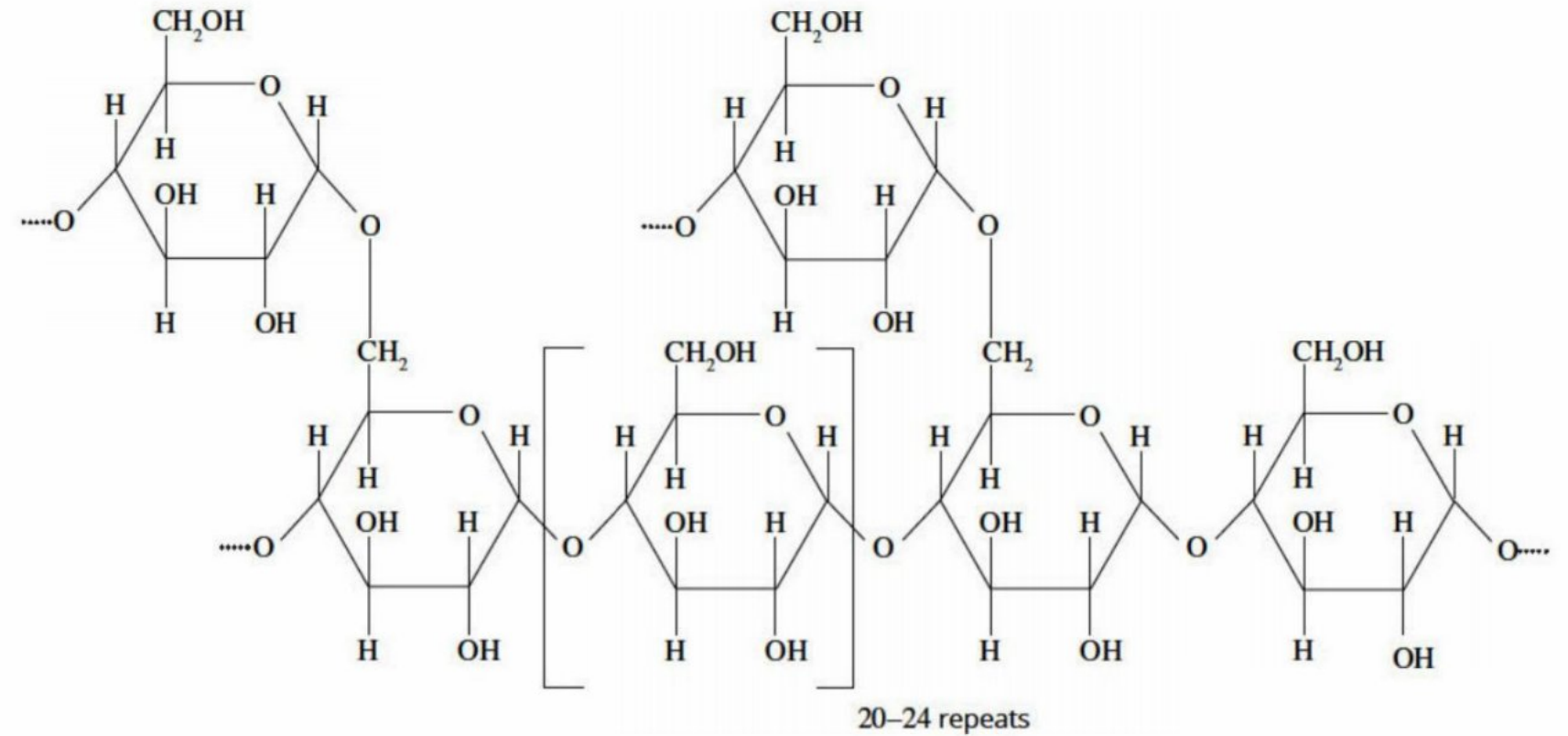
Note
Amylose vs Amylopectin Solubility
Amylose and amylopectin have different water solubilities due to their structural differences:
- Amylose: Long molecules coil into spiral-like helices that pack tightly together, with many groups hidden inside the helices away from water contact. Therefore, amylose is largely insoluble in cold water.
- Amylopectin: Branched structure prevents extensive coiling, leaving many groups exposed, so it dissolves in water.
Synthesis of glycogen
The third glucose polymer is glycogen, which is highly branched similar to amylopectin, but with branches occurring more frequently (every 7-11 glucose units):
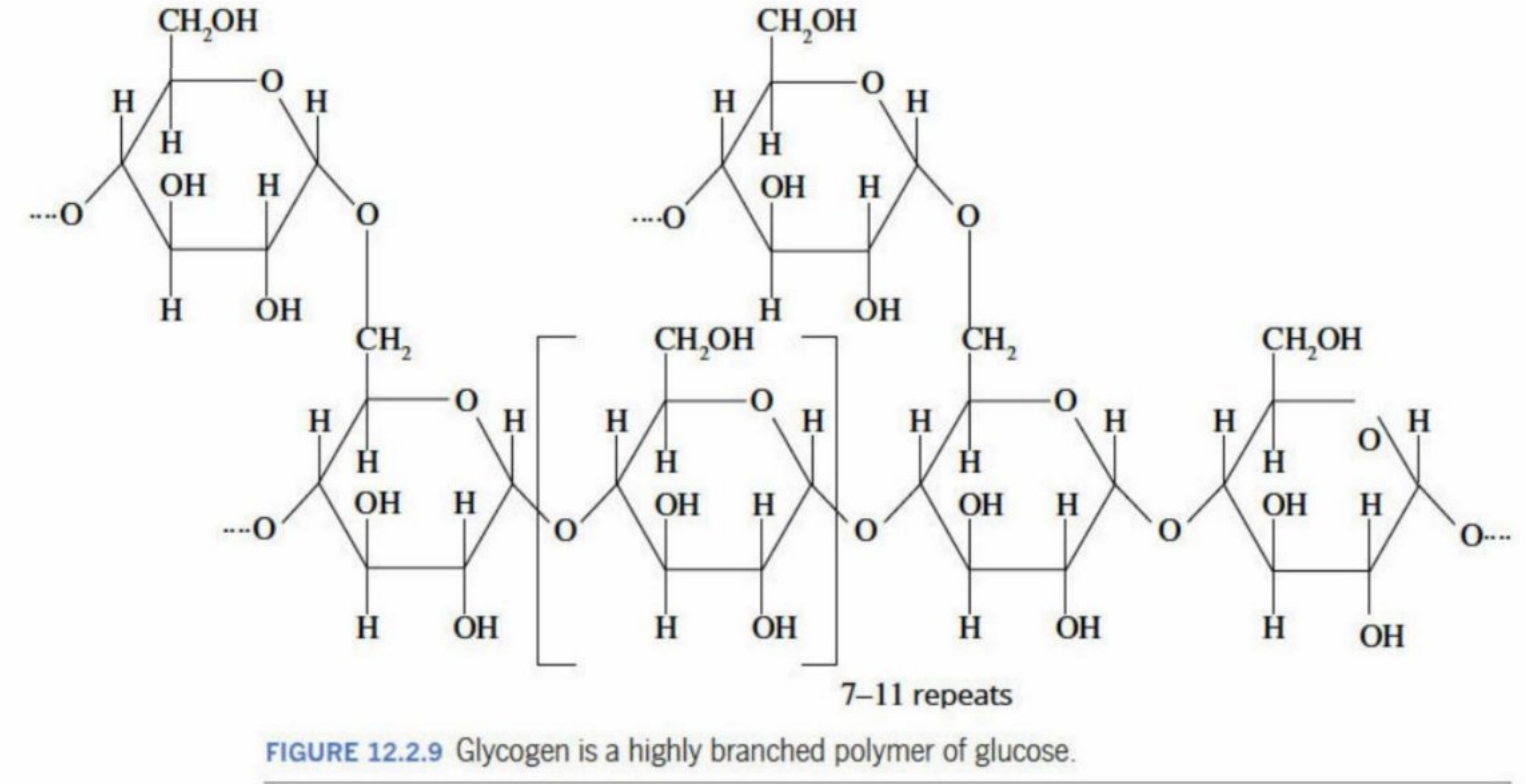
Animals use glycogen for energy storage. Glycogen forms from excess glucose and is stored in liver or muscle tissue. When energy is needed, glycogen breaks down to glucose, which is then used in cellular respiration.
Important
Starch vs Glycogen
While both are glucose polymers used for energy storage:
- Starch (plants): Less branched amylopectin branches every 20-24 glucose units
- Glycogen (animals): More highly branched with branches every 7-11 glucose units
The higher branching in glycogen allows for faster glucose release when animals need rapid energy, matching their more active lifestyles compared to plants.
Glucose isomers in solution
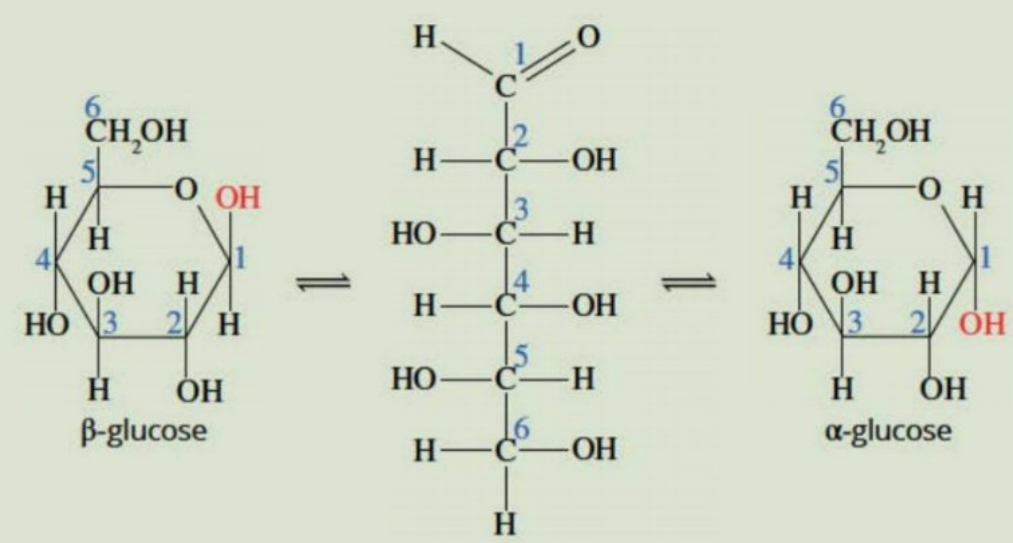
When dissolved in water, monosaccharides can exist as isomers in equilibrium. Glucose exists in three forms in solution:
Note
The -glucose form can convert to -glucose (and vice versa) through the straight-chain form. When the straight chain closes to form a ring, the group bonded to carbon 1 can be positioned either above or below the ring. This equilibrium between isomers explains why two different forms of glucose occur in many organisms.
Synthesis of lipids
Introduction to lipids
Lipids (fats and oils) are present in meat, fish, dairy products, eggs, and all fried foods. Canola is one source of oils used in food production:
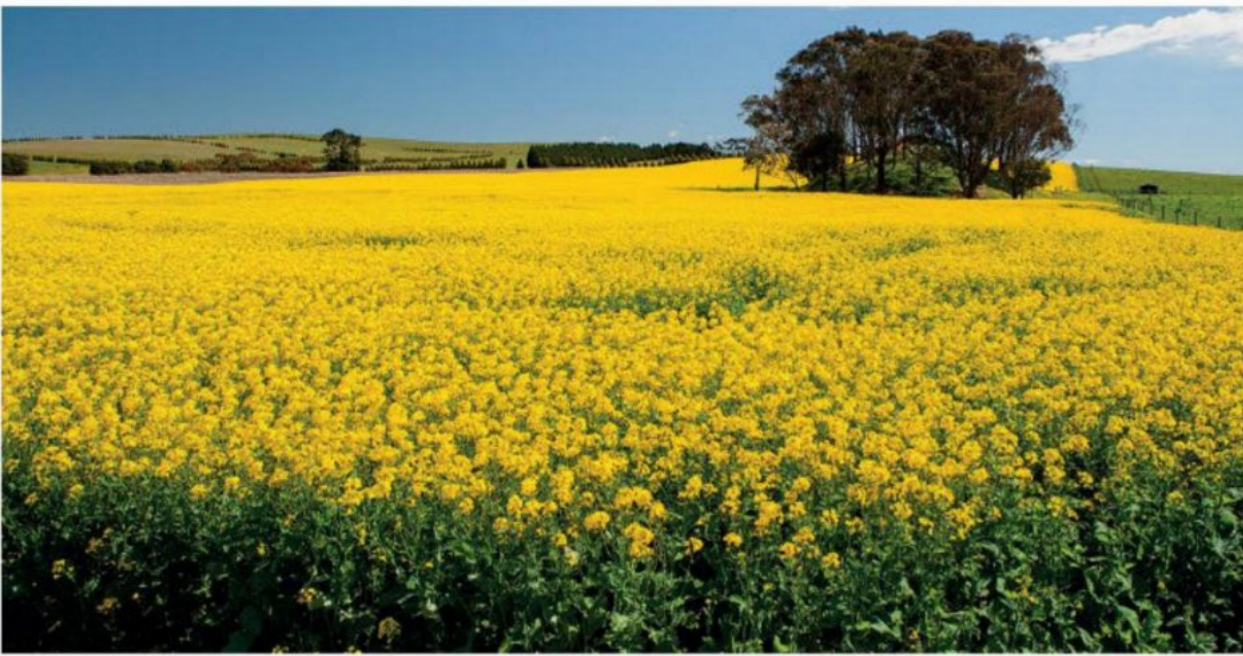
Canola provides unsaturated fatty acids used in margarine, cooking oils, and salad oils. It also produces a by-product used as livestock feed. Increased demand for canola oil has led many Australian farmers to plant this crop.
Fats and oils serve as major energy sources in the diet. Animals use fats to store chemical energy. Lipids belong to the class of biological molecules that are distinguished by their physical state at room temperature:
- Fats are solids at room temperature
- Oils are liquids at room temperature
Triglyceride structure
Fats and oils consist of large non-polar molecules called triglycerides. Being non-polar, triglycerides cannot form hydrogen bonds with water, so fats are insoluble in water and oils are immiscible (cannot mix) with water.
Note
The non-polar nature of triglycerides is due to their long hydrocarbon chains, which dominate the molecule's properties. This is why oil and water don't mix - the non-polar oil molecules cannot interact with polar water molecules through hydrogen bonding.
Triglycerides form through condensation reactions between a glycerol molecule and three fatty acid molecules. Glycerol (propane-1,2,3-triol) is a relatively small molecule containing three hydroxyl functional groups. Fatty acids have a carboxyl functional group attached to a long unbranched hydrocarbon chain (tail). This tail makes up the bulk of the molecule. Most fatty acids contain an even number of carbon atoms, typically between eight and twenty.
Formation of triglycerides
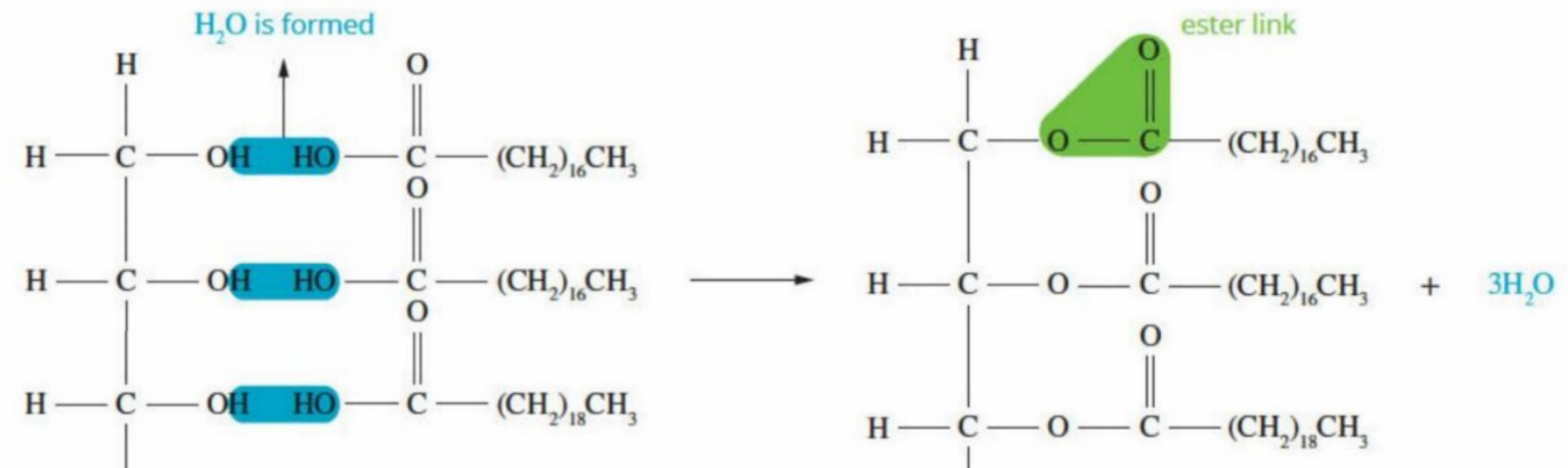
When a condensation reaction occurs between a molecule containing a carboxyl group () and a molecule containing a hydroxyl group (), an ester functional group (or ester link, ) forms, joining the two molecules. A water molecule is also produced.
A triglyceride forms from one glycerol molecule reacting with three fatty acids. This reaction creates three ester links and releases three water molecules per triglyceride formed:
Example
Triglyceride Formation Process
Step 1: A glycerol molecule with three groups reacts with three fatty acid molecules, each with a group
Step 2: Three condensation reactions occur simultaneously or sequentially
Step 3: Three ester links () form, connecting the fatty acids to the glycerol backbone
Step 4: Three water molecules are released as by-products
Result: One complete triglyceride molecule with three hydrocarbon tails
Most triglycerides contain two or three different fatty acid hydrocarbon chains that may differ in length. Some chains may also contain one or more carbon-carbon double bonds.
Types of fatty acids
Fats are classified based on the structural features of their fatty acid components:
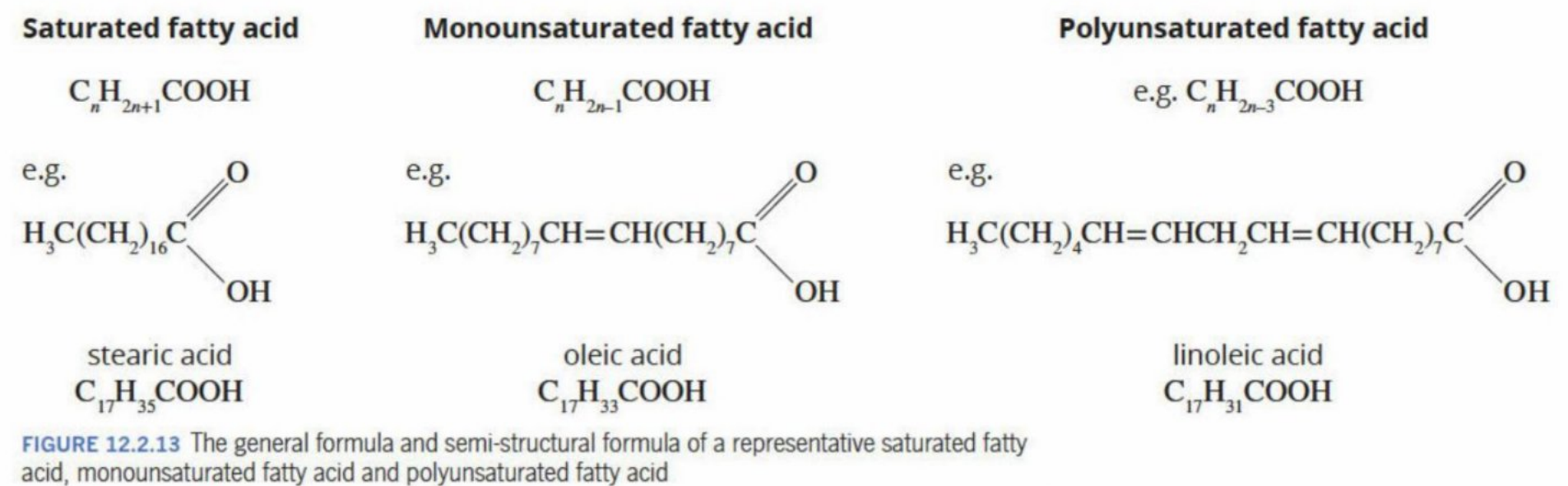
Saturated fatty acids contain hydrocarbon chains with only single carbon-carbon bonds. They have the general formula .
Example: Stearic acid occurs widely in meats and has the semi-structural formula and molecular formula .
Monounsaturated fatty acids contain one carbon-carbon double bond in their hydrocarbon chain. They have the general formula .
Example: Oleic acid is found in many vegetable oils and has the semi-structural formula and molecular formula .
Polyunsaturated fatty acids contain more than one carbon-carbon double bond in their hydrocarbon chain. Fish and vegetable oils are the main dietary sources. For example, sunflower oil is a good source of linoleic acid, which has the semi-structural formula and molecular formula .
The structures and general formulas of these three types are shown below:
Important
Fatty Acid Classification
The number of carbon-carbon double bonds () determines the fatty acid type:
- Saturated: Zero double bonds -
- Monounsaturated: One double bond -
- Polyunsaturated: Multiple double bonds - e.g.,
Note how the general formula changes: each double bond removes two hydrogen atoms from the saturated formula. The presence and number of double bonds significantly affect the physical properties and health effects of fats and oils.
Summary
Key Points to Remember:
-
Carbohydrates are made from carbon, hydrogen, and oxygen with the general formula . Glucose forms through photosynthesis: .
-
Monosaccharides (glucose, fructose, galactose) are all isomers that are sweet-tasting and highly water-soluble due to their polar hydroxyl groups.
-
Disaccharides form when two monosaccharides undergo condensation reactions, creating a glycosidic link and releasing water. Examples include maltose and sucrose.
-
Polysaccharides are glucose polymers. Starch (in plants) exists as linear amylose or branched amylopectin. Glycogen (in animals) is highly branched with branches every 7-11 glucose units.
-
Triglycerides (fats and oils) form from glycerol and three fatty acids via condensation reactions, creating three ester links and releasing three water molecules.
-
Fatty acids are classified as saturated (no bonds, general formula ), monounsaturated (one bond, ), or polyunsaturated (multiple bonds).