Latent Heat (VCE SSCE Chemistry): Revision Notes
📚Revision Notes
Latent Heat
Introduction
Have you ever wondered why sweating helps cool you down on a hot day or during exercise? When you perspire, water is released onto your skin's surface. This water then absorbs a large amount of heat energy from your body before evaporating into the air as a gas. This process is an excellent example of latent heat in action.

Note
Sweating is one of the body's most effective cooling mechanisms. As water evaporates from your skin, it absorbs approximately 40.7 kJ of energy per mole, providing substantial cooling through the latent heat of vaporisation.
Combined with water's high specific heat capacity, latent heat makes water one of nature's most effective coolants. Understanding latent heat is crucial for explaining many phenomena, from how our bodies regulate temperature to how oceans maintain stable temperatures for marine life.
What is latent heat?
When you heat a solid substance at constant pressure, its temperature rises steadily until it reaches its melting point. At this point, something interesting happens: even though you continue adding heat energy, the temperature stops rising and remains constant whilst the solid melts. The same phenomenon occurs when a liquid reaches its boiling point. The temperature stays constant during boiling until all the liquid has evaporated into gas.
Think about boiling water in a pot. No matter how vigorously the water boils, it stays at until every last drop has turned to steam. The graph below demonstrates this clearly.
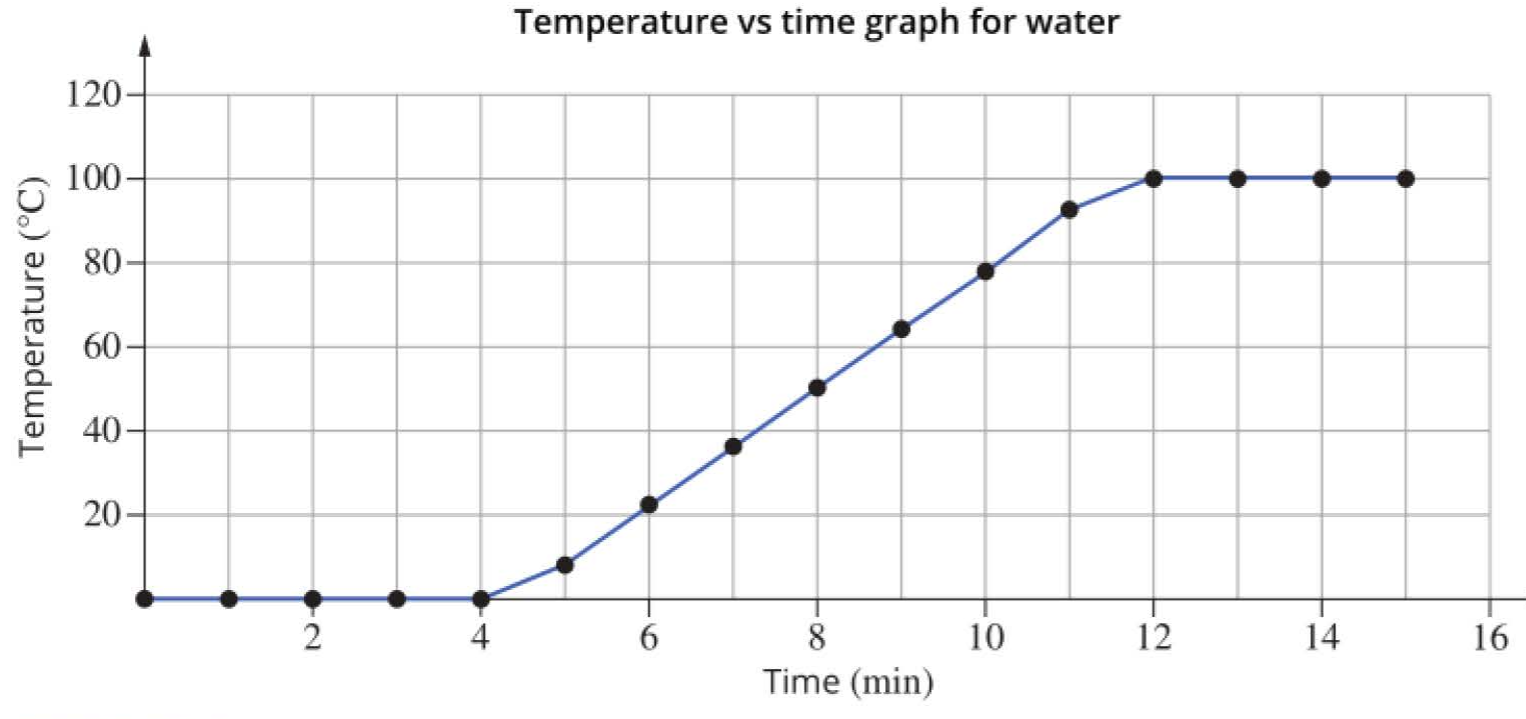
The flat horizontal sections (plateaus) on this graph show where phase changes are occurring. During these plateaus, the temperature doesn't change even though energy is continuously being added. This energy isn't being "wasted" - it's being used to change the state of the substance rather than increase its temperature.
Important
Latent heat is defined as the energy absorbed by a fixed amount of substance (usually mole) as it changes state from a solid to a liquid, or from a liquid to a gas, at its melting point or boiling point respectively.
The word "latent" means hidden - the energy is hidden because it doesn't cause a temperature change that we can measure.
Types of latent heat
There are two types of latent heat, corresponding to the two main phase changes:
Latent heat of fusion
The latent heat of fusion is the energy required to change mole of a substance from solid to liquid at its melting point. The word "fusion" means melting or joining together. This energy is needed to overcome some (but not all) of the forces holding the solid structure together.
Latent heat of vaporisation
The latent heat of vaporisation is the energy required to change mole of a substance from liquid to gas at its boiling point. This process requires more energy than fusion because the particles must completely separate from each other to form a gas.
Note
Both types of latent heat are measured in kilojoules per mole () and given the symbol .
Latent heat values for water
Water's fusion and vaporisation values
Water has a latent heat of fusion of . This means that of energy is needed to melt mole of ice at . This energy disrupts the regular ice lattice structure by breaking some of the hydrogen bonds between water molecules. However, many hydrogen bonds remain in the liquid state, which is why liquid water still has considerable structure.
Water has a latent heat of vaporisation of . This substantially larger value reflects the fact that of energy is needed to convert mole of liquid water to steam at . This much greater energy requirement is because all the hydrogen bonds between water molecules must be completely broken to allow the molecules to separate and form a gas.
Comparison with other substances
The table below compares water's latent heat values with those of hydrogen and oxygen:
| Substance | Latent heat of fusion () | Latent heat of vaporisation () |
|---|---|---|
| Water | ||
| Hydrogen | ||
| Oxygen |
Note
Water's latent heat values are dramatically higher than those of hydrogen and oxygen. This difference exists because water molecules are held together by strong hydrogen bonds, whilst hydrogen and oxygen molecules experience only weak dispersion forces.
The strength and number of hydrogen bonds in water, relative to its molecular size, explain why water's latent heat values are so much greater than those of other small molecules.
Calculating energy changes during phase transitions
When you know a substance's latent heat value, you can calculate how much energy is needed to change its state. The formula is:
where:
- is the heat energy in kilojoules ()
- is the amount of substance in moles ()
- is the latent heat value (either fusion or vaporisation) in
Important
Always check whether the phase change involves melting (fusion) or boiling (vaporisation), and use the appropriate latent heat value. Using the wrong value will give an incorrect answer.
Example
Worked Example: Evaporating Water
Let's calculate the heat energy required to evaporate of water at .
Step 1: Calculate the amount of water in moles
Using the formula where the molar mass of water is :
Step 2: Identify the relevant latent heat value
Since water is evaporating, we need the latent heat of vaporisation:
Step 3: Calculate the heat energy
Therefore, of energy is required to evaporate of water at its boiling point.
The significance of water's high latent heat
Body temperature regulation
Water's high latent heat of vaporisation makes perspiration an extremely effective cooling mechanism. When sweat evaporates from your skin, each mole of water removes of heat energy from your body. This large energy absorption causes significant cooling, helping to prevent overheating during exercise or in hot environments.
Water storage and conservation
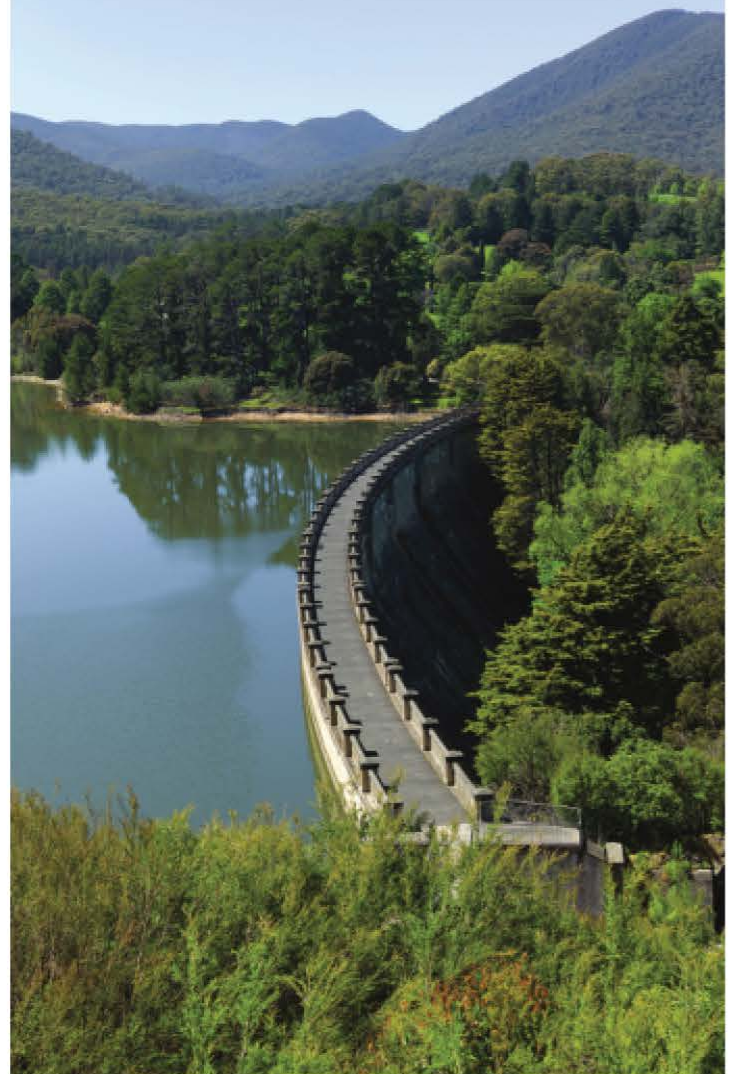
Australia stores much of its fresh water supply in open reservoirs. Although some water is lost through evaporation, these losses would be far greater if water had a lower latent heat of vaporisation. The high energy requirement for evaporation means that sunlight doesn't cause rapid water loss from storage facilities.
Note
Water's high latent heat of vaporisation acts as a natural protection against excessive evaporation. This property is essential for water conservation in regions with intense sunlight and high temperatures.
Ocean temperature regulation
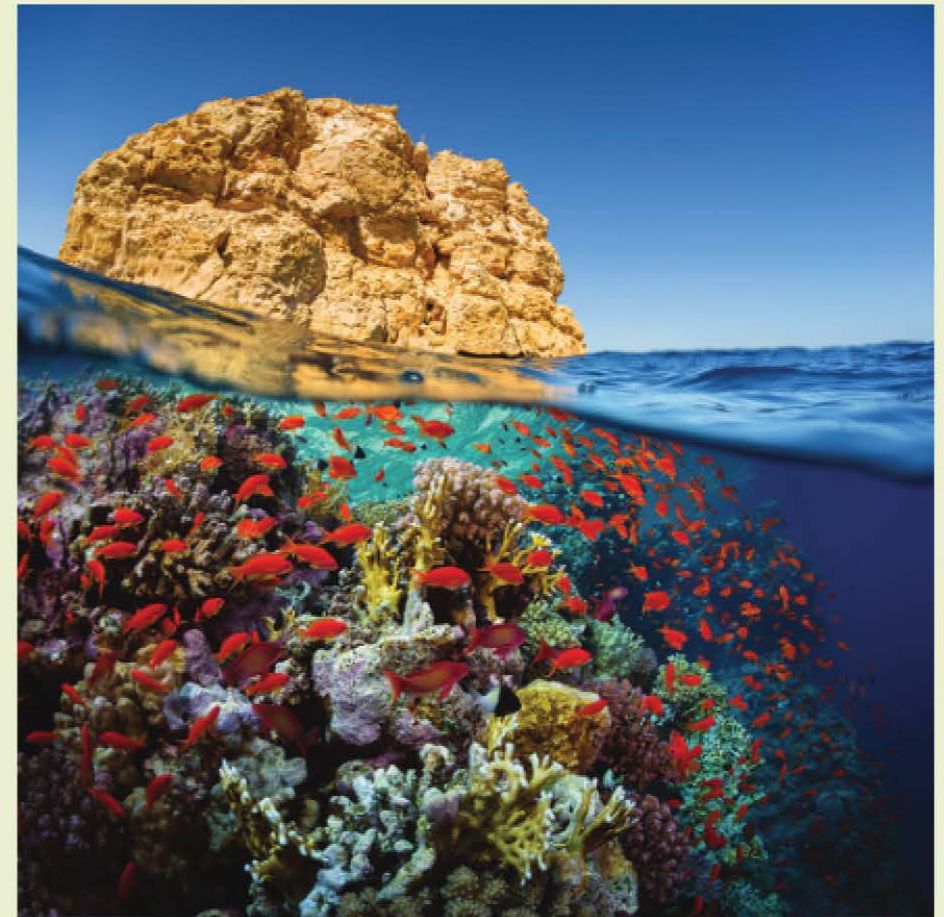
Ocean temperatures vary across the Earth, being warmer near the equator and cooler near the poles. However, the temperature in any particular ocean region remains relatively stable over time. This stability is crucial for marine organisms such as coral and fish, which are sensitive to temperature fluctuations.
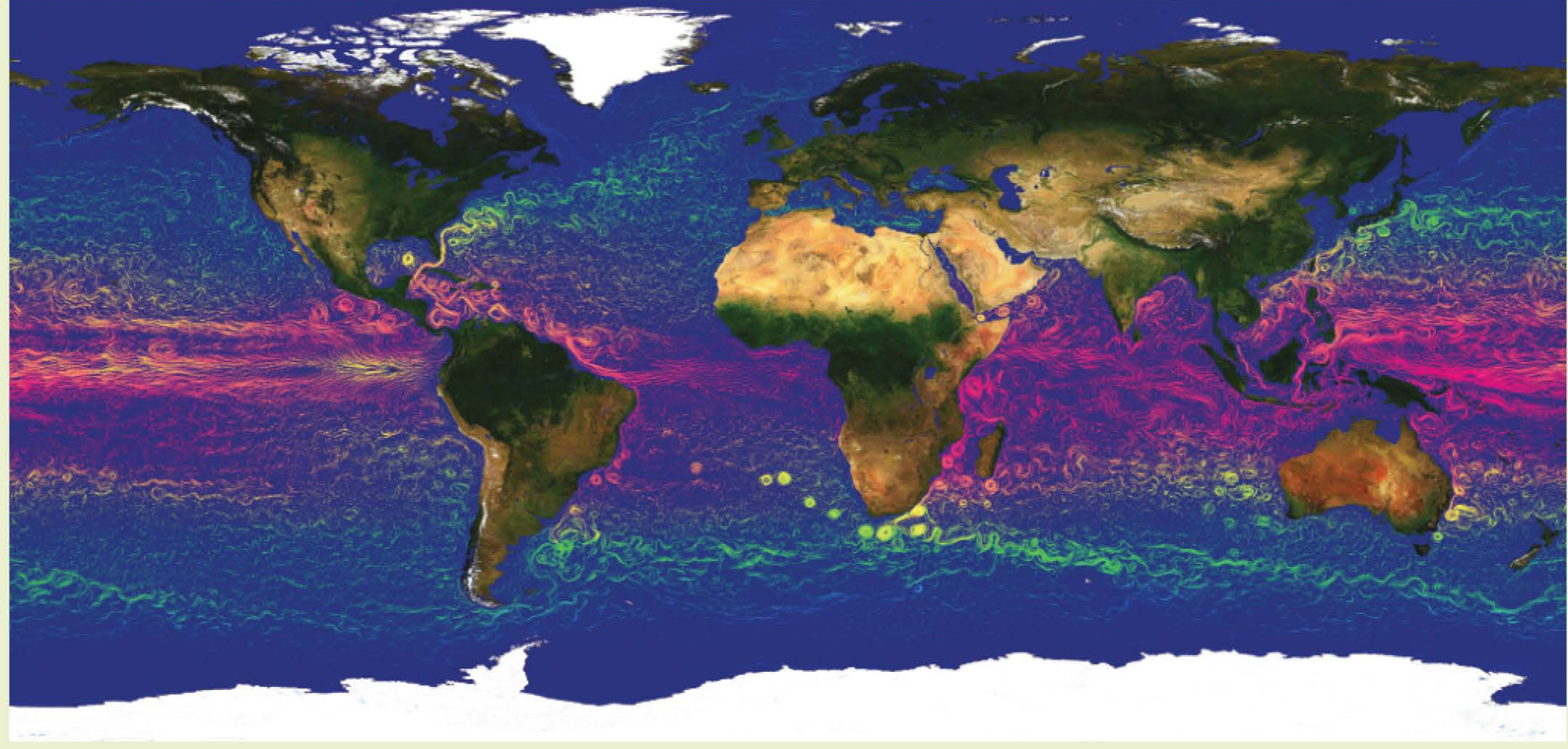
The global ocean currents shown above illustrate temperature variations, with red colours indicating warm water and green colours showing cooler regions. The average ocean surface temperature is about , ranging from around in the Arctic Ocean (salt dissolved in seawater lowers the freezing point) to between and in the Indian Ocean.
Two properties of water work together to maintain stable ocean temperatures:
- High specific heat capacity means that even intense sunlight doesn't cause large temperature increases in ocean water
- High latent heat of vaporisation means that high levels of sunlight don't result in excessive evaporation
These properties create a stable aquatic environment that supports diverse marine ecosystems.
Summary
Key Points to Remember:
-
Latent heat is the energy absorbed during a phase change at constant temperature. The temperature doesn't rise during melting or boiling because the energy breaks intermolecular forces rather than increasing kinetic energy.
-
Water has two key latent heat values: for fusion (melting) and for vaporisation (boiling). The vaporisation value is much higher because all hydrogen bonds must break.
-
Calculate energy for phase changes using . Always identify whether you need the fusion or vaporisation value for your calculation.
-
Water's high latent heat values result from strong hydrogen bonding between molecules. These values are much higher than those of similarly sized molecules without hydrogen bonding.
-
Practical significance: Water's high latent heat makes it an excellent coolant (perspiration), reduces evaporation losses from water storage, and helps maintain stable ocean temperatures essential for marine life.