Poverty (VCE SSCE Health and Human Development): Revision Notes
📚Revision Notes
Poverty
Poverty is a major factor contributing to differences in health status and burden of disease between countries. Understanding how poverty creates barriers to essential resources helps explain why low-income countries experience poorer health outcomes compared to high-income nations like Australia.
What is poverty?
Poverty means being deprived of essential resources. This deprivation typically starts with a lack of income but extends to both material resources (such as food, shelter, clean water and healthcare) and intangible resources (including social inclusion, educational opportunities and the ability to make decisions about one's life).
Measuring poverty
From an individual perspective, poverty is generally measured using income-based definitions:
Note
Absolute poverty (extreme poverty): Living on less than US$1.90 per day. This represents the minimum income needed to meet basic survival needs.
Relative poverty: Living on less than 50 per cent of a country's average income. This measure recognises that poverty exists even in wealthy nations when people have significantly less than their fellow citizens.
Poverty across income classifications
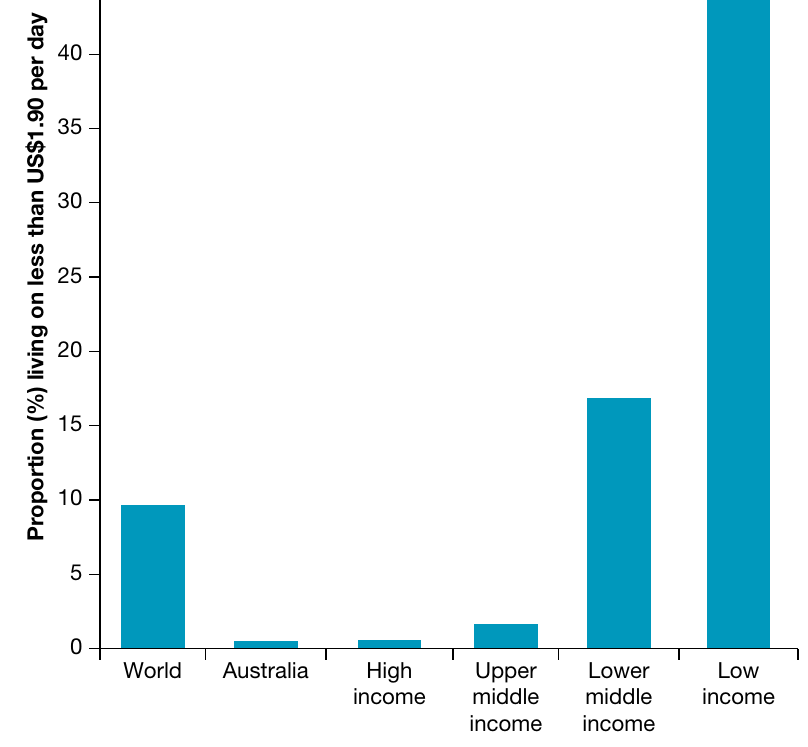
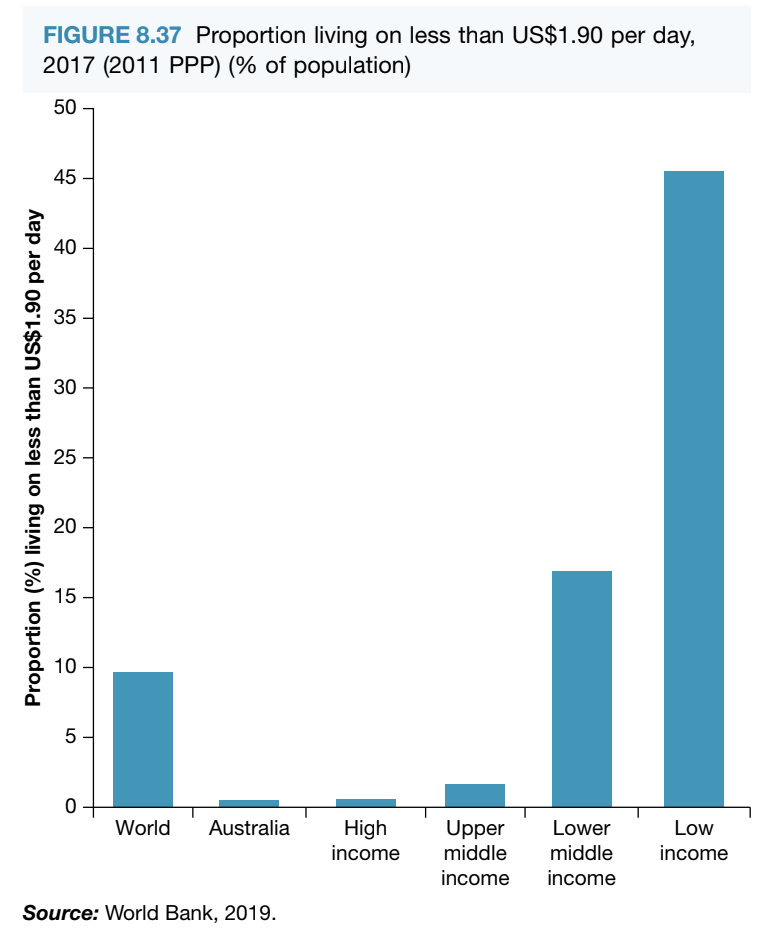
The chart above shows stark differences in poverty rates across different income groups. Low-income countries have the highest rates of extreme poverty at approximately 42 per cent, whilst Australia and other high-income countries have minimal rates (under 1 per cent). The world average sits at around 9-10 per cent.
Note
Although extreme poverty rates are low in Australia, relative poverty does exist, particularly among low socioeconomic groups.
How poverty affects health status and burden of disease
Poverty creates barriers to accessing multiple essential resources, all of which contribute to variations in health status between countries.
Poverty and government services, social protection measures and infrastructure
Gross National Income (GNI) represents the total value of goods and services produced by a country's citizens, including income earned by citizens working overseas. GNI reflects a country's wealth and indicates how much money the government can spend on services and infrastructure.
Higher GNI enables governments to provide better access to:
- Clean water and sanitation systems
- Health services
- Public education
- Social protection measures (pensions, welfare payments, disability support)
The more revenue governments generate through taxation and investment, the greater their capacity to provide these essential resources to citizens.
The chart above demonstrates the enormous gap in income levels between different country classifications. High-income countries have a GNI per capita of approximately US$55,000, whilst low-income countries have only around US$1,000 per person.
Important
Wealth Distribution Matters
GNI does not determine how wealth is distributed within a country. In many nations, a small number of people control most of the wealth, leaving the majority living far below the wealthy minority. This unequal distribution creates a unique challenge in low and middle-income countries.
The double burden of disease
When wealth is poorly distributed in low and middle-income countries, these nations face a challenging situation:
- They experience poverty-related health issues like communicable diseases and high child mortality (problems mostly absent in high-income countries)
- They also face wealth-related conditions like obesity, diabetes and cardiovascular disease (common in high-income countries)
Important
Experiencing both poverty-related and wealth-related health issues simultaneously is called a double burden of disease.
In Australia and other high-income countries, higher average incomes mean that wealth inequality has less dramatic health impacts than in lower-income nations.
Poverty and nutritious food
Lack of income often means families cannot afford nutritious foods, leading to undernutrition. This has serious health consequences:
Note
Health Consequences of Undernutrition
For children:
- Decreased immune function increases risk of infections
- Higher rates of premature death
- Impaired growth and development
For pregnant women:
- Increased risk of maternal mortality during pregnancy and childbirth
- Babies born with underdeveloped body systems
- Newborns more susceptible to premature death
Poverty and access to clean water and sanitation
Poverty limits government capacity to build and maintain clean water and sanitation infrastructure. This directly increases the risk of infectious diseases, particularly diarrhoeal disease, which is a leading cause of death among children in low and middle-income countries.
Without access to clean water:
- Families drink contaminated water
- Disease spreads more easily
- Children miss school to collect water
- Overall health status deteriorates
Poverty and education
Limited government funds in low and middle-income countries often mean only wealthy families can afford to pay for their children's education. This creates a damaging cycle:
Reduced access to education leads to:
- Lower literacy rates
- Fewer employment opportunities
- Continued poverty
- Limited access to food, water and healthcare
- Higher rates of illness and premature mortality
Note
Lower health literacy: When people cannot read or understand health information, they face increased risks from conditions like HIV/AIDS because they cannot access or understand prevention messages.
Important
Breaking the Poverty Cycle
Education is key to breaking the poverty cycle, but it often requires payment that poor families cannot afford. This perpetuates the following cycle:
Low income → Lack of education → Poor health and wellbeing → Poor living conditions → Inability to secure meaningful employment → Low income (cycle continues)
Education in Australia: All Australian children between ages six and 15-16 (depending on state/territory) must attend school. Government tax revenue covers most education expenses, giving people from all socioeconomic backgrounds the opportunity to educate their children. This contributes to higher health status and lower burden of disease.
Poverty and healthcare
Poverty typically means individuals, including children and pregnant women, cannot afford healthcare services. The contrast between Australia and lower-income countries is significant:
Note
In Australia:
- Medicare provides universal healthcare access
- Pharmaceutical Benefits Scheme (PBS) ensures affordable essential medicines
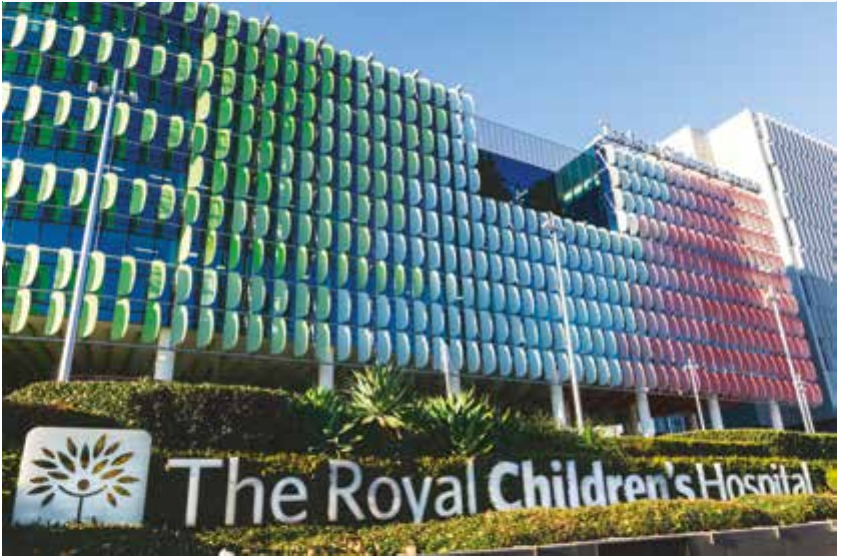
- Public hospitals available to all citizens
- Access to doctors and health professionals regardless of ability to pay
In most other countries:
- Few nations have universal healthcare systems
- Only those who can pay receive treatment
- Children die from conditions easily treatable in high-income countries
- Healthcare costs create financial hardship
Maternal healthcare: According to the World Health Organization, more than 280,000 women die annually from preventable pregnancy or childbirth complications. Most deaths occur in low and middle-income countries. In Australia, Medicare enables most women to access maternal healthcare regardless of their financial situation.
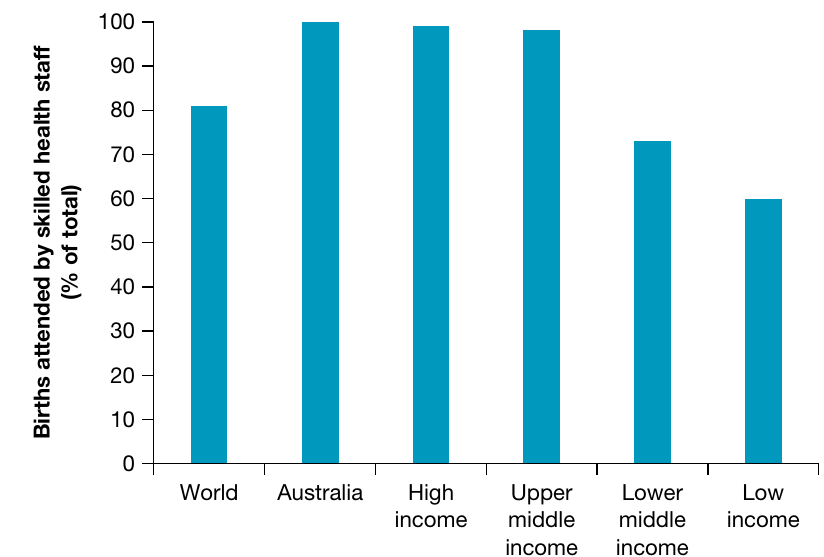
The chart above shows that nearly 100 per cent of births in Australia and high-income countries are attended by skilled health staff, compared to only 60 per cent in low-income countries. This difference contributes to the vast gap in maternal and infant mortality rates.
Poverty and housing
Housing quality significantly impacts health, particularly in low and middle-income countries where poverty forces many people into inadequate living conditions.
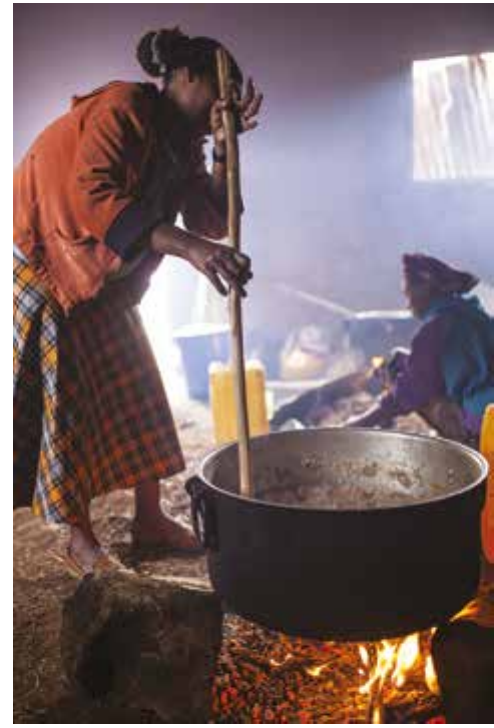
Indoor air pollution: Many households rely on solid fuels (coal, wood) for indoor heating and cooking without adequate ventilation like chimneys. This creates dangerous levels of indoor air pollution.
Note
The World Health Organization identifies indoor air pollution as the eighth most important global risk factor, responsible for 2.7 per cent of the global burden of disease.
Health impacts of indoor air pollution:
- Increased pneumonia risk in children under five
- Chronic respiratory disease in adults over 30
- Lung cancer
- Women and children face highest risks due to longer exposure times
High-income countries generally use cleaner energy sources, resulting in lower illness and death from indoor pollution.
Protection from infectious diseases: Adequate housing reduces exposure to disease-carrying mosquitoes (malaria) and other health threats. Low-income countries often lack this protection compared to high-income nations.
Reliable electricity supply: Access to electricity enables families to:
- Continue education after dark
- Store food safely
- Access technology and information
- Control indoor temperatures
- Break the cycle of poverty through increased opportunities
Temperature extremes: Many communities face extreme hot or cold temperatures. Without proper insulation, heating or cooling:
- Risk of death increases, especially for those with pre-existing heart conditions
- The body struggles to maintain safe body temperature
- Type of heating used (solid fuels) can increase respiratory disease risk
Remember!
Summary
Key Points to Remember:
-
Poverty is measured in two ways: Absolute poverty (living on less than US$1.90/day) and relative poverty (living on less than 50% of a country's average income).
-
Poverty creates barriers to six key resources: Government services and infrastructure, nutritious food, clean water and sanitation, education, healthcare, and adequate housing. Each barrier contributes to poorer health outcomes.
-
GNI reflects government capacity: Higher Gross National Income enables governments to invest in health-promoting infrastructure and services. However, how wealth is distributed matters as much as total wealth.
-
The poverty cycle is self-perpetuating: Low income leads to lack of education, which causes poor health, poor living conditions, and inability to find employment, continuing the cycle. Education is key to breaking this cycle.
-
Australia's universal systems reduce poverty's impact: Medicare, PBS, public education and social protection measures ensure all Australians can access essential health-promoting resources regardless of income, contributing to better health status compared to countries without such systems.