Social and Environmental Characteristics of Different Countries (VCE SSCE Health and Human Development): Revision Notes
📚Revision Notes
Social and Environmental Characteristics of Different Countries
Understanding the differences between high-, middle-, and low-income countries helps us see why health and wellbeing vary so much around the world. These differences can be grouped into social characteristics (relating to people and society) and environmental characteristics (relating to physical surroundings and living conditions).
Social characteristics
Social characteristics refer to the features of a society that influence how people live, work, and interact with each other. Different income levels of countries show distinct patterns in these social features.
Note
The social characteristics of a country are closely linked to its economic development level. These features don't exist in isolation - they interact with and influence each other, creating either positive cycles of development or negative cycles of poverty.
Gender equality
Gender equality means males and females have equal rights, responsibilities, and opportunities in all areas of life.
High-income countries typically show relatively high levels of gender equality. In these nations, both males and females enjoy similar opportunities and choices in key areas including education, employment, community participation, family planning, and recreation.
In contrast, many low-income countries experience significant gender inequality. Females often face limited educational opportunities and typically work in agricultural settings, tending crops or spending considerable time collecting water and preparing meals. Their career options and life choices are often restricted compared to males in the same society.
Note
Middle-income countries are experiencing progress in gender equality. As more females enter paid employment, these countries benefit from reduced poverty levels and increased economic productivity. This demonstrates how gender equality can contribute to overall national development.
Birth and population rates
High-income countries are characterised by low birth rates and slow population growth, while low-income countries typically experience the opposite pattern.
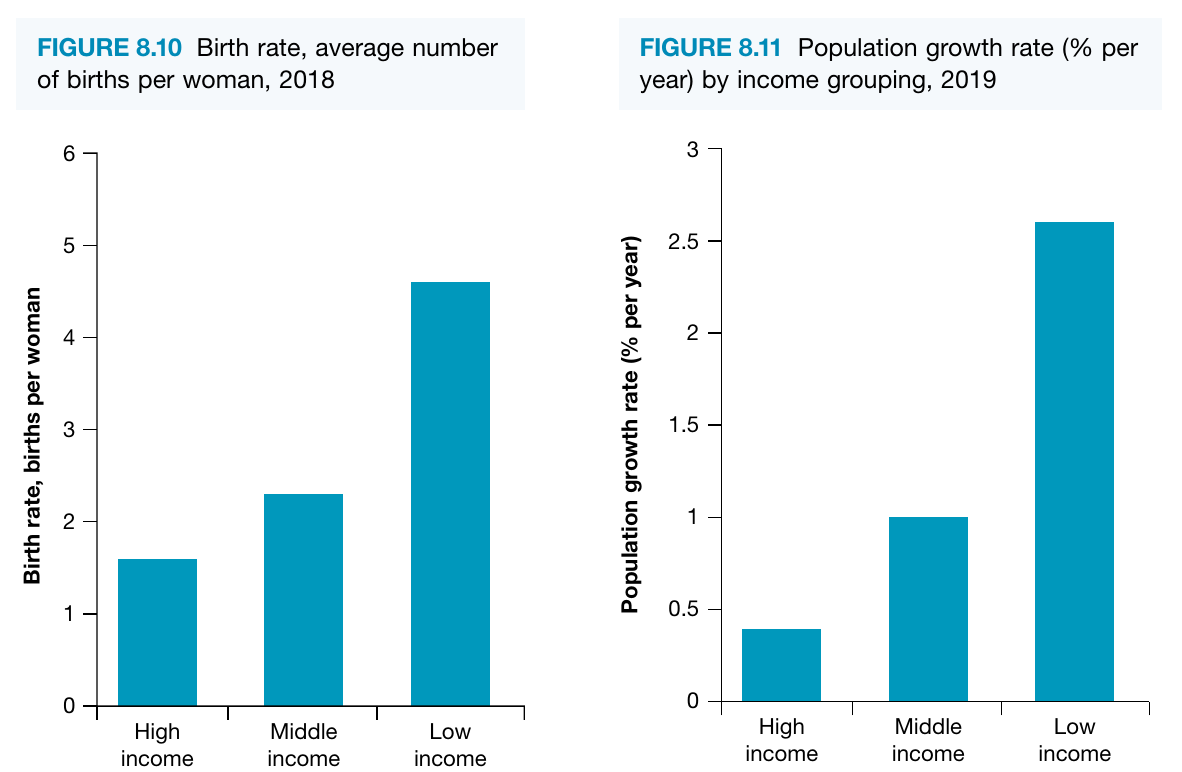
Several factors contribute to lower birth rates in wealthy nations:
- Access to contraception and family planning services
- Career opportunities for women
- Higher levels of education
- Greater gender equality
- Cultural shifts regarding family size
Important
The consequences of high birth rates in low- and middle-income countries can be significant. Large families may struggle to provide adequate resources for all children to live healthy lives. Additionally, rapid population growth limits governments' ability to provide essential services such as education, healthcare, and social security for all citizens.
Education and employment levels
High-income countries are distinguished by high rates of both education and employment. People in these nations typically have choices about their level of education and career paths.
The education landscape differs dramatically in low-income countries. Many lack developed education systems, which severely limits career options for their citizens. A crucial difference is funding: families in low-income countries usually must pay for their children's schooling, whereas in middle- and high-income countries, governments provide substantial funding to make education accessible to all.
Important
The Education-Poverty Cycle
This disparity in educational access creates a cycle that can be difficult to break. Without education, people have fewer employment opportunities, which perpetuates poverty and limits the country's overall development. Breaking this cycle requires significant investment in accessible education systems.
Social security systems
High levels of economic development and stable political systems enable governments in high-income countries to provide social security payments for those in need. These systems offer financial support to individuals who are unemployed or unable to work due to illness or disability, helping to promote their health and wellbeing.
Low- and middle-income countries often lack the resources to provide such assistance. Without social safety nets, people who are unemployed or unable to work face deepening poverty, which can have severe impacts on their health and wellbeing.
Health systems
High-income countries generally maintain public health systems that provide basic healthcare to all citizens when needed, regardless of their ability to pay. This universal access to healthcare is a fundamental characteristic that supports population health.
In contrast, people in low- and middle-income countries often lack access to suitable healthcare facilities and services. This limited access directly affects the level of health and wellbeing that populations can achieve.
Access to technology
Technology encompasses communication systems, internet access, and medical technologies. It plays a vital role in economic development, trade opportunities, education advancement, and healthcare delivery.

High-income countries enjoy greater access to technology due to a combination of factors:
- Economic resources to invest in technology infrastructure
- Developed infrastructure to support technology use
- Higher education levels enabling effective technology utilisation
Note
Low-income countries often lack technology access, which creates significant disadvantages. Limited technology impacts citizens' ability to gain education, earn income, and access modern healthcare. This technology gap represents another factor that can widen the health and wellbeing divide between rich and poor nations.
Legal systems
Most high-income countries benefit from strong political and legal systems that provide stability and protect citizens' rights. These robust legal frameworks are important for ensuring fundamental human rights are upheld, including the right to education and the right to live safely.
Many low-income countries and some middle-income countries experience unstable governments and political unrest. These conditions increase the risk of civil conflict, which is more common in low-income countries. Without strong legal systems to protect human rights, the health and wellbeing of citizens can be severely affected.
Environmental characteristics
Environmental characteristics relate to the physical conditions in which people live. These features significantly influence the level of health and wellbeing that populations can achieve.
Safe water and sanitation
Access to safe water and sanitation is a defining characteristic of high-income countries and many middle-income countries. This single factor is responsible for a large proportion of the variations in health and wellbeing between different income groups of countries.
Important
Safe water and adequate sanitation prevent the spread of waterborne diseases and enable basic hygiene practices that protect health. The lack of these essential services in many low-income countries contributes significantly to poor health outcomes.
Food security
People in high-income countries generally have reliable access to a quality food supply throughout the year. Food security in these nations is maintained even during challenging circumstances.
Low-income countries often struggle with food security. Natural disasters such as floods and droughts have a more pronounced impact on food availability in these countries because they lack the financial resources to purchase food during emergencies. This vulnerability to food shortages can lead to malnutrition and its associated health consequences.
Adequate housing
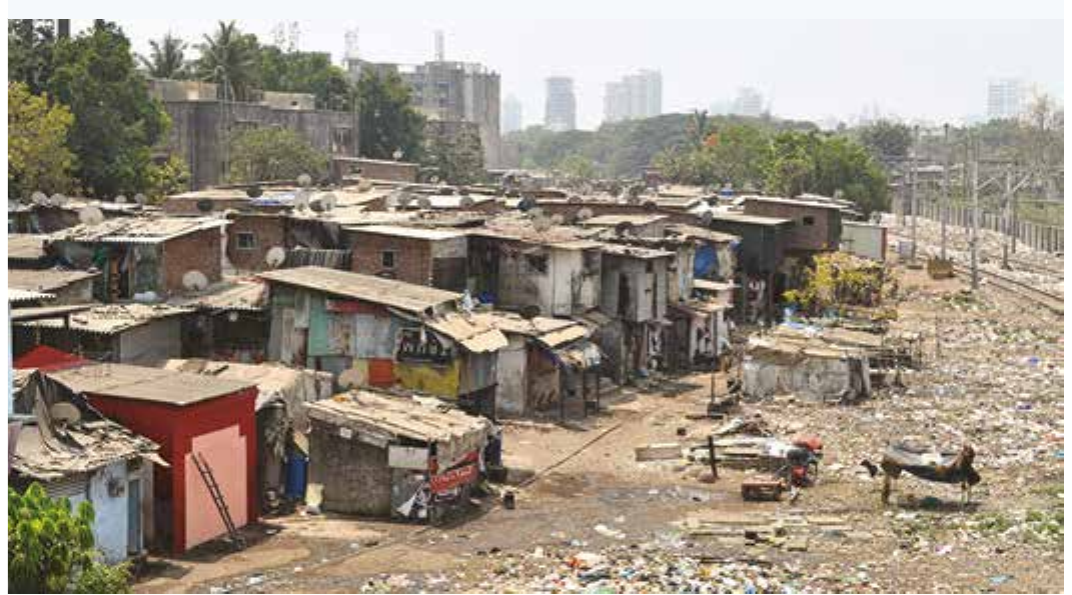
Housing quality varies dramatically between income levels of countries. Many people in low- and middle-income countries lack access to adequate housing compared to those in high-income nations.
Substandard housing in poorer countries often features:
- Poor ventilation
- Lack of heating and cooling systems
- Poor resistance to disease-carrying organisms such as insects
- Absence of cooking facilities and running water
- Inadequate protection from weather and environmental hazards
Note
Urban slums are particularly common in low- and middle-income countries. These are settlements, neighbourhoods, or regions comprised of housing that does not provide the essential conditions required to live a healthy life.
Adequate infrastructure
Infrastructure encompasses the basic physical systems necessary for modern life, including roads, transport systems, piped water, sewerage systems, electricity grids, and telecommunication systems.
High-income countries typically have well-developed infrastructure in all these areas. This comprehensive infrastructure supports economic activity, enables access to services, and contributes to quality of life.

People in low- and middle-income countries often lack access to adequate infrastructure, particularly in rural and remote areas and urban slums. This absence of basic systems creates daily challenges and limits opportunities for development and improved health outcomes.
Levels of carbon dioxide emissions
High-income countries emit significantly greater amounts of carbon dioxide (CO₂) per person into the atmosphere due to their extensive industrial activities and higher consumption levels.
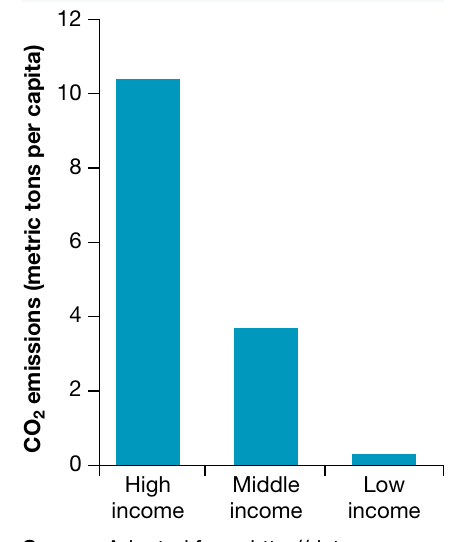
Carbon dioxide emissions contribute to climate change and its associated effects on sea levels and weather patterns. Ironically, while high-income countries produce the most emissions, low- and middle-income countries often suffer the most severe impacts of climate change. These poorer nations lack the economic resources to effectively adapt to or mitigate the effects of changing climate conditions.
Important
Environmental Justice Issue
This creates an environmental justice issue where those least responsible for climate change face the greatest consequences. High-income countries contribute the most to global CO₂ emissions, yet low- and middle-income countries experience more severe impacts from climate change without having the resources to adequately respond.
Connections to health status
The economic, social, and environmental characteristics described above contribute significantly to the differences in health status experienced across high-, middle-, and low-income countries. These factors work together in complex ways:
Example
Example: The Interconnected Nature of Country Characteristics
Consider how these factors create a cycle of disadvantage:
- Limited education restricts employment opportunities
- Poor employment leads to poverty
- Poverty prevents access to adequate housing, food, and healthcare
- Inadequate infrastructure limits access to clean water and sanitation
- All these factors combine to impact health and wellbeing
Understanding these interconnections helps explain why health outcomes differ so dramatically between countries at different income levels.
Remember!
Summary
Key Points to Remember:
-
Social characteristics that distinguish high-income countries include gender equality, low birth rates, high education and employment, developed health and social security systems, technology access, and strong legal systems.
-
Environmental characteristics of high-income countries include safe water and sanitation, food security, adequate housing and infrastructure, but also high carbon dioxide emissions.
-
Low-income countries face significant challenges including gender inequality, high birth and population growth rates, limited education and employment, inadequate healthcare and social security, poor infrastructure, and vulnerability to climate change.
-
These characteristics are interconnected and work together to create significant differences in health and wellbeing between countries at different income levels.
-
The technology gap and infrastructure deficit in low-income countries create barriers to development that can be difficult to overcome without external support.