Arrangements (VCE SSCE Mathematical Methods): Revision Notes
📚Revision Notes
Arrangements
What are arrangements?
An arrangement is a way of ordering a set of objects where the sequence matters. Each different order counts as a distinct arrangement, even when using the same objects.
For example, if we arrange the three letters A, B, C, we can create six different arrangements:
ABC, ACB, BAC, BCA, CAB, CBA
Notice that ABC and CBA are considered different arrangements because the order of the letters is different. In mathematics, arrangements are also called permutations.
Note
The key feature of arrangements is that order matters. Changing the sequence of the same objects creates a completely different arrangement.
The box method for counting arrangements
When we have more than three objects, listing all possible arrangements becomes impractical. Instead, we can use a visual box method to work out how many arrangements exist.
Arranging three letters
Let's revisit arranging the letters A, B, C using the box method. We imagine three empty boxes that need to be filled:

Now we count the choices available for each box:
- We have 3 choices for the first box (we can pick A, B, or C)
- We have 2 choices for the second box (we've already used one letter)
- We have 1 choice for the third box (we've already used two letters)
Using the multiplication rule, the total number of arrangements is:
This matches the six arrangements we listed earlier!
Worked example: arranging four books
Example
Worked Example: Arranging Books on a Shelf
Question: How many ways can we arrange four different books on a shelf?
Solution:
We think of the bookshelf as having four positions:

For four books, we have:
- 4 choices for position 1
- 3 choices for position 2
- 2 choices for position 3
- 1 choice for position 4
Using the multiplication rule, the total number of arrangements is:
Worked example: arranging twelve students
Example
Worked Example: Photo Arrangements
Question: A photo is to be taken of 12 students sitting in a row. How many different arrangements are possible?
Solution:
With 12 students, the number of arrangements is:
Factorial notation
Writing out long multiplication sequences like is cumbersome, so mathematicians use a shorthand called factorial notation.
The symbol (read as "n factorial") represents the product of all positive integers from down to 1:
For example:
Important
Key Principle: The number of ways to arrange objects in a row is
This fundamental principle forms the basis for all arrangement calculations.
Arranging some objects from a larger set
Sometimes we want to arrange only some objects from a larger collection. For instance, how many ways can we arrange two letters chosen from A, B, C?
The possibilities are: AB, BA, AC, CA, BC, CB (six arrangements)
Using the box method with two boxes:

We have:
- 3 choices for the first box (A, B, or C)
- 2 choices for the second box (one letter already used)
Total arrangements:
Worked example: painting the Olympic rings
Example
Worked Example: Painting the Olympic Rings
Question: A painter needs to paint the five circles of the Olympic flag using five different colours. He has eight paint colours available. In how many ways can he paint the circles?
Solution:
We represent the five circles with five boxes:

For each circle:
- First circle: 8 colour choices
- Second circle: 7 colour choices (one colour used)
- Third circle: 6 colour choices
- Fourth circle: 5 colour choices
- Fifth circle: 4 colour choices
Total arrangements:
The general formula
We can express the answer from the Olympic rings example using factorials. We calculated:
If we multiply by 1 (which doesn't change the value), we can write:
Notice that , so this can also be written as:
Important
General Formula: The number of arrangements of objects chosen from objects is:
This is often written as and read as "n permute r".
Worked example: forming four-digit numbers
Example
Worked Example: Forming Four-Digit Numbers
Question: Find the number of different four-digit numbers that can be formed from the digits 1, 2, 3, 4, 5, 6, 7, 8, 9, if each digit:
a) can only be used once
b) can be used more than once
Solution:
a) We are arranging 9 objects (the digits) in groups of 4:
b) Since digits can be repeated, we have 9 choices for each of the four positions:
The value of 0!
For our arrangement formula to work in all situations, we need to define .
Consider arranging objects in groups of size (using all objects). From first principles, this equals .
Using our formula:
For this to equal , we must have:
Important
Special Definition: By definition,
This special definition ensures our arrangement formula works consistently in all cases, including when we arrange all objects from a set of objects.
Arrangements with restrictions
When an arrangement has restrictions or conditions, the best strategy is to deal with the restriction first, then count the remaining choices.
Important
Strategy for Restrictions: Always handle restrictions first! This simplifies the problem and reduces errors.
- Identify the restriction
- Count the choices for the restricted position(s)
- Count the remaining choices for other positions
- Apply the multiplication rule
Worked example: forming even four-digit numbers
Example
Worked Example: Forming Even Four-Digit Numbers
Question: How many different even four-digit numbers can be formed from the digits 1, 2, 3, 4, 5, 6, 7, 8, if each digit can only be used once?
Solution:
We have four boxes to fill:
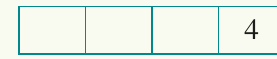
Step 1: Deal with the restriction first.
For the number to be even, it must end in 2, 4, 6, or 8. So we have 4 choices for the last box.
Step 2: Count the remaining choices.
After selecting the last digit, seven digits remain:
- 7 choices for the first box
- 6 choices for the second box
- 5 choices for the third box
Step 3: Apply the multiplication rule.
Total arrangements:
Exam Tip: Always handle restrictions first! This is the key to solving arrangement problems with conditions correctly and efficiently.
:::
Remember!
Summary
Key Points to Remember:
- An arrangement (or permutation) is an ordering of objects where sequence matters
- The number of ways to arrange objects is
- The number of ways to arrange objects from objects is , also written as
- By definition,
- When solving problems with restrictions, deal with the restriction first, then count the remaining choices