Zimbardo’s Stanford Prison Experiment (VCE SSCE Psychology): Revision Notes
📚Revision Notes
Zimbardo's Stanford Prison Experiment
Background and aim
In 1971, Dr Philip Zimbardo conducted a landmark study examining how assigned social roles influence behaviour. The research addressed a specific question: was the reported brutality in American prisons caused by the personalities of prison guards, or by the prison environment itself?
Zimbardo transformed a basement in Stanford University's psychology department into a simulated prison facility. He recruited participants through a newspaper advertisement seeking young males willing to participate in a study exploring prison life. The experiment was designed to last two weeks, with participants receiving $15 per day (a substantial sum at the time).
Note
The central aim of this research was to determine whether prison brutality stemmed from individual personalities (dispositional factors) or from the prison environment itself (situational factors). This distinction is crucial in understanding whether prison violence is inevitable or preventable through environmental changes.
Method
Participants
Seventy-five male university students responded to the advertisement. Each applicant underwent psychological interviews and testing to assess their suitability. From these, 24 individuals were selected based on their psychological fitness and emotional stability. Of the 24 selected, 18 were assigned active roles in the experiment, whilst the remaining six served as potential replacements if needed.
Random allocation
Participants were randomly assigned to one of two roles: prisoner or guard. Nine individuals became prisoners, and nine became guards. This random allocation was designed to ensure any subsequent behavioural differences resulted from the roles themselves rather than pre-existing personality differences.
Important
Random allocation was a critical methodological feature. By ensuring participants were assigned to roles purely by chance, Zimbardo could be confident that any differences in behaviour between guards and prisoners were caused by the roles themselves, not by personality differences that existed before the study began.
Setting and roles
The mock prison was created in the basement of Stanford's psychology building. To enhance realism and establish clear role distinctions, both groups wore specific uniforms and were subject to particular conditions.
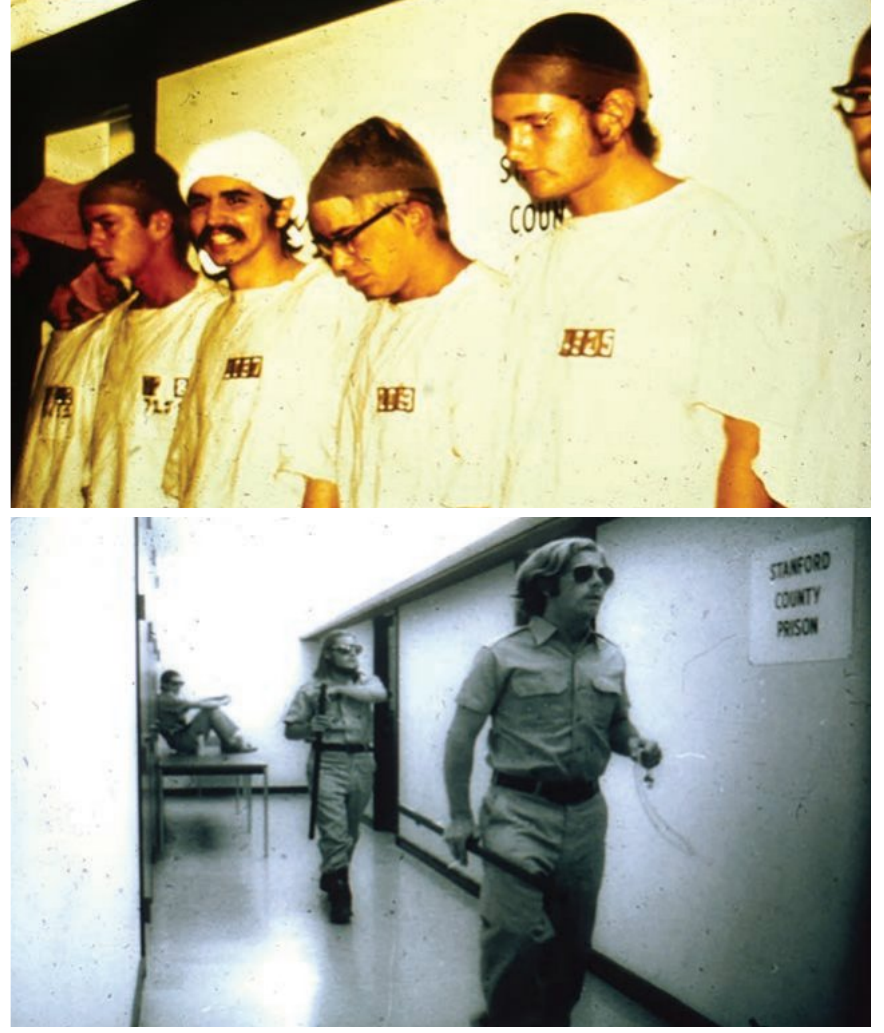
Prisoner role:
- Wore only a smock bearing their assigned number, without underclothes
- Wore a tight nylon cap covering their hair
- Had a locked chain around one ankle
- Were addressed only by their assigned number
- Could only refer to themselves and other prisoners by number
Guard role:
- Dressed in identical khaki uniforms
- Wore whistles around their necks
- Carried clubs borrowed from the police
- Wore mirrored sunglasses preventing eye contact with prisoners
- Worked in shifts of eight hours, with others remaining on call
Note
Purpose of uniforms and conditions:
The uniforms served specific psychological purposes. Prisoner clothing was designed to be humiliating and dehumanising, stripping away individual identity. The nylon cap mimicked a shaved head, the smock was dress-like and uncomfortable, and being addressed only by number reinforced their loss of personal identity.
Guard uniforms created authority and anonymity. The mirrored sunglasses prevented eye contact, making guards appear less human and more intimidating. The whistle, club, and identical clothing established their power and authority whilst also creating psychological distance from the prisoners.
Instructions and procedure
Zimbardo instructed guards to maintain order in the prison and command the prisoners' respect through whatever means they deemed necessary, with one restriction: no physical violence was permitted. Zimbardo himself took on a dual role, both observing the experiment as a researcher and acting as the prison warden.
Important
Zimbardo's dual role as both researcher and prison warden created a serious conflict of interest. As a researcher, he should have maintained objectivity and prioritised participant welfare. As prison warden, he became absorbed in maintaining the prison's operation, which compromised his ability to protect participants from harm.
Procedure: day-by-day events
Day 1
Example
Day 1: Mock Arrests and Establishing Control
To maximise authenticity, real police officers conducted mock arrests at participants' homes. Prisoners were searched, fingerprinted, and charged with committing a crime. They were then blindfolded and transported to the mock prison, where they were stripped of their clothes and possessions, deloused, and given prison uniforms and bedding.
At 2:30 am, guards woke prisoners with loud whistles for the first "count" - a procedure designed to familiarise prisoners with their numbers. Some guards immediately began exerting control, taunting prisoners with insults and issuing petty orders. They assigned pointless tasks such as push-ups, establishing their dominance from the outset.
Key observation: Guards began asserting authority immediately, using sleep deprivation and arbitrary power to establish control.
Day 2
Example
Day 2: The Rebellion
On the second morning, prisoners staged a rebellion. They removed their nylon caps, tore off their identification numbers, and barricaded themselves inside their cells by pushing beds against the doors. Guards responded by spraying fire extinguishers at the prisoners. The three backup guards were called in to help restore order.
To suppress the rebellion, guards confiscated prisoners' clothes and mattresses. They placed the rebellion's ringleaders in solitary confinement. In contrast, prisoners who had not participated in the uprising received better food and were moved to more comfortable cells as a reward. This strategy aimed to create division among the prisoner group.
Key observation: Guards employed a "divide and conquer" strategy, rewarding compliant prisoners to break solidarity and prevent future collective resistance.
Day 3
Example
Day 3: Escalating Aggression and First Release
Guards returned the previously rewarded prisoners to their original cells, then escalated their aggressive behaviour. They forced prisoners to perform humiliating acts, including walking in a manner described as "like a monster" and telling other inmates they "loved" them.
Guards restricted bathroom access, compelling prisoners to relieve themselves in buckets. The prisoners reported feeling severely traumatised and dehumanised, and their behaviour became increasingly passive and submissive.
One prisoner experienced what appeared to be a mental breakdown, shouting that he could no longer cope. Although Zimbardo attempted to persuade him to continue, the prisoner was ultimately released from the study.
Key observation: By day three, guards had moved beyond maintaining order to actively humiliating and degrading prisoners. Prisoner behaviour shifted from rebellious to passive and broken.
Day 4
Example
Day 4: Social Fragmentation and Prisoner 819
Social cohesion among prisoners deteriorated markedly. Those who had participated in the rebellion suspected the compliant prisoners of being informants. Conversely, the compliant prisoners viewed the rebels as threats to their relative comfort.
Over the following two days, two additional prisoners were released due to psychological distress. One prisoner, known as 819, began crying in his cell. A priest was brought in to speak with him, but Prisoner 819 refused conversation and instead requested medical attention. After witnessing his distress, Zimbardo reminded him of his actual identity and escorted him from the prison. As they departed, guards encouraged the remaining prisoners to chant repeatedly that "819 is a bad prisoner".
Key observation: The guards' divide-and-conquer strategy succeeded in destroying prisoner solidarity. Prisoners now saw each other as threats rather than allies. Even after Prisoner 819's release, guards continued to use him as a tool to control remaining prisoners.
Day 5
Example
Day 5: Parental Visits and Escape Rumour
Friends and relatives of the prisoners were permitted to visit. Prior to these visits, cells were thoroughly cleaned and polished, and prisoners were showered, shaved, and fed to create a favourable impression. Some parents expressed concern about their sons' treatment, but none demanded their release.
Later that day, a rumour circulated about an escape attempt. Although entirely unfounded, this rumour provoked the guards to intensify their abusive treatment even further.
Key observation: Guards actively managed external perceptions by preparing prisoners for visits. Remarkably, even parents failed to intervene despite observing concerning conditions. The unfounded escape rumour demonstrates how deeply guards had embraced their role, responding to imaginary threats with real aggression.
Day 6
Example
Day 6: Early Termination
Despite planning the experiment to run for two weeks, Zimbardo terminated it after only six days. The decision came in response to prisoners' emotional breakdowns and the guards' escalating aggression.
Key observation: The experiment ended at only 30% of its planned duration, demonstrating the extreme and rapid deterioration of conditions that occurred when normal individuals were placed in roles involving differential power and status.
Role of Christina Maslach
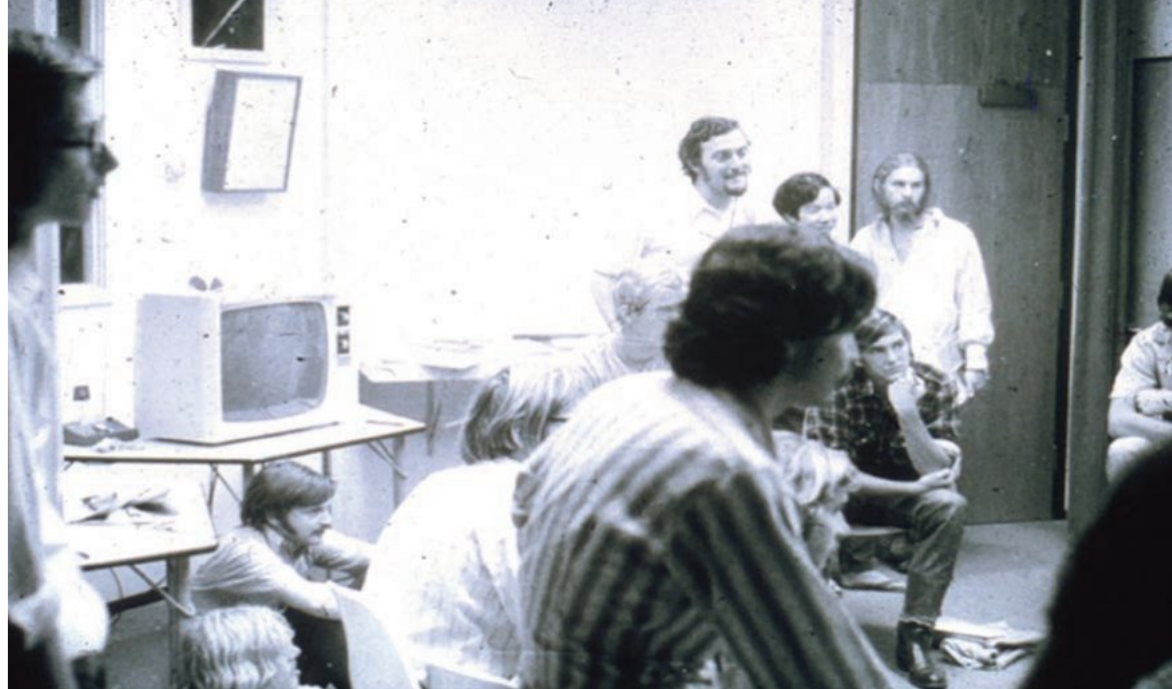
Christina Maslach, who had recently completed her PhD at Stanford University, visited to observe the experiment. Upon witnessing the guards' treatment of prisoners, she expressed strong objection, stating: "It's terrible what you are doing to these boys!"
Important
Remarkably, out of over 50 external observers who had seen the simulated prison, Christina Maslach was the only person to question its morality. Her intervention played a key role in Zimbardo's decision to end the experiment. This demonstrates how powerfully situational factors can influence behaviour - even trained psychologists who observed the abuse failed to intervene until Maslach spoke up.
She later married Zimbardo.
Findings and conclusions
After the experiment, Zimbardo reflected on how deeply he had become absorbed in his role as prison warden, noting: "It wasn't until much later that I realised how far into my prison role I was at that point – that I was thinking like a prison superintendent rather than a research psychologist". He acknowledged that assuming both roles simultaneously was a serious error.
The experiment's results led Zimbardo to conclude that individuals readily conform to the social roles they are expected to perform. The behaviour of normal, well-educated individuals can be profoundly influenced when assigned a role involving substantial power and status.
Guards, given a role with considerable power and status, rapidly adapted to their unfamiliar position. They became dominating, powerful, and coercive in their treatment of prisoners. In contrast, prisoners occupied a role with minimal status and little power. Unable to avoid or resist the guards' misuse of authority, they experienced increasing dehumanisation and trauma, leading to timid and passive behaviour.
Note
Dehumanisation in context:
Dehumanisation refers to the process of depriving a person or group of positive human qualities. In the Stanford Prison Experiment, this occurred through multiple mechanisms: prisoners being referred to by numbers rather than names, being forced to perform degrading acts, having basic dignities removed (such as bathroom access), and being treated as objects to be controlled rather than as human beings with feelings and rights.
Overall, the Stanford Prison Experiment demonstrated the extreme effects that status and power can have on human behaviour.
Summary
Key Findings:
- Normal, psychologically healthy individuals rapidly conformed to assigned social roles, even when those roles involved harmful behaviour
- Power and status profoundly influenced behaviour: guards became aggressive and controlling, prisoners became passive and submissive
- Situational factors (the prison environment and assigned roles) proved more influential than individual personalities in determining behaviour
- The process of dehumanisation occurred rapidly once power differentials were established
- Even the researcher himself (Zimbardo) became absorbed in his assigned role, compromising his objectivity and ethical responsibilities
Evaluation
Methodological limitations
Biased sample
Zimbardo employed a non-random sampling method, recruiting participants through newspaper advertisement. Furthermore, his sample consisted exclusively of white males. Consequently, the findings cannot be generalised to women or individuals from other ethnic backgrounds.
Note
The lack of diversity in the sample raises important questions about generalisability. We cannot assume that women, individuals from different cultural backgrounds, or people from different age groups would respond identically to the same situational pressures. The sample also consisted of university students, who may differ from the general population in education level, socioeconomic status, and other relevant characteristics.
Lack of replication
The experiment was conducted only once and has not been replicated. This lack of replication means the study has low reliability, as we cannot confirm whether the same results would occur under similar conditions.
Important
Why hasn't it been replicated?
The Stanford Prison Experiment cannot be replicated due to its serious ethical violations. Modern ethical guidelines would prohibit conducting a study that causes such significant psychological harm to participants. This creates a methodological dilemma: we cannot verify the findings through replication, but replication is impossible for ethical reasons.
Ethical criticisms
No harm principle
Participants assigned to the prisoner role were not adequately protected from psychological harm. They experienced numerous incidents of humiliation and severe distress. For example, one prisoner was released after just 36 hours due to uncontrollable episodes of screaming, crying, and anger.
However, Zimbardo conducted extensive group and individual debriefing sessions following the experiment. All participants completed post-experimental questionnaires at several intervals: weeks after the study, then months later, and subsequently at yearly intervals. Based on these follow-ups, Zimbardo concluded that no lasting adverse effects resulted from participation.
Note
While Zimbardo's follow-up procedures were thorough and found no lasting harm, this does not excuse the harm that occurred during the study itself. The no harm principle requires researchers to prevent harm from occurring in the first place, not simply to check whether harm proved permanent afterward.
Withdrawal rights
Although participants theoretically retained the right to leave at any time, this right was compromised in practice. Zimbardo actively attempted to convince one prisoner to remain when he expressed a desire to withdraw. Additionally, whilst Zimbardo argued that participants chose to stay, the right to withdraw was undermined because prisoners reinforced amongst themselves "a sense of imprisonment by telling each other that there was no way out".
Important
The illusion of choice:
True informed consent requires that participants can freely choose to continue or withdraw. In the Stanford Prison Experiment, several factors compromised this freedom:
- Zimbardo actively discouraged withdrawal when requested
- Prisoners believed they could not leave (despite this being false)
- The realistic nature of the simulation blurred the line between research study and actual imprisonment
- The power dynamics created by the roles made it psychologically difficult to assert rights
Informed consent
The experiment lacked fully informed consent on multiple levels. Zimbardo himself could not predict what would occur during the study, making it impossible to fully inform participants beforehand. Moreover, prisoners did not consent to being arrested at their homes, which added an unexpected element of stress and realism to their experience.
Additional criticisms and reflections
One guard later challenged the authenticity of the experimental setup, revealing that he had assumed the study's purpose was to demonstrate brutal guard behaviour. He admitted deliberately acting in an aggressive manner, stating: "Somebody ought to stir things up here". He further claimed to be conducting "his own little experiments", suggesting his behaviour may have been performative rather than genuine.
Note
This revelation raises questions about the validity of the findings. If guards were consciously performing expected behaviours rather than genuinely conforming to their roles, the experiment may tell us more about demand characteristics (participants acting according to what they believe the researcher expects) than about genuine role conformity.
The prisoner who experienced a mental breakdown on day two initially believed he could not leave, so he decided to "act crazy" to secure his release. However, he later acknowledged that whilst he began by pretending, he genuinely felt hopeless, upset, and out of control. Zimbardo agreed that this participant started in a state of "make believe" but crossed into being "excessively disturbed" rather than "really crazy".
Important
The blurred line between acting and reality:
Both guards and prisoners reported that what began as performance eventually became genuine emotion and behaviour. The prisoner who started by "acting crazy" crossed into genuine psychological distress. This suggests that even when people consciously adopt a role, the psychological effects can become very real, demonstrating the power of situational factors to influence not just behaviour but also genuine emotional and psychological states.
In a BBC documentary about the experiment, Zimbardo reflected: "None of the good guards ever intervened in the behaviour of the guards who gradually became more and more sadistic. We like to think there is this core of human nature that good people can't do bad things … the sad message is, in this case, the evil place won over the good people."
Summary
Key Takeaways from Zimbardo's Reflection:
Zimbardo's final reflection challenges fundamental assumptions about human nature:
- Even "good" people can fail to intervene when witnessing harmful behaviour in certain situations
- Situational factors ("the evil place") can overpower individual moral character ("good people")
- The study suggests that preventing harmful behaviour requires changing situations and systems, not just selecting "better" individuals
- Normal people can engage in harmful behaviours when placed in roles that provide power without accountability
Remember!
Summary
Essential Points to Remember:
-
Zimbardo's 1971 Stanford Prison Experiment investigated whether prison brutality resulted from individual personalities or situational factors by randomly assigning 24 male students to prisoner or guard roles in a mock prison
-
The study, planned for two weeks, was terminated after only six days due to prisoners' emotional breakdowns and guards' escalating aggression, demonstrating the powerful influence of assigned social roles on behaviour
-
Findings showed that normal, psychologically healthy individuals rapidly conformed to their assigned roles: guards became dominating and coercive, whilst prisoners became passive and submissive, illustrating how power and status affect behaviour
-
The experiment has been criticised for methodological limitations, including a biased sample (only white males) and lack of replication, reducing generalisability and reliability
-
Serious ethical violations occurred, including inadequate protection from psychological harm, compromised withdrawal rights, and lack of fully informed consent, although Zimbardo conducted extensive debriefing and found no lasting adverse effects in follow-up assessments