Mental Wellbeing (VCE SSCE Psychology): Revision Notes
📚Revision Notes
Ways of Considering Mental Wellbeing
Introduction
Mental wellbeing is a priority for both individuals and society. In Australia, almost half of all adults (approximately 7.3 million people) will experience mental ill-health at some point in their lives. The economic burden is substantial, with costs to the Australian economy estimated at up to $220 billion annually.
Note
Understanding mental wellbeing is important because many factors that negatively affect mental health are preventable. Through awareness and action, we can work towards preventing mental disorders and promoting optimal mental wellbeing.
The mental health continuum
Mental health and wellbeing exists along a continuum ranging from high levels (mentally healthy) to low levels (mental disorder). Each person occupies a unique position on this spectrum, which changes throughout their life depending on their experiences and their resilience – the ability to recover from adversity.

The continuum consists of three broad categories:
- High (mentally healthy): Characterised by effective functioning and absence of mental impairment
- Moderate (mental health problems): Temporary disruptions to everyday functioning
- Low (mental disorders): Long-lasting conditions affecting mood, thinking and behaviour
Important
A person's position on this continuum is not fixed. Movement along the continuum occurs in response to life circumstances, available support, and individual resilience. Everyone's position changes throughout their lifetime.
Characteristics of mentally healthy people
People at the healthy end of the continuum demonstrate several positive characteristics. Being mentally healthy involves more than simply the absence of illness or disease.
High level of functioning
High level of functioning refers to the ability to carry out a wide range of daily activities, attend to self-care, maintain interpersonal relationships and demonstrate resilience in the face of everyday challenges.

Assessing level of functioning
Note
The World Health Organization (WHO) developed the WHO Disability Assessment Schedule 2.0 (WHODAS 2.0) to assess a person's level of functioning across different cultures and settings. This 36-item questionnaire measures functioning across six major life domains.
The six major life domains assessed by WHODAS 2.0 are:
- Cognition – understanding and communicating
- Mobility – moving and getting around
- Self-care – hygiene, dressing, eating and staying alone
- Getting along – interacting with other people
- Life activities – domestic responsibilities, leisure, work and school
- Participation – joining in community activities
The questionnaire uses a scoring system from 0 to 4:
- 0 = no difficulty
- 1 = mild difficulty
- 2 = moderate difficulty
- 3 = severe difficulty
- 4 = extreme difficulty or cannot do
| Reference no. | Question: Subject's ability to carry out these actions |
|---|---|
| Understanding and communicating | |
| D1.1 | Concentrating on doing something for 10 minutes? |
| D1.2 | Remembering to do important things? |
| D1.3 | Analysing and finding solutions to problems in day-to-day life? |
| D1.4 | Learning a new task, for example, learning how to get to a new place? |
| D1.5 | Generally understanding what people say? |
| D1.6 | Starting and maintaining a conversation? |
| Getting around | |
| D2.1 | Standing for long periods such as 30 minutes? |
| D2.2 | Standing up from sitting down? |
| D2.3 | Moving around inside your home? |
| D2.4 | Getting out of your home? |
| D2.5 | Walking a long distance such as a kilometre (or equivalent)? |
| Self-care | |
| D3.1 | Washing your whole body? |
| D3.2 | Getting dressed? |
| D3.3 | Eating? |
| D3.4 | Staying by yourself for a few days? |
| Getting along with people | |
| D4.1 | Dealing with people you do not know? |
| D4.2 | Maintaining a friendship? |
| D4.3 | Getting along with people who are close to you? |
| D4.4 | Making new friends? |
| D4.5 | Sexual activities? |
| Life activities | |
| D5.1 | Taking care of your household responsibilities? |
| D5.2 | Doing your most important household tasks well? |
| D5.3 | Getting all the household work done that you needed to do? |
| D5.4 | Getting your household work done as quickly as needed? |
| D5.5 | Your day-to-day work/school? |
| D5.6 | Doing your most important work/school tasks well? |
| D5.7 | Getting all the work done that you need to do? |
| D5.8 | Getting your work done as quickly as needed? |
| Participation in society | |
| D6.1 | How much of a problem did you have in joining in community activities (for example, festivities, religious or other activities) in the same way as anyone else can? |
| D6.2 | How much of a problem did you have because of barriers or hindrances in the world around you? |
| D6.3 | How much of a problem did you have living with dignity because of the attitudes and actions of others? |
| D6.4 | How much time did you spend on your health condition, or its consequences? |
| D6.5 | How much have you been emotionally affected by your health condition? |
| D6.6 | How much has your health been a drain on the financial resources of you or your family? |
| D6.7 | How much of a problem did your family have because of your health problems? |
| D6.8 | How much of a problem did you have in doing things by yourself for relaxation or pleasure? |
Areas of high functioning
A mentally healthy person typically demonstrates high levels of functioning across most areas of life:
- Activities of daily living: Self-care and personal hygiene
- Work or occupational settings: Productivity and achieving targets
- School settings: Participating and getting along with others
- Interpersonal relationships: Developing and maintaining friendships and relationships
People with high levels of mental wellbeing can typically maintain their functioning when they encounter everyday challenges. They are often described as adaptive or resilient because these challenges do not substantially impair their functioning.
Social and emotional wellbeing
Wellbeing is a complex combination of a person's physical, social, emotional, mental and spiritual health that is linked to happiness and life satisfaction. Whilst wellbeing is holistic and difficult to separate into distinct areas, mentally healthy people typically display traits associated with both social and emotional wellbeing.
Social wellbeing
Social wellbeing relates to the connections you make with other people and your ability to get along with people in a community. It encompasses your ability to form meaningful relationships with friends, family, co-workers and intimate partners.

Example
Examples of High Social Wellbeing:
- Developing positive relationships with family and friends
- Respecting and interacting appropriately with people from different ethnic and cultural backgrounds
- Working effectively as part of a team, such as at work or in a sports team
- Contributing to society through volunteer organisations or community involvement

Emotional wellbeing
Emotional wellbeing relates to the ability to feel a range of emotions and express them in a positive way. Everyone experiences different emotions from time to time. Good emotional wellbeing is measured by the ability to manage these emotions and express them appropriately for the context.

Example
Examples of High Emotional Wellbeing:
- Expressing a range of emotions relevant to the context
- Controlling different emotions and responding to them in a positive manner
- Acting in a positive manner and maintaining a positive outlook
- Identifying emotions in others and responding appropriately
- Responding with appropriate emotions to setbacks
Resilience to life stressors
Resilience is the ability to respond or 'bounce back' to previous normal functioning when faced with adversity. Even people with high levels of mental wellbeing experience challenges that may cause grief, anger and despair. However, the capacity to adapt to or overcome stressful circumstances and continue with day-to-day life demonstrates resilience.
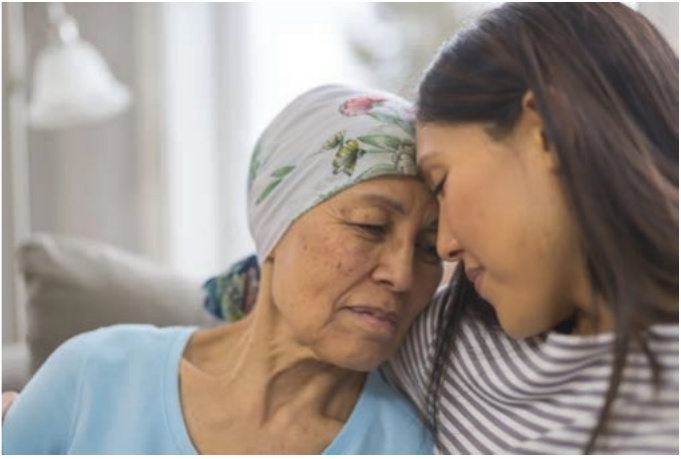
Life stressors are everyday or conceivable events, such as a relationship breakdown, work challenge or failing a test. Other stressors might include experiencing a natural disaster and losing a home, or the death of a loved one.
Note
A person who is mentally healthy may encounter a life stressor and feel equipped to cope with it, demonstrating resilience. In contrast, someone who is not mentally healthy may not feel able to deal with such a stressor.
The resources required to cope with stressors and promote resilience include:
- Strong social support
- High levels of self-efficacy
- Ability to problem solve
- Ability to make plans and carry them out
Important
The impact of a life stressor on mental wellbeing depends on one's resilience. Many of these factors can be learned and developed, so it is possible to improve your level of resilience over time.
Mental health problems and mental disorders
Mental health problems
A person in the middle of the mental wellbeing continuum may have a mental health problem – a relatively short-term disruption that impacts on a person's everyday functioning. These problems typically do not last as long as mental disorders and may result in mild and temporary impairment.
When experiencing a mental health problem, there is often some disruption to usual levels of social and emotional wellbeing. This may be due to various reasons, including relationship stressors or work pressures.

Note
Mental health problems can be considered natural responses to negative events in life that most people experience at some stage.
Characteristics that indicate someone may be experiencing a mental health problem include:
- Increased or decreased sleep and appetite
- Loss of energy and motivation
- Difficulty concentrating
- Difficulty focusing on or completing work or study tasks
- Irritability
- Becoming withdrawn
Mental disorders
Approximately 20% of Australians will experience a mental disorder in any given 12-month period. A mental disorder is a condition that affects mood, thinking and behaviour and is typically long lasting. These disorders are usually diagnosed using set criteria and include conditions such as major depression and schizophrenia.

Important
The Three D's of Mental Disorders
Mental disorders often lead to a person experiencing the three D's:
-
Distress: The unpleasant experience of the person with the disorder or their family and friends, such as sadness, anxiety or feeling overwhelmed
-
Dysfunction: The impact the condition has on the person's ability to complete daily activities and cope with everyday life, such as attending work or school, and participating in events with family and friends
-
Deviance: Thoughts and behaviours that are inconsistent with the person's culture or society, including actions such as speaking out of turn, lashing out at others and socially withdrawing
Additional characteristics that indicate someone may be experiencing a mental disorder include:
- Reduced levels of day-to-day functioning
- Reduced ability to cope with and manage change and uncertainty
- Impaired ability to engage in social relationships
- Notable changes in thoughts, feelings and behaviours, or a lack of interest (apathy)
- Serious or prolonged changes in typical character
- Impaired ability to function independently, such as taking care of oneself at home
Comparison across the continuum
Note
The following table summarises the key characteristics across the three categories of the mental health continuum, helping to distinguish between mentally healthy individuals, those experiencing mental health problems, and those with mental disorders.
| Mentally healthy | Mental health problems | Mental disorders |
|---|---|---|
| High level of functioning | Increased or decreased sleep and appetite | Reduced level of day-to-day functioning |
| Form positive relationships with others (high level of social wellbeing) | Experience loss of energy and motivation | Reduced ability to cope with and manage change and uncertainty |
| Manage feelings and emotions (high level of emotional wellbeing) | Difficulty concentrating | Impaired ability to engage in social relationships |
| Cope with day-to-day stresses; that is, cope with and manage change and uncertainty | Difficulty focusing on or completing work or study tasks | Experience notable changes in thoughts, feelings, behaviours or lack of interest (apathy) |
| Think logically and problem solve | Experience irritability | Show serious or prolonged changes in typical character |
| Have reasonable level of confidence in their abilities and self-esteem | Become withdrawn | Impaired ability to function independently, such as taking care of oneself at home |
Aboriginal and Torres Strait Islander peoples' social and emotional wellbeing framework
Mental wellbeing must also be considered from the perspective of Aboriginal and Torres Strait Islander peoples. These diverse cultures have unique social structures and complex knowledge systems. Mental wellbeing is one element of their multidimensional and holistic view of social and emotional wellbeing (SEWB).
Note
Social and emotional wellbeing is the foundation for physical and mental health for Aboriginal and Torres Strait Islander peoples. This is a holistic concept that may change across the life span of an individual. What is important for a child's social and emotional wellbeing may differ from what is important to an Elder. Understanding of SEWB varies between different cultural groups and individuals.
The seven domains of SEWB
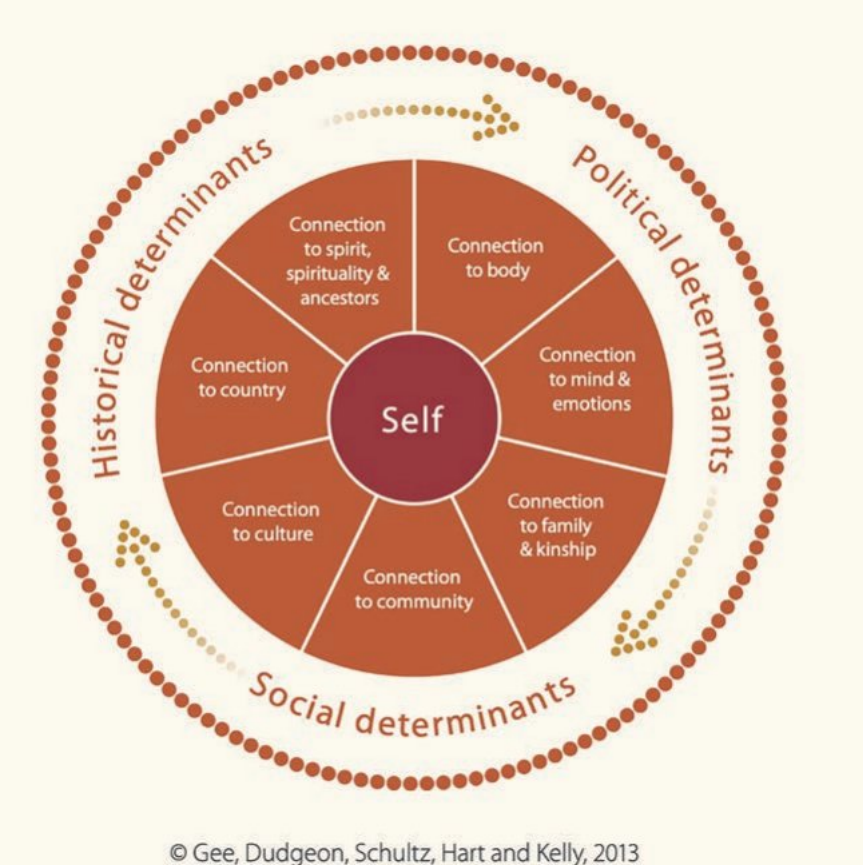
The SEWB model proposes seven overlapping domains that are sources of wellbeing and connection, supporting a strong and positive identity:
- Body
- Mind and emotions
- Family and kinship
- Community
- Culture
- Country
- Spirituality and ancestors
Important
At the centre of the model is the individual, surrounded by a network of relationships between individuals, family, kin and community. The model recognises the importance of connection to land, culture, spirituality and ancestry, and how these affect the individual.
Risk and protective factors
Each domain has associated risk and protective factors that influence social and emotional wellbeing:
| Domain | Description | Examples of risk factors | Examples of protective factors |
|---|---|---|---|
| Connection to body | Physical health – feeling strong and healthy and able to physically participate as fully as possible in life | - Chronic and communicable diseases - Poor diet - Smoking | - Access to good healthy food - Exercise - Access to culturally safe, culturally competent and effective health services and professionals |
| Connection to mind and emotions | Mental health – ability to manage thoughts and feelings | - Developmental/cognitive impairments and disability - Racism - Mental illness - Unemployment - Trauma including childhood trauma | - Education - Agency: assertiveness, confidence and control over life - Strong identity |
| Connection to family and kinship | Connections to family and kinship systems are central to the functioning of Aboriginal and Torres Strait Islander societies | - Absence of family members - Family violence - Child neglect and abuse - Children in out-of-home care | - Loving, stable accepting and supportive family - Adequate income - Culturally appropriate family-focused programmes and services |
| Connection to community | Community can take many forms. A connection to community provides opportunities for individuals and families to connect with each other, support each other and work together | - Family feuding - Lateral violence - Lack of local services - Isolation - Disengagement from community - Lack of opportunities for employment in community settings | - Support networks - Community controlled services - Self-governance |
| Connection to culture | Connection to a culture provides a sense of continuity with the past and helps underpin a strong identity | - Elders passing on without full opportunities to transmit culture - Services that are not culturally safe - Languages under threat | - Contemporary expressions of culture - Attending national and local cultural events - Cultural institutions - Cultural education - Cultural involvement and participation |
| Connection to Country | Connection to Country helps underpin identity and a sense of belonging | - Restrictions on access to Country | - Time spent on Country |
| Connection to spirituality and ancestors | Spirituality provides a sense of purpose and meaning | - No connection to the spiritual dimension of life | - Opportunities to attend cultural events and ceremonies - Contemporary expressions of spirituality |
Social, historical and political determinants
Mental health and SEWB for Aboriginal and Torres Strait Islander peoples is influenced by social, historical and political determinants. These determinants do not occur in isolation but affect SEWB concurrently and cumulatively.
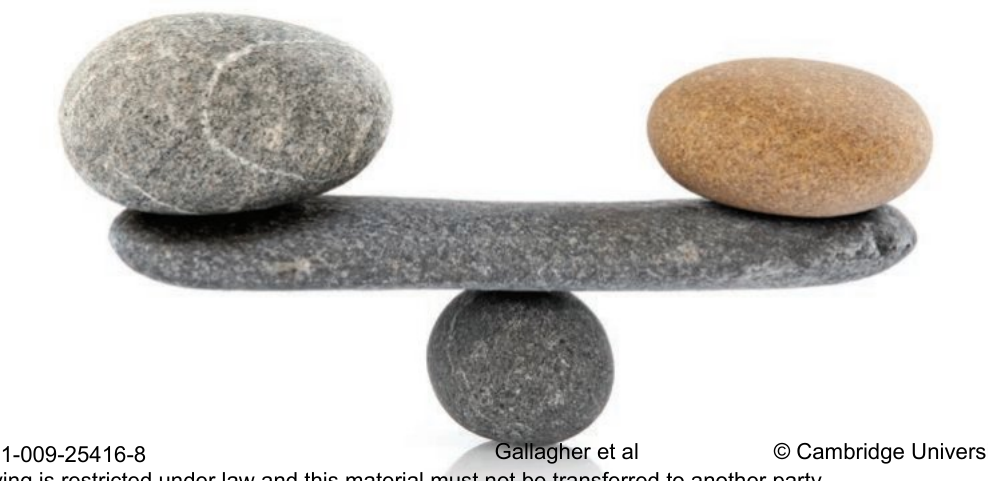
Social determinants include:
- Socio-economic status and the impact of poverty
- Unemployment
- Housing
- Educational attainment
- Racial discrimination
- Exposure to violence, trauma and stressful life events
- Access to community resources
Historical determinants refer to:
- The impact of past government policies
- The extent of historical oppression and cultural displacement experienced by individuals, families and communities
Political determinants refer to:
- Unresolved issues of land
- Control of resources
- Cultural security
- The rights of self-determination and sovereignty
Note
These determinants are recognised as contributing to health and wellbeing and reducing health inequities for Aboriginal and Torres Strait Islander peoples.
The utility of the SEWB framework
A SEWB framework is useful for considering mental wellbeing, particularly for Aboriginal and Torres Strait Islander peoples, because it makes clear that mental health issues are still entwined with the past injustices associated with colonisation.
Important
The framework demonstrates that there is an interactive relationship between SEWB and mental health. A person can experience relatively good SEWB and yet still experience mental health problems, or vice versa. This holistic approach recognises the complexity and multidimensional nature of wellbeing.
Remember!
Summary
Key Points to Remember:
-
Mental health and wellbeing exists on a continuum from high (mentally healthy) through moderate (mental health problems) to low (mental disorders), and a person's position on this continuum changes throughout life.
-
Mentally healthy people demonstrate three key characteristics: high level of functioning across life domains, social and emotional wellbeing, and resilience to life stressors.
-
Mental health problems are relatively short-term disruptions causing temporary impairment, whilst mental disorders are longer-lasting conditions characterised by the three D's: distress, dysfunction and deviance.
-
The WHODAS 2.0 assessment tool measures functioning across six domains: cognition, mobility, self-care, getting along with others, life activities, and participation in society.
-
Aboriginal and Torres Strait Islander peoples' social and emotional wellbeing is a holistic framework encompassing seven interconnected domains (body, mind and emotions, family and kinship, community, culture, Country, spirituality and ancestors) influenced by social, historical and political determinants.