Cultural Determinants of Mental Wellbeing (VCE SSCE Psychology): Revision Notes
📚Revision Notes
Cultural Determinants of Mental Wellbeing
Understanding culture
Culture refers to a way of life that is shared and learned amongst a particular group of people. It encompasses the characteristics and knowledge that define a group, including:
- Language and communication patterns
- Social habits and customs
- Music and arts
- Religious and spiritual practices
- Food and culinary traditions
- Shared patterns of behaviour and interactions
- Understandings acquired through socialisation
Culture holds particular importance for many people because it provides a sense of belonging and shapes individual identity. It influences how people develop their values, beliefs, and perspectives on life. Many communities place high value on preserving their culture and transmitting it to future generations in its authentic form.
Culture and wellbeing
Note
Whilst some ancient Greek and Roman physicians recognised the therapeutic value of music, western medicine did not widely acknowledge the importance of arts, crafts, and other cultural aspects until the 19th century. This period marked the development of occupational therapy as a recognised healthcare discipline, where 'occupation' refers not to employment, but to any meaningful activity often determined by one's culture.
In cultures where arts and crafts form part of everyday life, their role in supporting wellbeing is considered natural and integral. For Aboriginal and Torres Strait Islander peoples, cultural practices such as traditional weaving techniques represent more than skills—they embody connections to ancestors and cultural identity. The inability to pursue such cultural activities can have devastating effects on mental wellbeing.
Cultural determinants of health
Many cultures worldwide adopt a holistic view of health. This perspective recognises that health extends beyond physical wellbeing to encompass:
- Individual and community wellbeing
- Social wellbeing
- Emotional wellbeing
- Spiritual wellbeing
- Cultural wellbeing
Note
Western culture historically focused on physiological factors when considering ill-health. However, in recent times there has been a shift towards more holistic perspectives, with social, emotional, and mental factors receiving greater recognition. This change has often been influenced by non-Western cultural perspectives.
Aboriginal and Torres Strait Islander peoples have always maintained a holistic view of health. Therefore, promoting and maintaining Aboriginal and Torres Strait Islander wellbeing, including mental wellbeing, requires consideration of multiple factors, not merely physical health. Cultural determinants of wellbeing are protective factors that support good health and wellbeing, including mental wellbeing.
Strength-based perspective
Cultural determinants of wellbeing originate from and promote a strength-based perspective. This approach acknowledges that stronger connections to culture and Country build:
- Stronger individual and collective identities
- Enhanced sense of self-esteem
- Greater resilience
Examples of cultural determinants of wellbeing include connection to Country, self-determination, and language. This note focuses specifically on cultural continuity and self-determination as integral factors for maintaining wellbeing in Aboriginal and Torres Strait Islander peoples.
It is important to recognise that there are many Aboriginal and Torres Strait Islander cultures and peoples, existing and thriving across diverse communities throughout Australia. Whilst diversity exists across and within Aboriginal communities, some cultural characteristics are shared by most, if not all, Aboriginal cultures, uniting Aboriginal and Torres Strait Islander peoples through shared history and shared experiences.
Cultural continuity
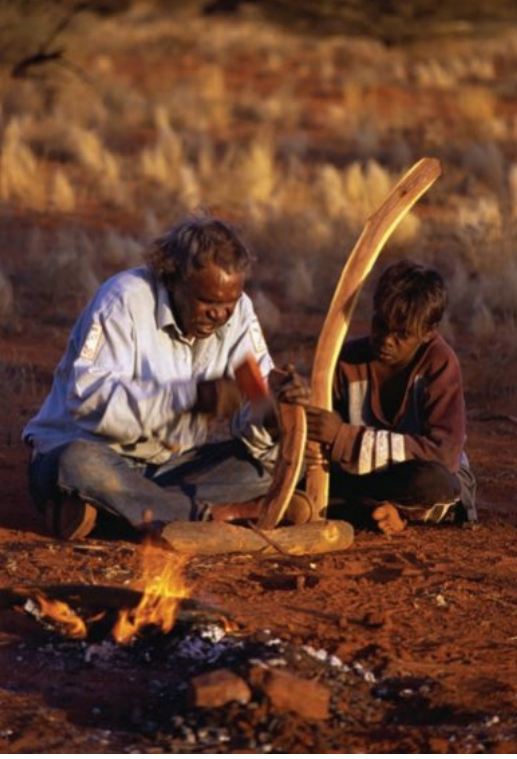
Cultural continuity refers to the ability to preserve the historical traditions of a culture and carry them forward with that culture into the future. For Indigenous peoples, cultural continuity also represents an expression of self-determination and community self-sufficiency.
For Aboriginal and Torres Strait Islander peoples, cultural continuity and the practising of culture can involve:
- A living relationship with ancestors
- The spiritual dimension of existence
- Connection to Country
- Connection to language
Historical context and impact of colonisation
Before colonisation, Aboriginal peoples typically lived in small family groups that linked into larger language groups with distinct territorial boundaries. Aboriginal cultures were robust and well developed, characterised by:
- Complex kinship systems
- Rules for social interaction
- Distinct languages
- Ceremonies, customs, and traditions
- Extensive knowledge of their environment
Colonisation can be understood as the process of settling amongst and establishing control over an area and, in some instances, the people in that area. The arrival of Lieutenant James Cook in 1770 and Captain Arthur Phillip in 1786 on the eastern coast of Australia initiated the colonisation of Australia by non-Indigenous people.
Important
European colonisation had a devastating impact on Aboriginal and Torres Strait Islander communities and cultures. Aboriginal and Torres Strait Islander peoples were subjected to numerous injustices, including:
- Mass killings
- Displacement from traditional lands
- Forced relocation to missions and reserves under the guise of 'protection'
- Denial of cultural practices
- Subsequent loss of many cultural practices
For Aboriginal and Torres Strait Islander peoples, colonisation meant massacre, violence, disease, and loss. Consequently, the ability of Aboriginal and Torres Strait Islander peoples to practise their culture has not always been present, which has had a substantial impact on the ability to maintain cultural continuity.
Research evidence
Note
Research has demonstrated that strengthening cultural identity acts as a buffer against:
- Psychological stress
- The transmission of historical trauma between generations (intergenerational trauma)
- Self-harm
- Suicide
This evidence highlights the protective role that cultural continuity plays in supporting mental wellbeing for Aboriginal and Torres Strait Islander peoples.
Self-determination
Self-determination refers to the ability to participate in decisions on matters that affect one's life. For Aboriginal and Torres Strait Islander peoples, self-determination means the right to make decisions on matters that affect their lives and communities.
International recognition
Important
The right to self-determination is enshrined in the United Nations Declaration on the Rights of Indigenous Peoples, to which Australia is a signatory. Article 3 of this document states:
Indigenous peoples have the right to self-determination. By virtue of that right they freely determine their political status and freely pursue their economic, social and cultural development.
Historical loss and restoration
When Aboriginal and Torres Strait Islander peoples were subjected to colonisation and dispossession, this cultural determinant was lost. This loss has contributed to the disadvantage and low levels of wellbeing often experienced by Aboriginal and Torres Strait Islander peoples.
Governments and organisations can demonstrate respect for and enable Aboriginal and Torres Strait Islander peoples' self-determination through various practices and activities, including:
- Prioritising culture: Placing cultural considerations at the forefront of decision-making and service delivery
- Addressing trauma and supporting healing: Acknowledging historical and ongoing trauma and providing appropriate support
- Addressing racism and promoting cultural safety: Actively working to eliminate racism and creating environments where cultural identity is respected
- Transferring power and resources to communities: Enabling communities to have control over decisions and resources that affect them
Clarification on self-determination
Note
It is important to understand that Aboriginal and Torres Strait Islander self-determination does not mean that Indigenous people or communities are a separate state or are separate from the wider Australian community. Rather, Aboriginal and Torres Strait Islander peoples assert their right to freely determine their own political, economic, social, and cultural development. This self-determination contributes to the promotion and maintenance of wellbeing for Aboriginal and Torres Strait Islander peoples.
Remember!
Summary
Key Takeaways:
- Culture is a shared way of life that provides identity and belonging, encompassing language, customs, traditions, and knowledge.
- Cultural determinants of wellbeing are protective factors, including cultural continuity and self-determination, that support holistic health for Aboriginal and Torres Strait Islander peoples.
- Cultural continuity—the preservation and transmission of cultural traditions—was severely disrupted by colonisation through displacement, denial of cultural practices, and loss of connection to Country and language.
- Research shows that strengthening cultural identity protects against psychological stress, intergenerational trauma, self-harm, and suicide.
- Self-determination, the right to make decisions affecting one's life and community, is essential for Aboriginal and Torres Strait Islander wellbeing and is supported through practices such as prioritising culture, addressing trauma, promoting cultural safety, and transferring power to communities.