The Biopsychosocial Approach to Maintaining and Protecting Mental Wellbeing (VCE SSCE Psychology): Revision Notes
📚Revision Notes
The Biopsychosocial Approach to Maintaining and Protecting Mental Wellbeing
The biopsychosocial model provides a framework for understanding how biological, psychological, and social factors interact to influence mental wellbeing. This approach recognises that mental health is affected by multiple interconnected factors, and that maintaining wellbeing requires attention to all three domains.
Note
The biopsychosocial model emphasises that mental wellbeing cannot be understood by examining any single factor in isolation. Instead, it requires consideration of how biological, psychological, and social elements interact and influence one another to shape overall mental health.
Understanding risk and protective factors
Mental wellbeing exists on a continuum, with various factors either increasing or decreasing the likelihood of developing mental disorders. Risk factors are elements that contribute to the development or progression of mental health conditions, whilst protective factors help prevent their occurrence or recurrence. Both types of factors can be categorised as biological, psychological, or social.
Note
Understanding the distinction between risk and protective factors is essential for developing effective mental health strategies. Rather than simply removing risk factors, a comprehensive approach also involves strengthening protective factors to build resilience and maintain wellbeing.
Biological risk factors
Biological risk factors relate to the physiological functioning of the body and include genetic factors, biochemical processes, and environmental influences on physiology.
Genetic vulnerability
Genetic vulnerability refers to an increased likelihood of developing a particular mental disorder due to inherited DNA. This predisposition is passed from parents to children and is beyond individual control.
Important
Key points about genetic vulnerability:
- It does not guarantee development of a condition, but increases risk
- Several mental disorders show genetic vulnerability, including schizophrenia and autism spectrum disorders
- The presence of specific genes interacts with environmental factors to influence outcomes
Poor response to medication
Medication is designed to interact with specific biological systems to alleviate symptoms. A poor response occurs when a prescribed drug fails to provide the expected relief.

Note
Factors contributing to poor medication response:
- Individual genetic differences affect how drugs are absorbed, distributed, or metabolised
- Some antidepressants may not alleviate symptoms such as poor sleep, sadness, or feeling overwhelmed
- Individuals often need to trial multiple medications before finding an effective option
- Poor response can potentially worsen symptoms in some cases
Poor sleep
Sleep serves as a restorative process that prepares the body for daily demands. Inadequate sleep produces physiological impacts that reduce biological resources for coping with life's challenges.
Important
Consequences of poor sleep:
- Impaired memory consolidation
- Inability to restore neurotransmitter levels
- Reduced resilience
- Common in anxiety, depression, bipolar disorder, and ADHD
Poor sleep contributes to mental disorder development by limiting the body's capacity to manage everyday demands.
Substance use
Substance use is classified as biological because the ingredients interact directly with physiological systems. Substance abuse involves harmful use of or dependence on psychoactive substances, including alcohol and illicit drugs.
| Legal substances | Illegal substances |
|---|---|
| Tobacco | Cocaine |
| Alcohol | Marijuana |
| Codeine | Heroin |
| Morphine | Amphetamines |
| Some sleep medications |

Important
Impact of substance dependence:
- Prevents normal day-to-day functioning without the substance
- Reduces capacity to manage everyday demands
- Most mental disorders show increased co-occurrence with substance use disorders
- Adults with severe mental disorders show co-occurring substance use disorders at rates around 50%
Psychological risk factors
Psychological risk factors relate to the functioning of the brain and mind, encompassing cognitive and affective processes such as thought patterns, emotions, and memory.
Rumination
Rumination involves repeatedly thinking about and focusing on negative thoughts and experiences. This repetitive negative focus can lead to distress and contribute to mental disorder development or prolong existing conditions.

Note
Evidence and effects:
- Observational studies show people who ruminate more have higher levels of depressive symptoms
- Rumination prevents effective problem-solving
- Creates more pessimistic and fatalistic thinking patterns
Impaired memory and reasoning
Cognitive problems such as impaired memory and reasoning often result from cognitive bias, where subjective reality creates difficulty with logical thinking and accurate information processing.
Note
Individuals with impaired memory and reasoning struggle to make well-considered decisions, which can contribute to mental disorder development.
Stress
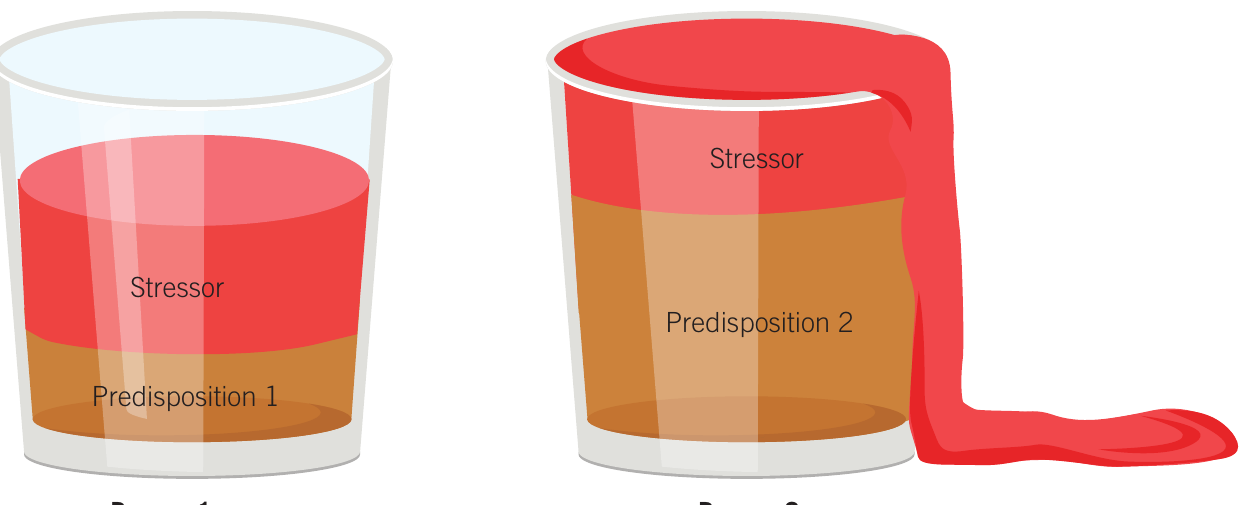
Stress involves both psychological and biological processes that occur when encountering a stimulus that challenges coping mechanisms. The appraisal of a situation as challenging or exceeding coping ability triggers a stress response that may contribute to mental disorder development.
Important
The diathesis-stress model demonstrates how:
- Everyone has some vulnerability to stress-related mental disorders
- Risk depends on individual vulnerability level, stress level, and coping ability
- A single stressor or combination of stressors may trigger disorder development
- Two individuals with different predispositions respond differently to the same stressor
Poor self-efficacy
Self-efficacy represents a person's confidence in their ability to complete life tasks and achieve goals. High self-efficacy involves believing one can influence events and control how experiences unfold.

Note
Characteristics of poor self-efficacy (Bandura):
- Avoidance of difficult tasks viewed as personal threats
- Low aspirations and weak goal commitment
- Focus on personal deficiencies and potential obstacles
- Quick surrender when facing difficulties
- Slow recovery from failure or setbacks
- Increased vulnerability to stress and depression
Lack of confidence in one's abilities prevents effective functioning and increases susceptibility to mental disorders.
Social risk factors
Social risk factors relate to personal social contacts and how culture and the social environment influence mental disorder development.
Disorganised insecure attachment
Attachment refers to the earliest relationships an infant forms with primary caregivers. Secure attachment, characterised by consistent care and love, provides a foundation for trusting relationships throughout life.

Disorganised insecure attachment occurs when an infant or young child does not receive consistent care or emotional support early in life. This may result from:
- Changes or disruptions in primary caregivers
- Unpredictable emotional responses from caregivers
- Inconsistent child behaviour towards caregivers
Important
Consequences of disorganised insecure attachment:
- Difficulty achieving usual cognitive milestones
- Interference with emotional and social development
- Challenges forming trusting adult relationships later in life
- Poor social skills development
Loss of a significant relationship
Loss of a significant relationship represents a major stressor that may trigger mental disorder onset. This loss may occur through:
- Death of a family member or close friend
- Separation
- Moving far away from someone close
- Loss of a pet
Note
Impact of relationship loss:
- Requires adaptation to life without the person's presence
- Studies show distress lasting 4-7 years after losing a spouse or child in an accident
- Symptoms include depression, sleep disturbances, fatigue, panic attacks, loneliness, and increased mortality
Stigma as a barrier to accessing treatment
Stigma involves feelings of shame or disgrace associated with personal characteristics indicating membership in a culturally devalued group. This can be real or imagined, and relates to community interactions.
Important
Effects of stigma:
- Lowered self-esteem
- Increased isolation and hopelessness
- Negative influence on family and professional life
- Discrimination in employment and community activities
- Perpetuation of mental disorder symptoms
Historical factors contributing to stigma:
- Negative mass media portrayal
- Disrespectful and dehumanising labels (e.g. 'crazy', 'nuts', 'mental')
Stigma may prevent individuals from seeking help from psychologists or doctors due to shame and discomfort discussing their condition.
Protective factors
Protective factors reduce the likelihood of mental disorder occurrence or recurrence, though they do not provide absolute protection. These factors positively affect individual health and can be categorised using the biopsychosocial framework.
Note
Resilience, the ability to bounce back to normal functioning when facing adversity, acts as a protective factor. Greater resilience reduces the likelihood of developing mental disorders.
Biological protective factors
Adequate nutritional intake and hydration
Consuming appropriate nutrients allows the body to maintain high levels of physical and mental wellbeing. Adequate nutrition:
- Provides sufficient energy for daily life
- Enables adaptation to and overcoming of stressors
- Contributes to resilience development and maintenance

Adequate sleep
Sleep serves as a restorative process preparing the body for daily demands. People with adequate sleep:
- Experience less irritability
- Have lower illness susceptibility
- Are better positioned to overcome stressors
- Develop and maintain greater resilience
Note
Both adequate nutritional intake and sleep are biological protective factors because they relate to bodily functioning.
Social protective factors
Support from family, friends and community
A supportive network helps individuals overcome challenges without feeling overwhelmed, protecting against mental disorder occurrence or recurrence whilst building resilience.

Different networks provide distinct support types:
Note
Family provides:
- Sense of belonging to a familiar group over time
- Support during difficult periods
- Unconditional love through life's ups and downs
Friends provide:
- Contribution to individual happiness
- Outlet for sharing experiences not comfortable sharing with family
- Sense of like-minded belonging in the world
Community provides:
- Challenging experiences allowing personal growth and learning
- Sense of purpose and collective achievement
- Opportunities for interaction and relationship development with diverse people
Important
Important characteristics of support:
- Authentic connections - genuine relationships where one can rely on others in times of need
- Energising support - overall, networks should provide more energy than they take, though individual instances may be draining
- Superficial connections, particularly online via social media, do not constitute authentic support
Psychological protective factors
Mindfulness meditation
Mindfulness meditation involves observing the present moment, suspending judgements, and focusing on something calm and peaceful. The American Psychological Association defines it as "moment-to-moment awareness of one's experience without judgement".
Note
Mindfulness characteristics:
- Focusing on the present
- Awareness of location and current activities
- Not being overly reactive or overwhelmed by environmental circumstances
- Awareness of direct sensory experiences or mental state through thoughts and emotions
- Regular practice throughout the day
Meditation characteristics:
- Redirecting thoughts to calm the mind
- Focusing on something specific
- Exploring the workings of one's mind
- May include sensations, emotions, and thoughts
Note
Research-identified benefits:
- Reduces rumination
- Reduces stress
- Boosts working memory
- Allows greater focus
- Results in more cognitive flexibility
- Results in less emotional reactivity
Mindfulness meditation is a psychological protective factor because it relates to thinking and information processing.
Cognitive behavioural strategies
Cognitive behavioural therapy involves strategies focusing on thinking patterns that influence behaviour. These strategies replace unhealthy or unhelpful thinking patterns with more helpful approaches.
Note
Benefits of cognitive behavioural strategies:
- Influence behaviour and mood positively
- Effective in treating various mental health conditions including depression
- Increase resilience by providing strategies for managing challenging situations
Example
Examples of cognitive behavioural strategies:
- Teaching someone stuck in catastrophising patterns to think more realistically and focus on problem-solving
- Helping recognise the difference between productive and unproductive worries
- Teaching relaxation and breathing techniques to control anxiety and physical tension symptoms
- Muscle relaxation for managing physical symptoms
These strategies are psychological protective factors because they relate to thinking and information processing.
Remember!
Summary
Key Points to Remember:
- The biopsychosocial model provides a framework for understanding how biological, psychological, and social factors interact to influence mental wellbeing
- Risk factors increase the likelihood of developing mental disorders, whilst protective factors help prevent their occurrence
- Biological risk factors include genetic vulnerability, poor medication response, poor sleep, and substance use
- Psychological risk factors include rumination, impaired memory and reasoning, stress, and poor self-efficacy
- Social risk factors include disorganised insecure attachment, loss of significant relationships, and stigma
- Protective factors include adequate nutrition and sleep (biological), support from family, friends and community (social), and mindfulness meditation and cognitive behavioural strategies (psychological)
- Multiple risk factors have a cumulative effect, increasing the likelihood of mental disorder development
- Multiple protective factors reduce the likelihood of mental disorder development and support resilience