The Process of Psychological Development: Social Development (VCE SSCE Psychology): Revision Notes
📚Revision Notes
The Process of Psychological Development: Social Development
What is social development?
Social development refers to changes in a person's ability to interact with other people and function as a member of society. This includes developing the capacity to form and maintain close relationships and acquiring related skills such as sharing, language and interpersonal communication.
Throughout life, relationships with parents, siblings, peers and romantic partners are essential to our social development. The ability to interact in healthy ways with others impacts many areas of functioning, from learning new words as a toddler to resisting peer pressure as an adolescent to successfully navigating adult challenges.
Note
Social development is not a one-time event but a continuous process that spans our entire lifetime. The quality of our early relationships and social experiences can have lasting effects on how we interact with others throughout our lives.
Social development across the life span
Social development continues throughout the entire life span, with distinct characteristics emerging at different stages:
Infancy (0-2 years)
During infancy, children learn to trust others to care for them and meet their needs. They begin to enjoy life with others, marking the start of give-and-take in relationships. Infant play is typically parallel in nature - infants play side-by-side rather than cooperatively with others. For example, they may use the same toys but not work together.
Childhood (2 years to puberty)
In early childhood, children learn to share toys and take turns. They show increasing social independence from their parents and develop friendships with other children. Children begin to initiate or join in play with peers, create games and learn to listen whilst others are speaking. This represents a shift from parallel to more cooperative play.
Adolescence (puberty to 18 years)
During adolescence, peer groups become more important, and adolescents typically spend more time with peers than with family. Interest in romantic relationships and sexuality increases. Adolescents develop a deeper capacity for caring and sharing, along with the ability to develop more intimate relationships.
Note
The shift towards peers during adolescence is a normal and healthy part of social development. However, maintaining positive family relationships during this stage remains important for overall well-being.
Adulthood (18-65 years)
In early adulthood, individuals focus on developing the ability to share intimacy and seek intimate love. Long-term relationships are formed, often leading to marriage and children.
Adults make career decisions that affect friendships, political values, location of residence, childcare arrangements, job stress levels and many other life aspects.
In later adulthood, individuals develop genuine concern for the welfare of future generations and contribute to the world through their families and work.
Old age (65+ years)
Older individuals have extensive experience dealing with different social situations and may be better at reading others' emotions and managing conflict. However, older people who have seen their social circle shrink due to illness and death may experience anxiety in certain social situations and feel greater isolation. Despite this, many older people remain happy and engage in a variety of activities.
Erik Erikson's psychosocial developmental theory
Background and theoretical framework
In the 1950s and 1960s, Erik Erikson conducted in-depth case studies of people from different backgrounds living in different cultures throughout Europe and America. Based on this work, he established a theory of psychosocial development that emphasised the impact of social experiences on personality development throughout the life span.
Erikson believed that personality develops from the combination of psychological processes within the individual and their external experiences with other people throughout life.
Important
Erikson's theory was revolutionary because it extended developmental psychology beyond childhood. Unlike many theorists of his time who focused solely on early years, Erikson recognised that personality development continues throughout the entire life span.
Key principles of the theory
Erikson proposed that social development is divided into eight stages over the life span. The major goal at each stage is to satisfy the individual's social needs at that age.
Each psychosocial stage is distinguished by two opposing emotional forces, known as contrary dispositions, which result in a crisis needing to be resolved. The stages are named after these crises in the form of one emotional force versus the other (e.g. 'trust vs mistrust').
How people deal with these crises has an enormous impact on the personality traits they display over their lifetimes. Successful resolution of each crisis results in a healthy personality and the attainment of a basic virtue. However, if a crisis remains unresolved, negative traits may appear.
The eight stages explained
Stage 1: Trust vs mistrust (0-2 years)
Age range: Infancy (0-2 years)
Crisis resolved: Infants depend completely on adults to take care of their basic needs, such as food and warmth. If these basic biological needs are catered for and sound attachments are formed, the child will be optimistic and trusting of their world.
Crisis not resolved: If these needs are not met, the child will be more distrusting and insecure.
Stage 2: Autonomy vs shame and doubt (2-3 years)
Age range: Toddler (2-3 years)
Crisis resolved: This stage occurs when parents begin toilet training and make other efforts to regulate their child. The child must begin to take some personal responsibility for activities like eating, bathing and dressing. If the child proceeds through this stage successfully, they acquire a sense of self-sufficiency.
Crisis not resolved: If parents are never satisfied with the child's efforts during this stage, parent-child conflict may result and the child may develop a sense of shame and self-doubt.
Example
Example: Developing Autonomy
A toddler learning to dress themselves may struggle with buttons and get frustrated. If the parent encourages their efforts and provides gentle assistance when needed, the child develops confidence and autonomy. However, if the parent consistently criticises the child's attempts or takes over completely, the child may develop shame about their capabilities and doubt their own abilities.
Stage 3: Initiative vs guilt (3-6 years)
Age range: Kindergarten (3-6 years)
Crisis resolved: The child's challenge at this stage is to function socially within their family. If the child gets along well with others in the family (siblings and parents), their sense of self-confidence should grow.
Crisis not resolved: If the child only thinks about their own needs and desires, then family members' reactions may instil feelings of guilt in the child, lowering their self-esteem.
Stage 4: Industry vs inferiority (6 years to puberty)
Age range: Primary school (6 years to puberty)
Crisis resolved: At this stage, the child is confronted by the challenge of functioning socially outside their families in a broader social context, such as at school and in the local neighbourhood. Children who flourish in this socially less-nurturing environment, where being able to produce (create things) is highly valued, should develop a sense of competence.
Crisis not resolved: Children who struggle with less social support may find it difficult to produce or create things. This can lead them to feel less competent or inferior compared to others.
Stage 5: Identity vs role confusion (adolescence)
Age range: Adolescence (puberty to 18 years)
Crisis resolved: The main challenge at this stage is the struggle to form a clear sense of identity. This includes working out a stable concept of themselves as a unique individual and defining their own personal values that provide them with their sense of direction. Those who successfully resolve this challenge tend to develop a healthy and confident sense of identity.
Crisis not resolved: Those who are unsuccessful in this resolution tend to experience a sense of 'role confusion', leading to lower self-esteem, instability and social withdrawal. Failure to cope with the identity issues of this stage may lead to psychological conditions related to confusion later in life. There is even a risk of developing serious mental disorders, such as borderline personality disorder.
Important
Stage 5 is often considered one of the most critical stages in Erikson's theory. The identity formed during adolescence serves as a foundation for all subsequent stages of development. Issues with identity formation during this stage can have far-reaching consequences for adult relationships and life satisfaction.
Stage 6: Intimacy vs isolation (early adulthood)
Age range: Early adulthood (18-40 years approximately)
Crisis resolved: In this stage of life, individuals are concerned with whether they can develop the capacity to share intimacy with others and find a meaningful intimate relationship. Successful resolution promotes empathy and openness.
Crisis not resolved: Unsuccessful resolution (without intimacy) can cause feelings of isolation and lead individuals to develop behaviours such as shrewdness and a 'need' to manipulate.
Stage 7: Generativity vs stagnation (middle age)
Age range: Middle age (40-65 years approximately)
Crisis resolved: The challenge in middle age is to develop worthwhile relationships with the younger generation. It is about having genuine concern for the welfare of future generations (such as concerns about water conservation and the environment). Success at this stage takes the form of providing unselfish guidance to younger people, and a feeling of contentment.
Crisis not resolved: People who are unsuccessful at this stage become self-absorbed and have self-indulgent concerns about meeting their own needs and desires. Typically, such individuals have had nothing to do with the younger generation.
Stage 8: Integrity vs despair (old age, 65+)
Age range: Old age (65+ years)
Crisis resolved: The challenge during the retirement years is to avoid dwelling on the mistakes of the past and on one's imminent death. It is also a time to reflect on and review one's life, thinking about how well one has met life's challenges and lived life. Success at this stage leads to a sense of meaning and accomplishment, satisfaction with one's life and a feeling of contentment.
Crisis not resolved: Those who are unsuccessful at this stage tend to wallow in bitterness, regret, despair and resentment.
Evaluation of Erikson's theory
Strengths
- The psychosocial conflicts in Erikson's stages do appear to contribute to social and emotional development, and much research has been generated in support of the theory.
- His idea that experiences across the life span are just as important to social and personality development as those in the early years of life is supported by research.
- His theory draws important connections between childhood experiences and aspects of adult personality.
Note
Erikson's theory has been particularly influential in educational and therapeutic settings. Understanding which psychosocial stage a person is navigating can help educators and therapists provide appropriate support and interventions.
Weaknesses
- He provided an idealised description of 'typical' developmental patterns that do not adequately explain the enormous personality differences that exist between people. This inability to explain individual differences is a common problem with all theories that propose certain 'stages' in development.
- There are concerns about some of the concepts within the theory (e.g. trust and autonomy), as they are descriptive rather than explanatory, which makes them difficult to test experimentally, verify or refute.
- Whilst there is some evidence that a failure to negotiate an earlier stage can lead to difficulties in later stages, there is no clear evidence that problems actually produce later issues.
Albert Bandura's social learning theory
Observational learning and modelling
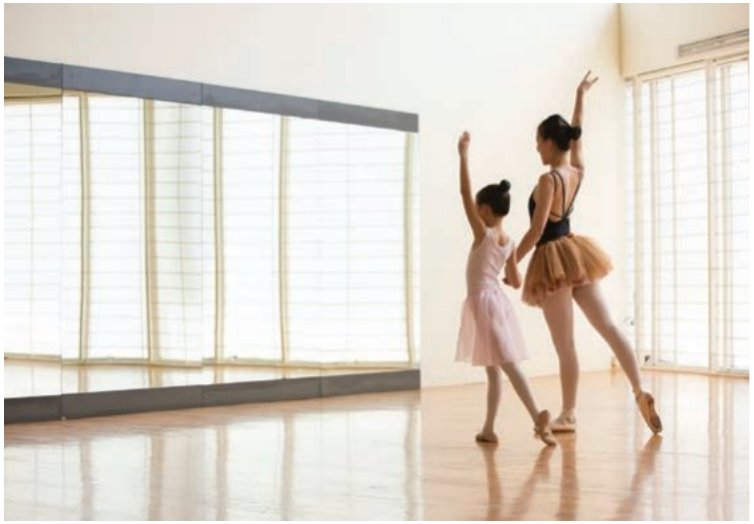
One of the ways we learn which behaviours to repeat or not to repeat is through observational learning - learning from others. We watch others' behaviour and, observing the consequences of their behaviour, we either replicate it or not. If their actions yield positive consequences, we are more likely to replicate that behaviour. Conversely, if their behaviour has negative consequences, we are less likely to replicate it.
This method of learning is a key component of Albert Bandura's social learning theory. When we learn by observing the actions of others and their consequences, this is also called modelling.
Note
Key Definitions
Observational learning: The acquisition of new behaviours as a result of observing the actions of others and the consequences of those actions.
Modelling: A form of learning whereby we observe the behaviour of others and then replicate it.
Bandura's 1965 Bobo doll experiment
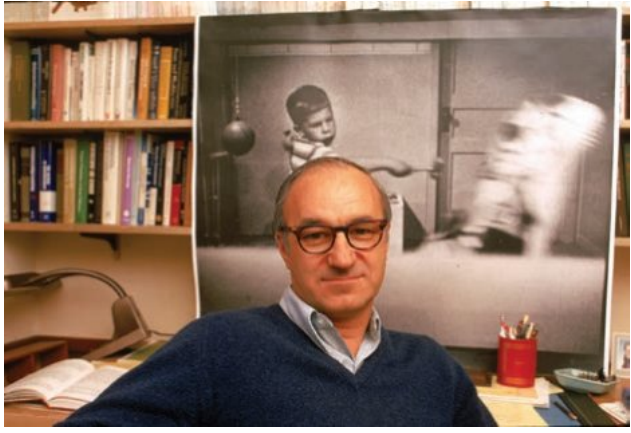
Bandura's most famous experiment regarding social learning theory was the Bobo doll study. Bandura and his colleagues demonstrated the powerful effect that observational learning and reinforcement can have on an individual and their willingness to replicate behaviour.
Example
Study: Bandura's Bobo Doll Experiment (1965)
Participants: 66 children (33 boys and 33 girls)
Aim: To investigate whether observational learning and reinforcement influence children's willingness to replicate aggressive behaviour.
Procedure:
All children were shown a film in which a model knocked down a 'Bobo doll' (an inflatable clown) by punching it on the nose and shouting things like 'sockeroo!'
The children were divided into three groups, with each watching a different ending to the film:
-
Group 1 (model rewarded): Watched the model being aggressive towards the Bobo doll, followed by a researcher praising the model for their behaviour and offering a food reward.
-
Group 2 (model punished): Watched the model being aggressive towards the Bobo doll, followed by a researcher criticising the model for their behaviour.
-
Group 3 (control group - no consequences): Watched the model being aggressive towards the Bobo doll, but the model was neither rewarded nor punished for their behaviour.
Afterwards, each child was placed in a room by themselves with various toys, including a Bobo doll. The experimenters scored the children based on the number and variation of aggressive behaviours they demonstrated.
The experiment was then repeated a second time, and this time the children were offered various rewards, including sweets, juice and stickers, to mimic the behaviour they had just witnessed.
Findings:
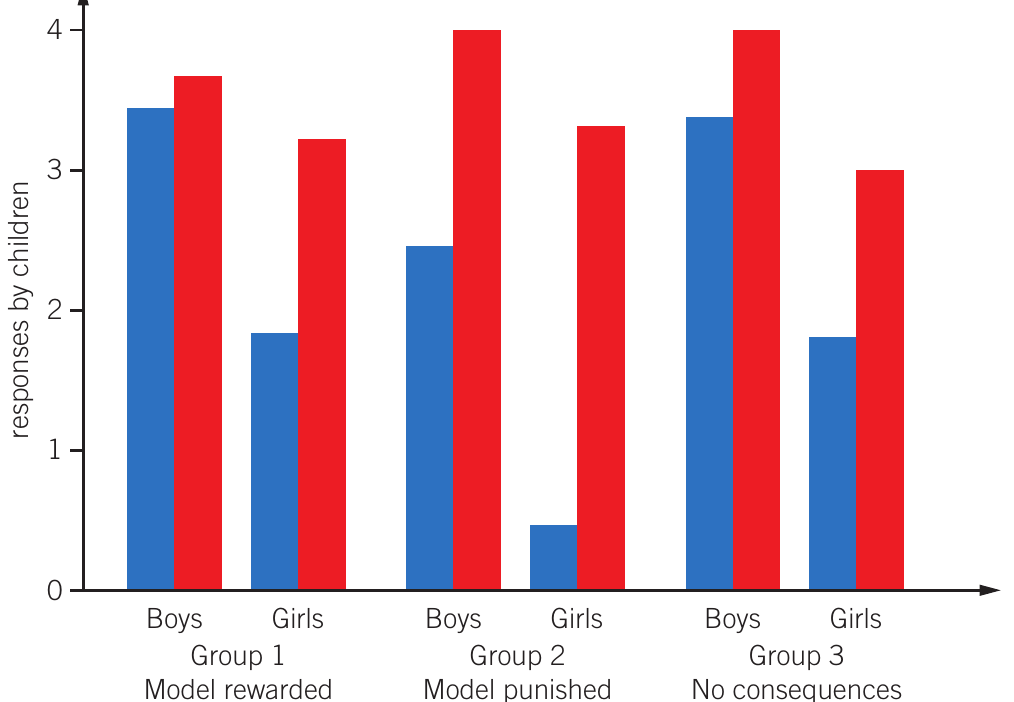
Bandura found that the children in the group that saw the model being rewarded for their behaviour were more likely to act violently towards the doll by mimicking that behaviour.
When the children themselves were offered a reward for replicating the aggressive behaviour (a piece of candy for every piece of behaviour from the film that they could replicate), the children who had seen the model being punished were even more likely to replicate the aggressive acts on the doll.
The results showed that:
- Children who saw the model rewarded showed high levels of imitative aggression
- Children who saw the model punished showed lower levels of imitative aggression initially
- When offered incentives, all children, including those who saw the model punished, displayed increased imitative aggression
- Gender differences were observed in some conditions
Implications
By age 15, the average American child will have viewed approximately 24,000 shootings on television and watched more hours of television than time spent in school. By 2030, Australian children are predicted to have witnessed the same.
However, as Bandura has shown, simply observing violence does not mean that the child will go on to perform aggressive acts. Many other factors are involved in determining whether a person will engage in aggressive behaviours and continue to replicate that behaviour in the future.
Important
While Bandura's research demonstrates that children can learn aggressive behaviours through observation, it's crucial to understand that observation alone doesn't guarantee imitation. The presence or absence of consequences, the child's relationship with the model, and many other contextual factors all play important roles in determining whether observed behaviours will be replicated.
Evaluation of Bandura's social learning theory
Strengths
- It provides some explanation of how people's behaviour or learning can differ because of external or environmental influences. This has led to the recognition of different ways of learning, such as through observation or direct experience.
- It considers the thought processes of the individual and emphasises their role in the individual's decision on whether to imitate a behaviour.
- It suggests that behaviour can be modified to replace maladaptive behaviours with more adaptive ones by implementing an optimistic and appropriate consequence. The theory is therefore considered empowering, as it helps individuals identify for themselves appropriate behaviours through observation and practising the desired behaviour.
Weaknesses
- It does not account for how we develop a whole range of complex responses that also includes thoughts and feelings, not just observable behaviours or actions.
- By placing greater weight on the environment, the theory assumes that a person's behaviour and actions are determined by society rather than by how the person handles or processes information.
- The theory fails to account for all behaviour, especially when there is no apparent role model for the observer to imitate.
- It does not consider individual interpretations of different situations, as it does not account for all behavioural differences; rather, it focuses on what is happening in the situation rather than explaining why the situation is occurring.
Summary
Key Points to Remember:
-
Social development involves changes in our ability to interact with others and function in society, continuing throughout the entire life span from infancy to old age.
-
Erikson's psychosocial theory proposes eight stages of development, each involving a crisis between two opposing forces (e.g. trust vs mistrust). Successfully resolving each crisis leads to healthy personality development and basic virtues, whilst failure can result in negative traits.
-
Bandura's social learning theory explains that we learn behaviours by observing others and the consequences of their actions. If we see behaviour being rewarded, we are more likely to imitate it; if we see it being punished, we are less likely to imitate it initially, though incentives can increase imitation.
-
Both theories emphasise the importance of social experiences in development, but Erikson focuses on internal crises across the life span whilst Bandura emphasises external observation and environmental influences on learning.
-
Neither theory is without limitations - Erikson's theory struggles to explain individual differences and is difficult to test, whilst Bandura's theory does not fully account for internal thoughts and feelings or situations without role models.