Circulatory System in Mammals (AQA A-Level Biology): Revision Notes
📚Revision Notes
Circulatory System in Mammals
Mammals possess a closed, double circulatory system where blood remains contained within blood vessels throughout its journey around the body. This system is called 'double' because blood passes through the heart twice during each complete circuit of the body.
Note
The double circulation system exists because when blood flows through the lungs, its pressure drops significantly. If this low-pressure blood went directly to the body tissues, circulation would be very slow and inefficient.
Instead, blood returns to the heart after passing through the lungs, allowing the heart to boost the pressure again before sending it to the rest of the body tissues. This mechanism is essential for maintaining efficient circulation to meet the high metabolic demands of mammals.
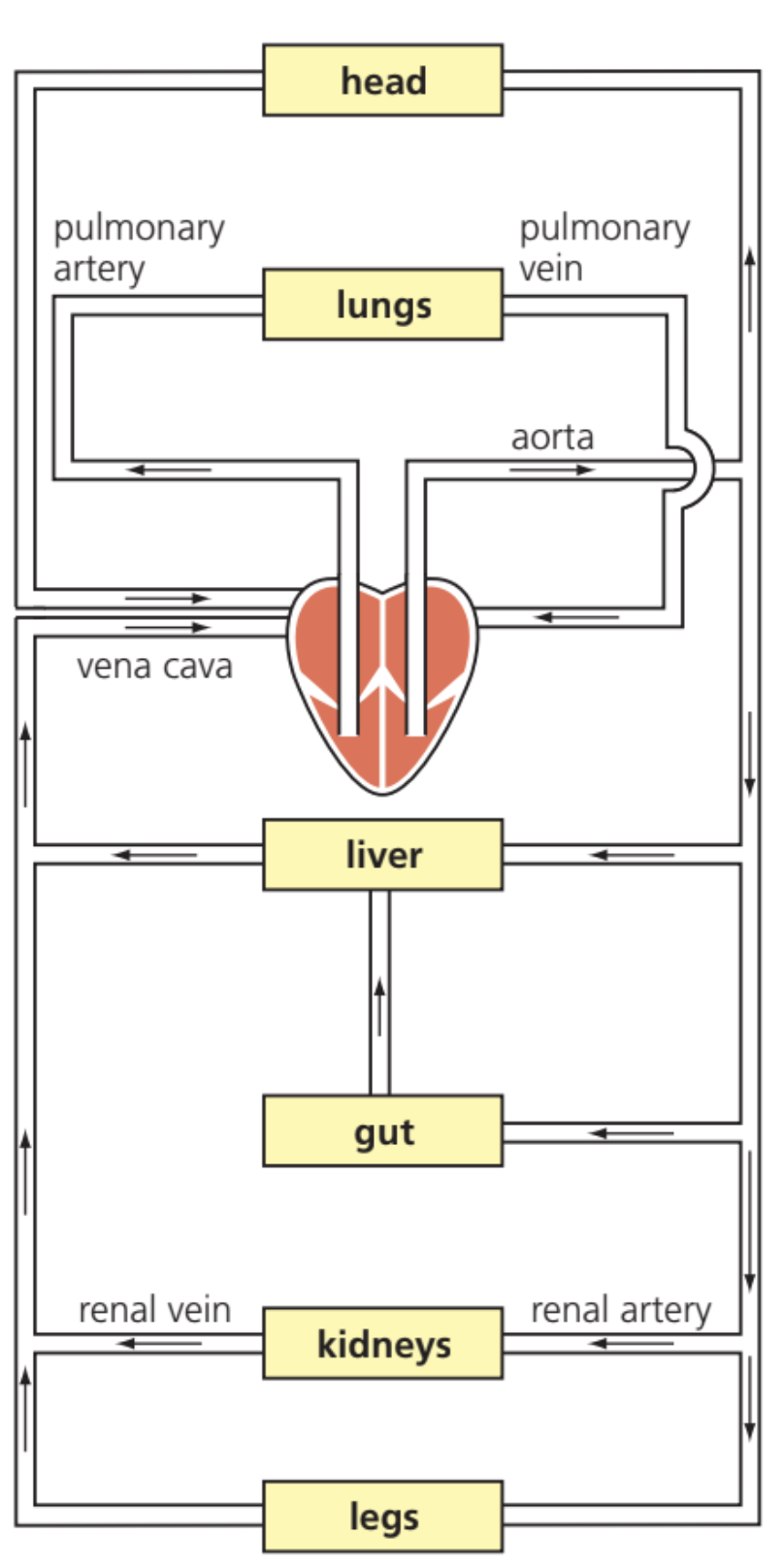
Structure of the mammalian heart
The mammalian heart contains four chambers that work together to pump blood around the body:
- Right atrium: Receives deoxygenated blood returning from body tissues
- Right ventricle: Pumps deoxygenated blood to the lungs
- Left atrium: Receives oxygenated blood returning from the lungs
- Left ventricle: Pumps oxygenated blood to body tissues
Note
The four-chamber design completely separates oxygenated and deoxygenated blood, preventing mixing and ensuring maximum efficiency in oxygen transport throughout the body.
Types of blood vessels
The circulatory system contains three main types of blood vessels, each with specific functions:
Arteries carry blood away from the heart at high pressure. The main arteries include:
- Aorta: Carries oxygenated blood from the left ventricle to body tissues
- Pulmonary artery: Carries deoxygenated blood from the right ventricle to the lungs
Veins return blood to the heart at lower pressure. Key veins include:
- Vena cava: Returns deoxygenated blood from body tissues to the right atrium
- Pulmonary vein: Returns oxygenated blood from the lungs to the left atrium
Capillaries are the smallest blood vessels where exchange of substances occurs between blood and tissues. Almost all body cells are located within 1mm of a capillary, creating a short diffusion path for efficient exchange.
Important
The close proximity of all cells to capillaries (within 1mm) is crucial for rapid diffusion and ensures that no cell is too far from the blood supply for efficient gas and nutrient exchange.
Blood flow pathway
The complete circulation pathway follows two main circuits that work simultaneously and continuously:
Pulmonary circulation
- Deoxygenated blood flows from the right ventricle through the pulmonary artery to the lungs
- Gas exchange occurs in the lungs - carbon dioxide is removed and oxygen is added
- Oxygenated blood returns via the pulmonary vein to the left atrium
Systemic circulation
- Oxygenated blood flows from the left ventricle through the aorta to body tissues
- Blood delivers oxygen and nutrients to cells while collecting carbon dioxide and waste products
- Deoxygenated blood returns via the vena cava to the right atrium
Note
These two circuits operate simultaneously, with the right side of the heart pumping blood to the lungs while the left side pumps blood to the rest of the body tissues.
Advantages of double circulation
The double circulation system provides several key benefits for mammals:
- Maintains high blood pressure for efficient transport to all body tissues
- Enables rapid delivery of oxygen and nutrients to cells
- Supports the high metabolic rate required by warm-blooded mammals
- Allows effective temperature regulation throughout the body
- Ensures efficient waste removal from active tissues
Important
Double circulation is particularly crucial for mammals because it supports their warm-blooded nature and high energy demands. Without this system, mammals could not maintain their constant body temperature or active lifestyle.
Transport and exchange
Although the circulatory system moves substances over longer distances through mass flow, the final stage of transport into cells occurs by diffusion. This exchange happens rapidly because it occurs over a large surface area, across short distances, and down steep diffusion gradients between blood and tissues.
The high efficiency of this system is essential for survival because mammals maintain a constant, high body temperature and have high energy demands that require continuous, rapid supply of oxygen and nutrients to all cells.
Summary
Key Points to Remember:
- Mammals have a double circulation system - blood passes through the heart twice per complete circuit
- The four-chambered heart separates oxygenated and deoxygenated blood completely
- Arteries carry blood away from the heart, veins return blood to the heart, and capillaries allow exchange with tissues
- Double circulation maintains high blood pressure for efficient transport to meet mammals' high metabolic demands
- All cells are within 1mm of a capillary ensuring rapid diffusion of substances