Tissue Fluid (AQA A-Level Biology): Revision Notes
📚Revision Notes
Tissue Fluid
What is tissue fluid
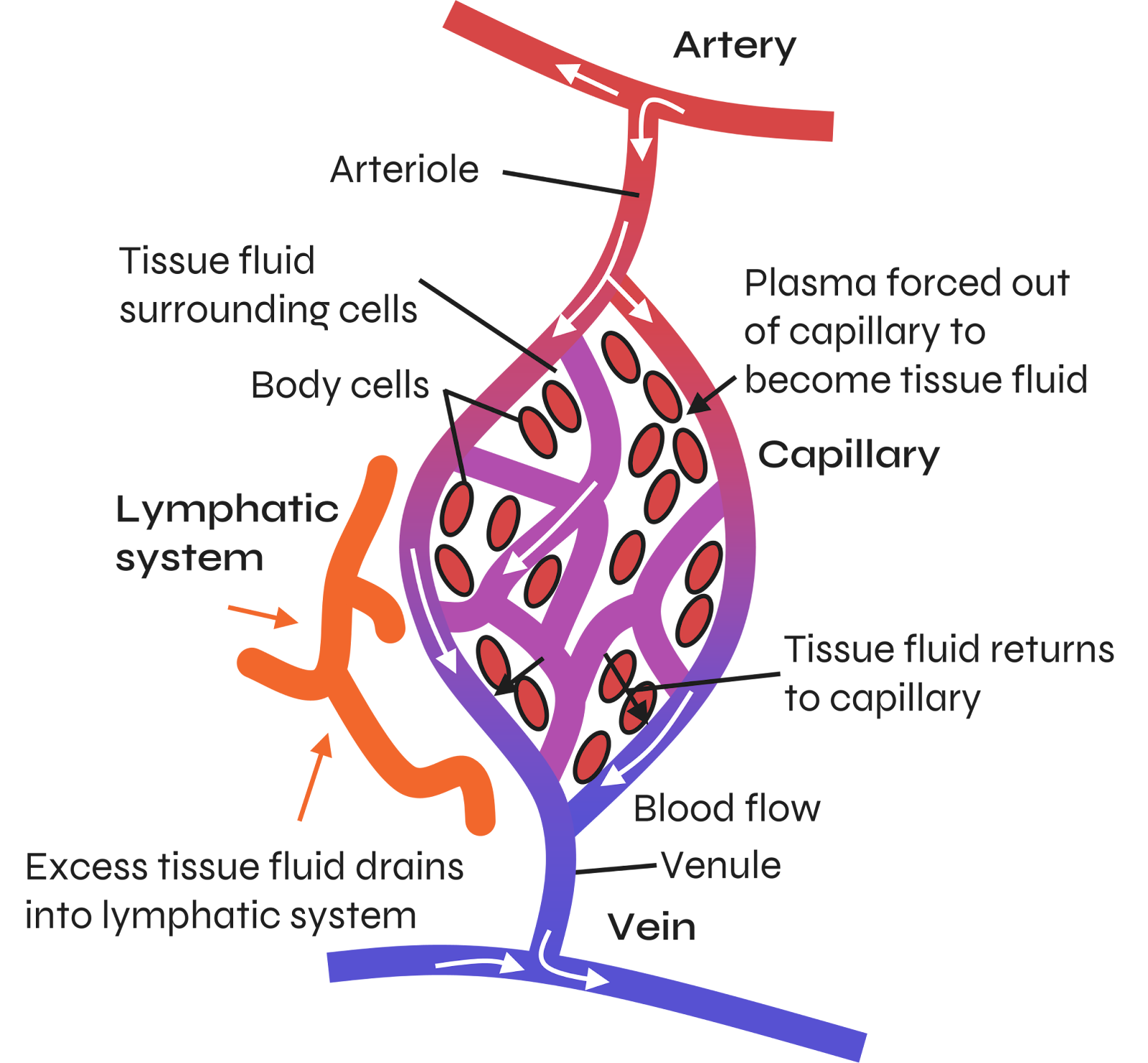
Tissue fluid is a watery solution that surrounds and bathes all cells in the body. It contains essential nutrients including glucose, amino acids, fatty acids, dissolved ions, and oxygen. This fluid acts as the immediate environment where cells live and represents the medium through which materials are exchanged between blood and cells.
The composition of tissue fluid is carefully regulated by homeostatic systems, ensuring cells receive a relatively constant environment. As metabolic materials move from blood to cells, tissue fluid also collects waste products like carbon dioxide for removal.
Note
Homeostatic Regulation
The body maintains strict control over tissue fluid composition to ensure cells can function optimally. Any significant changes in this fluid environment can disrupt cellular processes and threaten survival.
Formation of tissue fluid
Blood pumped by the heart creates hydrostatic pressure as it travels through arteries, arterioles, and into capillaries. This pressure is highest at the arterial end of capillaries where blood first arrives from the heart.
The hydrostatic pressure forces small molecules out of the blood plasma through the capillary walls in a process called ultrafiltration. Only small molecules like water, glucose, amino acids, and ions can pass through - blood cells and large proteins remain in the capillaries because they cannot cross the membrane barriers.
However, this outward pressure is opposed by two forces that tend to keep fluid in the capillaries:
- Hydrostatic pressure of existing tissue fluid outside the capillaries resists additional fluid movement outward
- Lower water potential of blood due to plasma proteins creates an osmotic effect that draws water back into the capillaries
Important
Pressure Balance
The formation of tissue fluid depends on a delicate balance between opposing forces. The net outward pressure at the arterial end must be sufficient to push fluid out, while the net inward pressure at the venous end must be sufficient to draw most of it back in.
Despite these opposing forces, the net effect at the arterial end produces sufficient pressure to push tissue fluid out of capillaries, supplying cells with fresh nutrients and oxygen.
Return of tissue fluid to circulation
Once tissue fluid has exchanged materials with cells, it must return to the circulatory system. This happens through two main routes:
Direct return via capillaries
Most tissue fluid returns directly to the blood plasma through the capillary walls. This occurs because conditions change as blood moves towards the venous end of the capillary network:
- Loss of tissue fluid from capillaries reduces hydrostatic pressure inside them
- By the time blood reaches the venous end, internal pressure is usually lower than tissue fluid pressure outside
- The higher external pressure forces tissue fluid back into the capillaries
- Additionally, plasma has lost water but retains proteins, creating a stronger osmotic gradient that draws water back in
Note
Pressure Reversal
The key to tissue fluid return is the reversal of pressure gradients from arterial to venous ends of capillaries. This elegant mechanism ensures continuous circulation of fluid while maintaining tissue hydration.
The tissue fluid returning to capillaries has lost much of its oxygen and nutrients through diffusion to cells, but has gained carbon dioxide and waste materials in exchange.
Lymphatic system drainage
Not all tissue fluid can return directly via capillaries. The excess is collected by the lymphatic system - a network of vessels that begins in tissues and eventually drains back into the bloodstream near the heart.
Lymphatic vessels start as blind-ended capillaries in tissues and gradually merge into larger vessels. Unlike blood circulation, lymph is not moved by heart pumping but instead relies on:
- Hydrostatic pressure from tissue fluid that has left the capillaries
- Muscle contractions during body movement that squeeze lymph vessels
- One-way valves in lymph vessels that prevent backflow and ensure movement towards the heart
Important
Essential Drainage System
Without the lymphatic system, excess tissue fluid would accumulate in tissues, causing swelling (edoema) and disrupting normal cellular function. This system is crucial for maintaining proper fluid balance throughout the body.
This system ensures that excess tissue fluid is returned to circulation, maintaining proper fluid balance in tissues.
Summary
Key Points to Remember:
-
Tissue fluid is the watery medium that bathes cells, containing nutrients and oxygen while collecting waste products
-
Capillary structure (thin walls, narrow diameter, branched networks) is perfectly adapted for rapid exchange between blood and tissues
-
Ultrafiltration occurs when hydrostatic pressure forces small molecules out of capillaries at the arterial end, opposed by tissue fluid pressure and osmotic effects
-
Most tissue fluid returns directly to capillaries at the venous end due to pressure changes and osmotic gradients
-
Lymphatic drainage collects excess tissue fluid that cannot return via capillaries, using muscle contractions and one-way valves to move lymph back to the bloodstream