Required Practical 10a (AQA A-Level Chemistry): Revision Notes
📚Revision Notes
8.3.1 Required Practical 10a
Aim
Required Practical 10a requires a preparation of an organic solid and a test of its purity.
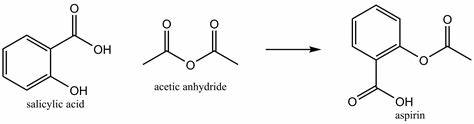
To prepare a sample of aspirin (2-ethanoyloxybenzenecarboxylic acid) by reacting salicylic acid (2-hydroxybenzenecarboxylic acid) with ethanoic anhydride in the presence of sulfuric acid as a catalyst. Aspirin is a widely used antipyretic (fever reducer) and analgesic (pain reliever). Once synthesised, the aspirin will be purified through recrystallization and its purity assessed using melting point analysis.
Equipment Needed
- Apparatus:
- 100 cm³ conical flask
- 400 cm³ beaker (for water bath)
- 25 cm³ and 10 cm³ measuring cylinders
- Boiling tube
- Recrystallization apparatus (boiling tube and hot water bath)
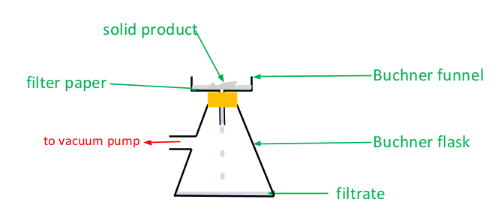
- Philtre funnel, philtre paper, and Büchner funnel (for filtration)
- Melting point apparatus
- Spatula and glass stirring rod
- Thermometer (0–100°C)
- Electronic balance
- Chemicals:
- Salicylic acid (~6.00 g)
- Ethanoic anhydride (10 cm³)
- Concentrated sulfuric acid (5 drops)
- Ethanol (15 cm³)
- Distilled water (75 cm³ for precipitation, 40 cm³ for recrystallization)
- Ice bath (optional, for crystallisation)
Method
Synthesis of Crude Aspirin
- Preparation:
- Weigh approximately 6.00 g of salicylic acid directly into a 100 cm³ conical flask.
- Record the exact mass of salicylic acid used.
- Addition of Ethanoic Anhydride:
- Using a 10 cm³ measuring cylinder, add 10 cm³ of ethanoic anhydride to the conical flask containing the salicylic acid. Swirl the flask to mix.
- Catalyst Addition:
- Carefully add 5 drops of concentrated sulfuric acid to the mixture. Swirl the flask gently for a few minutes to ensure thorough mixing.
- Heating:
- Place the conical flask in a 400 cm³ beaker of hot water at approximately 60°C. Keep the temperature steady and ensure it does not exceed 65°C. Warm the reaction mixture for 20 minutes to promote esterification.
- Precipitation of Aspirin:
- Remove the flask from the hot water bath and let it cool slightly. Pour the mixture into a beaker containing 75 cm³ of distilled water, stirring well to precipitate the crude aspirin.
- Filtration:
- Philtre the solid aspirin product under reduced pressure using a Büchner funnel to remove any residual liquids. Collect the crude aspirin on a double layer of philtre paper and allow it to dry.
Purification by Recrystallization
- Dissolving the Crude Aspirin:
- Measure 15 cm³ of ethanol using a 25 cm³ measuring cylinder and add it to a boiling tube.
- Prepare a hot water bath at approximately 75°C. Ensure that the temperature does not exceed 78°C, the boiling point of ethanol.
- Using a spatula, transfer the crude aspirin into the boiling tube with ethanol. Place the tube in the hot water bath and stir until all the aspirin dissolves.
- Recrystallization:
- Pour the hot aspirin solution into 40 cm³ of distilled water in a 100 cm³ conical flask. If crystals start forming immediately, continue gently swirling until fully dissolved.
- Allow the solution to cool slowly, ideally at room temperature. White needle-like crystals of aspirin should begin to form.
- If crystals do not form after cooling, place the conical flask in an ice bath and scratch the inside of the flask with a glass stirring rod to induce crystallisation.
- Filtration and Drying:
- Philtre the purified aspirin crystals under reduced pressure and transfer them onto philtre paper. Allow the crystals to dry completely.
- Recording Mass:
- Once dry, record the mass of the purified aspirin sample.
Data Collection
- Mass of Salicylic Acid Used: Record the initial mass of salicylic acid weighed out.
- Mass of Purified Aspirin: Measure and record the final mass of the dried, purified aspirin.
- Theoretical Yield Calculation: Calculate the theoretical yield based on the initial moles of salicylic acid used.
- Percentage Yield: Calculate the percentage yield using the formula:
- Atom Economy: Calculate the atom economy of the reaction based on the mass of the desired product versus the total reactant mass.
- Melting Point Measurement: Test the purity of the aspirin by measuring its melting point using a melting point apparatus. Pure aspirin should have a melting point around 135°C. Record the observed melting point range and compare it to the known value.
Safety Considerations
- Personal Protective Equipment (PPE):
- Always wear safety goggles, gloves, and a lab coat to protect against spills and splashes.
- Handling Chemicals:
- Salicylic acid and aspirin are mildly irritating to the skin and eyes.
- Ethanoic anhydride is corrosive and can cause severe burns; handle it with caution and avoid inhaling fumes.
- Concentrated sulfuric acid is highly corrosive. Add it slowly to avoid splattering and use gloves to prevent skin contact.
- Heating Precautions:
- Use a water bath for heating to avoid direct contact with flames. Monitor the temperature to prevent decomposition or boiling over.
- Ethanol is highly flammable. Ensure that the hot water bath does not exceed 78°C and keep ethanol away from open flames.
- Pressure Release:
- During filtration, use reduced pressure carefully to avoid splashing and ensure a secure setup to avoid exposure.
Conclusion and Analysis
- Purity Test: Compare the melting point of the synthesised aspirin to the standard melting point of pure aspirin (135°C). A pure sample will have a sharp melting point close to this value, while impurities will lower or broaden the melting range.
- Yield Analysis: Assess the efficiency of the synthesis by calculating the percentage yield. Comment on any potential sources of error or loss, such as incomplete reactions, product loss during filtration, or recrystallization steps.
- Atom Economy and Industrial Considerations: Calculate the atom economy of the process and consider why ethanoic anhydride is preferred over ethanoyl chloride in industrial synthesis, despite the latter having a higher atom economy. Ethanoic anhydride is generally safer and more cost-effective.