Resource Scarcity, Choice, and Allocation (AQA A-Level Economics): Revision Notes
📚Revision Notes
Resource Scarcity, Choice, and Allocation
Introduction to the fundamental economic problem
Economics begins with a simple but profound reality: we live on a finite planet with limited resources. Most economic resources that we rely upon are scarce, meaning their availability is restricted. As a result, how these resources are used must be carefully managed, either through market mechanisms (where prices guide decisions) or through planning systems (where authorities make allocation decisions).
Note
The fundamental economic problem is a central concept in economics that frames all economic decision-making: how can we best make decisions about allocating scarce resources among competing uses in order to improve and maximize human happiness and welfare?
Understanding scarcity
Scarcity is the central concept in economics. It arises from a fundamental mismatch: people have unlimited wants and desires, but the resources available to satisfy these wants are limited. Put simply, as a society we would like to consume more goods and services than our economy can actually produce with its limited resources.
Scarcity affects everyone, not just those with low incomes. Even wealthy individuals face scarcity because they have limited incomes relative to everything they might want to purchase. When operating through market mechanisms, this creates what economists call a budget constraint - the limit on what can be purchased given current prices and available income. This constraint represents all the possible combinations of goods and services that someone can afford with their limited resources.
Note
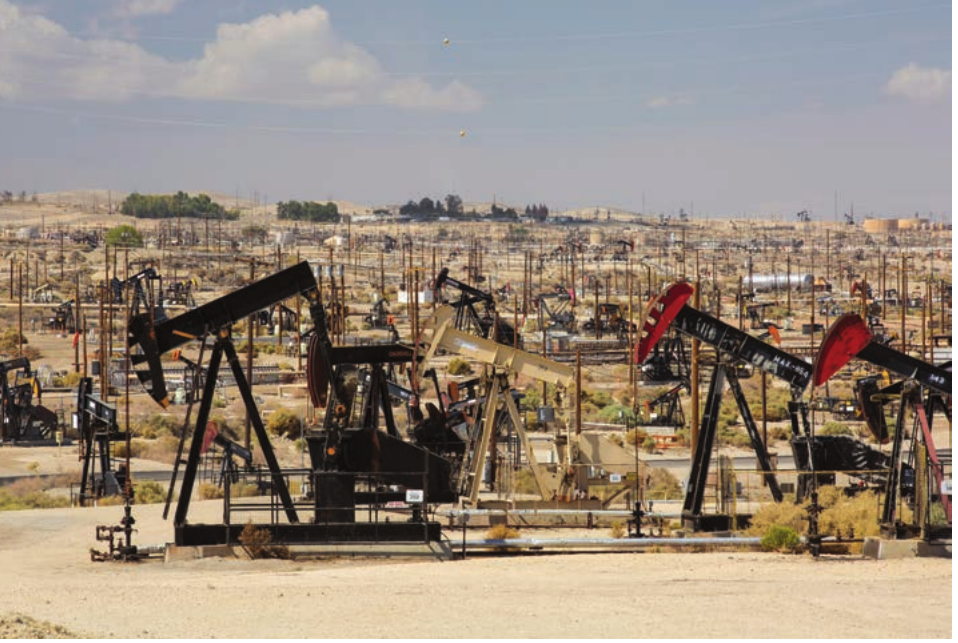
Resources in the economy include both renewable and non-renewable resources. Oil, shown in the image above, is an example of a non-renewable resource - once extracted and used, it cannot be replaced. This makes decisions about how to use such resources particularly important from an economic perspective.
The need for choice
Because resources are scarce and wants are unlimited, choice becomes necessary. Choice means selecting between alternatives when deciding how to use scarce resources. Whether you are an individual, a household, or a business, you constantly face decisions about how to allocate your limited resources.
Household choices
Consider a typical family scenario. A household receives a weekly income of £1,200. Their spending commitments might include:
- £350 on housing costs
- £350 on food
- £300 on other goods and services (heating, lighting, etc.)
- £100 on entertainment
This accounts for £1,100, leaving just £100 in savings. Now suppose housing costs suddenly increase to £550. Unless the family can increase their income, they must make difficult choices. They cannot maintain all their previous spending levels. The family might:
- Reduce entertainment spending (perhaps fewer cinema visits)
- Buy cheaper food
- Cut back on heating or lighting
- Purchase fewer non-essential items
- Stop saving
Important
The key point is that something must be given up. The family faces real choices about how to allocate their scarce income. This illustrates how budget constraints force decision-making at the household level.
Time as a scarce resource
Even without considering money, scarcity affects everyone because time itself is limited. Each person has only 24 hours in a day. A decision to spend an hour watching television means choosing not to spend that hour reading, exercising, or working. Individuals and households constantly make choices about how to use their finite time, deciding how to balance work, leisure, and other activities.
Opportunity cost
Whenever an economic agent (an individual, household, or firm) must choose between two or more alternatives that cannot all be achieved simultaneously, that choice involves an opportunity cost. The opportunity cost of any decision is the value of the next best alternative that must be given up.
It is important to understand what economists mean by "cost". Many people think of cost simply as the money price of something. However, economists focus on opportunity cost - the value of what must be sacrificed to make a particular choice.
The concept of opportunity cost
The opportunity cost of any choice, decision, or course of action is measured by the alternatives that have to be foregone. Specifically, it is the next best alternative that is sacrificed.
For example, if you choose to spend 30 minutes watching a television programme, the opportunity cost is the lost opportunity to use that time differently - perhaps reading a magazine or book. The opportunity cost is specifically the value of what you would have done instead if you had made your second-best choice.
Consumer opportunity costs
Example
Consumer Decision: Going to the Cinema
Suppose you go to the cinema to watch a film. Initially, you believe you will enjoy it. Two hours later, leaving the cinema, you think "That was rubbish, I wish I hadn't bothered." Does this mean you made an irrational decision?
Analysis: Not necessarily. The key phrase is "at the time". When you made the decision to watch the film, you believed it would be enjoyable. At that moment, choosing to go to the cinema was a rational decision based on the information and expectations you had. The fact that you were disappointed afterwards does not make the original decision irrational.
Time as opportunity cost: Even if a film is available to watch for free on television, there is still an opportunity cost - in this case, involving time. Time is scarce, and the two hours spent watching the film cannot be spent on alternative activities such as reading. A choice must be made between competing uses of time. The way different people value this choice will vary; for instance, a retired person may value leisure time differently from a financial trader working long hours.
Opportunity costs in business
Going to the cinema is a consumption activity where people must carefully consider how to spend their limited incomes - their budget constraint. Money spent on one good cannot be spent on another, so there is always an opportunity cost when deciding to consume a good, even when time is not a factor.
Firms also face opportunity costs when making production decisions. Consider a textile manufacturer that can produce either shirts or dresses from the same production line, but not both simultaneously. The opportunity cost of producing more shirts is the number of dresses that must be sacrificed.
Note
Production Technology Choices
Suppose a textile manufacturer has two technology options:
- Labour-intensive technology: uses many workers but little capital equipment
- Capital-intensive technology: uses expensive automated equipment but very few workers
Given a budget constraint, the firm must choose one production method. The opportunity cost of selecting one technology is the sacrificed opportunity to use the alternative method.
Inter-temporal choice
Another important example involves decisions that affect different time periods - what economists call inter-temporal choice. Consider a teenager deciding whether to leave school to get a job immediately, or to continue education and attend university. This choice involves:
- Immediate income (from working now) versus future income (from better qualifications later)
- Current earnings versus potential higher earnings in the future
Important
The opportunity cost of going to university includes the wages forgone during the years of study. Conversely, the opportunity cost of working immediately after school is the potential for higher future earnings that might have resulted from obtaining a university degree.
Rational behaviour and opportunity cost
When making choices, economists generally assume that people behave rationally. Rational behaviour means that people attempt to make decisions in their own self-interest, trying to maximize their private benefit or satisfaction.
The "think at the time" principle
Return to the earlier example about opportunity cost: "When a choice has to be made, people always choose what they think at the time is the best alternative, which means that the second best or next best alternative is rejected."
The phrase "think at the time" is crucial. When you decided to watch that disappointing film, the decision was rational at the moment it was made because you believed you would enjoy it. Having left the cinema dissatisfied, it would be irrational to return and pay to watch the same film again - but the original decision was not irrational.
Important
Rational behaviour does not require perfect foresight or always being correct. It means making the best decision possible with the information available at the time, choosing the alternative that appears to offer the greatest benefit.
Calculating opportunity cost
Example
Worked Example: Electrical Goods Manufacturer
A small electrical goods manufacturer can produce either TV sets or radio sets using all its available resources, but cannot produce both simultaneously. The table below shows the different combinations of the two goods the firm can produce:
Production Possibilities Table
| TV sets | Radio sets |
|---|---|
| 0 | 30 |
| 1 | 29 |
| 2 | 27 |
| 3 | 24 |
| 4 | 20 |
| 5 | 15 |
| 6 | 9 |
| 7 | 0 |
This table shows production possibilities. If the firm produces zero TV sets, it can produce 30 radio sets. If it produces 1 TV set, radio set production falls to 29. As TV set production increases, fewer radio sets can be produced.
Step 1: Understanding the question What is the opportunity cost of producing TV sets in terms of radio sets forgone?
Step 2: Calculate opportunity cost for each additional TV set We calculate the number of radio sets sacrificed for each additional TV set produced:
| TV set produced | Opportunity cost (radio sets forgone) |
|---|---|
| 1st TV set | 1 radio set (30 - 29) |
| 2nd TV set | 2 radio sets (29 - 27) |
| 3rd TV set | 3 radio sets (27 - 24) |
| 4th TV set | 4 radio sets (24 - 20) |
| 5th TV set | 5 radio sets (20 - 15) |
| 6th TV set | 6 radio sets (15 - 9) |
| 7th TV set | 9 radio sets (9 - 0) |
Step 3: Identify the pattern The data reveal an important pattern - there is an increasing opportunity cost in terms of radio sets forgone as production of TV sets increases. The first TV set costs only 1 radio set, but the seventh TV set costs 9 radio sets.
Explanation: This increasing opportunity cost pattern is common in economics. As more resources are devoted to producing one good, increasingly large amounts of the alternative good must be sacrificed. This happens because resources are not perfectly adaptable between different uses - some resources are better suited to producing TV sets, others to producing radio sets.
Summary
Key Points to Remember:
-
Scarcity is the fundamental economic problem - it exists because people have unlimited wants but resources to satisfy these wants are limited.
-
Scarcity necessitates choice. Individuals, households, and firms must constantly make decisions about how to allocate their scarce resources among competing uses.
-
Every choice involves an opportunity cost - the value of the next best alternative that must be sacrificed or forgone.
-
Economists assume people behave rationally, making decisions that they believe at the time will maximize their benefit or welfare.
-
Opportunity costs can be calculated numerically using production possibilities data, often revealing patterns such as increasing opportunity costs as more of one good is produced.