Case Study: Coastal Environment and Management at a Local Scale (AQA A-Level Geography): Revision Notes
📚Revision Notes
Case Study: Coastal Environment and Management at a Local Scale
Geographical context of Pevensey Bay
Pevensey Bay is situated on the East Sussex coastline in a low-lying zone with softer sediment deposits. It lies between harder rock types - sandstone found at Hastings to the east and chalk formations of the South Downs to the west.
The bay occupies a stretch of coastline that has been shaped by thousands of years of natural coastal processes. These processes have created and maintained a natural shingle barrier that provides important protection for the area behind it.
Note
The strategic position of Pevensey Bay between two different geological formations (sandstone and chalk) has significantly influenced its physical development and the types of sediment found along its coast.
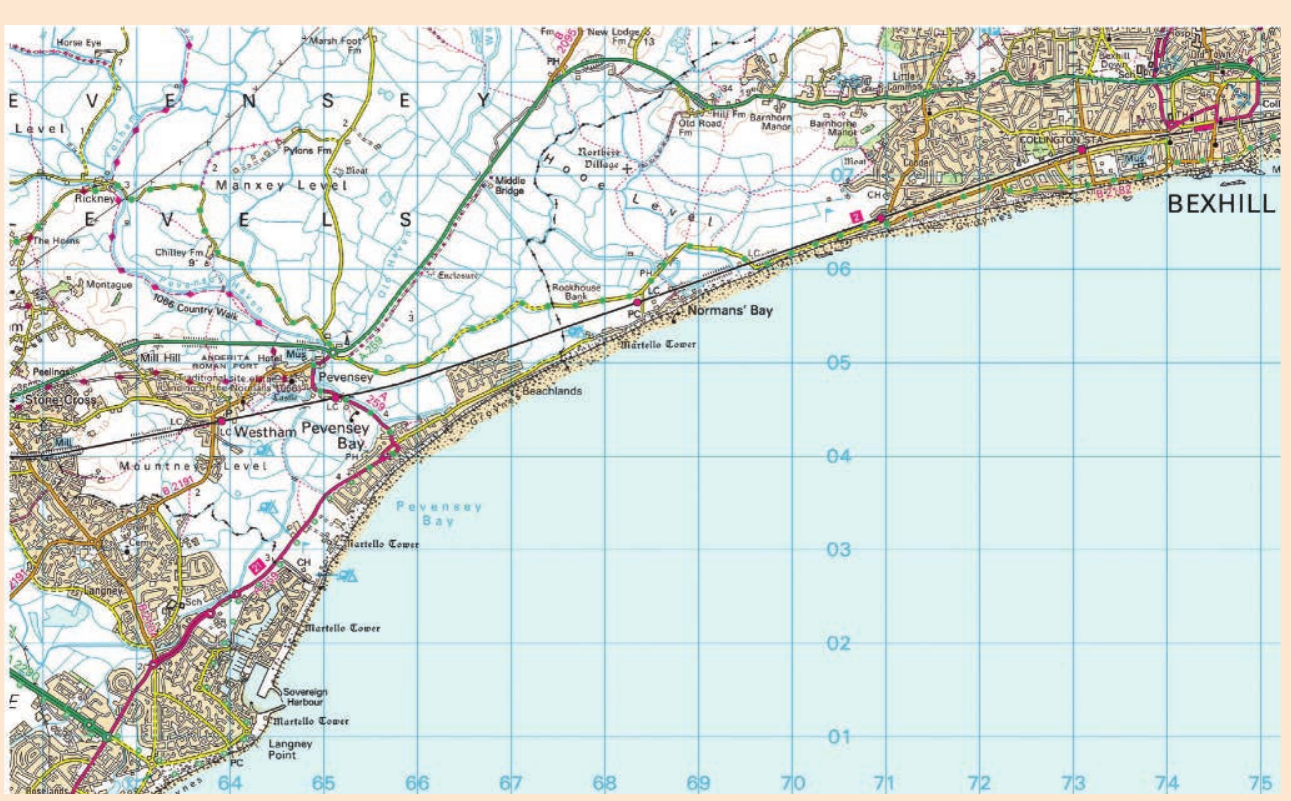
Key features of the area include:
- A259 coast road and railway line connecting Hastings to Portsmouth
- Nature reserves including a designated SSSI (Site of Special Scientific Interest) wetland
- Agricultural land with numerous livestock and arable farms
- Settlements including Pevensey Bay, Norman's Bay, Langley, Westham and parts of Pevensey
Physical characteristics of the coastline
The coastline at Pevensey Bay has several distinctive features:
The shingle barrier:
- Extends for 9 kilometres between Eastbourne and Bexhill
- Reaches a height of approximately 6 metres above sea level
- Projects seawards an average distance of 45 metres
- Consists of naturally deposited beach material (shingle and sand)
This shingle bank has developed over several thousand years through geomorphological processes. Whilst the barrier has been modified through coastal management today, it continues to function as a natural defence against coastal flooding.
Important
The shingle barrier at Pevensey Bay is a naturally formed coastal landform that has evolved over thousands of years. It acts as the primary defence against flooding for the low-lying land behind it.
Natural coastal processes
The shore at Pevensey Bay, like all natural coastlines, continuously adapts to reduce the impacts of wave energy. Several key processes operate along this stretch of coast:
Longshore drift is the dominant process affecting sediment movement. Beach material is transported from the south-west towards the north-east along the coastline. During major storm events, beaches become flatter as wave energy spreads the sediment, creating protective barriers that reduce wave power and prevent waves from reaching the top of the shingle bank.
Through natural processes, the shingle bank and beach have historically been maintained without human intervention. However, research has demonstrated that sediment movement is not evenly distributed - the coastline experiences irregular losses with a net loss of approximately 25,000 m³ of beach material every year.
Note
The natural movement of sediment along the coast (longshore drift) operates continuously, but the rate and direction can vary depending on wave conditions, tidal patterns, and seasonal weather patterns.
The continuing rise in sea levels means that:
- Wave action and longshore drift continue to transport sediment in the littoral zone
- Storm frequency appears to be increasing
- The shape and position of the coastline changes almost daily
- Flood risk is the biggest concern rather than erosion, given the soft man-made defences constructed from sand and shingle
What requires protection?
The natural and man-made sea defences at Pevensey Bay currently protect substantial areas and infrastructure:
- A permanent area of 50 km² at risk of flooding - including communities in Pevensey Bay, Norman's Bay, Langley, Westham and parts of Pevensey
- 10,000 properties
- Recreational and commercial sites that support the local economy
- Transport infrastructure - the A259 coast road and railway line from Hastings to Portsmouth
- Environmental sites - nature reserves and SSSI wetland areas
- Agricultural land - numerous livestock and arable farms in the Pevensey Levels
Important
The challenge facing modern-day settlements is that the coastline must remain in a relatively fixed position. As sea levels continue to rise and coastal processes continue to operate, balancing the needs of residents with economic costs, environmental benefits and long-term sustainability represents an ongoing challenge.
Current coastal management approach
The management of sea defences at Pevensey Bay follows a unique organisational structure. The defences are managed and maintained through the country's first public-private partnership (PPP) for coastal management.
The Pevensey Coastal Defence Ltd (PCDL) partnership
The project was established in 2000 following a major storm event in 1997. This 1-in-20 year storm demonstrated that the shingle beach could be breached, prompting action to improve coastal defences.
Key details of the partnership:
- Established following a realisation in 1997 about breach risk
- Contract awarded to a consortium called Pevensey Coastal Defence Ltd (PCDL)
- Designed to run for 25 years
- Initial budget of $30 million
The management approach centres on working with the natural environment rather than against it. PCDL bases its management on understanding and working with the natural processes of the local sediment sub-cell. This environmentally and aesthetically acceptable approach maximises opportunities for future recreational and environmental projects.
Important
Understanding Sediment Sub-cells
A sediment sub-cell is a section of coastline where sediment movement operates as a relatively self-contained system. Understanding this natural compartment helps managers work with rather than against natural coastal processes, leading to more sustainable and cost-effective management strategies.
Management philosophy
The shingle beach at Pevensey Bay extends the full length of the bay. The crest height of this defence is 6 metres, and the shingle bank extends seawards an average of 45 metres.
Traditionally, the barrier had been maintained using 150 wooden timber groynes. However, since 2000, the project has taken a different approach. As each groyne fails, it is carefully removed rather than replaced. The aim is to retain only about 10 groynes strategically positioned to maintain important discontinuities in the coastline. This creates a more open, natural beach whilst still providing effective coastal protection.
Note
This represents a shift towards soft management - working with natural processes rather than trying to completely control them through hard engineering structures. This approach is more sustainable, cost-effective, and environmentally friendly than traditional hard engineering methods.
Beach management strategies
PCDL employs six main strategies to maintain the coastal defences at Pevensey Bay. Each strategy plays a specific role in managing beach sediment and maintaining effective protection.
- Recharge
- Recycling
- Bypassing
- Reprofiling
- Groynes
- Beach Surveys
Recharge
Beach recharge addresses the natural loss of sediment from the bay.
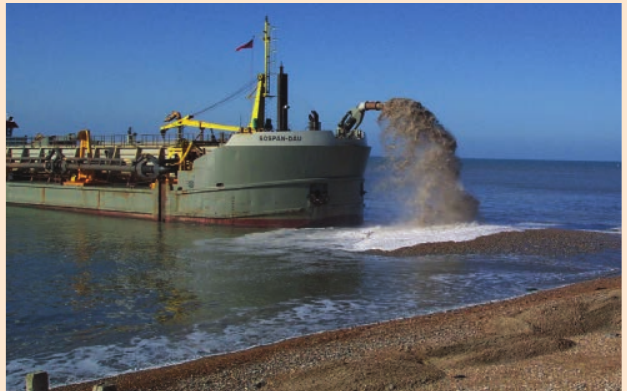
Longshore drift naturally removes approximately 25,000 m³ of sediment annually from the bay, transporting it towards Bexhill. Lorries then transport 5,000 m³ of this material around the harbour each year to areas further west.
To replace lost material, the remaining 20,000 m³ of gravel and sand is dredged annually from an offshore location at Sovereign Harbour. This dredged material is then pumped directly onto the beach, providing a natural source of beach material that closely matches the original composition.
Note
Why Beach Recharge Works
This approach is more environmentally sensitive than earlier methods. In recent years, rather than using noisy bulldozers to push material into place, the sediment is left in situ allowing the natural process of longshore drift to distribute it along the coast. This provides a more natural sorting of beach material whilst saving considerable time and money.
Recycling
The rate of sediment movement varies from place to place along the bay. Some sections experience net accumulation of material, whilst others suffer net loss.
Following periods of particularly stormy weather - such as Winter 2013-14 - when conditions prevent the dredger from operating close to shore, recycling becomes essential. Dump trucks and bulldozers are deployed to redistribute sediment from areas of gain to areas of loss.
Example
Practical Application: Winter Storm Management
During Winter 2013-14, severe weather prevented the dredger from operating near the shore. In response, PCDL deployed:
- Dump trucks to transport sediment
- Bulldozers with attached 'boxes' or earth scrapers for smaller operations
- Strategic redistribution from areas of accumulation to areas of loss
This flexible approach maintained beach protection despite challenging conditions while minimising environmental impact and operational costs.
If relatively small amounts of sediment require recycling, a 'box' or earth scraper is attached to the bulldozer to limit the use of larger plant machinery. This reduces environmental impact and operational costs.
Bypassing
The southern arm of Sovereign Harbour creates a barrier that interrupts the natural west to east movement of sediment. Without intervention, this would cause material to accumulate on one side of the harbour.
If this accumulation were allowed to continue, sediment would eventually spill over into the harbour, blocking the lock gates. To prevent this, between 5,000 and 15,000 m³ of surplus shingle is moved from the western side of the harbour during winter months.
Note
Trucks transport this material either directly to the beach east of the harbour or to a stockpile that serves as an emergency source of beach material. This bypassing operation maintains the natural sediment flow and is carefully timed to avoid disruption during the tourist season.
Reprofiling
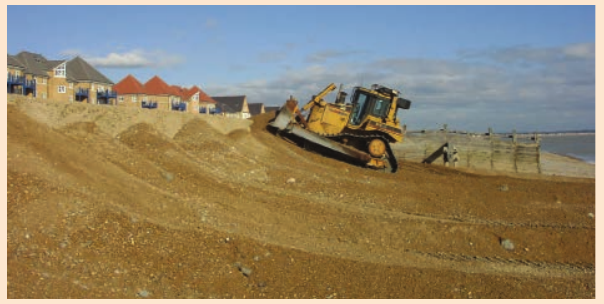
During winter storms, destructive waves remove material from the crest of the shingle beach and deposit it lower down the beach profile. Whilst some wave energy would naturally return this material, in the meantime coastal areas may be left vulnerable to flooding.
To prevent the shingle being transported away by longshore drift before natural processes can return it, a bulldozer is used to push the material back up to reinstate the beach crest. This operation occurs during winter months when recycling is also taking place.
Important
Beach reprofiling represents a compromise between allowing completely natural processes and maintaining adequate protection. It works with natural sediment movement whilst ensuring the beach maintains its protective function - a key principle of soft management.
Groynes
Rather than maintaining the original 150 groynes along the bay, the management strategy now takes a very different approach.
Restoring all 150 groynes would have consumed 40 per cent of the 25-year budget (approximately $12 million). Instead, as each wooden groyne fails, it is carefully removed to prevent it becoming dangerous for beach users or breaking apart and floating out to sea.
The wood from removed groynes is reused - either to repair other structures or made available to local residents, businesses and farmers for recycling and reuse. Around 10 groynes are strategically retained to maintain important discontinuities in the coastline, helping create a more open, natural beach environment.
Note
Benefits of Strategic Groyne Removal:
- Reduces maintenance costs significantly
- Promotes a more sustainable coastal environment
- Creates aesthetically pleasing, open beaches
- Better supports recreational use
- Eliminates hazards from failing structures
- Encourages natural beach processes
Beach surveys
Accurate monitoring enables targeted and efficient management interventions.
Twice a month, a quad bike equipped with a GPS receiver surveys the beach. The collected data produces three-dimensional models of both the shingle bank and beach. This system functions similarly to satellite navigation in a car but achieves accuracy to between 15 and 30 cm.
These regular surveys help the management team:
- Maintain the sustainability of the project
- Target replenishment activities only where needed
- Monitor how different strategies are performing
- Identify areas requiring recycling or reprofiling
- Track longer-term changes in beach morphology
Important
By focusing resources only where they are needed, beach surveys ensure the management approach remains cost-effective and environmentally sensitive. This data-driven approach is fundamental to the success of the soft management strategy.
Success and sustainability
The Pevensey Bay sea defences project has achieved significant recognition for its approach to coastal management.
By May 2019, the scheme had won 15 awards, including gold and silver awards under the Considerate Constructors Scheme. This scheme specifically highlights projects that try to manage the coastline sustainably, working with rather than against natural processes.
Note
The Success of Pevensey Bay Demonstrates:
- Public-private partnerships can effectively manage complex coastal environments
- Working with natural processes produces environmentally acceptable outcomes
- Soft management approaches can provide effective coastal protection
- Regular monitoring enables efficient use of resources
- Sustainable management can balance protection with environmental and recreational benefits
The project continues to adapt and refine its strategies, with current progress and updates available through the project website (www.pevensey-bay.co.uk).
Remember!
Summary
Key Points to Remember:
-
Location and Physical Features: Pevensey Bay is located on the East Sussex coast in a low-lying area with a 9 km natural shingle barrier protecting 50 km² of land, 10,000 properties, and important infrastructure including the A259 road, railway, and SSSI wetlands.
-
Natural Coastal Processes: Longshore drift moves sediment from west to east, causing a net loss of approximately 25,000 m³ of beach material annually. Sea level rise increases flood risk, making this the primary concern rather than erosion.
-
Management Organisation: PCDL (Pevensey Coastal Defence Ltd) manages the coast through the UK's first public-private partnership for coastal management, established in 2000 with a 25-year contract and $30 million budget.
-
Six Management Strategies: The approach uses integrated strategies working together:
- Recharge: 20,000-25,000 m³ dredged annually from offshore
- Recycling: 5,000-15,000 m³ moved by trucks from areas of gain to loss
- Bypassing: Moving sediment around Sovereign Harbour to maintain natural drift
- Reprofiling: Bulldozers restoring beach crest after storms
- Strategic Groynes: Reduced from 150 to about 10
- GPS Beach Surveys: Twice monthly for targeted, data-driven management
-
Sustainable Success: The soft management approach works with natural processes rather than against them, winning 15 awards by 2019 including gold and silver Considerate Constructors Scheme awards for sustainable coastal management.
Memory Aid - "R-R-B-R-G-S": Recharge, Recycling, Bypassing, Reprofiling, Groynes, Surveys