Sea Level Change (AQA A-Level Geography): Revision Notes
📚Revision Notes
Sea Level Change
Introduction
Sea level has changed dramatically throughout Earth's history, and understanding these changes is crucial for interpreting coastal landscapes. The position of the sea relative to the land has shifted significantly during glacial and interglacial periods, particularly over the last 18,000 years. Whilst tides cause daily fluctuations in water levels, the average position of sea level relative to land has undergone substantial long-term changes.
Note
It's important to distinguish between short-term tidal changes that occur daily and the long-term sea level changes that span thousands of years. This section focuses on the latter – changes that fundamentally reshape coastlines and create distinctive landscape features.
There are three main mechanisms that drive sea level change, each operating at different scales and through different processes.
Types of sea level change
Understanding the different types of sea level change helps us interpret coastal features and predict future changes. Each type operates through distinct processes and at different geographical scales.
Important
Eustatic change
A global change in sea level resulting from an actual fall or rise in the level of the sea itself.
Eustatic changes affect the entire world simultaneously. These occur when the total volume of water in the oceans changes or when the capacity of ocean basins alters. The most significant eustatic changes happen during glacial and interglacial periods. When ice sheets grow, water is locked up on land as ice, causing worldwide sea level fall. When ice melts, this water returns to the oceans, causing global sea level rise.
Important
Isostatic change
Local changes in sea level resulting from the land rising or falling relative to the sea.
Isostatic changes are regional adjustments where the land moves vertically. The weight of ice sheets during glacial periods causes the Earth's crust to sink. When ice melts, the land slowly rebounds upward, a process that can continue for thousands of years. This means that even though global sea levels may be rising, some coastal areas can experience falling relative sea levels if the land is rising faster than the water.
Note
The distinction between eustatic and isostatic change is crucial: eustatic changes affect the water level globally, whilst isostatic changes involve the land itself moving up or down in specific regions. Both can occur simultaneously, creating complex patterns of relative sea level change.
Important
Tectonic change
The rise or fall in sea level resulting from tectonic processes.
Tectonic changes occur through crustal movements caused by plate tectonics, earthquakes, and volcanic activity. These can raise or lower sections of coastline relative to sea level.
Historical sea level changes
Sea level changes during the Quaternary ice age have been substantial. The most recent glacial maximum occurred approximately 18,000 years ago, when sea levels were on average 110 metres below current levels. This dramatic difference completely transformed global coastlines.
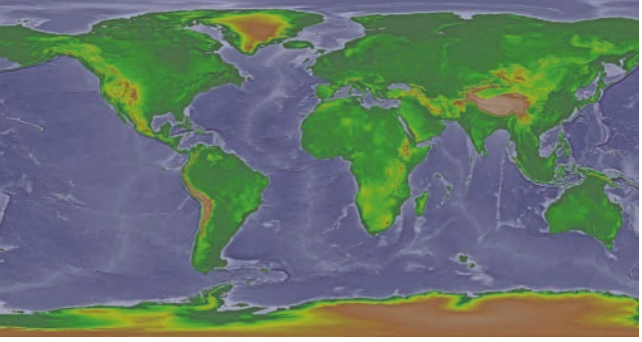
During this period, vast ice sheets covered much of the northern hemisphere. Areas that are now underwater, such as the North Sea basin, were exposed as dry land. The extensive grassy plain stretching between southern Britain and continental Europe, known as Doggerland, existed during this time.
Note
The exposure of areas like Doggerland demonstrates just how dramatically different Earth's geography was during the last glacial maximum. Entire land bridges existed between regions now separated by sea, fundamentally affecting migration patterns for both humans and wildlife.
The most significant changes have occurred in the last 10,000 years. As global temperatures rose and ice sheets melted, sea levels rose rapidly, reshaping coastlines worldwide. The coastline of Western Europe gradually became recognisable, though extensive areas remained exposed that are now submerged.
Stages of sea level change
The advance and retreat of ice sheets during glacial cycles creates a predictable sequence of sea level changes. Understanding these stages helps explain many coastal features we observe today.
Stage 1: Climate cooling and ice growth
As global climate begins to cool, marking the onset of a glacial period, precipitation increasingly falls as snow rather than rain. This snow accumulates and compresses into glacier ice over time. The hydrological cycle effectively slows down because water remains locked on land as ice rather than returning to the sea through evaporation, condensation and precipitation. This worldwide phenomenon causes a eustatic fall in sea level that affects the entire planet.
Example
Stage 1 in Action: The Start of a Glacial Period
Consider the onset of the last glacial period around 110,000 years ago:
- Global temperatures began to drop by several degrees
- Winter snowfall in high latitudes stopped melting completely during summer
- Year after year, snow accumulated and compressed into ice
- Over thousands of years, this process removed enough water from the oceans to lower global sea levels by over 100 metres
- Coastlines around the world shifted seaward as the continental shelves became exposed
Stage 2: Isostatic depression
The immense weight of growing ice sheets causes the land beneath them to sink. This isostatic adjustment affects coastlines in specific regions, particularly in northern latitudes where ice accumulates. The sinking moderates the eustatic sea level fall in some areas. Different coastlines experience different relative sea level changes depending on ice distribution and crustal response.
Example
Stage 2 in Action: Ice Loading in Britain
During the last glacial maximum:
- Ice sheets up to 1.5 km thick covered Scotland and northern England
- The weight of this ice (equivalent to massive pressure on the crust) caused the land to sink by hundreds of metres
- This depression was greatest in Scotland where ice was thickest
- Southern England experienced less depression or even slight uplift as the crust bulged outward from the loading in the north
- The relative sea level in Scotland didn't fall as much as the global eustatic fall because the land was also sinking
Stage 3: Climate warming and melting
As global temperatures rise, ice masses on land begin to melt. This replenishes the main ocean store, causing sea level to rise worldwide (eustatic rise). In many regions, this rising water floods the lower-lying land, creating submergent features. Former river valleys become drowned, forming features called rias. Glacial valleys that are flooded become fjords.
Important
Fjord
Former glacial valley drowned by rising sea levels.
Important
Ria
Former river valley drowned by rising sea levels.
Note
The key difference between fjords and rias lies in their formation: fjords were carved by glaciers and are typically deep with steep, straight sides and U-shaped profiles. Rias were carved by rivers and tend to be shallower with winding courses and V-shaped profiles.
Stage 4: Isostatic recovery
Once ice is removed from land areas, the crust begins to move back upward to its previous level. This isostatic readjustment process is gradual and continues long after ice has melted. If isostatic recovery occurs faster than eustatic sea level rise, emergent features develop, such as raised beaches. However, isostatic recovery is complicated because it affects different places at different rates and in different ways.
Important
Raised beaches
Areas of former wave-cut platforms and their beaches which are at a level higher than the present sea level.
In Britain, isostatic adjustment continues today. The southeast is gradually sinking whilst the northwest is rising. This reflects the fact that ice sheets were thickest in northern Scotland, and this was the last area where ice melted.
Example
Stage 4 in Action: Modern Britain's Continuing Adjustment
Evidence of ongoing isostatic recovery in Britain today:
- Northwest Scotland is rising at approximately 1-2 mm per year
- Southeast England is sinking at approximately 1 mm per year
- Raised beaches in western Scotland sit 10-15 metres above current sea level
- Some Roman-era coastal settlements in southeast England are now below sea level
- This differential movement creates challenges for flood defences and coastal management
Coastlines of submergence and emergence
The interplay between eustatic and isostatic changes creates distinctive coastal landscapes. These can be classified based on whether sea level has risen or fallen relative to the land.
Submergent coastlines
As mean global temperatures continue rising, there are inevitable consequences for sea levels. Melting standing ice, particularly in Antarctica and Greenland, releases fresh water into the oceans. This has serious implications for many low-lying coastal areas and islands in the Indian and Pacific Oceans.
Note
Current rates of ice melt suggest that many low-lying coastal regions could experience significant flooding within this century. Small island nations in the Pacific and Indian Oceans are particularly vulnerable, with some potentially becoming uninhabitable due to rising sea levels.
Submergent features form when sea level rises relative to the land, flooding former terrestrial landscapes. The two main features are:
- Rias – former river valleys that have been drowned by rising sea levels, creating wide, sheltered inlets
- Fjords – former glacial valleys that have been submerged, typically creating deep, steep-sided coastal inlets
Emergent coastlines
Emergent features develop when land rises relative to sea level, exposing former coastal features above current sea level. The most characteristic feature is raised beaches, where former wave-cut platforms and beaches now sit above the present-day shore. These provide clear evidence of former sea levels and can be dated to understand the timing of isostatic recovery.
In some parts of the world, isostatic adjustment is still taking place, with land continuing to rise as it responds to the removal of ice from the last glacial period.
Note
Raised beaches are valuable for geographers and geologists because they provide physical evidence of past sea levels. By studying the height and age of these features, we can reconstruct the history of sea level changes and isostatic adjustment in a region.
Key Takeaways
Summary
Remember These Essential Points:
-
Three types of sea level change: Eustatic affects the whole world, isostatic involves local land movements, and tectonic relates to crustal processes.
-
Historical context matters: Sea levels were 110 metres lower 18,000 years ago during the last glacial maximum, dramatically different from today.
-
Four-stage cycle: Climate cooling creates ice and falling sea levels; ice weight causes land to sink; warming melts ice and raises sea levels; land rebounds after ice removal.
-
Submergent features (rias and fjords) form when sea level rises relative to land, whilst emergent features (raised beaches) form when land rises relative to sea level.
-
Britain is still adjusting: The southeast continues to sink whilst the northwest rises, reflecting the distribution of ice during the last glacial period.