Global Changes Influencing Ecosystems (AQA A-Level Geography): Revision Notes
📚Revision Notes
Global Changes Influencing Ecosystems
Climate change and ecosystem vulnerability
The natural environment forms the foundation for all human life and activities. Climate change is altering this environment in profound ways, and ecosystems worldwide are facing unprecedented challenges. Understanding these changes is crucial because we depend on the environment to help manage the impacts that a changing climate will bring.
Ecosystems are highly vulnerable to climate change. This vulnerability is particularly concerning because climate change can worsen existing pressures that ecosystems already face, such as:
- Pollution affecting air, water and soil quality
- Land conversion for agriculture, urban development and industry
- The spread of invasive non-native species
Note
Whilst some species might benefit from changing conditions, UK government estimates suggest that many more species will experience negative consequences. The balance of winners and losers is heavily skewed towards species decline.
Impacts on UK ecosystems
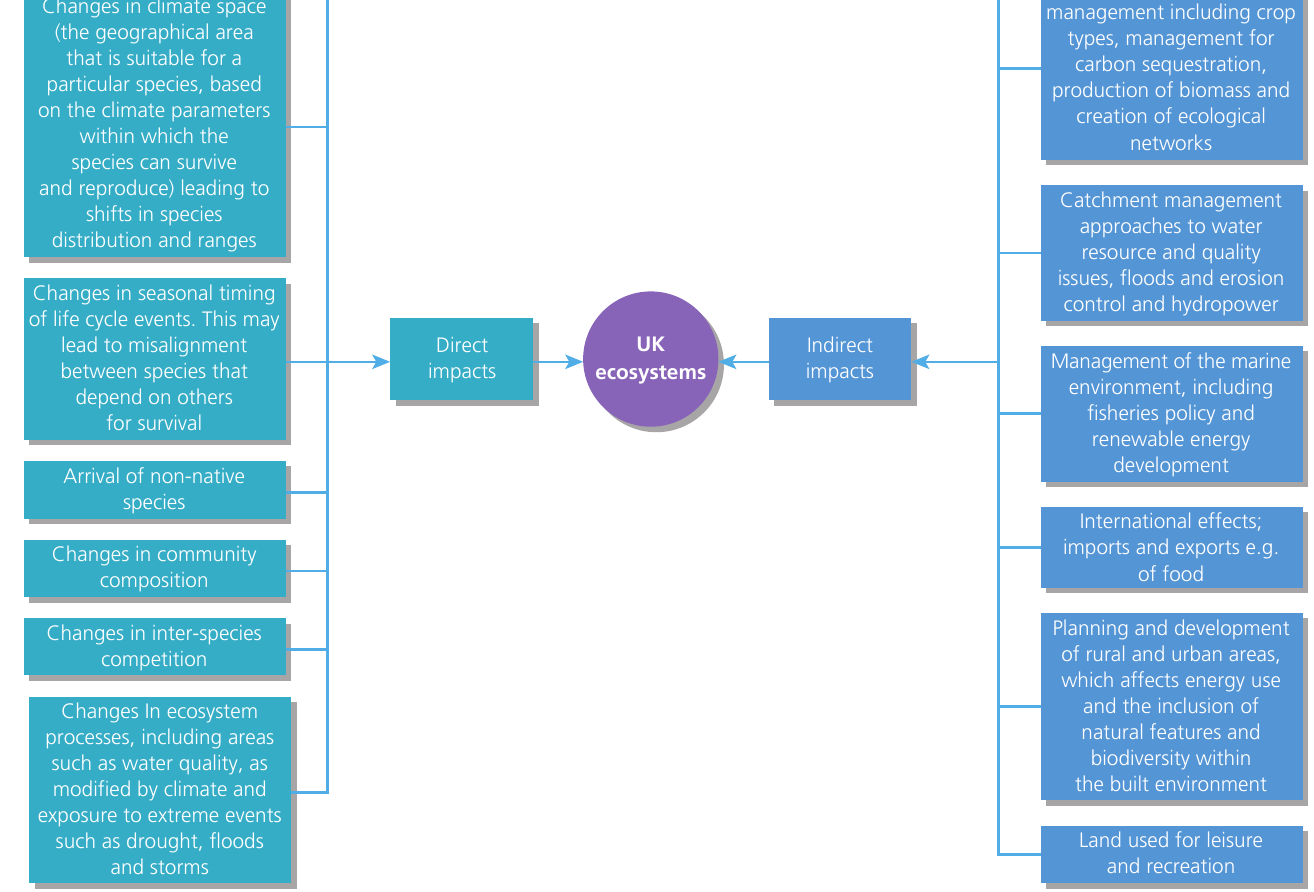
Climate change affects UK ecosystems through two distinct pathways: direct environmental impacts and indirect impacts through human management responses.
Direct impacts of climate change
Direct impacts occur when changing climate conditions physically alter ecosystems and the species within them. These impacts include several interconnected processes:
Loss of physical space occurs along coastlines due to sea-level rise and coastal erosion. Low-lying habitats are particularly vulnerable, and areas at higher altitudes may also face pressure as temperatures increase, pushing temperature-sensitive species into ever-smaller zones.
Note
Climate space refers to the geographical area that is suitable for a particular species, based on the climate parameters (such as temperature range, rainfall patterns and seasonal variations) within which the species can survive and reproduce.
Changes in climate space refer to shifts in the geographical areas suitable for particular species. As these parameters shift geographically, species distributions must shift accordingly, leading to changes in where species are found.
Seasonal timing shifts affect life cycle events such as flowering, breeding and migration. When these timing changes occur unevenly across species, it can create misalignment between species that depend on each other. For example, if insects emerge before the plants they pollinate have flowered, or if birds arrive after their food sources have peaked.
Arrival of non-native species becomes more likely as warming conditions allow species from warmer regions to establish populations in the UK. These new arrivals may thrive in the changed conditions.
Changes in community composition and inter-species competition result from the combined effects above. As some species decline, others expand, and new species arrive, the interactions between species change fundamentally. Competition for resources intensifies, and the ecological relationships that have evolved over millennia are disrupted.
Changes in ecosystem processes affect fundamental functions such as water quality, nutrient cycling and carbon storage. Extreme events like droughts, floods and storms become more frequent and severe, directly damaging ecosystems and altering how they function.
Indirect impacts through human responses
Indirect impacts occur when humans modify land management and policy in response to climate change. These management decisions affect ecosystems even when they are designed to address climate challenges:
Changes in land management include modifications to agricultural practices and forestry to achieve carbon sequestration (capturing and storing carbon dioxide from the atmosphere). Production of biomass crops for renewable energy also alters landscapes, potentially at the expense of natural habitats. The creation of ecological networks to help species move across landscapes represents another major change.
Catchment management involves managing entire river watersheds to address water resource availability, water quality issues, flood risk and erosion control. Hydropower development also falls under this category. These approaches can significantly alter aquatic and riparian ecosystems.
Management of the marine environment includes changes to fisheries policy aimed at sustainable harvesting and the development of renewable energy installations such as offshore wind farms. These alterations affect marine ecosystems directly.
International food trade effects influence domestic ecosystems because the UK's approach to importing and exporting food affects which crops are grown domestically and how much pressure is placed on agricultural land.
Planning and development of rural and urban areas determines how energy is used, where natural features are included in the landscape, and how biodiversity is incorporated into built environments. Development decisions affect the amount and quality of habitat available for wildlife.
Land used for leisure and recreation creates pressure on ecosystems through activities and infrastructure that support tourism and outdoor recreation.
UK-specific changes to wildlife and habitats
The UK faces particular challenges as its climate changes. Wildlife and plant species may need to adapt by shifting their ranges northwards to track suitable climate conditions. However, this movement brings its own problems, as species must compete with newly arrived non-native species that can thrive in the warmer conditions.
Important
Habitats across the UK face growing threats from multiple sources that can compound to create severe ecosystem stress:
- Salt marshes along coasts are threatened by rising sea levels, which can inundate these valuable coastal wetlands
- Beech woodland in southern England faces increased susceptibility to summer droughts, potentially leading to widespread tree stress and mortality
- Species across all habitats may experience reduced food availability if their breeding periods become misaligned with food availability, such as when birds nest earlier but their insect prey has not yet emerged in sufficient numbers
Global patterns of species extinction
On a global scale, atmospheric warming represents the greatest threat to biodiversity. The Intergovernmental Panel on Climate Change (IPCC), the international scientific body that assesses climate change, has concluded that rising temperatures, combined with habitat destruction and pollution, will place many species at risk of extinction in the coming decades.
Important
The Intergovernmental Panel on Climate Change (IPCC) is the international body that assesses scientific information related to climate change and its impacts. Their findings represent the consensus of thousands of scientists worldwide.
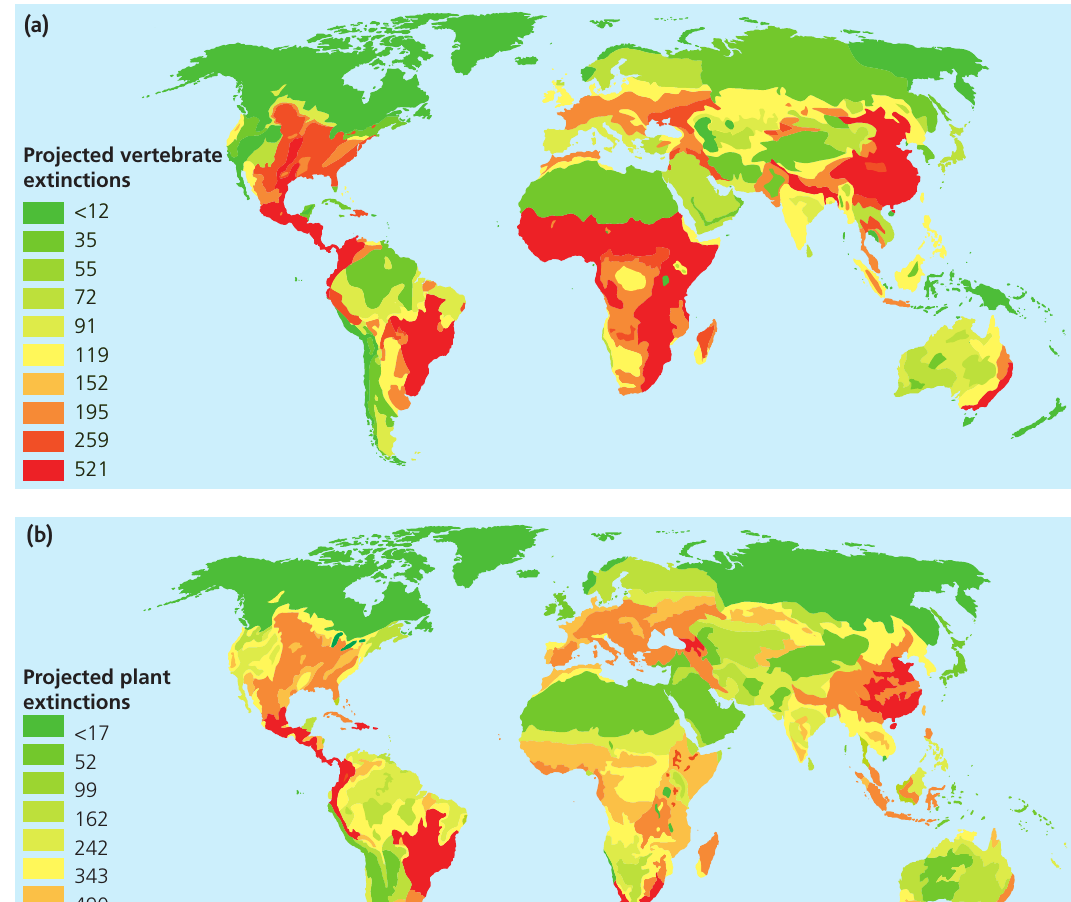
Predictions about species extinction vary widely depending on the assumptions made in different studies. However, one conclusion consistently emerges from the research: extinction risks will increase as global temperatures rise. Some studies suggest that up to one in six species could face extinction as temperatures continue to climb.
The geographical patterns of extinction risk show clear disparities:
- Tropical and subtropical regions show the highest projected extinction rates, with some areas expected to lose between 195 and 521 vertebrate species. Plant extinctions in these regions could reach between 716 and 1,429 species
- Africa and Central America appear as particular hotspots for vertebrate extinctions, with large areas showing red (highest risk) on projected maps
- South and Southeast Asia face substantial plant extinction risks
- Polar and northern regions show lower absolute numbers of projected extinctions (fewer than 12-35 vertebrates in many areas), partly because these regions have fewer species to begin with
Note
These projected extinction rates are dramatically higher than natural background rates:
- Projected rates are 10 times greater than recently observed global average extinction rates
- They are 10,000 times greater than extinction rates recorded in the fossil record from the distant past
These comparisons reveal that we are entering a period of extinction that is unprecedented in recent Earth history.
Climate-sensitive species at risk
Certain types of species are particularly vulnerable to climate change due to their specific ecological requirements. Two groups face especially severe threats:
Example
Climate-Sensitive Species: Mountain-Adapted Animals
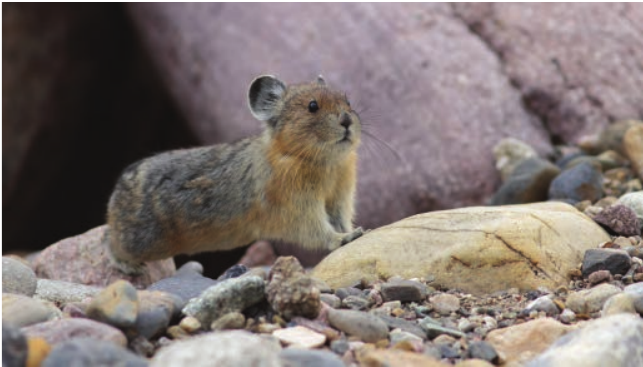
The pika serves as a prime example of species at risk from climate change:
Challenge: These small mammals are suited to high-altitude habitats where temperatures remain cool.
Impact of warming: As global temperatures rise, the suitable climate zone for these species moves higher up mountains.
End result: Species adapted to mountain peaks will run out of upward space to move, becoming trapped in ever-shrinking habitat islands.
The pika serves as an indicator species for this type of climate pressure affecting mountain ecosystems worldwide.
Example
Climate-Sensitive Species: Sea Ice-Dependent Animals
The polar bear illustrates the threat to species dependent on disappearing habitats:
Habitat requirement: These animals rely on sea ice environments for essential activities such as hunting, breeding and moving between areas.
Impact of warming: As Arctic sea ice extent decreases and the ice-free season lengthens, these species lose critical habitat.
Critical difference: Unlike terrestrial species that might shift their ranges poleward or to higher elevations, sea ice-dependent species have nowhere to go when their habitat literally melts away.
Both examples illustrate a crucial principle: species with specialised habitat requirements and limited ability to disperse to new areas face the greatest extinction risk from climate change.
Remember!
Summary
Key Points to Remember:
-
Climate change affects ecosystems through both direct environmental impacts (physical changes, seasonal shifts, new species arrivals) and indirect impacts (human management responses to climate change)
-
UK ecosystems face pressures from species needing to shift northwards, competition with non-native species, habitat loss from sea-level rise, and mismatches between breeding times and food availability
-
Global extinction projections show rates 10 times higher than recent averages and 10,000 times higher than fossil records, with tropical regions facing the greatest species losses
-
Climate-sensitive species like mountain-adapted animals (pika) and sea ice-dependent species (polar bears) are particularly vulnerable because they cannot relocate when their specialised habitats disappear
-
The IPCC warns that rising temperatures could threaten up to one in six species with extinction, making climate change the greatest cause of species extinctions globally