Hazards (AQA A-Level Geography): Revision Notes
📚Revision Notes
Case Study: Multi-Hazard Environment, The Philippines
Introduction and context
The Philippines is an archipelago nation in Southeast Asia consisting of over 7,600 islands. The country is home to more than 100 million people, making it one of the most populous nations in the region.
Economically, the Philippines has grown significantly and now ranks as the fourth richest economy in Southeast Asia. It is considered a newly industrialised country, showing substantial economic development in recent decades. However, this wealth is not evenly distributed across the population. A significant imbalance exists, with 21.6% of the population living below the poverty line, mainly concentrated in rural areas. This widespread poverty creates a substantial vulnerability to natural disasters.
Note
The stark economic contrast in the Philippines is a critical factor in disaster vulnerability. While the nation has achieved significant industrial growth, over one-fifth of its population remains in poverty, limiting their ability to prepare for, respond to, and recover from natural disasters.
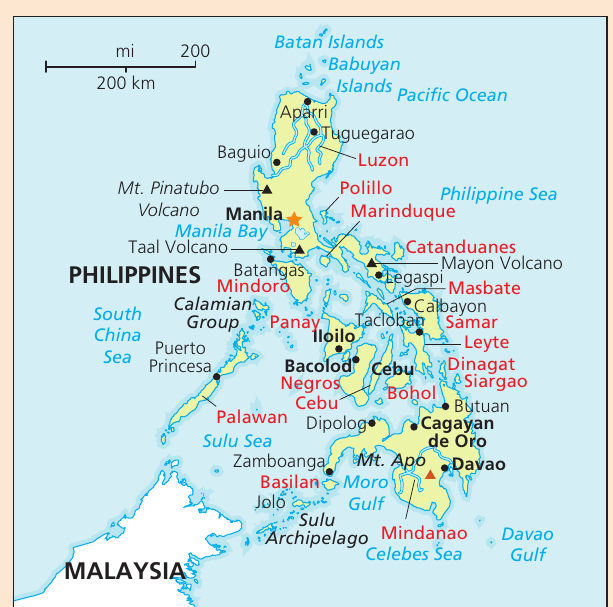
Why the Philippines is a multi-hazard environment
The Philippines faces an exceptional level of hazard risk due to its geographical position. The country sits on the western rim of the Pacific Ring of Fire, a major zone where tectonic plates meet and interact. This location brings both earthquakes and volcanic activity, with secondary impacts such as lahars.
Important
Pacific Ring of Fire - A horseshoe-shaped belt around the Pacific Ocean where approximately 75% of the world's volcanoes are located and 90% of earthquakes occur. Tectonic plates collide, separate, and slide past each other in this zone.
Additionally, the Philippines lies directly in the path where tropical storms (typhoons) cross from the Pacific Ocean towards Southeast Asia. This positioning makes the Philippines the most exposed country in the world to these particular hazards.
The combination of tectonic and meteorological hazards creates a complex risk environment. Storms bring the threat of flooding and landslides, which are made worse when they coincide with volcanic eruptions or earthquake damage. All government efforts to reduce poverty and protect vulnerable populations must contend with this relentless succession of natural disasters.
Major natural hazards affecting the Philippines
Earthquakes
Earthquakes are a fairly common occurrence in the Philippines. The country experiences regular seismic activity due to its position on active tectonic plate boundaries. Between 2000 and 2017 alone, there were 17 earthquakes with a magnitude of at least 6.0 Mw, causing numerous deaths and damaging large numbers of buildings.
Notable earthquake events include:
-
1976 Mindanao (Moro Gulf): This magnitude 7.9 Mw earthquake generated devastating tsunamis which inundated the western shore of Mindanao, killing up to 8,000 people. The combination of ground shaking and tsunami waves caused catastrophic damage to coastal communities.
-
1990 Luzon: A magnitude 7.8 Mw earthquake killed over 1,600 people and caused widespread ground rupturing and soil liquefaction. The violent ground motion destroyed buildings and infrastructure across a wide area.
-
2013 Bohol: This magnitude 7.2 Mw earthquake killed over 200 people, injured thousands, and caused damage to tens of thousands of buildings. The economic impact was severe, particularly affecting the livelihoods of rural communities.
-
2018 earthquakes: In April 2018, a magnitude 6.1 Mw earthquake hit Luzon, damaging buildings and killing five people. While less damaging, this was followed by a more powerful magnitude 7.1 Mw earthquake that struck off southern Mindanao in December. Mount Mayon also erupted in February of that year. The islands experienced nine typhoons and tropical storms during 2018, with Super Typhoon Mangkhut being particularly devastating in September.
Example
Worked Example: The 2013 Bohol Earthquake Impact
The 2013 Bohol earthquake demonstrates the cascading effects of seismic events in a vulnerable region:
Initial Impact:
- Magnitude: 7.2 Mw
- Direct deaths: Over 200 people
- Injuries: Thousands
Secondary Effects:
- Tens of thousands of buildings damaged or destroyed
- Economic disruption to rural communities
- Infrastructure collapse affecting recovery efforts
Long-term Consequences:
- Loss of livelihoods, particularly in agriculture
- Displacement of families
- Increased vulnerability to subsequent disasters
Volcanic activity
The Philippines contains numerous active volcanoes scattered across its islands. Experts' opinions vary on the exact number, but approximately 23 volcanoes are considered to be reasonably active. Among these, at least three have a history of violent and destructive eruptions.
Important
Lahars - Dangerous mudflows that form when volcanic ash and debris mix with heavy rainfall, often from tropical storms. These flows can travel at high speeds down river valleys, burying communities and infrastructure.
Key volcanoes:
Mayon: This is the most active volcano in the Philippines, having erupted nearly 50 times over the last 400 years. The most destructive event occurred in 1814, causing widespread devastation. The most recent eruption was in 2018, which was particularly noted for its lahars. When volcanic ash from Mayon mixed with heavy rainfall from tropical storms, it produced deadly rivers of mud that swept down mountainsides.
Pinatubo: Mount Pinatubo erupted violently in 1991, producing the second largest volcanic eruption on the planet in the twentieth century. Approximately 500,000 people lived within the danger zone (40 km radius of the volcano). Early warnings and evacuations probably saved at least 5,000 lives, though around 850 people still died in 1991.
Example
Worked Example: The 1991 Pinatubo Eruption - A Multi-Hazard Event
The Pinatubo eruption illustrates how volcanic activity can trigger multiple interconnected hazards:
Primary Hazard - Volcanic Eruption:
- Explosive force: Second-largest eruption of the 20th century
- Ejection of gases, ash, and steam into upper atmosphere
- Material remained suspended for at least two years
Global Impact:
- Average global temperatures decreased by 0.5°C
- Atmospheric effects lasted two years
Secondary Hazard - Lahars:
- Typhoon Yunya brought heavy rainfall immediately after eruption
- Volcanic ash + rainfall = deadly lahars
- Final death toll: approximately 850 people
Success Story:
- Early warnings and evacuations saved at least 5,000 lives
- Demonstrated the value of monitoring and preparedness
The explosion was so violent that it hurled gases, ash, and steam into the upper atmosphere. These materials remained suspended in the atmosphere for at least two years, causing average global temperatures to decrease by 0.5°C. Following the eruption, Typhoon Yunya brought very heavy rainfall which combined with volcanic ash to produce deadly lahars. The final death toll reached approximately 850 people.
Taal: Taal is one of the most active volcanoes in the country, with 33 eruptions recorded in the historical record. All of these eruptions have originated from a volcano that sits in the middle of a crater lake. This lake formed when a huge explosion in prehistoric times created the caldera of Taal. The volcano's proximity to heavily populated areas makes it particularly dangerous. Historical records suggest that Taal has been responsible for 5,000–6,000 deaths, as it lies close to populated regions.
Note
The Three Most Dangerous Volcanoes:
- Mayon: Most active (50 eruptions in 400 years), known for lahars
- Pinatubo: Most explosive (1991 eruption had global climate impact)
- Taal: Most dangerous location (sits in crater lake near major population centers)
Tropical storms
Numerous tropical storms cross the Philippines every year, bringing with them the risk of severe flooding. When these storms occur alongside landslides and lahars (especially if combined with a volcanic eruption), the impacts can be catastrophic. Such disturbances account for the highest numbers of deaths from natural hazards in the Philippines, with most fatalities resulting from storm surges.
Typhoon Mangkhut (2018) was an extremely powerful and catastrophic tropical cyclone. The storm caused extensive damage in September 2018. It was the strongest typhoon to make landfall anywhere in the Philippines since Haiyan in 2013 and was the third-strongest tropical cyclone worldwide in 2018. Mangkhut caused 127 deaths in the Philippines and cost US$627 million in damage.
According to the Red Cross, approximately three million people were affected in the worst-hit parts of the Philippines, and another 11 million people further south faced flooding. This flooding made it very difficult for many farmers to return to their rice farms.
Note
Typhoons represent the single greatest cause of disaster-related deaths in the Philippines. The combination of storm surges, flooding, and landslides from these powerful storms creates multiple simultaneous threats to coastal and inland communities.
Interconnected hazards and cascading impacts
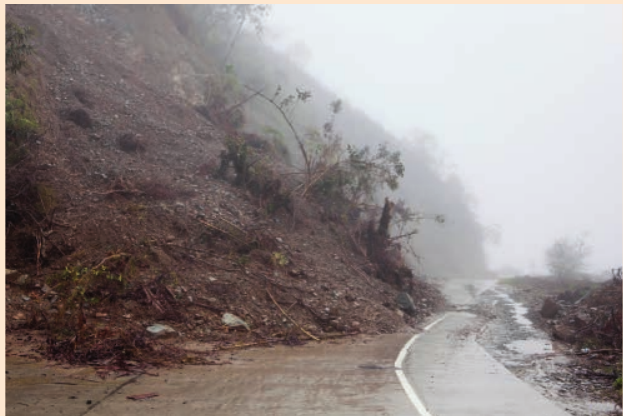
In a multi-hazard environment such as the Philippines, people face greater risk than in single-hazard zones. They are vulnerable not only to the main hazards of earthquakes, volcanic activity, and typhoons, but these hazards frequently trigger others. In some cases, one hazard directly causes another, creating cascading disasters.
Important
Hazard Interconnections Create Multiplied Risk
These interconnections include:
- Earthquakes can trigger tsunamis, fires, and landslides
- Volcanic eruptions combined with heavy rainfall create lahars
- Typhoons bring flooding and can initiate landslides on unstable slopes
- Heavy rainfall associated with storms can cause serious flooding and landslides
- Crime (looting) becomes a secondary hazard during major disasters
The hazards themselves - tsunamis, lahars, mudslides, flooding, fires - are sometimes viewed simply as secondary effects of the main hazards. However, they can often be recognised in their own right as distinct hazards.
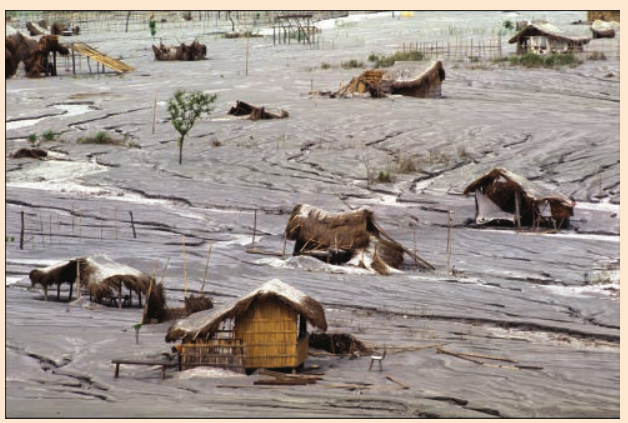
The combination of volcanic activity (ash deposits) with the same heavy rainfall from tropical storms can trigger lahars, which can devastate whole communities. This interconnection is particularly deadly because:
- Volcanic ash creates loose, unstable material on slopes
- Heavy tropical rainfall mobilises this material into fast-moving mudflows
- Communities downslope have little warning time
- The flows can travel many kilometers from the volcano
Vulnerability factors
Several factors increase the vulnerability of the Philippine population to natural hazards. Understanding these factors is essential for developing effective disaster risk reduction strategies.
Poverty and wealth distribution
With 21.6% of the population living below the poverty line (mainly in rural areas), a large proportion of Filipinos lack the resources to protect themselves adequately from disasters. There is a clear and direct link between poverty and vulnerability to natural disasters. Poor communities cannot afford resilient housing, insurance, or emergency supplies. They often live in the most hazardous locations because land is cheaper there.
Rapid urbanisation and poor housing quality
Over recent decades, Filipinos have flocked to risky low-lying areas seeking cheap, crowded housing. Rapid urbanisation has led to the construction of flimsily built housing that cannot withstand the forces of earthquakes, typhoons, or flooding. The environmental degradation from such poorly planned development has only added to the problem. Many urban areas have expanded without proper building codes or enforcement, creating densely packed neighbourhoods of vulnerable structures.
Environmental degradation
Steep slopes that have been cleared of forest vegetation lead to rapid run-off during heavy rainfall. Without tree roots to stabilise the soil and slow water movement, the risk of flooding increases dramatically. Unprotected slopes are also highly susceptible to landslides. Deforestation has exacerbated this problem, with the potential for landslides growing as more hillsides are stripped of protective vegetation.
Impact of recent disasters and climate change
In the past two decades, the Philippines has experienced over 300 natural disasters. Filipino officials insist that the typhoon hazard is becoming more severe, partly as a result of climatic change. Warmer ocean temperatures can fuel more intense tropical storms, while changing rainfall patterns affect flooding and landslide risks.
Note
The Vulnerability Cycle
Poverty, poor housing, and environmental degradation create a self-reinforcing cycle:
- Poverty forces people to live in hazardous areas with cheap, poorly-built housing
- Environmental degradation (deforestation) increases flood and landslide risks
- When disasters strike, poor communities suffer the greatest losses
- Recovery is difficult without resources, deepening poverty
- The cycle repeats with each new disaster
Management and response
Current approaches and challenges
Traditionally, the Philippines' institutional arrangements and disaster management systems have relied on a response or reactive approach. The focus has been on dealing with disasters after they occur, rather than preventing them or reducing their impact beforehand. In contrast, a more effective approach would emphasise proactive measures - disaster prevention and mitigation through appropriate land-use planning, construction standards, and other preventative measures focused on the creation of disaster-prone conditions.
There has been widespread emphasis on post-disaster aid and short-term preparedness (forecasting and evacuation) rather than on mitigation strategies and post-disaster support for economic recovery. The current system tends to be more of a centralised top-down administrative system rather than one which is community-based and encourages local initiatives.
What is needed is initiatives that emphasise a bottom-up approach. This would help the most vulnerable communities cope with hazards when they occur.
Cost to the economy
The cost to the Philippine economy has been estimated at 0.5% of national GDP in direct costs. Indirect and secondary impacts further increase this figure. These economic losses make it harder for the country to invest in disaster prevention and poverty reduction, creating a vicious cycle.
Beyond the significant economic cost, there are substantial social and environmental impacts. Communities are disrupted, families are separated, and ecosystems are damaged. The psychological toll on populations living under constant threat is considerable.
Philippines National Red Cross programmes
Some programmes have been established to address these challenges. The Philippines National Red Cross (PNRC), working in conjunction with foreign Red Cross organisations, has started programmes at community level. The aim of these initiatives is to reduce the impacts of natural disasters by encouraging people to collaborate in protecting their lives and the resources they depend on.
Note
Philippines National Red Cross Community-Level Programmes
These plans address several key areas:
-
Co-operation with government: Working with governmental bodies to gain financial support for mitigation measures and to ensure programmes have long-term sustainability
-
Training local volunteers: Building capacity within communities for disaster management response
-
Risk identification: Identifying risk through land-use mapping and determining which mitigation measures might be feasible for specific locations
-
Physical mitigation measures: Initiating measures such as sea walls, dykes, and health-related improvements (clean water supplies) or planning tools (land-use plans, evacuation plans)
-
Information dissemination: Spreading information to the whole community so that everyone understands the risks and knows how to respond
Government legislation and implementation challenges
The central government is attempting to improve the situation. The United Nations has claimed that the Philippines already has some of the best risk-reduction laws in the world. Unfortunately, most of these laws remain on paper rather than being implemented in practice.
With a country of over 7,600 islands, too much responsibility for reducing disaster risk falls to local government, where resources are not always wisely spent. Recent government legislation calls for 70% of disaster spending to be used on long-term planning, with only 30% allocated for emergency response.
Important
The Core Challenge of Multi-Hazard Management
As one government official summarised: "resources are stretched. Even before we could recover from one disaster, here is the next one."
This statement captures the fundamental difficulty facing the Philippines:
- Limited resources must be divided among multiple competing needs
- Recovery periods are too short before the next disaster strikes
- Building long-term resilience is difficult when constantly responding to emergencies
- The rapid succession of disasters prevents effective implementation of prevention measures
However, the main problem of living in a multi-hazard environment remains acute. The continuous cycle of disasters makes it extremely difficult to shift from reactive emergency response to proactive disaster prevention.
Community attitudes and resilience
Many commentators have pointed to the great resilience of the Filipino people in the face of these problems. Some observers describe an attitude among the population as fatalistic - they accept that these events are part of living in such an area. Some see losses as inevitable and accept them over time, viewing disasters as part of "God's will" or simply the reality of their environment.
This resilience has both positive and negative aspects. While it helps communities recover psychologically, it may also reduce pressure for systemic changes in disaster prevention and mitigation.
Summary
Key Points to Remember:
-
The Philippines is the most exposed country in the world to multiple natural hazards due to its location on the Pacific Ring of Fire and in the path of Pacific typhoons.
-
Major hazards include earthquakes (17 magnitude 6.0+ events between 2000-2017), active volcanoes (approximately 23), and powerful typhoons like Mangkhut (2018), which was the strongest ever recorded in the Philippines.
-
Hazards are interconnected: earthquakes trigger tsunamis and landslides, volcanic eruptions combined with typhoon rainfall create devastating lahars, and typhoons cause both flooding and landslides.
-
Vulnerability is increased by poverty (21.6% below poverty line), rapid urbanisation with poor quality housing, and environmental degradation from deforestation.
-
Management challenges include a reactive rather than proactive approach, limited resources ("even before we could recover from one disaster, here is the next one"), and difficulty implementing risk-reduction laws despite having some of the best legislation globally.
-
Over 300 natural disasters have occurred in the past two decades, with climate change making typhoons increasingly severe.
-
The Philippines National Red Cross operates community-level programmes focusing on training, risk mapping, physical mitigation measures, and information dissemination.