Case Study: Local Scale, Gili Trawangan, Indonesia (AQA A-Level Geography): Revision Notes
📚Revision Notes
Case Study: Local Scale, Gili Trawangan, Indonesia
Introduction and location
On 5 August 2018, a powerful magnitude 7.0 earthquake struck the Lombok area of Indonesia. The small island of Gili Trawangan, located in the strait between Bali and Lombok, suffered devastating damage. Most of the island's buildings were destroyed, highlighting the vulnerability of this popular tourist destination to tectonic hazards.
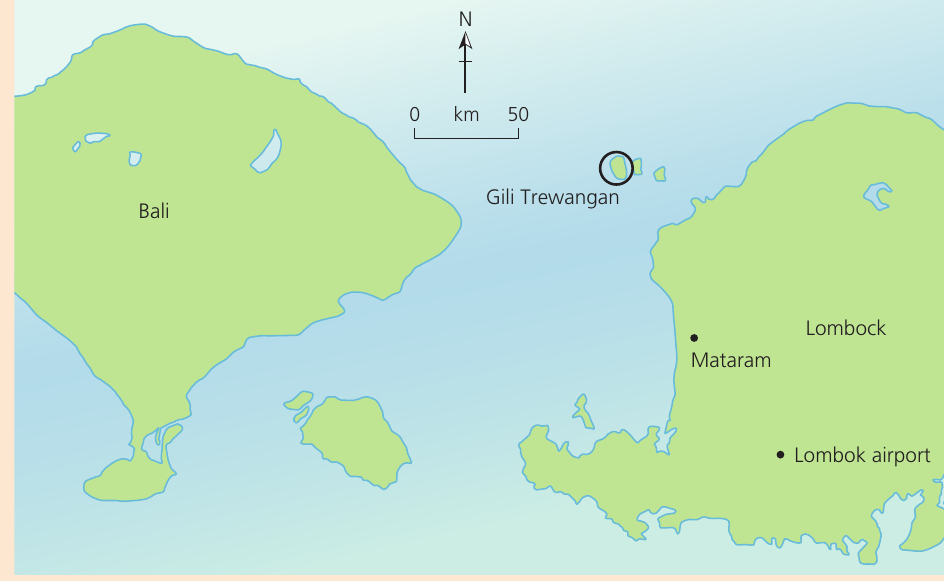
Gili Trawangan is the largest of three small islands situated just off the north-west coast of Lombok. The island covers a modest area, measuring approximately 3 kilometres in length and 2 kilometres in width. Unlike its neighbouring islands, Trawangan rises to an elevation of 30 metres above sea level, making it the only island in the chain with significant height.
Characteristics of Gili Trawangan
Physical and human geography
The island supports a permanent population of around 1,500 residents. Despite its small size, Gili Trawangan has developed into a significant tourist destination, attracting visitors seeking diving experiences, vibrant nightlife, and romantic getaways.
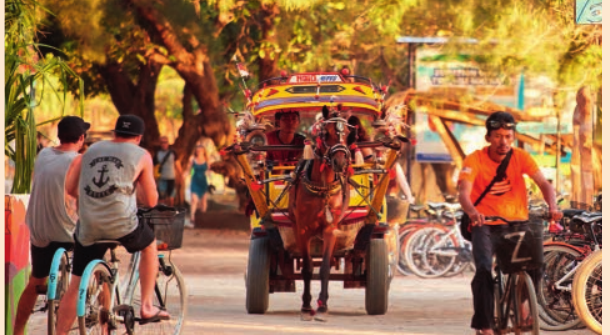
A distinctive feature of the island is the complete absence of motorised vehicles. Instead, residents and tourists rely on bicycles and a traditional form of transport called the cidomo.
Important
A cidomo is a small horse-drawn carriage that serves as the main form of wheeled transport on Gili Trawangan. This traditional vehicle is commonly used by locals and has become an iconic feature of island life.
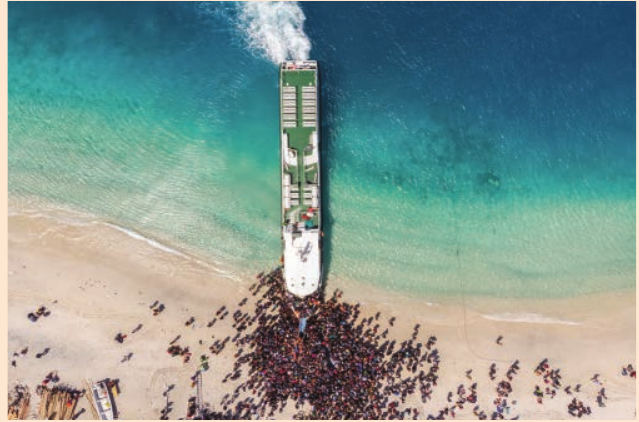
Connectivity to the mainland depends entirely on boat services. Motor boats provide links between the Gili islands and to Lombok, Bali, and other Indonesian islands. This isolation creates particular challenges during emergencies.
Development history
The island's development has been characterised by haphazard, unplanned growth. Originally, Gili Trawangan served merely as a stopping point for fishermen. However, by 1971, coconut plantations had been established, and 350 prisoners from the overcrowded Mataram prison were transferred to the island to assist with harvesting. When the coconut industry failed, many of these workers chose to remain on the island.
They constructed makeshift homes and businesses on the abandoned plantation land. During the 1980s, backpackers began discovering the island, leading to rapid development of budget accommodation such as cheap hotels and bunkhouses. This pattern of building, demolishing, and rebuilding has continued since the 1980s, creating chaotic cycles of development.
Note
The westward migration of settlers moving to the island created a pattern of haphazard development that would later prove catastrophic during the earthquake. This unplanned growth meant buildings were constructed without proper seismic considerations or adherence to safety standards.
Risk and vulnerability
Tectonic setting
Gili Trawangan, along with the larger islands of Lombok and Bali, sits within an island arc structure. This geological setting forms where tectonic plates converge. The Indo-Australian Plate is moving northward and subducting beneath the south-east moving Eurasian Plate.
Important
These two massive plates generate enormous friction as they collide. The subducting plate can become trapped or "stuck" as it pushes beneath the overriding plate, causing stress to accumulate in the rocks. When the plates suddenly become "unstuck", massive amounts of stored energy are released instantaneously. This release manifests as earthquakes, often of significant magnitude.
Structural vulnerabilities
The haphazard development of Gili Trawangan created multiple vulnerabilities that increased the island's risk:
- Structurally unsound buildings: Many structures on the island were poorly constructed and could not withstand seismic forces
- Isolated location: The only connections to the mainland are by boat, making emergency response and evacuation difficult
- Lack of emergency services: There is no permanent police force stationed on the island
- No medical facilities: The island has no hospital, and although some dive centres employ first-aid trained staff, this is inadequate for a major disaster
- Limited infrastructure: Basic services such as water and electricity supply were vulnerable to disruption
These factors combined to create a situation where the island was highly exposed to tectonic hazards with minimal capacity to respond effectively.
Impacts of the 2018 earthquake
Human casualties
At least eight people lost their lives as a direct result of the earthquake. The actual death toll may have been higher, as some tourists may have left the island before being officially counted.
Building and infrastructure damage
The earthquake caused catastrophic damage to the island's built environment:
- Approximately 30% of all buildings were completely destroyed
- A further 40% sustained significant damage
- Water supplies were cut off across the island
- Electricity networks failed completely
Note
The horses that pull the cidomo carts were running loose because their usual restraints and shelters had been damaged or destroyed, adding to the chaos in the immediate aftermath.
Economic impacts: tourism collapse
The earthquake devastated Gili Trawangan's tourism industry, which forms the backbone of the local economy. According to the general manager of Aston Sunset Beach resort, tourist arrivals plummeted dramatically.
Before the earthquake, approximately 3,000 visitors were arriving on the island each day. Three months after the disaster, daily arrivals had fallen to just 900 people. Moreover, the composition of visitors had changed significantly, with most absent travellers being Indonesian nationals rather than international tourists.
Social impacts
The breakdown of order following the earthquake created additional problems:
- Looting: Reports emerged of widespread looting, and it took several days for military personnel to arrive and restore security to the island
- Evacuation chaos: Thousands of panicked tourists fled the island on the day following the earthquake
- Displacement: Many residents camped outdoors overnight because they were too afraid to sleep inside damaged buildings
Responses to the disaster
Immediate emergency measures
In the absence of organised government response, the local community took initiative. Doctors, dive instructors, and tourists collaborated to establish a basic emergency camp. They gathered oxygen and medical supplies and organised injured people into groups based on the severity of their injuries, from minor wounds to critical cases.
Evacuation
Most tourists headed directly to the international airport on Lombok island to secure flights home. Some were so desperate to leave that they slept on the airport floor while waiting for available flights.
Criticism of government preparedness
Important
The Indonesian National Agency for Disaster Management faced significant criticism for its slow response. Complaints highlighted a critical failure: despite the known risk of earthquakes in the region, there had been no disaster mitigation training provided by the central government to local communities.
This lack of preparedness meant that when the earthquake struck, residents and businesses had no established protocols or training to guide their response.
Recovery and reconstruction
Government inspection and assessment
In September 2019, more than a year after the earthquake, the government conducted an inspection of Gili Trawangan. Officials categorised the island's facilities according to their repair needs:
- Those requiring no repair
- Those requiring minor repairs (labelled as "lightly damaged")
- Those with average repair needs
- Those that were badly damaged and needed complete rebuilding
Rebuilding priorities and timeline
Following the inspection, the government announced several priorities for the island's recovery:
Tourism infrastructure: By February 2019, approximately six months after the earthquake, around 50% of the island's 500 hotels and restaurants had returned to normal operations and were receiving guests again.
Traditional transport: The government recognised the cultural and practical importance of the cidomo. Officials stated that the traditional horse-drawn carriage transport system needed to be retained and better organised to preserve this unique aspect of island life.
Road infrastructure: The Ministry of Public Works committed to implementing road improvements, with construction work scheduled to begin in November 2019. This would involve paving the island's roads for the first time.
Ferry services: The jetty at Gili Trawangan was designated as a priority for rebuilding. The government aimed to ensure it met international standards so it could better accommodate the thousands of tourists who visit the Gili Islands. Completion was scheduled for November 2019.
Financial and business support
The Indonesian Financial Services Authority (OJK) took action to support the economic recovery. The organisation agreed to reduce electricity and water bills for affected businesses, and helped them secure bank loans to fund reconstruction efforts.
Sustainability concerns
Note
The government inspection revealed that while some hotels had resumed operations relatively quickly, significant problems remained. The report identified issues with poor rubbish management and inadequate space for proper waste disposal. Officials recommended introducing a new rubbish management system to maintain cleanliness across the Gili Islands.
This finding raised broader questions about the sustainability of reconstruction efforts. The inspection concluded that whilst some progress had been made, environmental management systems needed improvement to support long-term sustainable development.
Conclusion and long-term implications
The earthquake exposed how Gili Trawangan's chaotic and haphazard development patterns had left it highly vulnerable to tectonic hazards. The disaster brought unprecedented attention to the island, leading to greater scrutiny of building standards, emergency preparedness, and sustainable development practices.
The recovery process has made the island more resilient to future disasters through improved infrastructure and building standards. However, this modernisation may fundamentally change what originally attracted visitors to Gili Trawangan in the 1980s. The introduction of paved roads, improved ferry facilities, and stricter building regulations represents a significant departure from the informal, laid-back character that first drew backpackers and tourists to the island.
The case raises important questions about balancing disaster resilience with the preservation of local character, and whether rapid development can truly be sustainable in such a hazard-prone location.
Remember!
Summary
Key Points to Remember:
-
Gili Trawangan is a small Indonesian island (3km long, 2km wide, 30m elevation) located between Bali and Lombok with a permanent population of 1,500 people and no motorised vehicles.
-
The 5 August 2018 earthquake (Mw 7.0) destroyed or damaged 70% of buildings, killed at least 8 people, cut off water and electricity, and caused tourist arrivals to collapse from 3,000 to 900 per day.
-
Haphazard development increased vulnerability due to structurally unsound buildings, lack of emergency services (no police or hospital), and isolation (only boat access to mainland).
-
The government response was criticised for being slow and providing no prior disaster mitigation training despite known earthquake risks in the region.
-
Recovery efforts focused on rebuilding tourism infrastructure (50% of hotels operational by February 2019), preserving traditional transport (cidomo), and improving roads and ferry services, though sustainability concerns remain about rubbish management.