Case Study: Typhoon Haiyan, Philippines (2013) (AQA A-Level Geography): Revision Notes
📚Revision Notes
Case Study: Typhoon Haiyan, Philippines (2013)
Introduction and formation
Typhoon Haiyan, known locally in the Philippines as Yolanda, ranks as one of the most powerful and deadliest tropical cyclones in modern Philippine history. This catastrophic weather event developed rapidly in early November 2013 and brought unprecedented destruction to the central Philippines.
The typhoon originated from a low-pressure system that formed in the Federated States of Micronesia in the western Pacific Ocean on 2 November 2013. Over the following days, meteorologists tracked the system as it moved westward and began to intensify. The storm underwent a period of rapid strengthening that transformed it into a tropical storm by 4 November.
Note
Rapid intensification is a critical factor in tropical cyclone danger. Haiyan's swift development from a low-pressure system to a Category 5 super-typhoon in just three days gave communities limited time to prepare for the catastrophic conditions that would follow.
By 5 November, Haiyan had intensified dramatically and was classified as a Category 5 super-typhoon. At this point, sustained wind speeds already exceeded 250 km/hr, with gusts reaching over 300 km/hr. This made it one of the strongest tropical cyclones ever recorded anywhere in the world.
Important
Super-typhoon: A tropical cyclone in the western Pacific that reaches sustained wind speeds of at least 240 km/hr (Category 5 equivalent). These represent the most intense and dangerous tropical storms.
The path of Typhoon Haiyan
On 7 November, Typhoon Haiyan made landfall in the Philippines, bringing catastrophic conditions to the islands. The typhoon struck the area around Tacloban with its northern eyewall, which contained the most powerful winds. By this time, central pressure had dropped to an extremely low 895 millibars, and the highest wind speeds reached an astonishing 315 km/hr (sustained for one minute). This meant that Haiyan possessed the most powerful sustained storm winds ever recorded to strike land.
After crossing the Philippines, Haiyan continued its westward track towards Southeast Asia. The storm moved across the South China Sea and eventually reached the northern part of Vietnam on 10 November as a severe tropical storm. The system finally dissipated as a tropical depression over southern China on 11 November.
Risk and vulnerability
Tacloban, the city that experienced the worst of Typhoon Haiyan's fury, sits in the central Philippines where tropical storms frequently cross from the Pacific Ocean towards Southeast Asia. This geographic location makes it one of the most hazard-prone regions in the world for this type of natural disaster.
In recent years, large numbers of Filipinos had migrated from rural countryside areas to urban centres such as Tacloban, seeking employment opportunities and better wages. This internal migration created high population densities and often resulted in overcrowded residential areas. Such concentrated populations become particularly vulnerable when major hazard events like Haiyan strike.
Housing and infrastructure vulnerabilities
Many residents, particularly those who had recently moved to the city, constructed poorly built houses on flat land nearest to the sea and coastline. These locations placed people directly in the path of storm surges and coastal flooding. Others built homes on steep hillsides, exposing them to the heavy rainfall of tropical cyclones, which can remove vegetation and trigger devastating landslides on slopes.
The quality of construction represented another critical vulnerability. Buildings constructed without proper engineering or resilient materials cannot withstand the extreme forces generated by super-typhoons. Makeshift housing offers virtually no protection against winds exceeding 300 km/hr or storm surges measuring several metres in height.
Important
Multiple Vulnerability Factors:
Tacloban's vulnerability resulted from a combination of:
- Geographic location in the direct path of Pacific storms
- Rapid urbanisation creating high population density
- Poor housing construction on both coastal flats and steep hillsides
- Economic poverty limiting protective measures and recovery capacity
- Insufficient government resources for emergency response
Economic vulnerabilities
Poor communities prove especially vulnerable to the aftermath of such catastrophic events. Many residents lack the financial resources to protect themselves adequately before a storm or to recover independently afterwards. They cannot afford to evacuate, rebuild homes, or replace lost possessions without assistance.
The regional and national government agencies often lack sufficient resources to respond effectively to emergencies of this magnitude. This economic constraint makes affected populations heavily dependent on foreign government aid and non-governmental organisations (NGOs) such as charitable relief agencies. When disaster strikes, communities like Tacloban rely almost entirely on external help for survival and recovery.
Primary hazards
Typhoon Haiyan produced three main hazard types that combined to create the catastrophic conditions experienced in the Philippines:
Extreme winds
The super-typhoon generated sustained wind speeds that reached truly exceptional levels. The severe winds caused the majority of the structural damage and loss of life. Buildings, even those constructed from concrete, could not withstand the lateral forces applied by winds of this intensity.
Heavy rainfall
In certain areas of the Philippines, rainfall reached nearly 300 millimetres in less than 12 hours. This represents an extraordinary volume of precipitation falling in a very short time period. Such intense rainfall saturates the ground completely, leading to surface runoff, flash flooding, and increased landslide risk on slopes where vegetation has been removed or weakened.
Storm surges
Enormous storm surges, measuring up to six metres in height, proved responsible for most of the damage and casualties. A storm surge occurs when powerful winds push ocean water towards the coast, raising sea levels dramatically above normal tide levels. When these walls of water strike low-lying coastal areas, they can sweep away entire communities within minutes.
Important
Storm surges represent the deadliest aspect of tropical cyclones for coastal populations. The six-metre surges generated by Haiyan were taller than a two-storey building, giving residents in low-lying areas virtually no chance of survival without evacuation.
Impacts and effects
The devastation caused by Typhoon Haiyan proved immense, affecting millions of people and causing destruction on a scale rarely seen even in a region accustomed to tropical storms.
Human impacts
The typhoon claimed over 6,000 lives, making it one of the deadliest natural disasters in Philippine history. More than 1,000 people were declared missing, with bodies continuing to be discovered well into 2019. Some estimates have placed the death toll as high as 10,000, though exact figures remain difficult to confirm due to the scale of destruction and displacement.
Nearly one million people found themselves homeless as a result of the typhoon, their dwellings completely destroyed or rendered uninhabitable. More than six million people experienced displacement, with at least 20,000 fleeing to the capital city of Manila seeking safety, shelter, and assistance.
Note
The "6-6-6" pattern of Haiyan's impact:
- Approximately 6,000 confirmed deaths
- Over 6 million people displaced
- Storm surges reaching 6 metres in height
This pattern helps illustrate the enormous scale of human suffering caused by the typhoon.
Physical and infrastructure damage
The storm caused widespread destruction to buildings and infrastructure throughout the affected region. An American army officer who flew over Tacloban to assess relief needs observed that he did not believe there existed a single structure that had not been destroyed or severely damaged in some way. Journalists covering the disaster described the devastation as "off the scale" and "apocalyptic" in nature.
Low-lying areas on the eastern side of Tacloban proved particularly vulnerable, with some entire neighbourhoods completely washed away by the storm surge. The force of the water left nothing but bare foundations and debris fields where homes and businesses had previously stood.
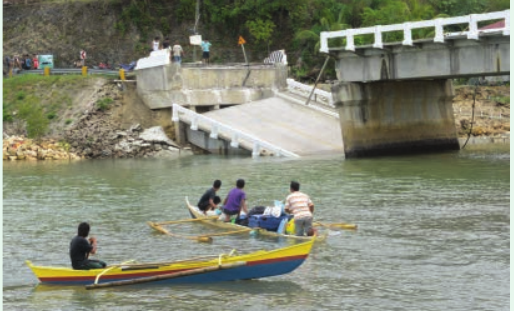
Large areas experienced complete loss of communications and electrical power systems. The destruction of this critical infrastructure severely hampered relief efforts in the crucial first days and weeks following the disaster.
Widespread flooding combined with numerous landslides blocked major roads throughout the region. Fallen trees also obstructed routes, making relief operations almost impossible except by air. Emergency supplies and personnel could not reach affected communities by normal ground transportation.
Even Tacloban city hall, which served as the centre of local government and coordination for international relief operations, suffered significant damage. The terminal building was destroyed by a 5.2-metre storm surge, though repair work proceeded quickly given its critical importance to the overall relief effort.
Economic impacts
The total economic damage caused by Typhoon Haiyan has been estimated at $2.9 billion. This figure includes destroyed homes and businesses, damaged infrastructure, lost agricultural production, and the costs of emergency response and recovery efforts. For a developing nation like the Philippines, this represents an enormous economic burden.
Social impacts
In the chaos and desperation following the typhoon, widespread looting occurred throughout affected areas. Survivors, lacking access to food, clean water, and basic necessities, broke into shops and warehouses to obtain supplies. The breakdown of normal social order reflected the extreme stress placed on communities by the disaster.
Local government structures collapsed in many areas as the disaster overwhelmed their capacity to respond. Officials themselves became victims, buildings were destroyed, and communication systems failed. This collapse left many local officials unable to coordinate relief efforts or maintain public safety during the critical early response period.
Responses to the disaster
Health response
Following the typhoon, authorities feared substantial outbreaks of diseases such as cholera, which could have driven the death toll even higher. Prompt action by the World Health Organisation (WHO) and other relief agencies helped ensure that disease outbreaks, particularly dysentery, were kept isolated and controlled to an acceptable minimum level. This public health response represented a crucial success that prevented a secondary disaster.
Note
The successful prevention of major disease outbreaks following Haiyan demonstrates the importance of rapid public health intervention after natural disasters. Clean water provision, sanitation, and medical care in the immediate aftermath can be as critical as the initial rescue operations.
International aid and relief operations
Immediately after the storm passed, the United Nations issued a statement acknowledging that "access remains a key challenge as some areas are still cut off from relief operations." Unknown numbers of survivors lacked basic necessities such as food, clean water, and medicines. They remained inaccessible to relief teams because roads, airports, and bridges had been destroyed or lay buried under wreckage.
The international community responded with significant aid contributions, providing both financial donations and practical assistance. The scale of the disaster required a massive, coordinated relief effort involving numerous countries and organisations.
The UK government deployed two Royal Navy ships to the Tacloban area, delivering over 200,000 tonnes of emergency aid supplies. These vessels provided crucial logistics support and served as floating bases for relief operations.
The United States mounted one of the largest relief operations, sending multiple naval ships and military aircraft to the disaster zone. More than 13,000 American service personnel participated in relief efforts, providing medical care, distributing supplies, and helping to restore damaged infrastructure.
Note
International cooperation in disaster relief:
The response to Typhoon Haiyan showcased how natural disasters often require international collaboration. When local and national governments are overwhelmed, support from the global community becomes essential for saving lives and beginning recovery efforts.
Many other countries contributed to the relief effort through financial donations or by sending practical help in the form of equipment, supplies, and personnel. This international cooperation proved essential given the overwhelming scale of the humanitarian crisis.
Remember!
Summary
Key Points to Remember:
- Typhoon Haiyan (November 2013) was a Category 5 super-typhoon with sustained winds of 315 km/hr, making it one of the most powerful tropical cyclones ever recorded
- The typhoon killed over 6,000 people, left nearly one million homeless, and displaced more than six million, with total damage estimated at $2.9 billion
- Tacloban was particularly vulnerable due to its geographic location, rapid urbanisation, poor housing quality, and economic poverty, with many residents living in high-risk coastal and hillside areas
- The three main hazards—extreme winds, heavy rainfall (300mm in 12 hours), and storm surges up to six metres—combined to create catastrophic destruction of buildings and infrastructure
- International response included massive aid operations (UK: 200,000 tonnes of supplies; USA: 13,000 personnel), though access challenges and infrastructure damage initially hampered relief efforts