Case Study: Water and Carbon in the Amazon Rainforest (AQA A-Level Geography): Revision Notes
📚Revision Notes
Case Study: Water and Carbon in the Amazon Rainforest
Introduction to the Amazon Basin
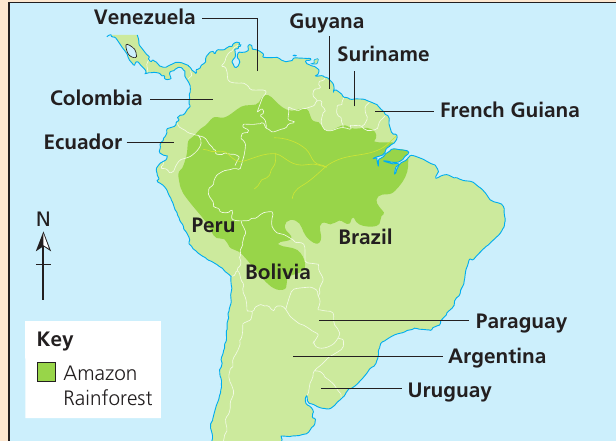
The Amazon Basin represents one of the world's most significant ecosystems. Covering an area of 670 million hectares, it contains approximately 300 billion trees and supports around 15,000 different species. This makes it one of the planet's most biodiverse regions.
Tropical forests have existed in South America for millions of years. At their maximum extent, they covered most of the continent. During ice ages, the forests retreated, but as the climate warmed, they expanded once again. Today's Amazon rainforest spans nine countries and provides essential resources for 34 million people who live within or depend upon the region.
Note
The Amazon Basin's vast scale and biodiversity make it one of Earth's most critical ecosystems. Its influence extends far beyond South America, affecting global climate patterns, carbon storage, and water cycles that impact the entire planet.
The carbon cycle in the Amazon
Understanding how carbon moves through the Amazon ecosystem is crucial for appreciating its global importance. The region plays a vital role in regulating atmospheric carbon dioxide levels.
Carbon storage and the forest as a carbon sink
Carbon sink: A natural system that absorbs and stores more carbon than it releases. The Amazon, along with other tropical rainforests, forms a carbon sink of 1-3 GtC (gigatonnes of carbon) per year.
Research from the Helmholtz Centre for Environmental Research estimates that in 2019, the Amazon stored approximately 76 billion tonnes of carbon. This represents an enormous carbon reserve that helps regulate global climate. However, the forest's capacity as a carbon sink has been changing over time.
In the 1990s, the Amazon absorbed a peak of around two billion tonnes of CO₂ each year. By 2019, this figure had fallen dramatically to approximately 600 million tonnes per year. This represents less than one-third of its previous absorption capacity, indicating a concerning trend in the forest's ability to sequester atmospheric carbon.
Important
Critical Decline in Carbon Absorption
The Amazon's capacity as a carbon sink has declined by approximately 70% from the 1990s to 2019. This dramatic reduction means the forest is absorbing far less CO₂ from the atmosphere, potentially accelerating global climate change rather than mitigating it.
The impact of rising CO₂ concentrations
Rising atmospheric CO₂ levels have created complex feedback effects in the Amazon. Initially, increased CO₂ appears to stimulate tree growth, leading to a growth spurt across the basin. However, this accelerated growth comes at a cost. Trees grow faster but also die younger, which has led to a surge in tree mortality rates throughout the Amazon.
This increased death rate among trees creates a negative feedback loop. As more trees die, the forest's ability to offset rising atmospheric CO₂ levels diminishes, potentially accelerating climate change rather than mitigating it.
The water cycle in the Amazon
The Amazon plays a fundamental role in the global water cycle, moving vast quantities of water from land to ocean and atmosphere.
Water discharge and river flow
The Amazon River system discharges an average of approximately 175,000 m³/s of water into the Atlantic Ocean. To put this in perspective, this represents about 15 per cent of all fresh water entering the world's oceans each day. The Rio Negro, a major tributary of the Amazon, ranks as the second largest river globally by water flow. At Manaus in Brazil, it measures 100 metres deep and 14 kilometres wide near its confluence with the main Amazon channel.
Rainfall patterns across the basin
Average rainfall across the Amazon Basin reaches approximately 2,300 mm annually. However, this varies significantly across the region. In some parts of the north-western Amazon Basin, annual rainfall can exceed 6,000 mm, making these among the wettest places on Earth.
The evapotranspiration cycle
Up to half of the rainfall in certain areas never reaches the ground. Instead, the forest canopy intercepts it, and the water either re-evaporates into the atmosphere or undergoes transpiration through plant leaves. Additional water evaporates from the ground and rivers, or is released through transpiration from vegetation.
Note
The Amazon's Self-Sustaining Water Cycle
The Amazon creates its own rainfall through evapotranspiration. Of the rainfall that evaporates back into the atmosphere, approximately 48 per cent falls again as rain. Only about 30 per cent of rainfall actually reaches the sea. The remainder circulates within this constant closed system, demonstrating the forest's remarkable ability to generate and maintain its own climate.
Of the rainfall that does undergo evapotranspiration back into the atmosphere, approximately 48 per cent falls again as rain. Only about 30 per cent of rainfall actually reaches the sea. The remainder circulates within this constant closed system, demonstrating the forest's role in generating its own rainfall.
Drivers of change in the Amazon
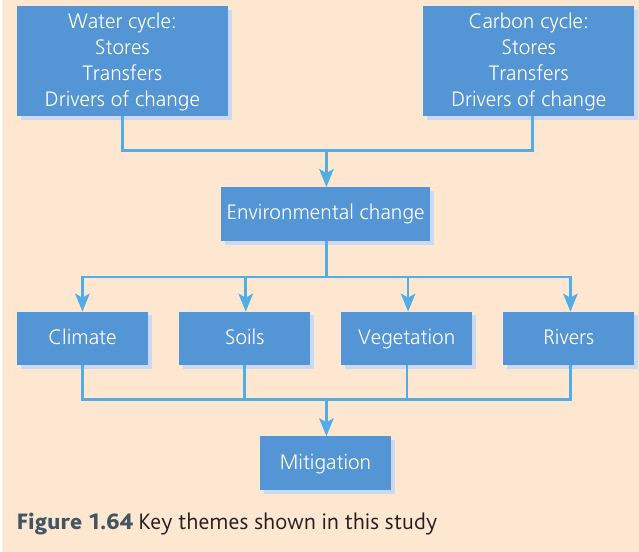
Multiple factors are transforming the Amazon rainforest, with human activities playing the dominant role in recent decades.
Deforestation rates and extent
Between 2000 and 2007, the Brazilian Amazon experienced deforestation at a rate of 19,368 km² per year. To put this in context, an area of forest larger than Greece was destroyed during this period. Brazil ranks as the world's fourth largest climate polluter, with approximately 75 per cent of its greenhouse gas emissions resulting from deforestation and land use change. Notably, 59 per cent of these emissions stem from forest loss and burning specifically in the Amazon region.
Methods of forest removal: slash and burn
Forest removal typically occurs through slash and burn techniques. This process involves cutting down trees and then burning the vegetation. These practices trigger a cascade of environmental changes:
Important
The Cascade of Deforestation Impacts
Slash and burn deforestation creates multiple interconnected environmental problems. It reduces humidity retention, increases surface reflectiveness (albedo), decreases rainfall, raises temperatures, reduces soil porosity, and releases vast amounts of stored carbon. Each effect compounds the others, creating a cycle of environmental degradation.
Effects on water and humidity:
- Reduces the retention of humidity in the soil's top layer, affecting depths down to one metre
- Facilitates the sudden evaporation of water that the forest canopy previously retained
- Reduces the formation of shallow cumulous clouds, as moisture from deforested areas doesn't typically produce rain
Effects on temperature and reflectiveness:
- Increases albedo (the reflectiveness of the surface), causing more solar radiation to be reflected rather than absorbed
- Forests absorb approximately 11 per cent more solar radiation than cleared land
- Average rainforest temperature sits at approximately 24-27°C, whilst pasture temperatures reach 33°C
- Daily temperature variation in Amazon forest soils at 20 cm depth doesn't exceed 2.8°C, whilst under pastures it reaches 8°C
Effects on soil:
- Reduces soil porosity, leading to faster rainfall drainage, increased erosion, and silting of rivers and lakes
- Forests emit salts and organic fibres along with water when they transpire, which act as condensation nuclei to assist cloud and rain formation
- Loss of these particles inhibits cloud formation and reduces overall rainfall
Effects on carbon storage:
- When destroyed, the vast carbon store held in forest biomass is released into the atmosphere
- Deeper forest roots can pump more soil moisture to the surface, producing 20-30 per cent more surface air humidity and consequently 5-20 per cent more precipitation than pastures
Differences between forest and pasture
There are significant environmental differences between tropical rainforest and the pasture land that typically replaces it. The moisture content in the upper one metre of pasture soil is about 15 per cent less than under nearby forest. Forest soils maintain more stable temperatures and higher moisture levels, creating conditions essential for the ecosystem's functioning.
Climate changes in the Amazon region
Climate change is already affecting the Amazon and projections indicate these changes will intensify.
Temperature increases
Studies investigating tropical rainforest regions have found a mean temperature increase of 0.26°C ± 0.05° every ten years since the mid-1970s. Scientists predict that by 2050, temperatures in the Amazon will increase by 2-3°C. There is also evidence of more frequent temperature extremes across the region.
Note
These temperature increases may seem small, but even modest warming can have devastating effects on rainforest ecosystems. The Amazon's species have evolved in relatively stable temperature conditions, making them particularly vulnerable to rapid change.
Rainfall variations
Amazonia experienced falling amounts of rainfall between the 1920s and 1970s. However, since the 1970s, there has been no significant change in overall rainfall levels, though patterns and distribution may be shifting.
Vegetation changes in the Amazon
Forest cover in the Amazon has undergone dramatic changes, with projections indicating further losses ahead.
Scale of forest loss
The World Wide Fund for Nature estimates that 20 per cent of the Amazon forest has already been lost. If current deforestation rates continue, this figure will rise to 27 per cent by 2030. Whilst most forest loss results from deliberate deforestation, a significant amount has been lost as a consequence of climate change.
Species vulnerability to climate change
Some species show limited tolerance to temperature change, drought, and increased salinity. Climate change can directly affect species sustainability by altering the conditions needed for growth and survival. Droughts and unusually high temperatures in the Amazon in recent years may be playing a role in killing millions of trees. Tree mortality rates began increasing well before an intense drought struck in 2005.
Impact of temperature rises on forest cover
A 2009 study examined the potential consequences of different temperature rise scenarios:
Important
Critical Temperature Thresholds for the Amazon
- A 2°C temperature rise above pre-industrial levels would result in 20-40 per cent of the Amazon dying off within 100 years
- A 3°C rise would see 75 per cent of the forest destroyed by drought over the following century
- A 4°C rise would kill 85 per cent of the forest
These projections highlight the Amazon's vulnerability to global temperature increases and underscore the urgent need for climate action.
Soil changes following deforestation
The soil system undergoes significant changes when forest is cleared, with implications for carbon storage and land productivity.
Carbon content comparison
Amazonian rainforest soils contain from 4 to 9 kg of carbon in the upper 50 cm of the soil layer. In comparison, pasturelands contain only about 1 kg/m². This represents a massive difference in carbon storage capacity.
When forests are cleared and burned, 30-60 per cent of the carbon is lost to the atmosphere. Unburned vegetation decays and is lost within ten years. The soil and bacteria that previously recycled dead vegetation are eliminated.
Note
Soil Degradation Cycle
When forest clearance first occurs, soils become exposed to the heavy tropical rainfall. This rapidly washes away the topsoil and attacks the deep weathered layer below. Most of the soil is washed into rivers before the forest clearance has even caused a reduction in rainfall. This creates a cycle of degradation that is difficult to reverse.
Effects of forest clearance on soil
When forest clearance first occurs, soils become exposed to the heavy tropical rainfall. This rapidly washes away the topsoil and attacks the deep weathered layer below. Most of the soil is washed into rivers before the forest clearance has even caused a reduction in rainfall. This creates a cycle of degradation that is difficult to reverse.
River changes in the Amazon Basin
The Amazon's river systems are experiencing multiple pressures from climate change and land use modification.
Effects on river discharge and flow
Changes in total precipitation, extreme rainfall events, and seasonality lead to several consequences:
- An overall reduction in river discharge
- An increase in silt being washed into rivers, which could disrupt river transport routes
- Flash flooding events that can destroy freshwater ecosystems
- Removal of protein sources and income for local inhabitants
- Destruction of water supplies that fulfil the needs of Amazonian peoples
Effects on river ecosystems
Warming water temperatures create additional problems. Temperature-dependent species may be killed off entirely. The biodiversity of river systems can change as new species are introduced whilst others are eliminated. Reduced water-dissolved oxygen concentrations may destroy eggs and larvae, which rely on dissolved oxygen for survival.
Note
River ecosystem changes have cascading effects throughout the Amazon. The loss of fish populations not only affects biodiversity but also impacts the livelihoods and food security of millions of people who depend on these water systems.
Mitigation strategies in Amazonia
Various strategies have been implemented to reduce the effects of environmental change in the Amazon region.
National parks and protected areas
The creation of national parks and forest reserves represents a key conservation strategy. Notable examples include:
- Tumucumaque National Park: covering 3.84 million hectares
- Para Rainforest reserve: spanning 15 million hectares
These protected areas aim to preserve biodiversity and maintain ecosystem functions.
Biofuel production initiatives
Forest biofuel production could compete with ethanol production from sugar cane by 2030. This offers potential for sustainable energy production whilst maintaining forest cover.
Reforestation programmes
Much of Brazil's industrial roundwood timber comes from planted forests, which currently make up only 2 per cent of the total forest area. Expanding these plantations could reduce pressure on natural forests. Additionally, programmes focus on enrichment of degraded forests using native species to restore ecosystem functions.
International cooperation and agreements
Several international frameworks support Amazon conservation:
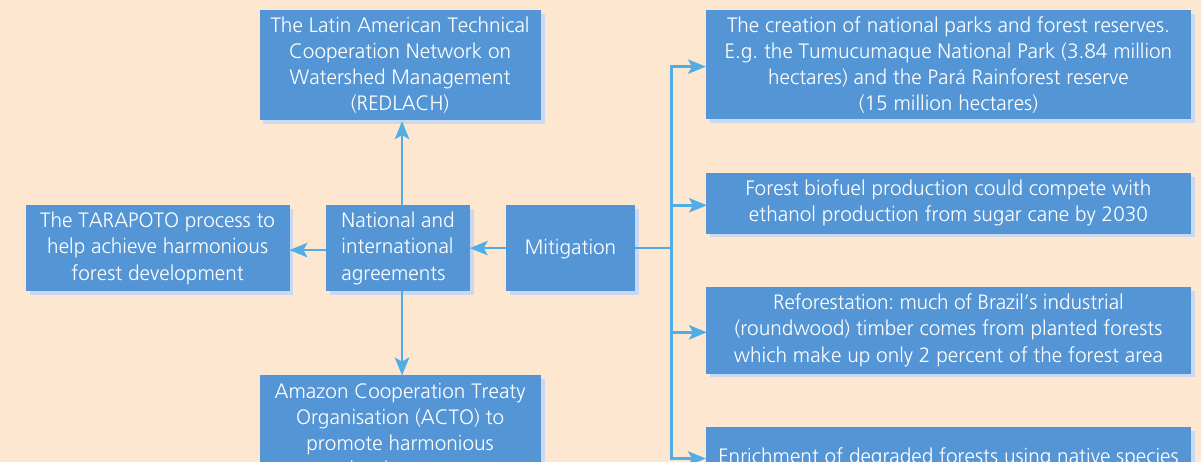
The Latin American Technical Cooperation Network on Watershed Management (REDLACH): This network coordinates watershed management efforts across the region, recognising that river basins cross national boundaries.
The TARAPOTO process: This initiative helps achieve harmonious forest development across participating nations, balancing conservation with sustainable use.
Amazon Cooperation Treaty Organisation (ACTO): This organisation promotes harmonious development across the Amazon Basin, with member nations working together to protect the region.
National and international agreements provide the framework for these various mitigation approaches, coordinating efforts across multiple countries and organisations.
Summary
Key Points to Remember:
-
The Amazon Basin stores 76 billion tonnes of carbon but its capacity as a carbon sink has declined from 2 billion tonnes per year in the 1990s to just 600 million tonnes per year by 2019.
-
Deforestation in the Brazilian Amazon occurred at a rate of 19,368 km² per year between 2000 and 2007, primarily through slash and burn techniques that reduce water retention, increase albedo, reduce rainfall, and release stored carbon.
-
The Amazon discharges approximately 175,000 m³/s into the Atlantic Ocean, representing 15 per cent of all fresh water entering the oceans daily, with complex evapotranspiration cycles where up to 48 per cent of rain is recycled.
-
Temperature in the Amazon has increased by 0.26°C per decade since the mid-1970s, with predictions of 2-3°C rise by 2050. A 3°C temperature rise would destroy 75 per cent of the forest through drought.
-
Mitigation strategies include creating protected areas (Tumucumaque National Park at 3.84 million hectares), promoting reforestation (currently 2 per cent of forest area), developing biofuel alternatives, and coordinating international cooperation through REDLACH, TARAPOTO, and ACTO agreements.