Force fields (AQA A-Level Physics): Revision Notes
📚Revision Notes
7.1.1 Force fields
Definition of Force Field
Note
A force field is a region in which an object experiences a non-contact force. The presence of a force field means that an object can feel a force without physically touching the source of the field. For example, gravity acts on objects at a distance, without any direct contact.
- Vectors represent force fields, showing both the magnitude and direction of the force at any point in the field. The direction of the vector points towards where a force would act on an object within the field.
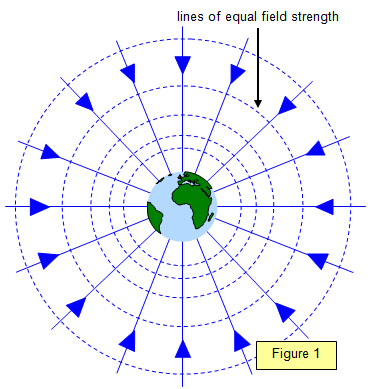
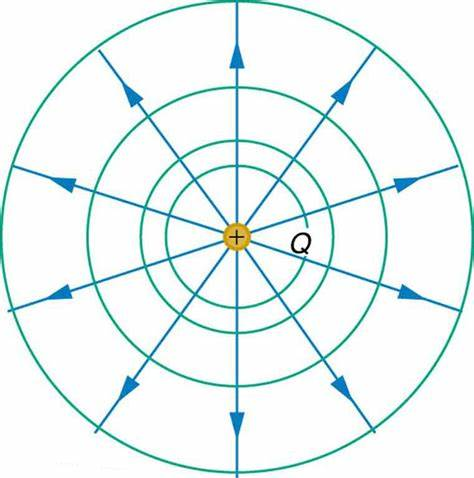
- Field lines are used in diagrams to represent force fields visually. The density of field lines (how close they are to each other) indicates the strength of the field in that area. Closer lines mean a stronger field.
Types of Force Fields
Force fields are created by different types of interactions:
-
Gravitational Fields: Formed by the interaction of masses. Every mass generates a gravitational field that attracts other masses towards it.
-
Electric Fields: Created by the interaction of charges. Electric fields can be attractive or repulsive, depending on the nature of the charges involved (like charges repel, unlike charges attract).
Similarities and Differences between Gravitational and Electric Fields
| Similarities | Differences |
|---|---|
| Both fields follow an inverse-square law: The force decreases as the square of the distance from the source increases. | Gravitational force is always attractive, while electric force can be attractive or repulsive depending on the charges involved. |
| Both fields use field lines to represent the direction and strength of the force. | Gravitational fields act on mass, while electric fields act on charge. |
| Both fields have equipotential surfaces, where the potential energy at each point on the surface is the same. |
Equipotential Surfaces
Equipotential surfaces are imaginary surfaces in a field where the potential energy of an object is constant. Moving along an equipotential surface requires no work because the force is perpendicular to the surface at all points. This concept applies to both gravitational and electric fields:
- In a gravitational field, an equipotential surface represents points where the gravitational potential energy is the same.
- In an electric field, it represents points with the same electric potential energy.
Inverse-Square Law
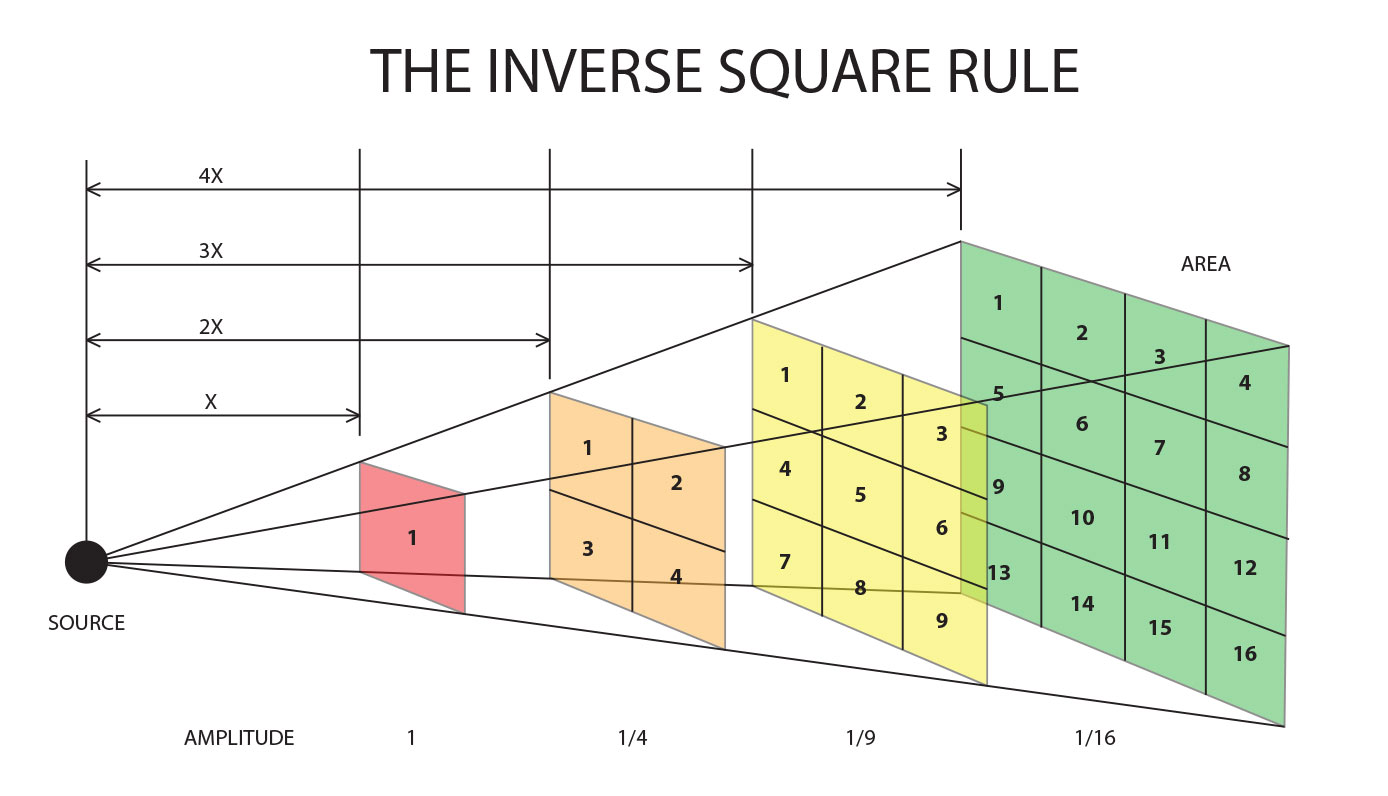
Both gravitational and electric forces obey an inverse-square law, meaning that the force between two objects is inversely proportional to the square of the distance between them. This relationship is fundamental in understanding how the strength of these fields diminishes with distance.
For instance, if the distance between two masses or charges is doubled, the force between them becomes one-fourth as strong.