Theoretical Approaches to Civil Rights (AQA A-Level Politics): Revision Notes
📚Revision Notes
Theoretical Approaches to Civil Rights
When comparing civil rights between the USA and the UK, political scientists use three main theoretical frameworks to understand similarities and differences. These approaches examine different aspects of how civil rights develop and are protected: structural theory (the role of institutions), rational theory (the role of individuals), and cultural theory (the role of shared values and beliefs).
Structural: the role of political institutions
The structural approach examines how political institutions shape civil rights protections. Significant institutional differences between the USA and the UK help explain why civil rights develop differently in each country.
Entrenched v flexible constitutions
One of the most fundamental differences lies in constitutional structure. The USA has an entrenched constitution, meaning that civil liberties written into the Constitution receive strong protection and are difficult to change. This contrasts sharply with the UK's flexible constitution, where rights can be modified more easily by Parliament through ordinary legislation.
Note
This constitutional difference has major implications for rights protection. In the USA, rights enshrined in the Bill of Rights (such as freedom of speech, freedom of religion, and the right to bear arms) enjoy constitutional protection. In the UK, rights depend more on parliamentary decisions and can be altered without the same level of constitutional safeguarding.
Sovereignty of the US Constitution v parliament
A related structural difference concerns sovereignty. In the UK, parliamentary sovereignty means that Parliament holds ultimate authority and decides what civil rights UK citizens enjoy. No other body can overrule Parliament's decisions on rights.
In contrast, the USA operates under constitutional sovereignty. The Constitution, not Congress, holds supreme authority. This structural arrangement means that landmark Supreme Court rulings play a crucial role in delivering and defining civil rights. The Court can strike down laws that violate constitutional rights, even if Congress has passed them.
Campaign finance rules
Different rules governing political donations and spending create another structural distinction. In the USA, campaign finance regulations allow pressure groups to spend considerably more on political campaigning than their UK counterparts. This gives American pressure groups greater financial influence over elected representatives, potentially affecting how civil rights issues are addressed.
Rational: the role of individuals acting out of self-interest
The rational approach focuses on how individuals, acting according to their own interests and motivations, drive civil rights progress. Individual actions have sparked major civil rights campaigns in both countries.
Individual cases sparking campaigns
Often, the infringement of a single person's liberties or rights provides the catalyst for broader campaigns. Two landmark American cases illustrate this:
Example
Landmark Cases That Transformed Civil Rights
-
Linda Brown in Brown v Topeka Board of Education (1954) - her case led to the desegregation of American schools, ending the 'separate but equal' doctrine that had legitimised racial segregation
-
Norma Corvey in Roe v Wade (1973) - her case established abortion rights across America, recognising a constitutional right to privacy
These individual challenges to injustice transformed into movements that changed civil rights for millions.
Civil rights leaders
Individual leaders can have transformative impacts on the political agenda through their vision, strategy and inspiration. Martin Luther King exemplifies this in the USA, where his inspirational leadership energised the civil rights movement and helped secure landmark legislation in the 1960s. By contrast, postwar UK civil rights campaigns have lacked a figure of comparable political stature, which may partly explain different trajectories in civil rights development.
Politicians' choices
Individual politicians make deliberate choices to either expand or restrict civil rights based on their priorities and beliefs:
Expanding rights:
- Democrat presidents John F. Kennedy and Lyndon B. Johnson championed civil rights legislation in the 1960s
- UK parliamentarians passed the Abortion Act in 1967 and legalised abortion in Northern Ireland in 2019
Restricting liberties:
- George W. Bush and Tony Blair both restricted civil liberties for terrorist suspects following 9/11
- Donald Trump restricted rights for illegal immigrants
Important
These examples demonstrate how individual political actors, pursuing their own policy goals, significantly shape civil rights outcomes. The rational approach reminds us that institutional structures alone don't determine rights - the choices of individuals matter enormously.
Cultural: the role of shared ideas and culture
The cultural approach examines how shared values, beliefs and cultural attitudes influence civil rights in both countries. While the USA and UK share some fundamental values, important cultural differences affect how civil rights develop.
Shared values
Both American and British cultures value individual liberty, reflected in the USA's Bill of Rights and the UK's Human Rights Act. Both countries generally respect the rule of law, which underpins rights protection. Additionally, a culture of pluralism in both nations allows pressure groups to campaign effectively for rights and liberties.
However, American political culture tends to be more suspicious of government control. This was demonstrated by larger anti-lockdown protests in the USA during the COVID-19 pandemic compared to the UK.
Threats to civil rights
Important
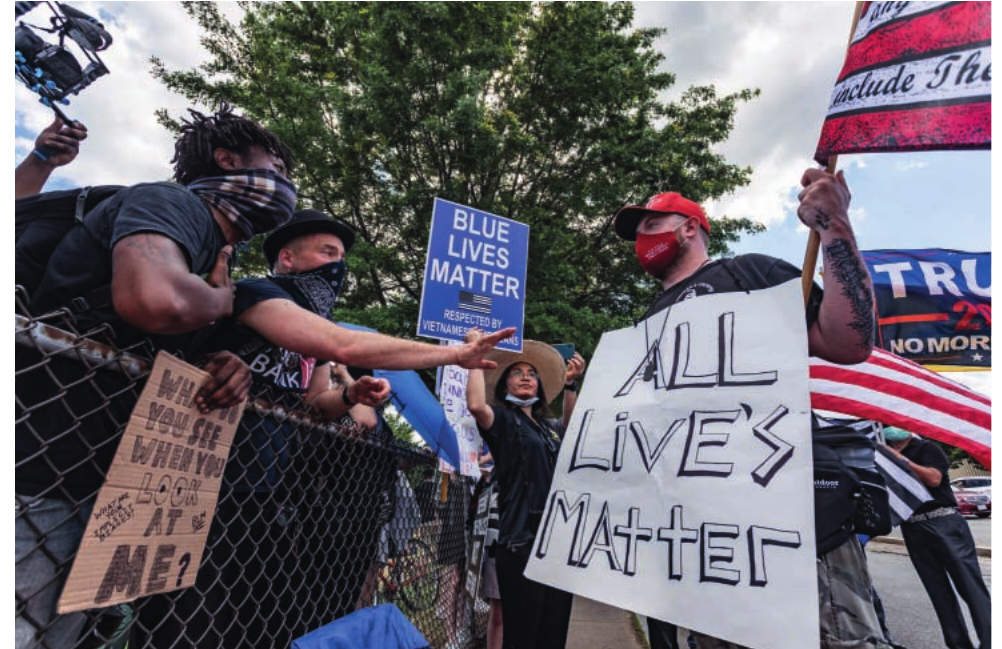
Civil rights face threats from far-right groups in both countries, sometimes resulting in violence. This has occurred on a greater scale in the USA, culminating in the 2021 Capitol insurrection - an attack on democracy itself that challenged fundamental democratic rights.
Religious influence
Religious groups hold much more prominence in American culture than in Britain. This means that rights with religious implications become more controversial in the USA, particularly regarding abortion. In both countries, some religious groups feel their rights are threatened by liberal policies that condone behaviours (such as same-sex relationships or abortion) contrary to their beliefs. However, this tension is more pronounced in America due to stronger religious influence on politics.
Cultural challenges for women and minorities
The culture of both countries can be problematic for women and minority groups, though significant variation exists between and within the USA and the UK.
Women's rights: Feminists point to misogynistic or sexist attitudes persisting in both societies despite undoubted gains in women's rights over the last century. These cultural attitudes continue to affect women's experiences and access to rights.
Racial equality: Campaigners for racial equality emphasise the racism, microaggressions, prejudice and unconscious bias experienced by people of colour in both the USA and the UK. These cultural attitudes create ongoing barriers to full civil rights enjoyment.
LGBTQ+ rights: LGBTQ+ people face homophobia and transphobia in both cultures, though this is often more pronounced in areas with stronger conservative religious beliefs (more prevalent in the USA).
Contemporary debates
Note
Recent controversies illustrate ongoing cultural tensions over rights:
-
The 'bathroom wars' in the USA have seen conservatives vehemently oppose allowing transgender students to use the bathroom matching their gender identity
-
Considerable debate over transgender issues has occurred in the UK, including a controversial 2020 intervention by author J.K. Rowling, which generated substantial media attention and highlighted cultural divisions over trans rights
These cultural factors demonstrate how shared values and beliefs, as well as cultural tensions, shape the civil rights landscape in both countries.
Remember!
Summary
Key Points to Remember:
-
Three theoretical approaches help us compare US and UK civil rights: structural (institutions), rational (individuals), and cultural (shared ideas)
-
Structural differences are fundamental: the USA has an entrenched constitution with constitutional sovereignty, while the UK has a flexible constitution with parliamentary sovereignty. These create different levels of rights protection
-
Individual actions matter: landmark cases (like Brown v Board of Education), inspirational leaders (like Martin Luther King), and politicians' choices all shape civil rights outcomes
-
Cultural values of liberty and the rule of law support rights in both countries, but differences in religious influence and attitudes toward government create varying approaches to specific rights
-
Both countries face cultural challenges regarding rights for women, racial minorities, and LGBTQ+ people, though the scale and nature of these challenges differ between and within the USA and UK