The Structure and Functions of Parliament (AQA A-Level Politics): Revision Notes
📚Revision Notes
The Structure and Functions of Parliament
Introduction to Parliament
Parliament is the central institution of UK government. Despite the growing importance of devolved assemblies in Scotland, Wales and Northern Ireland, Westminster remains the primary location for major political debates and decisions. Parliament is where national laws are passed, where the public is represented by 650 elected MPs, and where the government is scrutinised and held to account.
Although the UK occasionally uses direct democracy (such as the 2016 EU referendum on Brexit), nearly all significant political decisions are made within Parliament. Even decisions made elsewhere, such as in government departments or by the prime minister, are typically discussed and examined in Parliament at some stage. During the coronavirus crisis in 2020, for example, Parliament debated emergency measures and passed the Coronavirus Act 2020 to deal with the pandemic.
Note
Referendum: A direct public vote on a policy measure, representing the opposite of representative government. While the UK primarily operates through representative democracy via Parliament, direct democracy mechanisms like referendums are occasionally used for major constitutional decisions.
The structure of UK Parliament
The UK Parliament is bicameral, meaning it comprises two chambers: the House of Lords and the House of Commons. However, unlike most other legislatures worldwide, one chamber (the Commons) holds virtually all real power.
House of Commons
House of Commons: The elected portion of Parliament and where most power lies.
The House of Commons is the dominant chamber. By convention, all prime ministers and most government ministers in modern times sit in the Commons. The last member of the Lords to become prime minister was Sir Alec Douglas-Home in 1963, who promptly resigned his peerage and won a by-election to sit in the Commons instead. This demonstrates the democratic legitimacy required of modern political leaders.
The Commons comprises 650 members of parliament (MPs), each directly elected by single-member constituencies using the first-past-the-post electoral system. Each MP represents an average of 68,000 voters, though constituency sizes vary considerably. For instance, the Isle of Wight had an electorate of 113,000 in the 2019 election, whilst Na h-Eileanan an Iar (Western Isles) in Scotland had just over 21,000 voters.
Important
Member of parliament (MP): A person formally and directly elected by voters to sit in the House of Commons. MPs are the only directly elected component of the UK Parliament, giving the Commons its democratic legitimacy and corresponding power.
Nearly all MPs are members of a political party, though a handful of independents have been elected over the years. Examples include former war correspondent Martin Bell (Tatton, 1997-2001) and health campaigner Dr Richard Taylor (Wyre Forest, 2001-2010). Overall, the Commons is dominated by party politics, which has important implications for government scrutiny.
House of Lords
House of Lords: The unelected and least powerful chamber in Parliament.
The House of Lords consists almost entirely of unelected members and lacks any democratic mandate, which is correspondingly reflected in its limited powers. The Lords is largely advisory and can only really ask the Commons to 'think again' about a proposed law. The size of its membership varies over time as there is no number fixed in law, but in 2021 it comprised around 800 peers.
Peer: Another term for Lord.
Lord: Members of the House of Lords, unelected and chosen for life or until they decide to retire.
Since the 1999 Blair reforms, the Lords have consisted of:
- Life peers: Those appointed to a peerage for their lifetime only, made possible by the Life Peerages Act 1958. Most peers in the Lords today are life peers, often nominated by party leaders.
- 92 hereditary peers: Chosen from among the wider number of hereditary peers. When a vacancy occurs through death or resignation, the ensuing 'election' has a very small and select electorate. Ironically, the only elected component of the Lords is the hereditary part.
Life and hereditary peers are collectively known as the Lords temporal.
- 26 Church of England bishops: Selected mostly on the basis of seniority, though the bishops of five dioceses (Canterbury, Durham, London, Winchester and York) automatically receive a seat. They are collectively known as the Lords spiritual.
Note
In contrast to the Commons, a large number of independents (often known as crossbenchers) sit in the Lords. No single party has enjoyed a majority since 1999, which means the government cannot automatically control the Lords as it often can with the Commons.
Trends and developments in Parliament since the nineteenth century
Britain has effectively been a parliamentary state since the Glorious Revolution of 1688 and the passing of the Bill of Rights in 1689. Parliament is where laws are made, policy is debated, and the government is brought to account and scrutinised. In the UK system, the government is also part of the legislature, with all ministers by convention sitting in Parliament as either MPs or peers. Although Parliament has existed for centuries, it has evolved considerably:
Democracy
Parliament's membership was increasingly chosen by all of the people as the UK moved towards parliamentary democracy. This process was achieved through a series of parliamentary reform Acts, culminating in 1928 when full female suffrage was achieved.
Balance of power
The balance of power between the two chambers shifted considerably in the twentieth century. Real political power now lies exclusively with the Commons. The Parliament Acts of 1911 and 1949 brought about this change, establishing the Commons' supremacy.
Diversity
The growth of democracy has made membership of the Commons increasingly diverse. The first female MP, Nancy Astor, took her seat in 1919, whereas the December 2019 election returned a record 220 women MPs. Racial diversity has also increased, though ethnic minorities remain proportionally underrepresented in Parliament. In 1987, just three black MPs were elected, but following the 2019 election, 65 MPs were from BAME communities. Milestones include the first Chinese MP (2010) and the first South Asian woman MP (also 2010). There has also been an increase in LGBTQ+ elected representatives and people with disabilities.
Checks and balances
There has been a growing trend towards centralised control and discipline through political parties, with less scope for independent voting and policy-making. This has meant that the governing party has been able to dominate Parliament, with reduced scope for scrutiny and checks on the executive. However, in recent times backbench MPs have become increasingly rebellious. Recent prime ministers have been confronted by and sometimes constrained by significant revolts from their own MPs. For example, Theresa May (prime minister 2016-2019) was unable to get her Brexit deal through Parliament.
Important
The tension between party discipline and independent parliamentary scrutiny remains a crucial challenge. While strong party control helps governments implement their programmes, it can weaken Parliament's ability to effectively scrutinise and check executive power.
Committees
There has been increased use of committees as a forum for discussion and debate in place of the main chambers. This development makes the often heated and adversarial atmosphere of the Commons, especially during Prime Minister's Question Time (PMQs), untypical of much parliamentary business, which is considerably less lively though arguably more effective.
Broadcasting
Parliament has been televised since 1989, which has arguably raised its profile and enabled the electorate to become more familiar with its procedures, personalities and tone. Effective parliamentary debaters as well as less distinguished contributions are readily available for all to see.
Devolution and EU membership
The advent of devolution (in Scotland, Wales and Northern Ireland) and EU membership (until 2020) meant that many policies and laws were decided outside Westminster. This was particularly true for areas in which the EU held sway, such as trade and agriculture.
Retention of traditions
Despite these developments, Parliament retains many ancient traditions. Formality and ritual still play a large part in Westminster. For example, MPs do not vote electronically but file into the division lobby and walk through two doors (the Ayes and Noes) to be manually counted. The government and opposition sit facing each other, traditionally separated by a distance calculated as two sword lengths apart (3.96 metres). They may not cross these lines during sittings. The speaker starts each day with a short, formal procession preceded by a gold mace (staff) and accompanied by the chaplain.
Note
Opposition: Those parties not in government. After the 2019 election this comprised Labour, the Liberal Democrats, the Green Party, the nationalist parties and the Northern Irish parties. The largest opposition party is known as "Her Majesty's Official Opposition" and its leader shadows the prime minister.
Key positions in Parliament
Understanding Parliament's structure requires familiarity with several key roles and positions. These positions are essential for the functioning of parliamentary democracy and maintaining order during debates and votes.
The prime minister
The prime minister is the most important person in Parliament. As leader of the largest single party, they nearly always command an overall majority in the Commons (though 2010-15 and 2017-19 were exceptions). Therefore, they can command and control most of the business and outcomes of the Commons. Although in theory Parliament is meant to scrutinise and check the government, in reality a prime minister with a large majority can normally rely on getting the House of Commons to vote as desired. This is because the executive (government) dominates the legislature.
The speaker
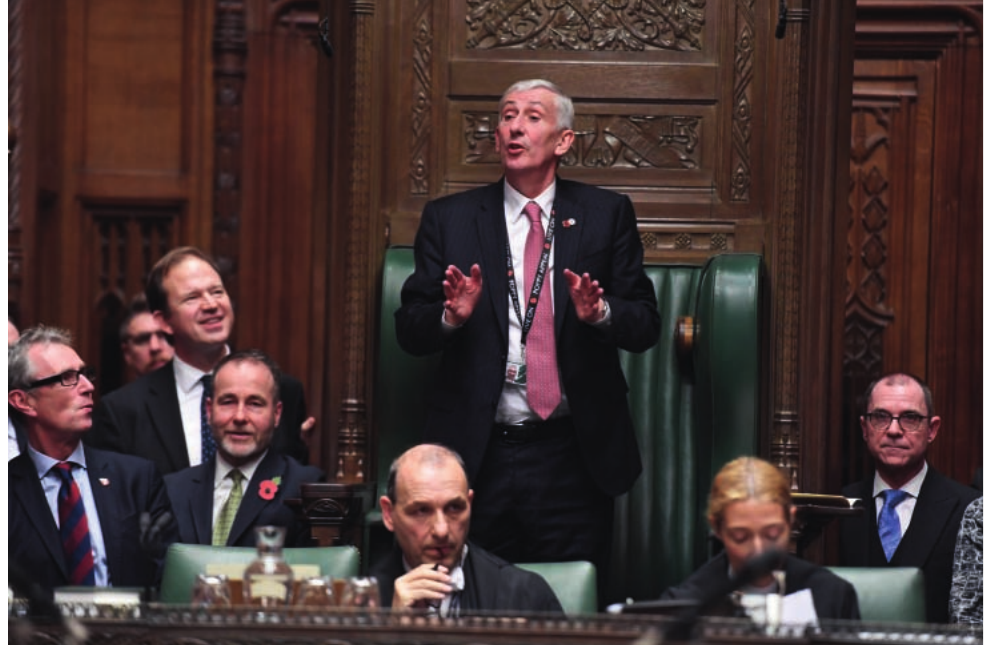
If we think of the Commons as one large debating chamber, the speaker is the chair, attempting to keep order and ensuring as many MPs as possible from across the range of parties are allowed to speak in debates. The speaker also administers the rules of the House of Commons and can suspend MPs who break these rules for varying periods. Among the rules is a ban on calling a fellow MP a liar or insinuating that they are lying or corrupt.
The speaker is voted for by fellow MPs in a series of ballots. Lindsay Hoyle was elected speaker on the fourth ballot in November 2019, and then unanimously re-elected following the general election that December.
Important
By tradition, the speaker renounces any party allegiance on taking up the post to ensure impartiality. At election time, traditionally the major political parties do not oppose them and they stand as 'The speaker seeking re-election'.
In recent years, however, the post has become more controversial. Michael Martin, speaker from 2000 to 2009, was effectively forced to resign due to the expenses scandal and growing dissatisfaction over his performance. His successor, John Bercow, also faced growing criticism, especially from government benches, over his alleged favouritism towards opposition MPs and his perceived lack of cooperation on progression of the Brexit bill following the 2016 referendum. He was also accused of bullying by some members of his own staff, though he strongly denied these claims.
Leader of the House of Commons
This cabinet-level post is essentially that of the government's business manager. It is their job to ensure that from the executive's perspective the Commons runs smoothly, and that its bills are properly timetabled. For example, on Thursdays the leader of the house informs the Commons about the business scheduled for the following week and usually provisional business for the week after that. The role also involves close liaison with the government's chief whip.
Whips
The term 'whip' derives from fox hunting, where the 'whipper in' keeps the pack of hounds in order. This gives a fairly good indication of a whip's role in the Commons. Essentially, whips are responsible for party discipline and ensuring as far as they can that MPs stay loyal and vote the way their leaders dictate. Although TV political dramas often portray whips as bullies issuing threats to wavering MPs, the reality is more measured. Much of their time is spent using gentler persuasive techniques and explaining the reasoning behind the prime minister's stance. There are junior whips, as well as whips in opposition parties. Each week, whips issue instructions on how their party's MPs should vote. A three-line whip indicates the party leadership expects all its MPs to turn up and vote a certain way.
Example
Example: Withdrawal of the Whip
From time to time the whip may be withdrawn from an MP, which effectively means the MP is suspended from the party. This is usually a temporary sanction and is more likely a response to the MP bringing the party into disrepute rather than defying the whip in a particular vote.
In 2012, Conservative MP Nadine Dorries had the whip withdrawn when she appeared on the TV reality show I'm a Celebrity...Get Me Out of Here! without first informing the party leadership, thereby being absent from the Commons for several weeks. The whip was later restored.
On rarer occasions, the whip can be withdrawn for political disloyalty. In September 2019, Boris Johnson removed the whip from 21 Tory rebels who defied instructions not to support a motion to take control of parliamentary business from the government during the Brexit bill saga. Ten MPs subsequently had the whip restored and five of the remainder stood as independents or Liberal Democrats in the subsequent general election, though all lost their seats.
Frontbench
This term applies to members of the governing party who are also ministers in the government, and to opposition MPs who are shadow ministers. The term derives from the fact that these members sit on the front rows in the Commons chamber.
Backbenchers
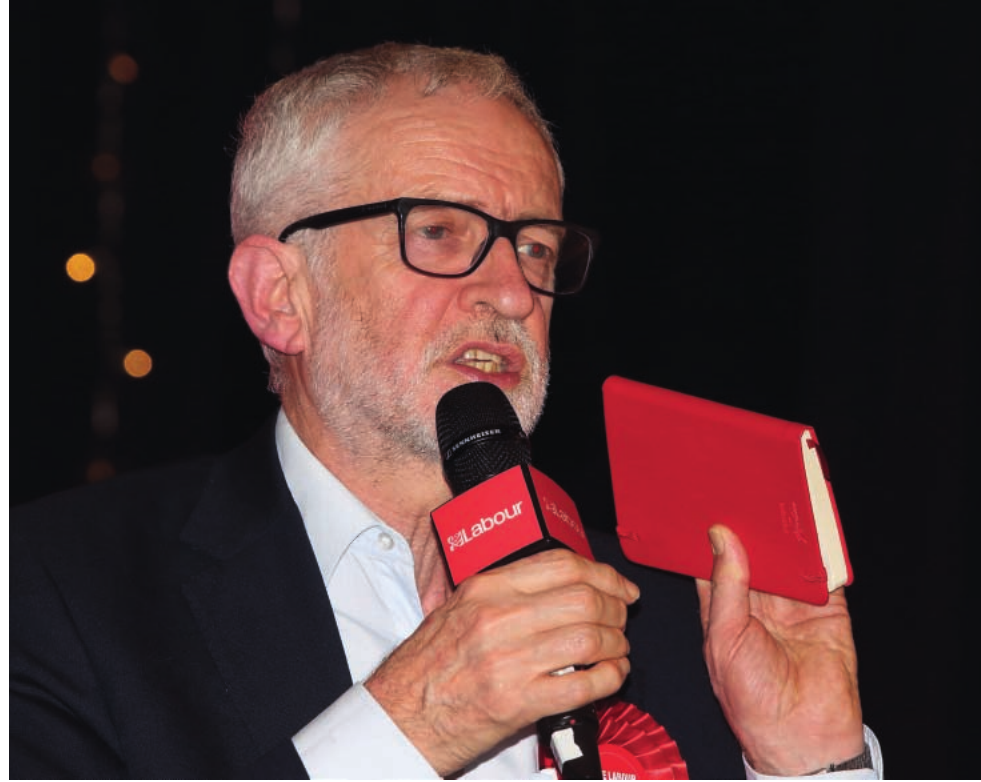
These are the ordinary MPs who are neither ministers nor shadow ministers. Some are loyal followers of the party, especially those hoping for promotion to the frontbenches. However, it is also here that more independently minded MPs can be found. Several MPs have spent many years criticising and occasionally voting against their own party leadership from the backbenches. During his time as a backbencher, former Labour leader Jeremy Corbyn rebelled frequently against the Labour government and its Blair/Brown leadership, making him the most rebellious Labour backbencher between 1997 and 2010.
The main functions of Parliament
The ancient origins of Parliament and often slightly esoteric terminology should not obscure the fact that this twenty-first century institution performs the following vital functions:
- Legislative: Parliament is where laws are introduced, debated and passed.
- Representative: Parliament represents people, both geographically through constituencies and in terms of political ideas through parties.
- Scrutiny: Parliament has the vital role of checking and scrutinising the government by questioning its actions and examining its legislative plans.
- Deliberative: Parliament has an important role as a forum for debate and discussion. In times of national crisis, whether during wars or during political dramas such as Brexit, all eyes turn to Westminster and its debates, speeches and decisions.
Note
The key question to consider is how well Parliament performs each of these functions. This evaluation requires examining both the formal powers Parliament possesses and the practical constraints it faces, such as party discipline and executive dominance.
Parliamentary debate and the legislative process
A key role of Parliament is to pass legislation. The vast majority of laws passed are public bills and especially government-backed bills. For example, in the two sessions of the 2015-17 Parliament, 55 government bills were debated of which 48 were passed. By contrast, in the same period, 324 private members' bills were introduced (bills presented by individual MPs or peers) of which just 14 were passed.
Important
Key Definitions:
-
Legislation: Measures put before Parliament that, once passed, become law.
-
Public bill: A bill that applies to everyone once it becomes law. This applies to most legislation. A small number of bills passed fall into the special category of private bills, which only apply to specific groups of people or public bodies, usually local authorities.
-
Debate: Discussions in the main chamber that take place during the passage of a bill, especially during the second reading.
How the legislative process works
A bill becomes law through the following basic process:
- All proposed laws (bills) must pass through both the Lords and the Commons.
- All bills go through certain set stages in order to be passed. The length and opportunities for debate and scrutiny vary depending on the stage.
- Every public bill is debated and can be amended.
- Most government-backed bills become law. By contrast, most bills proposed by backbench MPs or peers do not.
- Every bill must receive the royal assent to become law, but today this is only a formality.
Note
On average, around 30-40 public bills are passed by Parliament each year, with 31 being passed in 2019. The high success rate of government bills compared to private members' bills demonstrates the executive's dominance over the legislative process.
Remember!
Summary
Key Points to Remember:
-
UK Parliament is bicameral: It consists of the House of Commons (elected, 650 MPs, dominant) and the House of Lords (unelected, ~800 peers, advisory role).
-
The four main functions are: Legislative (passing laws), representative (representing constituents and political views), scrutiny (checking government actions), and deliberative (providing a forum for debate).
-
Key positions include: The prime minister (most powerful), the speaker (maintains order and impartiality), whips (enforce party discipline), leader of the House of Commons (manages government business), frontbenchers (ministers and shadow ministers), and backbenchers (ordinary MPs).
-
The Lords comprises three types of members: Life peers (appointed for life), 92 hereditary peers (elected from among hereditary peers), and 26 Church of England bishops. No single party has held a majority since 1999.
-
Parliament has evolved significantly: Through democratisation (full suffrage by 1928), power shifts (Commons dominance established by Parliament Acts 1911 and 1949), increased diversity (though still underrepresented), and modernisation (televised since 1989, increased committee use), whilst retaining ancient traditions.