How Policy Is Made (AQA A-Level Politics): Revision Notes
📚Revision Notes
How Policy is Made
Policy-making in UK government is influenced by a range of factors that come from different sources and situations. Understanding these factors helps explain why governments pursue particular policies and how external pressures shape their decisions.
Factors affecting policy-making
Government policy emerges from seven main sources:
- Manifesto pledges and promises - commitments made to voters during elections
- Personal convictions of the prime minister - the ideological beliefs and principles of party leaders
- Outcome of referendums - direct democratic decisions that bind governments
- Results of deals with minority/coalition parties - compromises required in hung parliaments
- Responses to national crises and emergencies - reactions to unexpected events including economic, foreign affairs and medical situations
- Mounting pressure from the public and media - campaigns and movements demanding action
- Changing social and cultural attitudes - evolving public opinion on moral and social issues
Important
Exam tip: Use the mnemonic PPPES to remember these factors: Personal, Political, Popular, External, Social.
Manifesto pledges and promises
Political parties make commitments in their election manifestos which form the basis of their policy agenda when in government. These pledges create an expectation that the government will deliver on its promises to voters.
Example
Case Study: Extending Free Childcare (2017)
The Conservatives pledged in their 2017 manifesto to double free childcare provision for working parents of 3 and 4-year-olds from 15 to 30 hours per week. The policy aimed to increase workforce participation by reducing childcare costs, whilst also providing socialisation opportunities and basic skills development for young children.
Eligibility was restricted to those earning under £100,000. The scheme was implemented by September 2017, demonstrating how manifesto commitments translate into government policy.
Personal convictions of the prime minister
Some prime ministers are described as conviction politicians - leaders who have strong pre-existing ideological beliefs that shape their policy agenda. These personal principles can drive major policy changes regardless of immediate political pressures.
Example
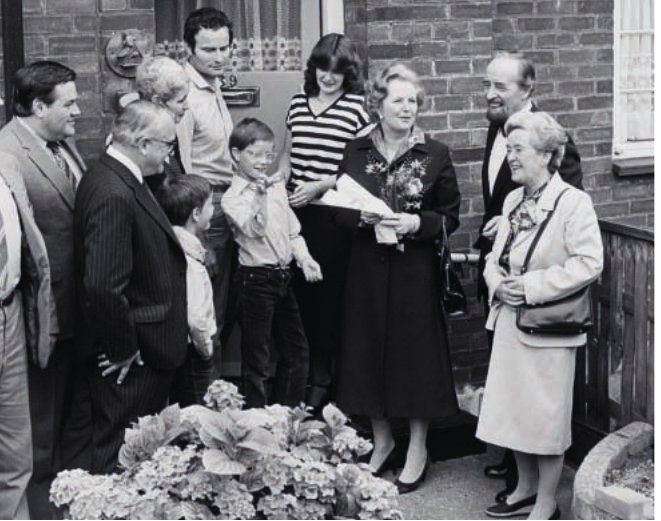
Case Study: Margaret Thatcher and Privatisation (1979-1990)
Margaret Thatcher exemplifies the conviction politician. She held firm beliefs in property ownership and reducing state involvement in the economy. These convictions drove two major policy initiatives:
Right to Buy: Council house tenants were given the right to purchase their homes at substantially reduced rates from local councils. This policy reflected Thatcher's vision of a "property-owning democracy". Between 1981 and 1991, social housing in England and Wales fell from 5.4 million to 4.5 million households - a reduction of 900,000 homes.
Privatisation: Nationalised industries including British Telecom, gas, electricity and coal mining were sold to private ownership. The public was encouraged to buy shares at discounted prices. This policy continued under subsequent governments - Tony Blair privatised air traffic control, whilst John Major privatised railways and electricity generating companies.
Outcome of referendums
Referendums create binding commitments that governments must honour, even when the result contradicts the personal views of the prime minister and most MPs. This represents a unique form of policy-making driven by direct democracy.
Example
Case Study: Brexit (2016)
David Cameron promised in his 2015 manifesto to hold a referendum on UK membership of the EU - a pledge he later regretted. The 2016 referendum resulted in a 52%-48% vote to leave the EU. Cameron resigned, and Theresa May took office with the task of implementing a decision she personally opposed (having voted Remain).
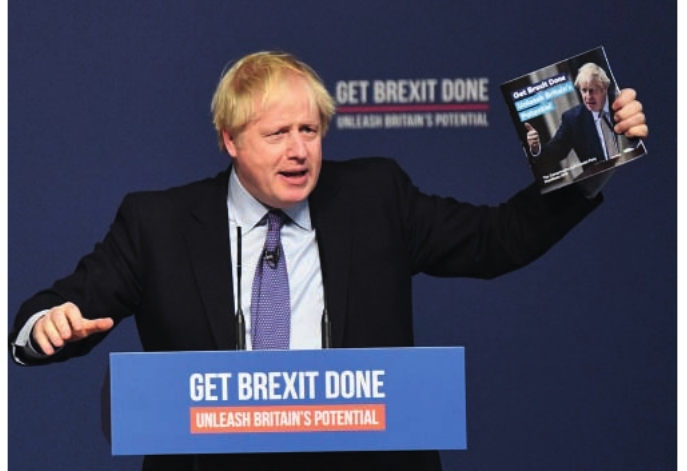
May's approach represented the opposite of conviction politics. She felt duty-bound to honour the referendum result despite her personal qualms. Her attempts to deliver Brexit ultimately failed, leading to her resignation in June 2019 and replacement by Boris Johnson. Johnson's 2019 election campaign centred on the promise to "Get Brexit Done", demonstrating how referendum outcomes can dominate government policy for years.
Results of deals with minority/coalition parties
When elections produce a hung parliament (where no party wins an overall majority), governments must negotiate with other parties to secure power. These deals require policy compromises that neither party would have pursued independently.
Example
Case Study: The 2011 Alternative Vote Referendum
The 2010 election resulted in a hung parliament. The Conservatives and Liberal Democrats signed a Coalition Agreement to provide political stability following the 2008-09 global economic crisis. The agreement represented a compromise between each party's manifesto promises.
A key Liberal Democrat demand was electoral reform. They had long opposed first-past-the-post (FPTP), which disadvantages smaller parties. The Coalition Agreement promised a referendum on adopting the alternative vote (AV) system - not a proportional system, but a degree of electoral reform.
The referendum took place with limited public engagement. The proposal was decisively rejected 67.9% to 32.1% on a turnout of just 41% (compared to 65% in the 2010 general election). Electoral reform was abandoned and FPTP retained. This case demonstrates how coalition negotiations can force governments to pursue policies neither party strongly supports.
Responses to national crises and emergencies
All governments face unexpected crises requiring swift responses. Prime ministers must appear calm, reassuring and decisive whilst developing policy rapidly. Emergency situations often require governments to "make up policy as they go along" whilst passing urgent legislation.
Example
Case Study: The COVID-19 Pandemic (2020)
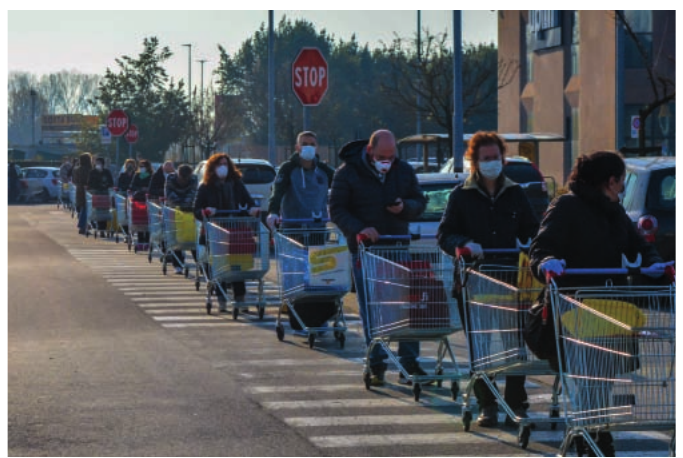
The coronavirus pandemic presented an unprecedented challenge requiring immediate and extensive policy responses. No postwar prime minister had faced an event of comparable scale or complexity.
Initial response: The government's early measures were limited - advising against travel to infected regions and recommending thorough handwashing. Schools, shops and leisure facilities remained open.
Full response: When the pandemic's severity became clear, policy became far more extensive and restrictive:
- Construction of temporary field hospitals (e.g. Nightingale Hospital in London's ExCeL centre)
- Shutdown of large economic sectors including pubs, restaurants and gyms
- Introduction of social distancing rules
- Emergency legislation through the Coronavirus Act 2020, enabling penalties for breaking restrictions on gatherings and non-essential travel
- Economic support measures including the furlough scheme, where government initially covered up to 80% of wages for employees unable to work
Note
The COVID-19 response demonstrated both the need for decisive action during crises and the inevitable confusion and uncertainty that accompanies rapid policy development.
Mounting pressure from the public and media
Popular movements and campaigns can push governments to accelerate policy changes or adopt new approaches. Pressure groups, protest movements and high-profile individuals can influence the policy agenda by raising public awareness and demonstrating widespread support for change.
Example
Case Study: Climate Change Policy
Recent years have seen significant popular mobilisation around climate change. Groups like Extinction Rebellion use direct action to highlight ecological issues. High-profile campaigners such as Swedish teenager Greta Thunberg have attracted large followings, with her global climate strikes embraced by many UK schoolchildren with support from parents and teachers.

This pressure influenced government policy on carbon emissions. In 2019, the UK government upgraded its commitment from an 80% reduction (pledged under the Climate Change Act 2008) to cutting greenhouse gas emissions to almost zero by 2050. Theresa May stated there was a "moral duty to leave this world in a better condition than what we inherited".
The policy shift resulted partly from public pressure and partly from recommendations by the government's independent Committee on Climate Change (CCC). This demonstrates how popular movements can add urgency to policy development, though other factors also contribute.
Changing social and cultural attitudes
Governments must respond to evolving social attitudes and cultural changes. They face a choice: ignore these changes, delay responding, or embrace new trends. Most governments, being pragmatic and keen to appear "in touch", tend to embrace change cautiously, whilst avoiding alienating traditional voters or dividing their own parties.
Example
Case Study: The 1960s and Social Liberalisation
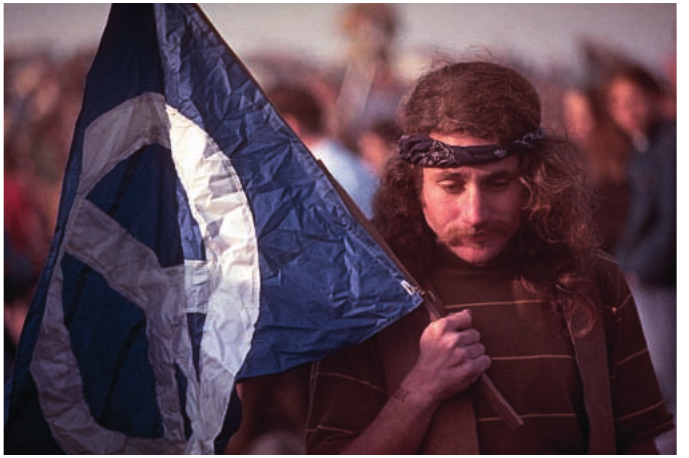
The "swinging sixties" saw rapid social change characterised by liberalisation of attitudes towards sex, marriage and women's rights. These changes were largely unprompted by government but eventually reflected in policy.
Harold Wilson's Labour governments (1964-1970) enacted several reforms reflecting changing social outlook:
- Legalised abortion up to 24 weeks of pregnancy
- Ended the death penalty
- Decriminalised male homosexuality (it was never illegal for women)
- Made divorce easier through the Divorce Reform Act 1969
Many measures were enacted through private members' bills (legislation proposed by backbench MPs rather than government) but received government support.
Note
This demonstrates how policy-making can reflect wider social change reactively (responding to changes already occurring) rather than proactively (leading change).
The power of prime ministers and cabinets to control policy-making
Prime ministers and their cabinets have only partial control over policy-making. Many occasions arise when the executive has little or no control over events or policy direction. The ability to dictate policy depends on several factors:
- Political circumstances - whether the government enjoys a strong Commons majority
- Prime ministerial personality - individual leadership styles and approaches
- External events - crises and popular movements that force government responses
Note
As Harold Macmillan allegedly said when asked what was most likely to throw governments off course: "Events, dear boy, events" - probably referring to the Profumo scandal. This sentiment reflects the experience of all prime ministers: they cannot fully control the policy agenda.
Important
Exam tip: When answering questions about policy-making, include a breadth of examples showing different factors and referencing several prime ministers. This demonstrates comprehensive understanding of how various influences shape government policy.
Summary
Remember!
-
Seven factors drive policy-making: manifesto pledges, personal convictions, referendums, coalition deals, national crises, public pressure, and social change (remember: PPPES)
-
Conviction politicians like Margaret Thatcher pursue policies based on ideological beliefs, whilst others like Theresa May act from duty even when personally opposed to policies
-
Referendums can force governments to implement policies opposed by the prime minister and most MPs, as seen with Brexit
-
National crises require swift responses with policy often "made up" during the event, as demonstrated by the COVID-19 pandemic response
-
Prime ministers have only partial control over policy-making - external events and pressures frequently dictate the agenda, supporting Macmillan's view that "events" determine government direction