Ministerial Responsibility (AQA A-Level Politics): Revision Notes
📚Revision Notes
Ministerial Responsibility
Ministerial responsibility is a fundamental principle of UK government that determines how ministers are held to account for their actions and decisions. It exists in two main forms: individual responsibility (where ministers are accountable for their own actions and their department's work) and collective responsibility (where all ministers must publicly support government policy).
Understanding ministerial responsibility is crucial for evaluating how effectively parliament can scrutinise the executive and hold government ministers to account. This principle also explains why and when ministers resign from office, which can significantly impact a government's stability and reputation.
Note
Ministerial responsibility operates as both a constitutional convention and a practical accountability mechanism, forming a key part of the UK's uncodified constitution. It helps maintain the balance of power between the executive and legislative branches of government.
Individual and collective responsibility
Individual responsibility refers to the requirement that all ministers must take personal accountability for their own conduct whilst in public office. When ministers fail to meet the expected standards, they are expected to offer their resignation. This includes taking responsibility not only for their personal actions but also, to some extent, for serious errors or failures within their government department.
Collective responsibility, by contrast, is about government unity. It requires all ministers (both senior cabinet members and junior ministers) to publicly support and defend all government policies, even if they privately disagreed during cabinet discussions. This convention also extends to avoiding public criticism of cabinet colleagues.
Ministerial accountability is the broader convention that ministers must explain and justify their actions and decisions, particularly before parliament and its committees. This involves answering questions honestly, appearing before select committees, and making statements to the House of Commons.
Note
Distinguishing the Three Key Concepts:
While these terms are related, they have distinct meanings:
- Individual responsibility focuses on personal accountability and the duty to resign when standards are breached
- Collective responsibility emphasizes government unity and public solidarity with cabinet decisions
- Ministerial accountability describes the ongoing duty to explain and justify actions to parliament, regardless of whether resignation is necessary
The importance of collective responsibility
Collective responsibility sits at the heart of cabinet government in the UK. It enables the government to speak with one voice and present a united front to parliament, the public and the media. Without this principle, governments would appear chaotic and openly divided, incapable of giving clear direction or delivering on their promises.
The convention requires all ministers to support and defend government policy in public, regardless of their private views. Whilst strong debates and divisions can occur during cabinet meetings, the principle is that "what happens in cabinet stays in cabinet". Ministers who cannot accept the burden of collective responsibility are obliged to resign and express their concerns from the backbenches instead.
However, collective responsibility is not absolute or unbreakable. It can be temporarily suspended, undermined by leaks, or occasionally breached by open dissent from serving ministers.
Important
The Flexibility of Collective Responsibility:
Despite being a fundamental principle, collective responsibility is not rigid. It can be:
- Temporarily suspended by the prime minister on specific issues
- Undermined by non-attributable leaks to the media
- Occasionally breached by open ministerial dissent
This flexibility reflects the political realities of governing, particularly when dealing with divisive issues where ministers hold strongly opposing views.
The suspension of collective responsibility
As Labour prime minister James Callaghan (1976-79) remarked in 1977: "I certainly think that the doctrine should apply, except in cases where I announce it does not." The Cabinet Manual formally states that all government members are bound by collective responsibility "except where it is explicitly set aside."
There have been several occasions when collective responsibility has been temporarily suspended:
- During the 1975 and 2016 referendums over Britain's membership of the EU
- In 2016, over the government's plans to build a third runway at Heathrow Airport
- During the 2011 alternative vote referendum
In all these cases, public disagreement was only permitted on these specific topics and not on other government policies. These were policy areas where it was widely apparent that individual ministers held strongly opposing views. The suspension represented an "agree to disagree" policy, determined by political realities.
Note
Why Suspend Collective Responsibility?
Suspending collective responsibility is a pragmatic response to deep divisions within government on specific issues. It allows ministers to campaign publicly on different sides of a debate without forcing mass resignations. This is particularly valuable during referendums where the government's role is to facilitate public decision-making rather than impose a single view.
The suspension is always limited to specific topics and doesn't extend to other government policies, maintaining overall cabinet unity.
Beyond formal suspension, collective responsibility is sometimes undermined by non-attributable ministerial leaks to the press. On rarer occasions, there is open dissent. For example, between 2016 and 2018, foreign secretary Boris Johnson wrote articles and gave newspaper interviews that undermined government policy under Theresa May. He told Conservative supporters at a private dinner that gloomy economic forecasts were "mumbo jumbo" and that the Northern Irish border issue had been blown out of proportion. May chose not to discipline him, perhaps fearing he would prove even more troublesome from the backbenches.
Similarly, in June 2018, treasury minister Liz Truss openly criticised her "male macho" cabinet colleagues in a speech at the London School of Economics, musing on the "hot air" coming from the Department for the Environment and referring to "woodburning Goves". This followed environment secretary Michael Gove's criticism of woodburning stoves for their environmental impact.
Ministerial resignations
There are five main occasions when ministers resign from government:
- Accepting the blame for an error or injustice within their department by civil servants and officials
- Unwillingness to accept collective responsibility over policy
- An inability to deliver a policy promise in their own department
- Personal misconduct
- Political pressure
Important
Policy Failure and Ministerial Responsibility:
Ministers nearly never fall because of policy failure itself. This is because all major policies are agreed collectively by cabinet and with the prime minister's support. To admit that a policy was fundamentally flawed (rather than poorly implemented) would suggest the entire government failed and must share blame collectively.
This explains why ministers typically blame implementation issues or civil servants rather than acknowledging fundamental policy errors.
Accepting the blame for departmental errors
This is probably the rarest reason for resignation. Ministers routinely blame civil servants or heads of executive agencies for operational failures, absolving themselves from errors of implementation. For example, ministers kept their jobs after critical reports found departmental mistakes over the sale of arms to Iraq (1996) and during the BSE crisis (2000).
Example
The Crichel Down Affair (1954):
The classic example of a minister accepting departmental responsibility is Sir Thomas Dugdale's resignation as minister of agriculture.
The Issue: An independent inquiry criticised his department for mishandling the compulsory purchase and re-letting of 725 acres of farmland in Crichel Down, Dorset. The land had been compulsorily purchased in 1937 for use as an RAF bombing range, with a promise it would be sold back to the owners when no longer required for military purposes. Instead, the Department of Agriculture took it on and re-let it for a much higher sum.
The Resignation: There was clear evidence of civil service mistakes and inefficiency. Dugdale took the blame and resigned, even though at the time it was unclear whether he was aware of the blunders.
The Reality: Documents released more recently revealed that Dugdale did bear some personal responsibility as he was aware of his officials' actions but had not tried to stop them. Nonetheless, the case is usually presented as a rare example of a minister taking responsibility for departmental errors.
A more recent example was Claire Perry's resignation as rail minister in 2016. She admitted in the Commons to her department's failure to deal adequately with reliability and overcrowding problems on some parts of the network. Following a week where she said she was "often ashamed to be the rail minister", she resigned after a debate about Govia Thameslink Railway, stating: "If I thought it would help by falling on my sword, I would. This feels like a failure."
Increasingly, civil servants themselves take personal blame for departmental mistakes. In 2011, the head of the UK Border Force, Brodie Clark, resigned after border controls were relaxed without ministerial authorisation. In summer 2020, following the exams fiasco, it was Sally Collier, head of Ofqual (the exam regulator), who resigned rather than education secretary Gavin Williamson.
Note
The Shift Toward Civil Service Accountability:
There has been a notable trend in recent decades toward civil servants and agency heads accepting personal blame for operational failures rather than ministers. This reflects a distinction between:
- Policy decisions (ministerial responsibility)
- Operational implementation (civil service responsibility)
However, critics argue this allows ministers to avoid accountability for failures that ultimately stem from their department's decisions and oversight.
Unwillingness to accept collective responsibility over policy
Ministers may resign when they disagree strongly with a particular government policy, often one not even involving their own department. These resignations are relatively uncommon since parties are elected on shared policy platforms. They typically arise from reactions to unforeseen events or reflect long-simmering divisions within a party.
Examples include:
- In 2003, two leading Labour frontbenchers, Robin Cook and Clare Short, resigned over the Iraq War
- Two Liberal Democrat junior ministers, Mike Crockart and Jenny Willott, resigned in 2010 rather than support the government's policy to increase university tuition fees to £9,000 per year
- In 2016, former Conservative leader Iain Duncan Smith resigned as work and pensions secretary, attacking £4 billion of planned cuts to disability benefits as "indefensible"
- More than 30 Conservative ministers resigned over Theresa May's Brexit deal, including two Brexit secretaries, David Davis and Dominic Raab
Example
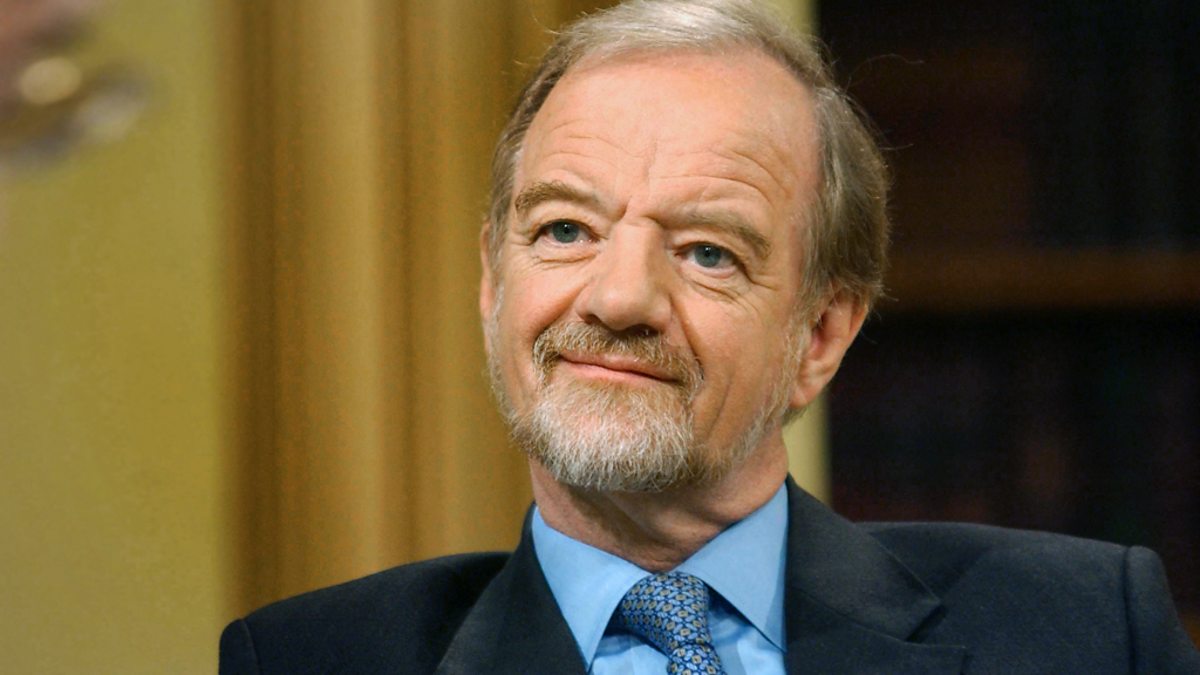
Robin Cook and the Iraq War:
As a former Labour foreign secretary (1997-2001), Robin Cook was well placed to comment on the Blair government's Iraq policy and the proposal to invade Iraq to remove Saddam Hussein, who was accused of possessing weapons of mass destruction (WMDs).
Cook's Position: Cook urged that Britain should work with European partners and the UN, rather than acting unilaterally with the USA. However, the government decided to join the USA in the war, largely due to US pressure and especially that of President George W. Bush, with whom Blair had a close relationship.
The Resignation: Following his resignation, Cook delivered a powerful Commons speech and composed a frank resignation letter, in which he wrote:
"I have been frank about my concern over embarking on military action in the absence of multilateral support. In principle I believe it is wrong to embark on military action without broad international support. In practice I believe it is against Britain's interests to create a precedent for unilateral military action... I was impressed by the energy and skill with which you ended Britain's isolation in Europe and achieved for our country equal status and influence to Germany or France. I am dismayed that once again Britain is divided from our major European neighbours."
The Impact: Cook's resignation speech is widely regarded as one of the finest parliamentary performances in recent times and was particularly damaging to Blair's leadership.
Example
Iain Duncan Smith (IDS):
Duncan Smith served as Conservative leader from 2001 to 2003 and was work and pensions secretary from 2010 until his resignation in March 2016.
The Stated Reason: His publicly stated reason was that cuts to the welfare budget, particularly to disability benefits, were a "compromise too far" during austerity and the government's drive to reduce the budget deficit. He argued that cuts should instead come from reducing benefits for better-off older people.
The Complexity: However, the proposed benefit cuts had already been abandoned a few days earlier, so this was not quite a straightforward resignation over policy differences. Some saw Duncan Smith's resignation as the culmination of:
- A long-running feud with the Treasury focused on the roll-out of Universal Credit
- Tensions over Europe (Duncan Smith was a staunch Brexiteer unlike Cameron and Chancellor George Osborne)
- Six years in post, potentially facing removal in a cabinet reshuffle anyway
The Unusual Variant: An unusual variant was the resignation of Scotland Office minister Douglas Ross in May 2020. He resigned in protest at the failure of the prime minister's chief adviser, Dominic Cummings, to resign over apparent breaches of the first COVID-19 lockdown. Ross stated: "I have constituents who didn't get to say goodbye to loved ones...people who didn't visit sick relatives because they followed the guidance of the government. I cannot in good faith tell them they were all wrong and one senior adviser to the government was right." This was a resignation over a personality rather than policy.
Inability to deliver a policy promise in their own department
This is a relatively rare cause of ministerial resignation. It can occur when a minister feels undermined by other Whitehall departments or when there is a change in government policy that directly concerns their department. It can involve a resignation on a point of principle but is not as high profile as refusing to accept collective responsibility.
Example
Tracey Crouch and Fixed-Odds Betting Machines:
In 2018, sports minister Tracey Crouch resigned over delays to a crackdown on maximum stakes for fixed-odds betting machines.
The Issue: Chancellor Philip Hammond announced in his budget speech that the cut in stakes from £100 to £2 would only come into force in October 2019. Crouch said pushing back the date was "unjustifiable" and could cost the lives of problem gamblers.
The Resignation: In her resignation letter to Theresa May, she wrote: "It is a fact of government that ministers must adhere to collective responsibility and cannot disagree with policy, let alone when it is policy made against your wishes relating to your own portfolio." There was a clear sense that a previously agreed policy had been deliberately delayed without her agreement, leading to her feeling undermined.
The Principle: She subsequently tweeted: "Politicians come and go but principles stay with us forever."
A related case was the surprise departure in February 2020 of Sajid Javid as chancellor, just four weeks before delivering his first budget. He rejected the prime minister's order to fire his team of aides, saying "no self-respecting minister" could accept such a condition.
Personal misconduct
This is the most frequent cause of resignation and covers a wide range of misdemeanours. In general, this can be summarised as "letting the side down". More precisely, it relates to ministers breaking one of the seven principles in the Ministerial Code.
Important
The Seven Principles of the Ministerial Code:
All ministers are expected to uphold seven core principles:
-
Selflessness: Ministers should act solely in the public interest, not for themselves, their friends or family.
-
Integrity: They must avoid placing themselves under obligation to people or organisations that might inappropriately influence them. They should not act to gain financial or material benefits for themselves, their family or friends. They must declare and resolve any interests and relationships. This effectively prohibits all forms of corruption.
-
Objectivity: They must act and take decisions impartially, fairly and on merit, using the best evidence without discrimination or bias. This is particularly important when awarding contracts, making appointments or providing public services.
-
Accountability: Ministers must be accountable to the public and parliament for their decisions and actions, submitting themselves to necessary scrutiny. This means replying truthfully to relevant parliamentary questions.
-
Openness: They should act and take decisions in an open and transparent manner. Information should not be withheld from the public unless there are clear and lawful reasons (such as national security or sensitive commercial information).
-
Honesty: Ministers should be truthful with both parliament and the public.
-
Leadership: They should exhibit these principles in their own behaviour, actively promote them, and robustly support them whilst challenging poor behaviour wherever it occurs.
Examples of ministers breaking the Ministerial Code include:
- David Blunkett was forced to resign twice from Blair governments. First in 2004 as home secretary when he requested officials to fast-track a visa application for a nanny employed by an ex-lover for her son he had fathered. Second in 2005 as work and pensions secretary after accepting a directorship at DNA Bioscience without consulting the Advisory Committee on Business Appointments, despite the firm bidding for a contract involving his department. This broke the objectivity principle.
- Chris Huhne (Liberal Democrat) was forced out in 2012 for perverting the course of justice over a speeding ticket. He had got his wife to take his speeding points to avoid a driving ban, breaking the honesty principle.
- Brooks Newmark (Conservative) left after being exposed sending explicit images to an undercover reporter, breaking both the selflessness and leadership principles.
- Damian Green, then first secretary of state, was dismissed in December 2017 after being found to have lied to colleagues over pornography found on his computer. He was also accused of sending suggestive text messages and "fleetingly" touching the knee of a young Conservative activist, Kate Maltby. This broke the honesty principle.
- Several ministers have had to leave after falsely claiming expenses, including Maria Miller in 2014 as culture secretary and David Laws in 2010 as chief secretary of the treasury. These broke the honesty principle.
Note
Sexual Impropriety and Ministerial Resignations:
In cases of sexual impropriety, it is typically not the affair or unwanted advances themselves that bring down ministers, but being caught lying about them or abusing their positions and seniority.
This reflects the broader principle that dishonesty with parliament and the public is often considered a more serious breach of the Ministerial Code than the underlying misconduct itself.
Do ministers have to resign if found guilty of breaking the Ministerial Code? The short answer is no. In November 2020, home secretary Priti Patel was found to have broken the code by bullying and swearing at senior civil servants in her department. Allegations emerged after the resignation of Philip Rutnam, the former Home Office permanent secretary, over what he described as a "vicious and orchestrated campaign" against him.
A Cabinet Office inquiry found that Patel had "not consistently met the high standards required by the ministerial code of treating her civil servants with consideration and respect". However, she retained the prime minister's confidence and much of the parliamentary party's support, so was only required to issue an apology and received an official warning. Sir Alex Allan, Whitehall's independent adviser on ministerial standards, subsequently resigned in protest at the prime minister's inaction.
Important
The Prime Minister's Ultimate Authority:
Whether a minister must resign for breaking the Ministerial Code ultimately depends on whether they retain the prime minister's support. The prime minister is the final arbiter of the code, meaning:
- Ministers who retain PM confidence can survive code breaches
- Ministers who lose PM support will likely be forced out
- The code's enforcement depends heavily on political circumstances and party loyalty
This highlights a fundamental limitation in the accountability mechanism - it relies on the prime minister's willingness to enforce standards.
Example
Priti Patel and Unauthorised Meetings:
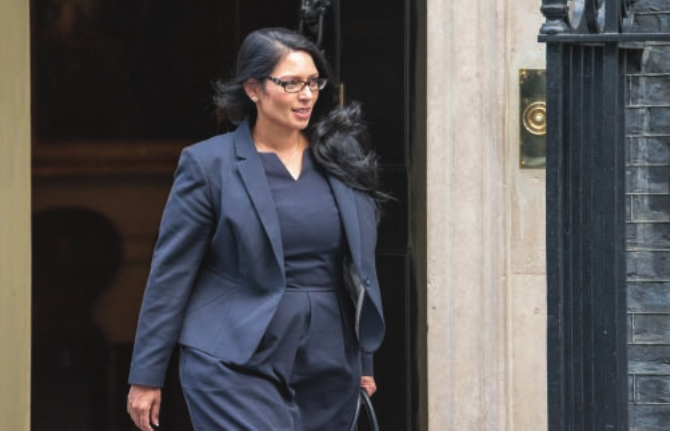
In November 2017, Priti Patel (then international development secretary in May's Cabinet) was forced to quit after Downing Street summoned her to return from a trip to Uganda and Ethiopia.
The Breach: It emerged that she failed to be honest with May about 14 unofficial meetings with Israeli ministers, businesspeople and a senior lobbyist undertaken during a private holiday to Israel. Under the Ministerial Code, ministers must be open and honest about such private meetings.
The Compounding Factor: Patel's offence was compounded when she returned to the UK and gave an interview to The Guardian, making misleading claims that foreign secretary Boris Johnson had been aware of the meetings and that a senior Foreign Office civil servant had briefed against her. This dishonesty led to her summary dismissal.
The Aftermath: However, as often happens, this was temporary suspension rather than permanent exclusion - in July 2019, Patel was appointed home secretary by Boris Johnson. This demonstrates that breaches of the Ministerial Code rarely result in permanent exclusion from government.
Political pressure
Of all causes of resignation, this is perhaps the least easy to define. Political pressure means that over a period of time, perhaps several weeks, a minister has increasingly become embroiled in controversy and negative publicity, making it hard for a prime minister to resist calls for their resignation. It may not be a single policy issue or scandal, but the result of mounting and eventually overwhelming pressure.
Example
Andrew Mitchell and "Plebgate":
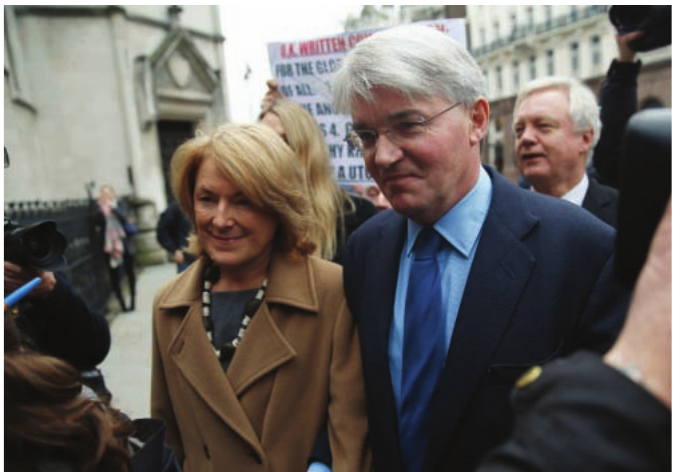
In September 2012, Andrew Mitchell (then chief whip) attempted to cycle out of Downing Street through the main vehicle gates. To his displeasure, he was told to dismount and walk his bike through a pedestrian entrance.
The Alleged Incident: He argued with the officer on duty and, according to the officer's account, Mitchell said: "Best you learn your f***ing place — you don't run this f***ing government — you're f***ing plebs." This quickly hit the press and was termed "Plebgate".
The Controversy: Mitchell apologised saying "I admit I did not treat the police with the respect they deserve", but denied swearing or calling the officers "plebs". For nearly a month, Mitchell clung to office whilst the police officer, supported by the Police Federation, stuck to his version of events. Eventually, with neither side able to prove their case conclusively or retract their story, Mitchell was forced to resign. He had become a distraction for the prime minister and government, and the episode was clouding the entire administration.
The Resignation Statement: In his resignation statement, he said: "It has become clear to me that whatever the rights and wrongs of the matter I will not be able to fulfil my duties as we both would wish...Nor is it fair to continue to put my family and colleagues through this upsetting and damaging publicity." He continued to deny using the word "pleb" and unsuccessfully sued The Sun newspaper for libel.
The Context: The story escalated quickly partly because of context. David Cameron's government had an "issue" with its image of being public school Oxbridge "toffs", partly due to Cameron's own background at Eton and Oxford. A senior minister using a socially derogatory term against a public servant only enhanced this stereotype. It didn't help that Mitchell was on his way to the elite Carlton Club, one of London's foremost private members' clubs.
Ministers resign for many reasons. Some are clear and straightforward (such as principled disagreement over major policy), whilst others are more complex and reflect wider political circumstances. The advent of the #MeToo movement meant allegations of sexual harassment were taken much more seriously in 2020 compared with a decade or two earlier. Similarly, the 2009 expenses scandal made such irregularities a much more high-profile offence.
Note
The Reality of Ministerial Resignations:
Ultimately, individual responsibility is more significant than collective responsibility in explaining resignations. A minister who enjoys their prime minister's political support is in a far stronger position than one the prime minister is happy "to let go".
Occasionally there are genuine personal reasons for resignation - in September 2020, Simon Clark resigned as minister for regional growth and local government citing "balancing my own life against the demands of office", with no scandal, political pressure or policy clash involved.
Whatever the precise cause, any ministerial resignation damages a government, if only because it implies a poor ministerial appointment in the first place.
The accountability of the prime minister and cabinet to parliament
Although modern prime ministers have often been accused of being presidential, they remain accountable to parliament. This involves regular appearances at question time, attending select committees and making ministerial statements before the Commons. However, there is debate about how well this works in practice.
Is the executive largely unaccountable to parliament?
Note
Two Perspectives on Executive Accountability:
The question of whether the executive is truly accountable to parliament is contested, with valid arguments on both sides. The table below presents the key arguments for each position.
Arguments that the executive is largely unaccountable:
- Answers in parliament, especially at Prime Minister's Questions (PMQs), often favour style over substance. Ministers frequently choose to avoid difficult and probing questions.
- The principles in the Ministerial Code are open to interpretation. Ministers often claim they were unaware of errors, and with the prime minister's backing, are unlikely to resign.
- Select committees have relatively little power. An unconvincing or evasive performance is no guarantee of dismissal.
- Most of the time, party loyalty is guaranteed - not only due to party discipline, but also because MPs desire to prevent opponents gaining ground. Few on their own benches openly criticise or attack "their" executive.
Arguments that the executive is accountable:
- Ministers from the prime minister down are subject to regular grilling at ministerial questions and PMQs. The televising of these occasions makes poor performances have even more impact.
- All executive members must follow the principles on standards expected in public life as set out in the Ministerial Code. This includes giving honest and accurate information to parliament and not knowingly misleading parliament or the public.
- Ministers appear before select committees and must be honest and truthful in hearings, which can often be probing and inquisitorial in nature.
- The prime minister above all must retain the support of the parliamentary party. Where this becomes weak, a prime minister's position can eventually become untenable. Some former ministers, such as Heseltine, Howe and Cook, have proved very effective in undermining and exposing flaws in a leader from their own party.
Summary
Key Points to Remember:
-
Individual responsibility means ministers are personally accountable for their own conduct and, to some extent, their department's work. Collective responsibility requires all ministers to publicly support government policy, even if they privately disagreed.
-
The Ministerial Code sets out seven principles expected of all ministers: Selflessness, Integrity, Objectivity, Accountability, Openness, Honesty, and Leadership. Breaking these principles can lead to resignation, though ministers don't have to resign if they retain the prime minister's support.
-
Ministers resign for five main reasons: accepting blame for departmental errors (rare), unwillingness to accept collective responsibility over policy, inability to deliver policy promises, personal misconduct (most common), and political pressure.
-
Collective responsibility can be temporarily suspended on specific issues (e.g., EU referendums, Heathrow expansion) where ministers hold strongly opposing views. It can also be undermined by ministerial leaks or open dissent.
-
The executive is held accountable to parliament through PMQs, select committees, and ministerial statements. However, there is debate about how effective these mechanisms are in practice, with party loyalty and ministerial evasion potentially limiting their impact.