Protection of Civil Rights and Liberties (AQA A-Level Politics): Revision Notes
📚Revision Notes
Protection of Civil Rights and Liberties
Introduction to civil rights and liberties
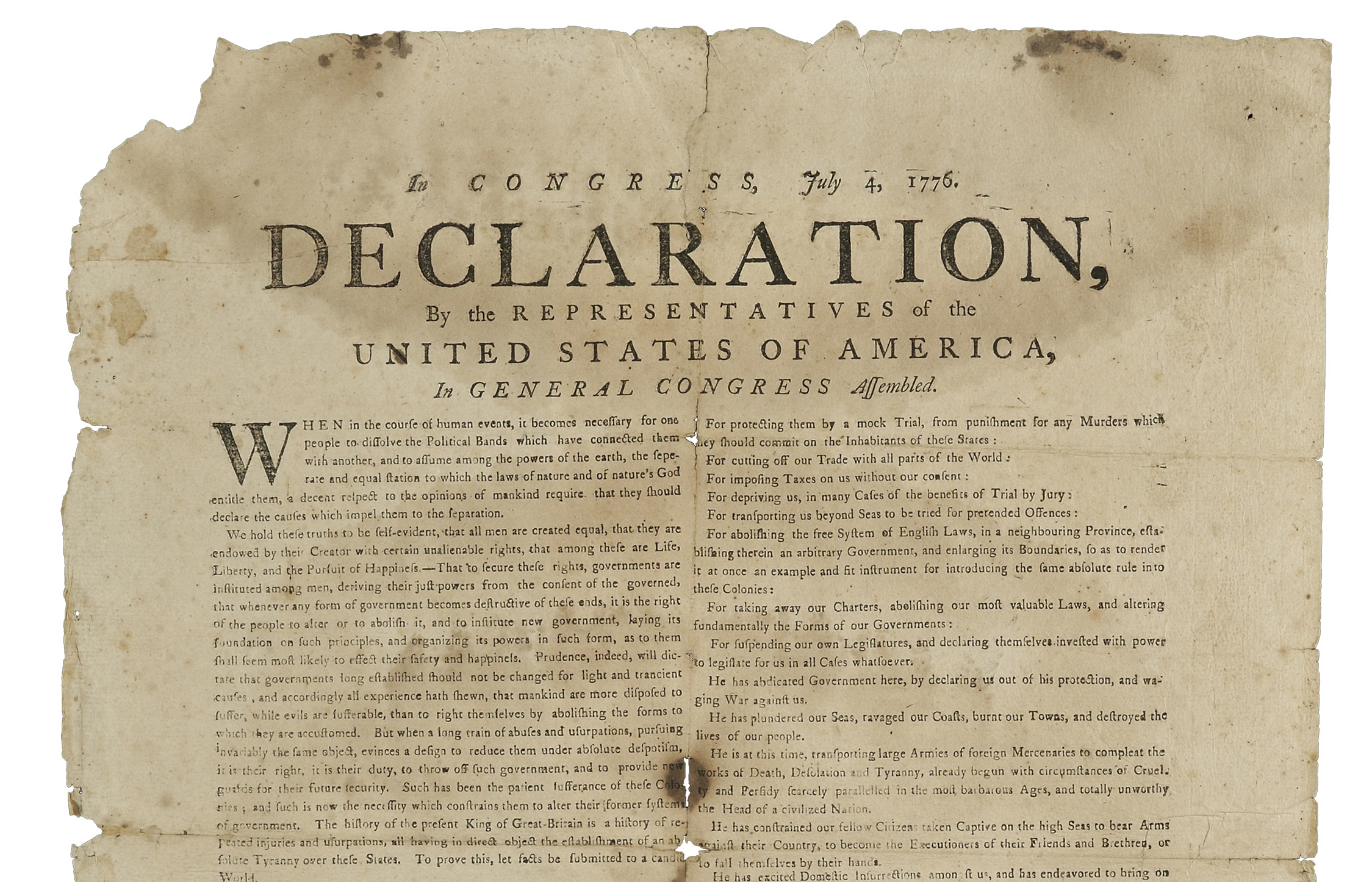
In 1776, 13 American colonies declared independence from Britain and made one of the most significant statements on rights in modern political history. The Declaration of Independence proclaimed that "all men are created equal" and that they possess certain "unalienable Rights" including "Life, Liberty, and the pursuit of Happiness."
Note
Whilst this declaration was revolutionary for its time, it had significant limitations. Women, Native Americans and enslaved people were excluded from these rights. The journey towards equal rights for all Americans has been long and ongoing.
Slavery was abolished only after the Civil War (1861-65). Women gained voting rights in 1920, and the civil rights movement of the 1950s and 1960s achieved racial desegregation and protections for African-Americans. Same-sex marriage was legalised nationwide in 2015.
Important
Today, the struggle for civil rights continues. African-Americans and people of colour experience racism and deep inequality. Muslims have faced increased discrimination, particularly after 9/11 and during Trump's presidency. Women's rights campaigners demand true equality, and the battle for LGBTQ+ and transgender rights remains fierce.
Understanding civil liberties and civil rights
The terms 'civil liberties' and 'civil rights' are often used interchangeably, but they refer to slightly different protections.
Civil liberties are fundamental individual freedoms that all Americans enjoy. These include freedom of speech, religion and association. Most civil liberties are detailed in the Bill of Rights. They generally protect individuals from government authority, ensuring the government cannot infringe upon these basic freedoms.
Civil rights are additional protections that ensure groups of citizens are not discriminated against. Many civil rights originate from the 'equal protection' clause of the Fourteenth Amendment (1865), which initially gave formerly enslaved people equal protection under the law. This amendment has subsequently been used to protect the rights of other groups.
Note
For example, the Supreme Court used the Fourteenth Amendment to ban racial segregation in education in Brown v Topeka (1954) and to establish women's abortion rights in Roe v Wade (1973). Congress has also created civil rights through legislation, such as the Voting Rights Act 1965, which outlawed discrimination that prevented African-Americans from voting.
Methods of protection
The Constitution
The framers of the Constitution, inspired by their experiences of British rule, designed a system to protect US citizens from an overly powerful government. They created a codified system of checks and balances that limited the powers of each branch of government. Citizens who felt their rights had been violated could seek justice through the judicial system. Article III of the Constitution established the Supreme Court as the final court of appeal.
The framers believed in inalienable rights - rights that cannot be taken away. They designed a constitution with a complex amendment process to prevent entrenched rights from being easily removed by future governments or legislatures. Whilst this protects fundamental rights, it has also been criticised for making the Constitution difficult to update.
Important
The original Constitution entrenched rights for some groups, including gun owners, but did not protect the rights of women or African-Americans. Subsequent amendments have been necessary to extend rights to all Americans.
The Bill of Rights (1791)
The first ten amendments to the Constitution, known as the Bill of Rights, were designed to protect the civil liberties of individual US citizens from government actions. These amendments were agreed by Congress in 1789 and ratified in 1791.
| Amendment | Rights protected |
|---|---|
| I | Freedom of religion, speech, press, assembly, and the right to petition the government for a redress of grievances |
| II | Right to keep and bear arms |
| III | Right not to have military troops quartered in private homes |
| IV | Right not to have unreasonable searches and seizures |
| V | Rights of people accused of a crime |
| VI | Right to a fair trial |
| VII | Rights to a trial by jury in common law suits over a certain value |
| VIII | Right not to face excessive bail or fines, nor cruel or unusual punishments |
| IX | Rights that are not enumerated by the Constitution are still held by the people and are protected |
| X | Rights of the states to retain powers that are not delegated to the federal government by the Constitution |
The First Amendment protects fundamental freedoms of religion, speech, press, assembly and petition. These freedoms are essential to American democracy and allow citizens to express themselves and challenge government actions.
The Second Amendment protects the right to keep and bear arms. This remains one of the most controversial amendments in modern American politics.
Note
The Third Amendment was a direct response to British actions before the American Revolution, when colonists were forced to accommodate British soldiers in their homes. Whilst rarely invoked today, it reflects the framers' desire to protect citizens from government intrusion.
The Fourth Amendment protects against unreasonable searches and seizures, requiring government officials to obtain warrants based on probable cause. This protects citizens' privacy and property rights.
The Fifth, Sixth, Seventh and Eighth Amendments focus on the rights of those accused of crimes. These include the right to due process, a fair trial, trial by jury, and protection from cruel and unusual punishment. These amendments ensure that the government cannot arbitrarily deprive citizens of their liberty.
The Ninth Amendment acknowledges that citizens possess rights beyond those specifically listed in the Constitution. This has been used to establish implied rights, such as the right to privacy.
The Tenth Amendment reserves powers not delegated to the federal government to the states or the people. This reflects the federal system of government and protects state sovereignty.
Subsequent amendments to the Constitution
When the Bill of Rights was ratified in 1791, it only applied to free persons. Slavery still existed, and women were not treated equally. Several subsequent amendments extended rights to more Americans:
Thirteenth Amendment (1865): This amendment abolished slavery throughout the United States, following the end of the Civil War. It marked a fundamental shift in American society, though formerly enslaved people still faced significant discrimination.
Fourteenth Amendment (1868): This amendment gave formerly enslaved people full citizenship. It contains two crucial clauses. The 'equal protection' clause grants all citizens equal protection under the law. The 'due process' clause states that the government cannot remove a citizen's life or freedoms without due process. The equal protection clause has provided the basis for many important civil rights judgements by the Supreme Court, extending far beyond racial equality to include women's rights, LGBTQ+ rights, and more.
Important
The Fourteenth Amendment's 'equal protection' clause has become one of the most significant provisions in the Constitution for protecting civil rights. It has been used as the basis for landmark decisions on racial equality, gender equality, LGBTQ+ rights, and many other civil rights protections.
Fifteenth Amendment (1870): This amendment gave men of all races the right to vote, including formerly enslaved people. However, many states found ways to circumvent this amendment through discriminatory practices like literacy tests and poll taxes.
Nineteenth Amendment (1920): This amendment gave women the right to vote on the same terms as men, following decades of campaigning by the women's suffrage movement.
Twenty-Fourth Amendment (1964): This amendment gave Americans the right to vote without needing to pay a tax. Poll taxes had been used to disenfranchise African-Americans, who tended to be poorer than white people. This amendment removed this discriminatory barrier.
The Equal Rights Amendment
The Equal Rights Amendment (ERA) would have made it illegal to discriminate on the grounds of sex. Led by the National Organization for Women (NOW) pressure group, the ERA was passed by Congress in 1972 and ratified by 35 states. However, opposition from conservative women led by Phyllis Schlafly prevented it from being ratified by the necessary three-quarters of state legislatures (38 out of 50) within the timeframe set by Congress.
The final deadline for ratification expired in 1982. However, a new campaign in recent years led to ratification by Nevada (2017), Illinois (2018), and Virginia (2020). In February 2020, the Democrat-majority House of Representatives voted to extend the deadline, meaning the ERA could become law as it had been ratified by the required 38 states. However, approval from the Republican-held Senate would still be needed to extend the deadline, which was unlikely. Despite this setback, the amendment has popular support, with around three-quarters of Americans backing it in 2020.
Important
Exam tip: Without the ERA, women's rights are still protected by the Constitution, particularly the Bill of Rights and subsequent amendments. However, women are not mentioned explicitly except in the Nineteenth Amendment. The ERA was a missed opportunity to entrench equal rights specifically for women. Although Congress has passed laws to prevent sex discrimination, these laws are not entrenched and can be more easily overturned than constitutional amendments.
Landmark rulings of the Supreme Court
The Supreme Court plays a crucial role in protecting civil rights and liberties by interpreting the Constitution and applying it to specific cases. Landmark rulings establish new legal principles or fundamentally change how the Constitution is interpreted, effectively changing the meaning of federal law.
Many landmark civil rights judgements focus on the Fourteenth Amendment and its 'equal protection' clause. The Bill of Rights has tended to form the basis of landmark cases defining Americans' civil liberties rather than their civil rights.
Key landmark Supreme Court cases include:
| Supreme Court case | Year | Rights provided |
|---|---|---|
| Shelley v Kraemer | 1948 | Restrictive covenants which banned the sale of homes to African-Americans were ruled unconstitutional |
| Brown v Board of Education of Topeka | 1954 | Right of students not to be segregated by race |
| Reynolds v Sims | 1964 | Right of voters to vote within a legislative district that is equal in population to other legislative districts (Alabama was found to be underrepresenting voters in districts with large urban populations, which particularly affected African-American voters) |
| Griswold v Connecticut | 1965 | Right to use contraceptives within marriage (states were no longer able to ban contraceptives for married people) |
| Miranda v Arizona | 1966 | Right of suspects to be informed of their Fifth Amendment rights before being questioned by the police |
| Loving v Virginia | 1967 | State laws on interracial marriage were declared unconstitutional |
| Roe v Wade | 1973 | Right to an abortion in the first two trimesters of pregnancy |
| Regents of University of California v Bakke | 1978 | Affirmative action in university applications processes could be constitutional in certain cases |
| Lawrence v Texas | 2003 | Right to engage in private consensual homosexual activity between adults (prior to this, some states had anti-sodomy laws) |
| District of Columbia v Heller | 2008 | Individual right to bear arms |
| Obergefell v Hodges | 2015 | Right of same-sex couples to marry |
| Masterpiece Cakeshop v Colorado Civil Rights Commission | 2018 | Right of a business owner to refuse service on the basis of religious beliefs (in this case, a baker refused to make a wedding cake for a same-sex marriage as it violated his Christian beliefs) |
| Altitude Express v Zarda | 2020 | Right of employees not to be discriminated against for their sexual orientation |
| R.G. & G.R. Harris Funeral Homes Inc. v Equal Opportunity Employment Commission | 2020 | Right of employees not to be discriminated against for being transgender |
| Espinosa v Montana Department of Revenue | 2020 | Right of parents to access state aid to send their children to a private religious school (the Court ruled that state aid could not be denied to a school purely because it was religious, in a victory for religious rights) |
Example
Worked Example: Brown v Board of Education of Topeka (1954)
This landmark case demonstrates how the Supreme Court used the Fourteenth Amendment's 'equal protection' clause to expand civil rights:
Background: Several states had laws requiring racial segregation in public schools, following the 'separate but equal' doctrine established in Plessy v Ferguson (1896).
Issue: Did racial segregation in public schools violate the Fourteenth Amendment's guarantee of equal protection under the law?
Decision: The Supreme Court unanimously ruled that racial segregation in public schools was unconstitutional, overturning the 'separate but equal' doctrine. The Court held that separate educational facilities are inherently unequal and therefore violate the equal protection clause.
Impact: This ruling became a catalyst for the civil rights movement and set a precedent for using the Fourteenth Amendment to challenge other forms of racial discrimination.
These cases demonstrate how the Supreme Court has expanded and defined civil rights over time. From ending racial segregation in schools to establishing marriage equality, the Court has been instrumental in protecting the rights of marginalised groups.
Important
Exam tip: Civil rights can also be protected by Acts of Congress, such as the Civil Rights Acts of 1957, 1964 and 1968, and the Voting Rights Act of 1965. However, legislation passed by Congress is not entrenched in the Constitution, so can be more easily overturned by a subsequent Act. Consequently, Acts of Congress do not provide the same protection of rights as a constitutional amendment or a Supreme Court judgement.
Remember!
Summary
Key Points to Remember:
-
Civil liberties are fundamental individual freedoms (like free speech) that protect citizens from government authority, whilst civil rights are protections that ensure groups of citizens are not discriminated against.
-
The Bill of Rights (first ten amendments) protects individual civil liberties, including freedom of religion, speech, press, assembly, the right to bear arms, and rights of those accused of crimes.
-
The Fourteenth Amendment's 'equal protection' clause has been the basis for many landmark civil rights cases, extending protections far beyond its original purpose of protecting formerly enslaved people.
-
The Supreme Court plays a crucial role in protecting rights through landmark rulings that interpret the Constitution and establish new legal principles, such as ending school segregation (Brown v Topeka, 1954) and establishing marriage equality (Obergefell v Hodges, 2015).
-
Entrenched rights in the Constitution are difficult to change due to the complex amendment process, which provides strong protection but also makes the Constitution challenging to update. The failure of the Equal Rights Amendment demonstrates this difficulty.