Role of Pressure Groups (AQA A-Level Politics): Revision Notes
📚Revision Notes
Role of Pressure Groups
Introduction: pressure groups and constitutional rights
The right of citizens to form pressure groups is itself an important civil liberty protected by the First Amendment, which guarantees freedom of speech and assembly. Citizens have exercised this constitutional right to establish pressure groups that defend and promote various civil rights and liberties across the political spectrum.
Note
Liberal pressure groups typically advocate for the rights of African-Americans and people of colour, immigrants, women, and the LGBTQ+ community. By contrast, conservative pressure groups campaign for religious rights, the rights of the unborn child, and gun rights. This demonstrates how pressure groups serve as vehicles for Americans of all political persuasions to advance their vision of rights and freedoms.
Methods used by pressure groups
Pressure groups employ various sophisticated strategies to promote and support rights. These methods can be grouped into four main categories:
Fundraising forms the financial foundation of pressure group activity. Groups raise money to fund advertising campaigns designed to influence public opinion, politicians, and the judiciary. Access to substantial financial resources often determines a group's effectiveness, which can favour wealthy organisations over grassroots movements.
Public campaigning encompasses a wide range of activities including online campaigns, social media mobilisation, rallies and marches, television advertising, and in some cases, direct action such as protests and demonstrations. These methods aim to raise awareness, build public support, and create pressure for change.
Political campaigning involves lobbying Congress and the federal government, as well as state legislatures and state governments. Pressure groups also make donations to electoral candidates who support their causes, though this raises questions about the influence of money in politics.
Important
Legal campaigning represents a particularly important strategy in the American system. Groups sponsor legal cases that challenge existing laws or policies, and they file amicus curiae briefs (meaning "friend of the court") in cases where they are not direct parties but have an interest in the outcome. This legal approach has produced many landmark Supreme Court decisions advancing civil rights.
American Civil Liberties Union (ACLU)
The American Civil Liberties Union (ACLU) stands as the most significant defender of individual civil liberties in the United States. With more than 1.5 million members and a staff of nearly 300 lawyers, the ACLU defends civil liberties in courts across the nation. It maintains affiliates in every state and participates in more US Supreme Court cases than any other non-governmental organisation.
The ACLU's distinctive approach
What distinguishes the ACLU from many other civil rights groups is its principled commitment to defending the civil liberties of all Americans, regardless of their views. This includes representing members of white supremacist organisations such as American Nazis or the Ku Klux Klan. In 1978, the ACLU successfully defended the right of a neo-Nazi group to march through an area of Chicago where many Holocaust survivors lived.
Note
The ACLU argues that protecting every individual's rights is essential because if the government can take away the rights of one group, there will be nothing to stop it from taking away Americans' civil liberties entirely. Whilst this approach is controversial, it reflects a fundamental principle about the nature of constitutional freedoms.
Historical achievements
The ACLU's objectives have generally aligned with liberal and civil rights causes. The organisation contributed to key landmark civil rights cases, including:
- Brown v Topeka (1954): The ACLU joined forces with the NAACP to support the case that ended racial segregation in schools
- Roe v Wade (1973): The ACLU's involvement helped establish the constitutional right to abortion
Twenty-first century campaigns
In the twenty-first century, the ACLU has won court rulings protecting the privacy rights of gay people and successfully challenged the teaching of intelligent design in science lessons in schools, defending the principle of separation of church and state.
The organisation mounted multiple legal challenges to US national security measures introduced after 9/11, including the waterboarding of terrorist suspects. However, this campaign achieved limited effectiveness, as the Bush, Obama, and Trump administrations continued controversial practices such as imprisonment without trial at Guantanamo Bay, the expanded use of drones, and targeted killings overseas.
Challenges to the Trump administration
By July 2020, the ACLU had filed more than 230 lawsuits against the Trump administration. A notable challenge concerned Trump's 2017 ban on immigration from Muslim-majority countries. The ACLU's legal action led to a federal court blocking the ban, though the government subsequently modified it and the Supreme Court ultimately ruled it constitutional.
Example
Landmark Case: Transgender Rights
In R.G. & G.R. Harris Funeral Homes Inc. v Equal Opportunity Employment Commission (2020), the ACLU defended a woman who was fired for being transgender.
Outcome: This case resulted in a landmark Supreme Court ruling that discrimination on the grounds of gender orientation is unconstitutional, extending civil rights protections significantly.
Impact: The ruling established important precedent for LGBTQ+ rights in employment and beyond.
National Association for the Advancement of Colored People (NAACP)
Founded in 1909, the National Association for the Advancement of Colored People (NAACP) is the USA's oldest civil rights pressure group. Today it has more than half a million members and continues to play a vital role in defending African-American rights.
Civil rights movement achievements
The NAACP achieved major successes during the 1950s and 1960s as part of the wider civil rights movement. The organisation provided legal representation for protesters arrested by authorities and helped plan the historic 1963 March on Washington. The NAACP lobbied Congress to pass crucial civil rights legislation including the Civil Rights Acts of 1957, 1964, and 1968, and the Voting Rights Act 1965.
The group also ran successful voter registration campaigns to increase the numbers of African-American voters. Whilst Martin Luther King and other leaders employed direct action tactics, the NAACP focused on winning civil rights through conventional campaign methods, particularly legal challenges.
Thurgood Marshall and legal victories
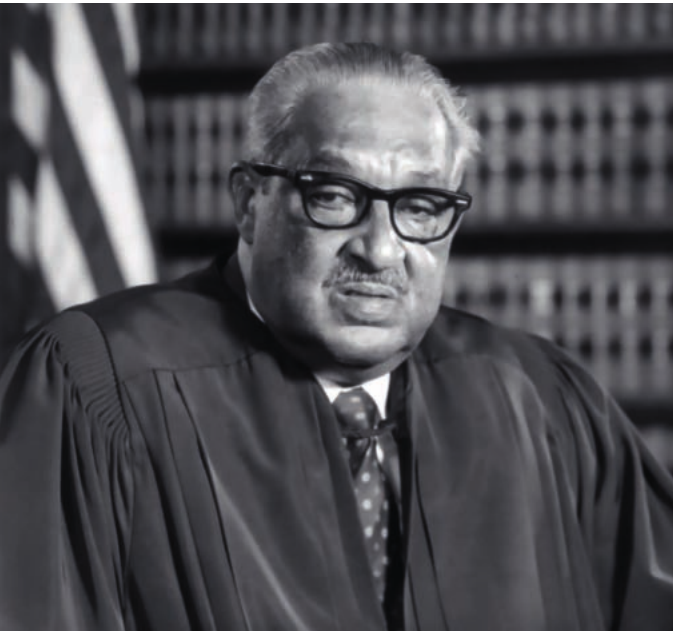
The NAACP led a sustained legal campaign to end racial segregation and overturn the legal principle of 'separate but equal'. Thurgood Marshall, the NAACP's special counsel, won a series of important victories including:
- Shelley v Kraemer (1948): Struck down racially restrictive housing covenants
- Brown v Topeka (1954): Ended racial segregation in public schools
Note
Marshall's success in these cases demonstrated the power of legal campaigning as a strategy for advancing civil rights. He later became the first African-American Supreme Court justice, cementing his legacy in American legal history.
Twenty-first century focus
In the twenty-first century, the NAACP has concentrated on ensuring that African-Americans receive equal treatment in five key areas: economic opportunities, education, health care, criminal justice, and voting rights. The organisation has also worked to expand youth engagement in civil rights campaigns.
Example
Campaign: #WeAreDoneDying
In May 2020, the NAACP launched the social movement #WeAreDoneDying to campaign against institutional racism.
Context: This initiative responded to two concurrent crises:
- The fatal shooting of unarmed 25-year-old Ahmaud Arbery whilst jogging through Brunswick, Georgia
- The disproportionate number of African-American deaths from COVID-19
Impact: The campaign highlighted how systemic racism manifests in both violent encounters and health care disparities.
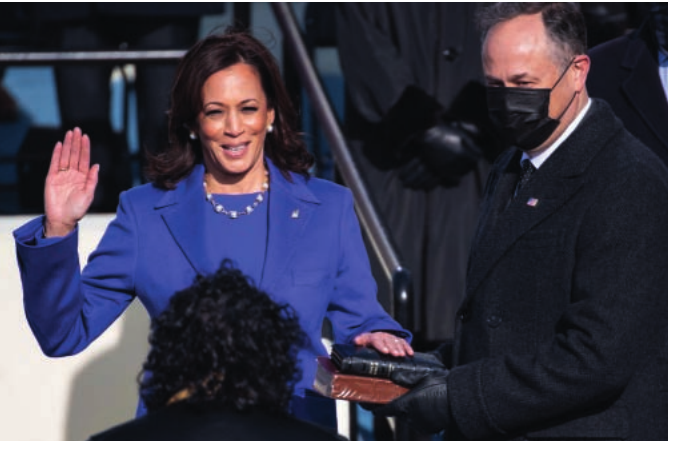
During the 2020 presidential election, the NAACP ran a national voter mobilisation programme. This effort contributed to record levels of black voter turnout and the election of Kamala Harris as the first black vice president of the United States, marking a historic milestone in American politics.
Role of social movements in promoting rights
Social movements have assumed an increasingly important role in promoting and supporting rights in recent years. Unlike traditional pressure groups with formal membership structures, social movements often operate as loosely organised grassroots campaigns that mobilise around specific issues.
Recent examples include Black Lives Matter campaigning for racial equality, the Women's March campaigning for civil rights for women, #MeToo campaigning to end sexual harassment and assault, and the anti-lockdown movement protesting government restrictions during the COVID-19 pandemic.
Civil liberties versus civil rights
Important
An important distinction exists between campaigns for civil liberties and campaigns for civil rights. The anti-lockdown movement represented a campaign for civil liberties rather than civil rights. Civil liberties are often defended by liberals, but also by conservative Republicans and particularly libertarians who seek to protect individual freedoms such as the right to bear arms.
The presence of far-right protesters and white supremacists at anti-lockdown demonstrations illustrates how the aims of civil liberties protesters may conflict with those of civil rights campaigners. Whilst both groups claim to defend constitutional freedoms, their underlying values and objectives can be fundamentally opposed.
Case study: the anti-lockdown movement
During the COVID-19 crisis, numerous state-based social movements emerged to protest against lockdown measures. Protesters argued that state governors' stay-at-home orders violated their constitutional civil liberties. By May 2020, estimates suggested approximately 2 million people were associated with the anti-lockdown movement, with demonstrations occurring in more than half of US states.
Note
Protesters breached lockdown rules to attend crowded demonstrations in state capitals, with many carrying firearms. In April 2020, armed protesters entered the Capitol building in Michigan, a dramatic assertion of their claimed rights. The situation escalated further when, in October 2020, the FBI arrested members of a militia who were planning to kidnap Michigan's governor, Gretchen Whitmer, demonstrating how civil liberties protests can sometimes tip into dangerous extremism.
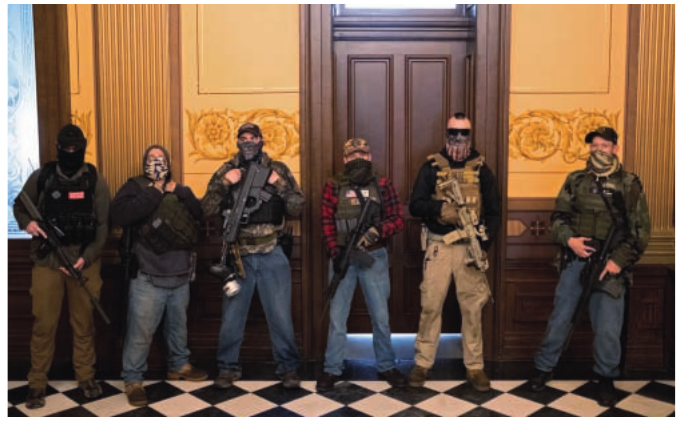
This case study reveals the tensions inherent in balancing public health, government authority, and individual freedoms in the American political system.
Remember!
Summary
Key Points to Remember:
-
Pressure groups are protected by the First Amendment, which guarantees freedom of speech and assembly, making them a fundamental part of American civil liberties.
-
Four main methods are used by pressure groups: fundraising to support campaigns, public campaigning including protests and social media, political lobbying of government, and legal campaigning through courts.
-
The ACLU defends all Americans' civil liberties, including controversial groups, arguing that protecting everyone's rights is essential to prevent government overreach. Key achievements include Brown v Topeka (1954) and successful challenges to Trump administration policies.
-
The NAACP, founded in 1909, is the oldest civil rights organisation and achieved major victories during the civil rights movement through legal campaigns led by Thurgood Marshall. In the twenty-first century, it focuses on economic, education, health, criminal justice, and voting rights equality.
-
Social movements play an increasing role in rights campaigns, but there is an important distinction between civil liberties movements (like anti-lockdown protests) and civil rights movements (like Black Lives Matter), which can sometimes have conflicting aims despite both claiming constitutional protections.