Composition of Congress (AQA A-Level Politics): Revision Notes
📚Revision Notes
Composition of Congress
Constitutional requirements for membership
To serve in Congress, members must meet specific constitutional criteria beyond simply being elected. These requirements differ between the House of Representatives and the Senate.
Note
Constitutional Requirements at a Glance
The Founding Fathers established different requirements for each chamber to ensure the Senate would be a more experienced and stable body:
House of Representatives requirements:
- Age: Must be at least 25 years old
- Citizenship: Must have been a US citizen for at least 7 years
- Residency: Must reside in the state they represent
Senate requirements:
- Age: Must be at least 30 years old
- Citizenship: Must have been a US citizen for at least 9 years
- Residency: Must reside in the state they represent
The higher age and citizenship requirements for senators reflect the Founding Fathers' intention for the Senate to be a more experienced, stable body compared to the House of Representatives.
Demographic diversity in Congress
Overview of representation issues
Congress has faced significant criticism for failing to reflect the diversity of modern American society. The USA is forecast to become "minority white" by 2045, when white people will make up less than 50% of the population. Additionally, nearly 14% of the US population are immigrants, and millennials now outnumber baby boomers.
Important
Despite these demographic shifts, Congress has been described as comparatively "pale, male and stale" due to its high proportion of white, male and older members. Christians are also significantly overrepresented compared to the general population.
This underrepresentation raises questions about whether Congress can truly understand and represent the needs of all Americans.
Current representation statistics
The 117th Congress (2021-23) marked a historic milestone as the most racially diverse Congress in American history. It also had the lowest proportion of Christians and the highest number of women ever recorded. However, significant gaps remain between Congressional representation and the demographics of the wider US population.
| Demographic category | Congress (2021-23) | US population (2019) |
|---|---|---|
| Women | 27% (118 in House, 24 in Senate) | 51% |
| People of colour | 22% | 23% |
| African-Americans | 12% | 13% |
| Hispanic Americans | 9% | 18% |
| Asians | 4% | 6% |
| Religion | ||
| Christian (total) | 88% | 71% |
| — Protestant | 55% | 48% |
| — Catholic | 30% | 21% |
| — Mormon | 2% | 2% |
| Jewish | 6% | 2% |
| Buddhist | 0.4% | 1% |
| Muslim | 0.6% | 1% |
| Hindu | 0.4% | 1% |
| No religion | 0.2% | 23% |
| LGBTQ+ | 2% | 4.5% |
| Average age | 59 years | 38 years |
| University degree | 99% | 35% (adults over 25) |
Professional backgrounds: Congress is dominated by those with careers in politics, law and business, with 99% holding university degrees compared to just 35% of adults over 25 in the general population.
Groups significantly underrepresented
Several demographic groups remain substantially underrepresented in Congress:
Women: Despite making up 51% of the US population, women constitute only 27% of Congress. Notably, women are much better represented within the Democratic Party than the Republican Party. Of the 142 women in the 117th Congress, Republicans accounted for just 37 (26%), whilst Democrats made up the remaining 105 (74%).
Hispanic Americans: As the largest ethnic minority group in the USA (18% of population), Hispanics are significantly underrepresented at just 9% of Congress. Of the 52 Hispanic members in the 117th Congress, 46 served in the House and 6 in the Senate.
Note
Understanding Hispanic/Latino/Latinx Terminology
The term Hispanic describes Americans with origins in Spanish-speaking countries. Many prefer the term Latino, which applies to people with Latin American roots regardless of language. Recently, Latinx has emerged as a gender-neutral alternative. In practice, these terms are often used interchangeably.
African-Americans: Whilst African-Americans make up 13% of the US population, they represent 12% of Congress (52 in the House, 3 in the Senate). There is a stark partisan divide: 58 African-American members were Democrats, whilst only 3 were Republicans.
Non-religious Americans: People with no religion are the most underrepresented group in Congress. Despite 23% of Americans identifying as non-religious, only one member of the 117th Congress had no religious affiliation - Senator Kyrsten Sinema (Democrat, Arizona), who is also the first openly bisexual senator.
LGBTQ+ community: With 4.5% of Americans identifying as LGBTQ+, but only 2% representation in Congress, this community remains underrepresented despite the 117th Congress having a record 11 openly LGBTQ+ members.
Younger Americans: Congress has an average age of 59 years compared to the national average of 38 years, indicating significant underrepresentation of younger generations.
Progress towards greater diversity
Despite ongoing representation gaps, Congress has made notable progress in recent years. The 2018 midterms saw more women run for Congress than ever before, partly as a reaction to Hillary Clinton's 2016 presidential defeat. This resulted in the 116th Congress (2019-21) having 24% female representation - a record at the time.
The Squad
The 116th Congress also witnessed the election of four progressive Democratic congresswomen of colour who became known as "The Squad": Alexandria Ocasio-Cortez, Ilhan Omar, Ayanna Pressley and Rashida Tlaib. They were seen as representing a new generation of progressive politics.

Note
Historic Firsts in Recent Congresses
- Alexandria Ocasio-Cortez made history by becoming the youngest ever congresswoman at age 29
- The 116th Congress saw the first two Muslim women elected to Congress (Ilhan Omar and Rashida Tlaib)
- A record four Native Americans were elected to the 116th Congress
- These achievements demonstrate gradual progress towards a more representative Congress
Reasons for underrepresentation
Several factors contribute to the persistent underrepresentation of certain groups in Congress:
State legislature pipeline
Many members of Congress first serve in state legislatures before running for federal office. However, women and African-Americans are also underrepresented at the state level, creating a shortage of suitable candidates for Congress from these groups.
Majority-minority districts
Majority-minority districts are congressional districts where a majority of voters belong to the same minority ethnic group (such as African-American voters). These districts help increase representation of ethnic minorities in the House of Representatives. However, this mechanism does not apply to Senate seats, as senators represent entire states rather than specific districts. This partially explains why African-Americans and Hispanics are better represented in the House than in the Senate.
Congressional culture barriers
Important
Breaking Down Cultural Barriers
Congress has traditionally been male-dominated, and its culture and traditions have been slow to adapt to the needs of women and other underrepresented groups.
For example, the Senate swimming pool remained male-only until 2009 and allowed male senators to swim naked if they wished. This highlights how deeply ingrained traditional practices have been in Congressional culture.
Practical barriers also exist for parents. Senators must be physically present to vote, making it difficult for new parents to take maternity or paternity leave or care for young children whilst the Senate is in session. Progress is gradually being made: in 2018, Tammy Duckworth became the first senator to have a baby whilst in office. She successfully convinced the Senate to change its rules to allow young children in the chamber.
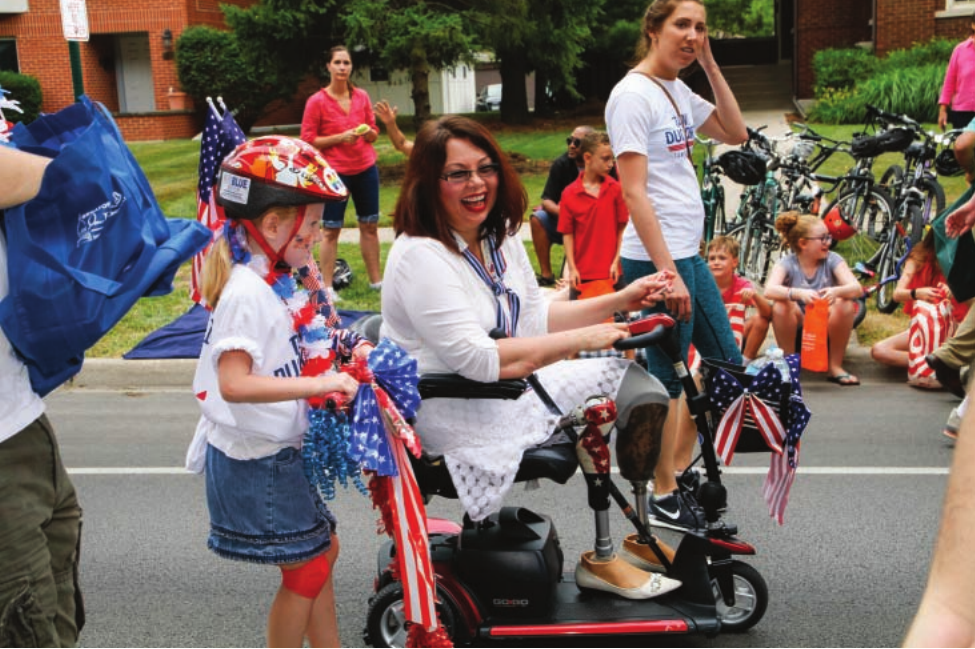
Senator Duckworth, who had both legs amputated after her helicopter was attacked in Iraq whilst serving as a military pilot, is also an advocate for people with disabilities and veterans.
Terms of office
The term of office refers to how long a member of Congress can remain in their position before they must contest it in another election. The House of Representatives and Senate have different term lengths, which significantly affects how each chamber functions.
House of Representatives: 2-year terms
Members of the House serve 2-year terms, meaning they face re-election every two years. This short term length has several implications:
- The composition of the House can change dramatically every two years, quickly reflecting shifts in public opinion
- Representatives remain highly responsive to their constituents' views, as they face frequent elections
- Members may focus more on short-term popular policies to secure re-election
Senate: 6-year terms
Senators serve 6-year terms, with only one-third of Senate seats up for re-election in each 2-year election cycle. This longer term has different implications:
- Senators gain more experience and can develop expertise over time
- They can take a more long-term view of issues, as elections are less frequent
- Senators have greater freedom to make decisions that may be unpopular in the short term but necessary for long-term benefit
- The Senate acts as protection against volatile swings in public opinion, as two-thirds of its members are not contested in any given election
Note
Comparing Term Lengths
The party with a majority in the House could potentially change every election, but this is much less likely in the Senate due to the staggered election cycle. This creates an important balance between responsiveness and stability in Congress.
The Senate as a "cooling saucer"
George Washington reportedly described the Senate as having been designed to "cool" legislation passed by the House, in the way a saucer might cool hot tea. This reflects the Founding Fathers' intention for the Senate to provide stability and careful consideration, whilst the House responds more immediately to public sentiment.
Party allegiance
Congress is overwhelmingly dominated by the two main political parties: the Democratic Party and the Republican Party.
At the start of the 117th Congress, all members of the House of Representatives identified as either Republican or Democrat. In the Senate, all but two senators belonged to one of these two parties.
Independent senators
The Senate includes two independent senators:
- Bernie Sanders (Vermont)
- Angus King (Maine)
However, both independents belong to the Democratic caucus, meaning they work closely with the Democratic Party and tend to vote with them on most issues. Bernie Sanders' close alignment with Democrats is demonstrated by his campaigns for the Democratic presidential nomination in both 2016 and 2020.
The dominance of the two-party system means that genuine third-party or independent representation in Congress remains extremely rare.
Remember!
Summary
Key Points to Remember:
-
Constitutional requirements differ between chambers: House members must be 25+ with 7+ years citizenship; senators must be 30+ with 9+ years citizenship. Both must reside in the state they represent.
-
Congress is criticised as "pale, male and stale" - women, ethnic minorities, non-Christians, LGBTQ+ people and younger Americans are significantly underrepresented compared to the general population.
-
The 117th Congress (2021-23) was the most racially diverse in history with record numbers of women, though representation gaps persist, particularly for Hispanics, women, and non-religious Americans.
-
Underrepresentation stems from state legislature pipelines, majority-minority districts (House only), and traditional male-dominated congressional culture that creates barriers for women and minorities.
-
Terms of office create different dynamics: the House's 2-year terms ensure responsiveness to public opinion, whilst the Senate's 6-year terms provide stability and allow for long-term decision-making.
-
Congress is dominated by Democrats and Republicans, with only 2 independent senators (Sanders and King) who caucus with Democrats.