Party and Committee System (AQA A-Level Politics): Revision Notes
📚Revision Notes
Party and Committee System
The party and committee systems are two fundamental organisational structures within the US Congress. They shape how legislation is developed, how power is distributed, and how effectively Congress can perform its constitutional functions of legislation and oversight.
Note
Understanding these two systems is essential to grasping how Congress functions in practice. The party system determines political coordination and voting patterns, whilst the committee system enables specialisation and detailed scrutiny of legislation.
Party system in Congress
Congressional caucuses
A congressional caucus is a grouping of members of Congress who collaborate to pursue shared legislative objectives. While most members belong to multiple caucuses based on various interests, every member (except independents who choose otherwise) belongs to one of the four main party caucuses.
The four main party caucuses are:
- House Republican caucus (also called the House Republican Conference) – all Republicans in the House of Representatives
- Senate Republican caucus (also called the Senate Republican Conference) – all Republicans in the Senate
- House Democrat caucus – all Democrats in the House of Representatives
- Senate Democrat caucus – all Democrats in the Senate
Beyond these major party groupings, smaller caucuses function as subgroups united by particular interests, often ideological. For instance, the House Freedom Caucus consists of approximately 45 conservative Republicans committed to limited government principles, whilst the Congressional Progressive Caucus comprises nearly 100 progressive Democrats who advocate for government intervention to improve society.
Progressive politics emphasises using government action to enhance society and improve the lives of ordinary citizens. This approach is particularly associated with the liberal wing of the Democratic Party.
Some caucuses operate on a bipartisan basis, including members from both parties. Examples include the Bipartisan Heroin and Opioid Task Force and the Climate Solutions Caucuses in both chambers. The Congressional Black Caucus is technically bipartisan, though only four Republicans have ever joined it.
Note
Caucuses can span both chambers of Congress. The Congressional Black Caucus, for example, had 55 members in 2019, including two senators. Smaller caucuses can wield significant influence, sometimes rivalling the party leadership's authority. In early 2018, the House Freedom Caucus opposed President Trump's budget proposal, forcing Republicans to rely on Democrat votes to pass the legislation.
Party leadership structure
Each party caucus in both chambers elects a leader. This leader is designated:
- The majority leader if their party controls that chamber
- The minority leader if their party is in the minority
These majority and minority leaders serve as floor leaders, responsible for planning the legislative agenda and coordinating their party members during votes and debates. Their primary objective is achieving party unity to advance legislative goals.
The speaker of the House of Representatives holds the most prominent leadership position in Congress. Elected by all House members, the speaker always belongs to the majority party. The speaker's responsibilities include presiding over debates, maintaining order during House sessions, and serving as the majority party's leader. The speaker determines the House's legislative agenda and appoints members to conference and select committees, granting considerable power. The Constitution places the speaker second only to the vice president in presidential succession.
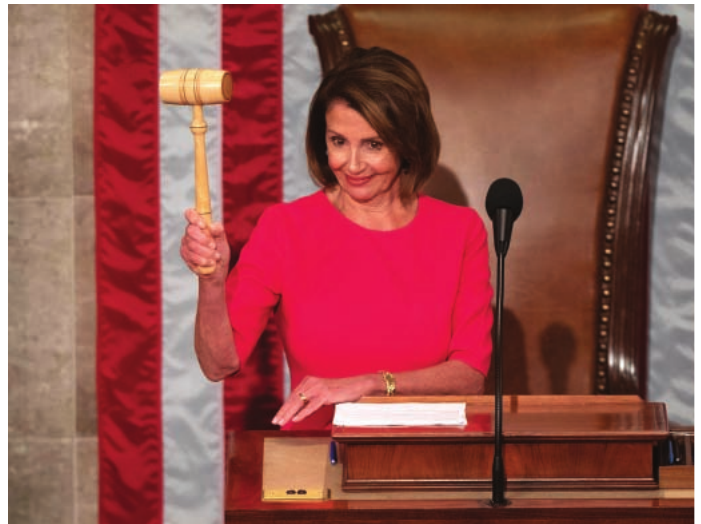
When the speaker belongs to a different party than the president, they become the primary voice of opposition to the executive. The speaker receives support from the House majority leader, who ranks second in the party hierarchy and implements the speaker's agenda by scheduling legislation for House consideration. Additional support comes from the assistant speaker, the party whip, and the chair of the party caucus.
Example
Case Study: Nancy Pelosi as Speaker of the House
Nancy Pelosi made history by becoming the first female speaker of the House of Representatives in 2007, serving until 2011 before being re-elected in 2019. Her election represented a significant milestone as the most important position held by a woman in Congress and in the presidential line of succession (until Kamala Harris became vice president in 2021).
Pelosi first entered Congress as a California representative in 1987 at age 47, after raising five children and serving as a volunteer organiser for the Democratic Party, including on the Democratic National Committee. As speaker, she led House Democrats to impeach President Trump in December 2019. However, she also demonstrated willingness to work across party lines, securing passage of Trump's revised trade agreement with Canada and Mexico in the same month as the impeachment vote.
This case illustrates how the speaker can simultaneously act as opposition leader whilst facilitating bipartisan legislation when it serves constituents' interests.
Party discipline
Party discipline in Congress has traditionally been weak compared to other democratic legislatures. Party whips in each chamber work to organise members to vote according to leadership directives. However, their power to enforce unity is limited. The separation of powers prevents party leaders from offering government positions to Congress members in exchange for support – a key difference from parliamentary systems.
Important
Party discipline is notably weaker in the US Congress than in parliamentary systems due to the separation of powers. Leaders cannot offer executive positions or easily remove members, so they must rely heavily on persuasion and limited incentives like committee assignments.
In the House, the speaker possesses some mechanisms to influence members. The speaker decides who sits on the House Rules Committee and who chairs and sits on select and conference committees. In the Senate, party leaders determine committee assignments, which can encourage senators to follow party directions.
Party leaders often must rely on persuasion to convince members to support the party's agenda, particularly challenging given the broad range of opinion within each party. In 2018-19, Democrats maintained unity through shared opposition to Trump's border wall proposal during the longest government shutdown in American history.
The final enforcement mechanism involves threatening to withdraw party support, either during a member's next election campaign or in their advancement up the party hierarchy. The 2018 midterm elections marked a turning point in Trump's control of the Republican Party. Many of his critics resigned from Congress and were replaced by more supportive members. Republicans lost House control but generally won seats where Trump campaigned personally. During Trump's 2019 impeachment trial, only one Republican senator, Mitt Romney, voted against him.
Despite party discipline being characterised as weak, Congress has become more partisan and polarised over recent decades, with members increasingly likely to vote along party lines.
Partisanship and polarisation
Partisanship refers to a focus on one's political party's interests. When extreme, partisanship can damage democracy by preventing bipartisanship – the process of two parties working together to reach compromise.
During the 1980s, many members of Congress were politically centrist, with considerable ideological overlap between moderate Republicans and Democrats. This overlap enabled collaboration on legislation. Even during divided government (when different parties control the presidency and one or both chambers of Congress), presidents with centrist proposals could often find sufficient bipartisan votes.
Important
The Polarisation Trend
Since the 1990s, Congress has become much more polarised. Republicans and Democrats have moved further apart on the political spectrum, leaving few members occupying the centre ground. This has made bipartisan cooperation increasingly difficult and contributed to legislative gridlock.
One factor driving this polarisation is the reduced number of competitive electoral districts – districts where either party has a realistic chance of winning. In 1997, there were 164 competitive congressional districts; by 2020, only 91 remained. This reduction means most districts are safely Republican or Democrat, encouraging representatives to appeal to their party base rather than the centre ground.
Increased polarisation amplifies partisanship, as the two parties become ideologically opposed in ways that seem irreconcilable. Bipartisanship becomes more difficult, increasing the likelihood of gridlock during divided government. Party unity votes – where the majority of voting Republicans oppose the majority of voting Democrats – have increased significantly since 2000, another consequence of heightened partisanship.
Efforts to restore bipartisanship
Some initiatives have sought to increase bipartisan cooperation. The Problem Solvers Caucus, established in 2017, promotes bipartisan collaboration on legislation with approximately 50 members from both parties. Whilst this represents a small proportion of Congress, party leaders have shown willingness to compromise on key initiatives. The First Step Act 2018, which reformed the criminal justice system, demonstrated successful bipartisan cooperation.
Note
The COVID-19 crisis initially generated exceptional bipartisan unity. In March 2020, the Senate voted unanimously (96-0) to approve the Coronavirus Aid, Relief, and Economic Security (CARES) Act – the largest economic stimulus in US history. The House vote was nearly unanimous. Coming just two months after the bitter partisanship of Trump's impeachment, the CARES Act showed Congress could set aside party differences when circumstances demanded it. However, partisanship resurged in late 2020, as Republicans and Democrats failed to agree on further economic stimulus.
Committee system in Congress
The committee system comprises several different committee types that help Congress fulfil its functions. These include standing committees, select committees, the House Rules Committee, and conference committees.
Note
The committee system enables Congress to manage its enormous workload by dividing responsibilities among specialised groups. Each committee type serves a distinct purpose in the legislative process, from detailed policy work to resolving differences between chambers.
Standing committees
Standing committees are permanent committees, each focusing on a specific policy area such as foreign affairs or agriculture. There are 20 standing committees in the House and 16 in the Senate. Much of their detailed work occurs within subcommittees. Parties are represented on committees in the same proportions as in the full chamber, so the majority party controls all standing committees.
Standing committees are responsible for:
- Holding hearings during the committee stage of bills to question witnesses and vote on whether bills should proceed to the full House or Senate
- Conducting investigations and oversight of the executive branch within their policy area
Senate standing committees have an additional crucial responsibility: considering presidential appointments. The process involves:
- Holding hearings to examine the nominee's suitability
- Voting on whether to recommend confirmation to the full Senate
Standing committees enable Congress to manage the vast range of issues requiring legislation and investigation. Long-serving committee members develop expertise in their policy areas, positioning them ideally to scrutinise relevant legislation. This specialist knowledge allows more effective oversight than the chambers as a whole, giving committee findings greater authority. Hearings often attract significant media attention, providing an important check on executive power. Consequently, committee chairs hold desirable and influential positions within Congress.
Important
Presidential Appointments: A Senate Power
Senate standing committees play a vital role in presidential appointments. Committee hearings provide a public test of nominees' suitability, and the committee vote typically indicates how the full Senate will respond. Committees can even influence whether nominees receive Senate consideration. When President Obama nominated Merrick Garland to the Supreme Court in 2016, Republican members of the Senate Judiciary Committee supported Majority Leader Mitch McConnell's refusal to hold hearings, effectively blocking the appointment.
Select committees
Select committees are established to address specific urgent issues, preventing relevant standing committees from becoming overloaded. Most are temporary, though a few – such as the House Permanent Select Committee on Intelligence and the Senate Select Committee on Intelligence – are permanent.
Select committees generally focus on investigation rather than legislation. From 2017 to 2020, the Senate Select Committee on Intelligence investigated Russian interference in the 2016 presidential elections. Select committees conduct high-profile, detailed hearings serving the public interest. The possibility of congressional investigation creates a powerful incentive for the executive to ensure its actions withstand scrutiny.
Important
However, investigations can become politicised, reducing their credibility. Committees may even divide on their conclusions, as demonstrated by the Benghazi investigation. When partisanship overshadows the investigative purpose, select committees lose their effectiveness as oversight mechanisms.
Example
Case Study: House Select Committee on Benghazi
The House Select Committee on Benghazi (2014-16) investigated the 2012 terrorist attack on the US embassy in Benghazi, Libya, which killed the US ambassador to Libya. The committee interviewed over 100 witnesses and spent two years and $7 million on the investigation.
The committee gained national attention when it questioned former secretary of state Hillary Clinton for 11 hours in 2015. Clinton was then the frontrunner for the Democratic Party's 2016 presidential nomination. Republicans' hostile questioning and determination to revisit previously covered issues appeared designed to score political points rather than uncover new information.
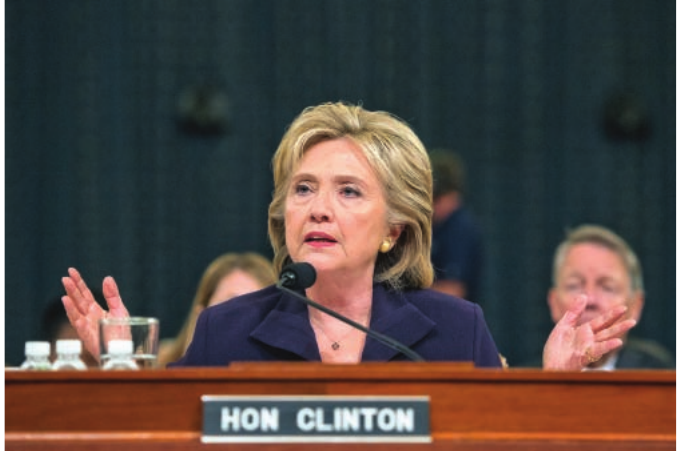
The committee released an 800-page report in 2016 finding no new evidence against Clinton, focusing instead on military leadership in Washington. However, the committee divided along partisan lines. Two Republican members released their own report highlighting leadership failures and emphasising Clinton's role. Democrats on the committee also released their own report exonerating Clinton.
This case demonstrates how select committee investigations can be undermined by partisan divisions, reducing their effectiveness as oversight mechanisms.
House Rules Committee
The House Rules Committee is a standing committee with unique importance. It establishes the 'rules' for bills, determining how much time they receive on the House floor and whether amendments are permitted. Open rules allow members to propose amendments to bills, whilst closed rules prohibit amendments.
The committee has a small membership of 13, weighted toward the majority party in a 2:1 ratio. The speaker uses this majority control to determine what the House debates. The committee decides which legislation is discussed, when, for how long, and in what manner. The House can force debate on a bill if an absolute majority of members sign a discharge petition, but this is difficult to achieve. Generally, the committee's decisions prevail.
Important
Exceptional Power Over Legislation
The House Rules Committee's choices carry significant consequences. The proportion of bills debated under closed rules has increased in recent years. In the 115th Congress (2017-19), 56% of bills faced closed rules – the highest percentage in congressional history. This prevents legislation improvement through member amendments and reduces the minority party's ability to shape government bills.
The chair of the House Rules Committee holds one of Congress's most powerful positions. Pete Sessions, who chaired the committee from 2013 to 2019, received millions of dollars in campaign donations from pressure groups and corporate donors due to his influence. Sessions reportedly used his position to advance his personal opposition to marijuana, preventing amendments that would have relaxed federal laws against marijuana in states where it is legal.
Conference committees
Conference committees are temporary committees established to consider specific bills when the House and Senate have passed different versions of the same legislation. Members from the relevant standing committees in each chamber sit together to consider both versions and merge them into a combined bill called a conference report. This final version returns to both chambers for approval votes. Either or both chambers can reject the final bill if dissatisfied.
Note
Conference committees can play an important role in developing legislation but have been used less frequently in recent years. The 104th Congress (1995-97) produced 67 conference reports, compared with just 7 in the 115th Congress (2017-19). Party leaders increasingly prevent bills from going to conference committee because the final bill's shape would be beyond their control. Instead, they ask members in one chamber to adopt the other chamber's version.
Representative role of senators and representatives
One key role of Congress members is representing their constituents through:
- Communicating with constituents
- Passing legislation
- Committee membership
- Lobbying the executive
- Constituency casework
These activities ensure that the voices and interests of ordinary citizens are heard in the federal legislative process.
Summary
Key Points to Remember:
-
Congressional caucuses organise members around party affiliation or shared interests; smaller caucuses can wield significant influence despite their size
-
Party discipline is traditionally weak in Congress due to separation of powers, but partisanship has increased significantly since the 1990s, making bipartisan cooperation more difficult
-
The speaker of the House is the most powerful position in Congress, controlling the legislative agenda and committee appointments; Nancy Pelosi was the first woman to hold this position
-
Standing committees are permanent policy-focused committees that consider legislation, conduct oversight, and (in the Senate) vet presidential appointments; they allow members to develop specialist expertise
-
The House Rules Committee uniquely controls what is debated on the House floor and under what conditions, giving it exceptional power to shape legislation
Important terms: Congressional caucus, progressive, majority leader, minority leader, speaker of the House, party whip, partisanship, bipartisanship, polarisation, divided government, party unity votes, standing committees, select committees, House Rules Committee, conference committees, open rules, closed rules, oversight