The Judicial Branch of Government (AQA A-Level Politics): Revision Notes
📚Revision Notes
The Supreme Court: Selection, Appointments, and Composition
Introduction
The Supreme Court is the highest federal court in the United States. It serves as the final court of appeal and holds the crucial responsibility of interpreting the Constitution. The justices of the Supreme Court wield enormous power, as they can overrule decisions made by the democratically elected president and Congress. Their rulings have profound impacts on American politics and society, affecting issues ranging from civil rights and abortion to marriage equality and capital punishment.
The Court acts as the guardian of the Constitution, with the duty of protecting citizens' rights. Because of this immense power, the process of selecting and appointing Supreme Court justices has become highly politicised and controversial.
Note
The Supreme Court's power extends beyond simply hearing appeals. Its justices have the authority to determine what the Constitution means in practice, making them some of the most influential figures in American government despite not being elected by the people.
The Supreme Court's place in the judicial branch
The federal court system
The judicial branch of government consists of a system of courts that interpret and apply the nation's laws. Cases in the federal system begin at the district court level, where witnesses testify and a judge or jury determines guilt or innocence. If either party disputes the verdict, they can appeal to the US Courts of Appeals (also called circuit courts). These courts review the decisions to ensure the law was applied correctly, but they do not retry cases or hear from juries.
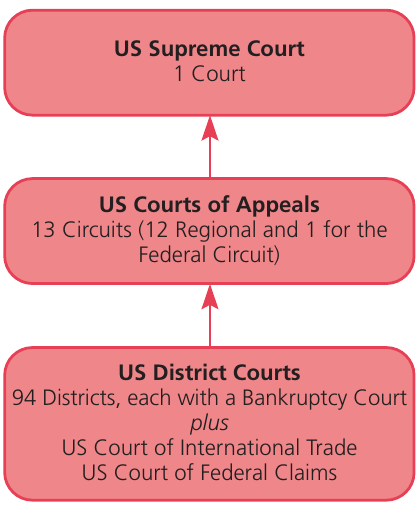
Decisions from the Courts of Appeals can be further appealed to the Supreme Court. However, the Supreme Court receives requests to review more than 7,000 cases annually and agrees to hear only 100-150 of them. The justices select cases that involve areas of constitutional interpretation requiring clarification.
Note
The Appeal Process
The journey from district court to the Supreme Court can take years. Cases must first exhaust lower court options before the Supreme Court will consider them. The justices use a process called "granting certiorari" to decide which cases deserve their attention, typically selecting those that involve conflicting interpretations of federal law or significant constitutional questions.
Judicial review
The Supreme Court's power of judicial review allows it to determine whether laws or government actions are constitutional. This means the Court can:
- Declare Acts of Congress or state legislatures unconstitutional
- Rule that actions by the president, state governors or their administrations violate the Constitution
Important
The Power of Judicial Review
This power enables the Supreme Court to check the other two branches of government, ensuring all federal and state government actions comply with the Constitution. Because the Constitution is sovereign, judicial review gives the Supreme Court tremendous authority in American politics.
The Supreme Court consists of one chief justice and eight associate justices. The odd number prevents tied decisions, though occasionally fewer than nine justices may hear a case if a seat is vacant or a justice recuses themselves due to a personal connection to the case.
The process of selection and appointment
Supreme Court justices serve for life, so vacancies only occur when a sitting justice dies, retires or is impeached. The appointment process involves both the president and the Senate in a highly charged political process.
Presidential selection of the nominee
When a vacancy arises, the president has the power to nominate a replacement. This nominee will likely remain on the Court for many years or decades beyond the president's own term in office, making each appointment highly significant.
The president's team begins by creating a list of potential nominees, consulting with political advisers, party officials and legal experts. Several factors influence the selection:
- Judicial experience and legal knowledge: Most nominees have served on federal Courts of Appeals
- Professional standing and reputation: The candidate's career achievements and legal scholarship
- Personal history and integrity: Every aspect of their professional and personal life is scrutinised
- Judicial philosophy: Their previous rulings are examined to predict future votes
Presidents aim to appoint justices who share their interpretation of the Constitution. Conservative presidents nominate conservative justices, whilst liberal presidents nominate liberal justices. President Trump, for example, promised to choose nominees from candidates suggested by the conservative Federalist Society.
Note
Strategic Considerations
The president must also consider whether the nominee can gain Senate confirmation. Potential candidates are short-listed and thoroughly vetted by White House lawyers and the FBI. This intense background checking aims to uncover anything that might derail the confirmation.
Justice Anthony Kennedy, for instance, endured more than ten hours of FBI interviews covering topics from his sexual history to his treatment of animals.
After interviewing the final candidates, the president announces their choice. This triggers massive media attention and public scrutiny. Occasionally, issues emerge after the announcement that were missed during vetting. In 1987, Ronald Reagan's nominee Douglas Ginsburg withdrew when it emerged he had used marijuana whilst a law professor.
Senate confirmation of the appointment
Once nominated, the candidate faces examination by the Senate Judiciary Committee. This standing committee conducts the following process:
- Questionnaire: The nominee completes extensive paperwork about their experience and previous rulings
- Witness testimony: Experts help the committee assess the nominee's suitability
- Televised hearings: The nominee is interviewed by committee members
- Committee vote: The committee votes on whether to recommend confirmation to the full Senate
The committee's vote usually indicates how easily the nominee will be confirmed by the Senate itself. Ruth Bader Ginsburg received unanimous committee support before being approved 96-3 by the Senate. In contrast, Clarence Thomas's tied 7-7 committee vote foreshadowed his narrow 52-48 Senate confirmation.
A simple majority in the Senate is sufficient for confirmation. However, the process has become increasingly partisan in recent years.
The filibuster and the nuclear option
Historically, presidential nominees needed support from 60 of the 100 senators because any senator could filibuster (speak indefinitely to prevent a vote). Sixty votes were required to invoke cloture (end the filibuster).
This changed through two key rule modifications:
- 2013: The Democrat-controlled Senate introduced the "nuclear option" for executive branch and lower judiciary nominations, allowing cloture with a simple majority
- 2017: The Republican-held Senate extended this to Supreme Court nominations to prevent Democrats from filibustering Neil Gorsuch's confirmation
Important
Impact of the Nuclear Option
These changes mean justices can now be confirmed by just one party if it holds a Senate majority. This has enabled more controversial candidates to be approved and given presidents greater power in shaping the Court.
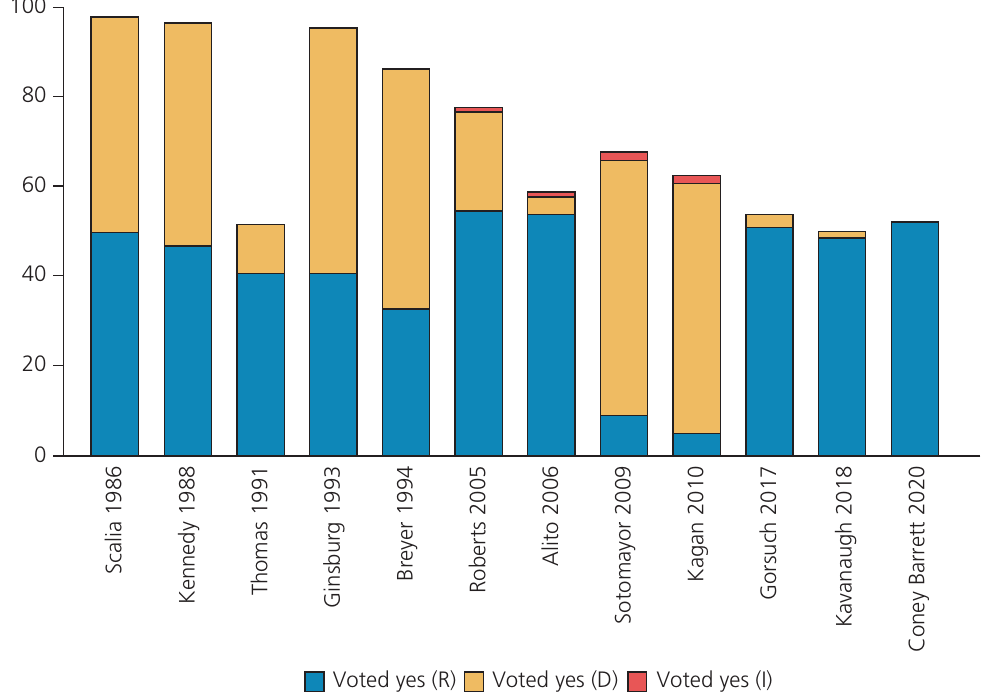
The chart above demonstrates the trend towards partisan polarisation in Supreme Court confirmations. Earlier nominees received near-unanimous bipartisan support, whilst recent nominees have seen sharply divided votes along party lines.
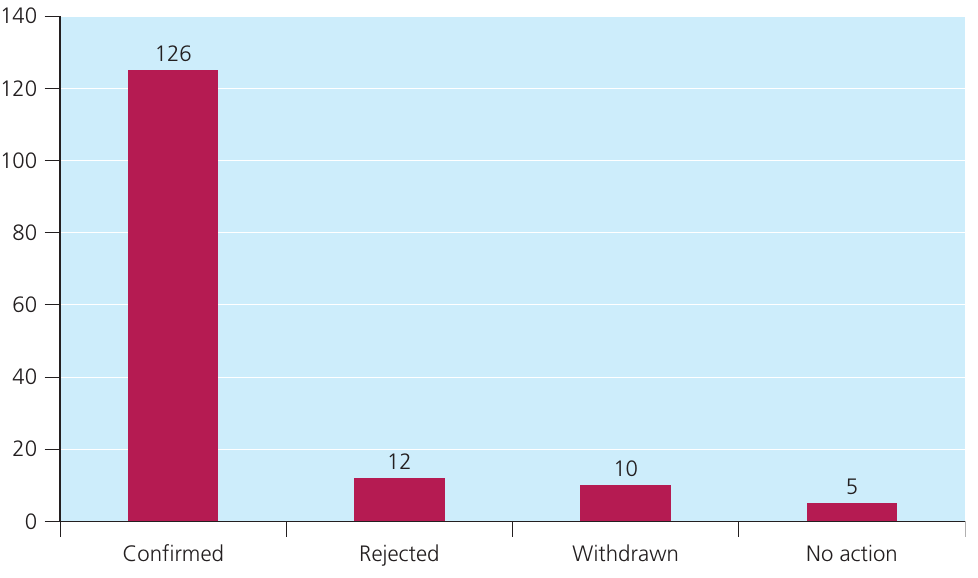
Defeat at the Senate confirmation stage remains relatively rare. The Senate last formally rejected a nominee in 1987, and the last withdrawal was in 2005. Of all nominees throughout history, 126 have been confirmed, 12 rejected, 10 withdrawn and 5 received no action.
Case study: Merrick Garland and Amy Coney Barrett
Example
Case Study: Contrasting Election-Year Nominations
In March 2016, President Barack Obama nominated Merrick Garland to fill a Supreme Court vacancy. Republicans, who controlled the Senate, refused to consider Garland's nomination. They argued that because a presidential election was scheduled for November, the winner of that election should make the appointment. Democrats were furious, contending this was unprecedented and that the Senate should fulfil its constitutional duty to consider the president's nominee.

Four years later, another vacancy arose during an election year. Following Ruth Bader Ginsburg's death in late September 2020, President Trump nominated Amy Coney Barrett to the Supreme Court. Despite the presidential election being just weeks away, Republicans moved swiftly to confirm Barrett. Trump explicitly stated he wanted Barrett confirmed before the election so she could potentially rule on any election disputes he might appeal to the Supreme Court.
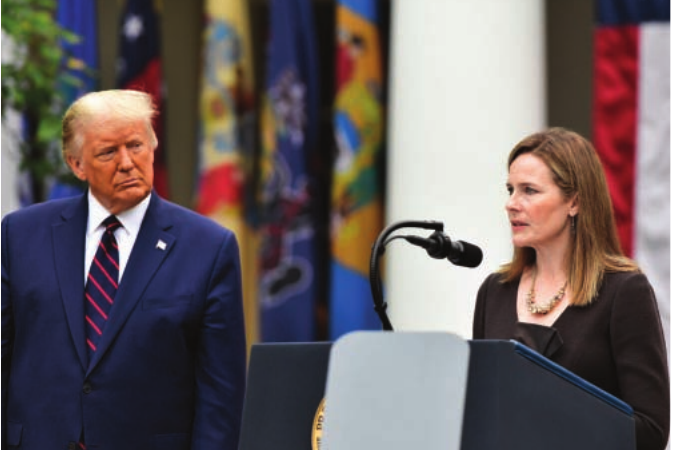
The Contrast: Barrett became the first Supreme Court justice in over 150 years not to receive a single vote from the minority party in the Senate. Her appointment shifted the Court's balance to a 6-3 conservative majority, cementing Trump's legacy and raising fears amongst liberals that landmark rulings like Roe v Wade (which legalised abortion) could be overturned.
Key Lesson: The contrast between these two situations highlighted the partisan nature of the appointment process and how Senate rules can be applied differently depending on which party holds power.
Case study: Clarence Thomas and Brett Kavanaugh
Example
Case Study: Sexual Misconduct Allegations in Confirmation Hearings
Sexual misconduct allegations have derailed some nominations but not others. In 1991, George H.W. Bush nominated Clarence Thomas to become the second African-American justice in the Court's history. The nomination nearly collapsed when Dr Anita Hill, Thomas's former colleague, accused him of sexual harassment.

Thomas forcefully denied all charges and accused the Senate Judiciary Committee of conducting "a high-tech lynching for uppity blacks who in any way think for themselves." He was eventually confirmed in a highly partisan 52-48 vote, with only 11 Democrats supporting him and 2 Republicans opposing.

Twenty-seven years later, history repeated itself. Trump's nomination of Brett Kavanaugh in 2018 was thrown into jeopardy when Dr Christine Blasey Ford gave detailed testimony of an alleged sexual assault that occurred when she was 15 and Kavanaugh was 17. He forcefully denied the allegation. The nomination became supercharged because Kavanaugh would replace Anthony Kennedy, the Court's crucial swing vote.
President Trump mocked Dr Ford at a political rally, whilst demonstrations erupted on Capitol Hill. Women's organisations supporting #BelieveWomen clashed with conservative women united behind #BackBrett. Pressure groups spent millions of pounds on advertising campaigns. Kavanaugh was eventually confirmed by 50-48 votes, the closest Senate confirmation vote ever recorded. The vote was almost entirely on party lines: only one Democrat voted for him and one Republican against.
Key Lesson: Both confirmations show how politicised the judicial confirmation process has become, with the Senate willing to confirm justices despite serious allegations of sexual misconduct.
Independence once appointed
Crucially, judges are completely independent once appointed. Their life tenure means the president cannot remove them for making judgements they dislike. This independence ensures justices can interpret the Constitution without political pressure.
Note
Justices Who Surprised Their Appointers
Sometimes justices surprise the presidents who appointed them. Republican president George H.W. Bush appointed David Souter, who became an unexpectedly liberal member of the Court. Justices have even ruled against the presidents who appointed them. Bill Clinton's appointees, Ruth Bader Ginsburg and Stephen Breyer, ruled in 1997 that the president was not immune to prosecution. Trump's nominees Neil Gorsuch and Brett Kavanaugh both judged in 2020 that Trump did not have an absolute right to withhold his tax returns and financial records from investigation.
Debate: Is the selection and appointment process fit for purpose?
| Arguments for the current process | Arguments against the current process |
|---|---|
| Detailed scrutiny means past controversies or questionable decisions are usually uncovered | Presidents choose nominees who support their political philosophy rather than purely on judicial merit |
| Multiple opportunities exist for unsuitable candidates to withdraw | Justices may be selected for their stance on specific issues (such as abortion) rather than judicial excellence |
| Senate Judiciary Committee members are experts in judicial matters who undertake detailed scrutiny | Senate questioning may be aggressive or focused on embarrassing nominees rather than assessing judicial expertise |
| Senate confirmation checks presidential power, as nominees must win majority support | If the Senate is controlled by the president's party, it tends to carry out less effective scrutiny |
| The Court has a range of conservative and liberal justices, allowing diverse legal approaches | In recent years there has been less bipartisan support for justices |
| Justices are independent once appointed and may follow different approaches than the president hoped | The Senate's refusal to hold hearings for Merrick Garland in 2016 was a political decision that violated the president's right to appoint |
| Involving elected branches (president and Senate) provides democratic oversight of the process | Pressure groups spend millions campaigning for or against nominees |
| Media interest in nominees can be intrusive and personal | |
| The Senate's confirmation of Brett Kavanaugh following sexual assault allegations damaged the Court's reputation |
Note
This debate reflects fundamental tensions in American democracy: the balance between judicial independence and democratic accountability, the role of partisanship in selecting judges, and whether lifetime appointments remain appropriate in modern politics.
Current composition of the Supreme Court
| Justice | Date appointed | President appointing |
|---|---|---|
| Chief Justice | ||
| John Roberts | 2005 | George W. Bush (R) |
| Associate Justices | ||
| Clarence Thomas | 1991 | George H.W. Bush (R) |
| Stephen Breyer | 1994 | Bill Clinton (D) |
| Samuel Alito | 2006 | George W. Bush (R) |
| Sonia Sotomayor | 2009 | Barack Obama (D) |
| Elena Kagan | 2010 | Barack Obama (D) |
| Neil Gorsuch | 2017 | Donald Trump (R) |
| Brett Kavanaugh | 2018 | Donald Trump (R) |
| Amy Coney Barrett | 2020 | Donald Trump (R) |
The chief justice
The chief justice is currently John Roberts, a conservative appointed by George W. Bush in 2005. Whilst the chief justice has the same voting power as associate justices, they have additional responsibilities:
- Chairing the Court and managing its proceedings
- Deciding which justice writes the majority opinion (explanation of the Court's judgement) in cases where the chief justice is in the majority
- Administering the oath of office at presidential inaugurations
- Chairing presidential impeachment trials in the Senate
The Court is named after its chief justice, so it is currently known as the "Roberts Court".
Balance of the Court
The Court currently has a 6-3 conservative majority. This balance has significant political implications, as it affects how the Court interprets the Constitution. For years, Anthony Kennedy served as the crucial "swing vote". Although appointed by Republican Ronald Reagan, Kennedy sometimes made liberal judgements on abortion, LGBTQ+ rights and affirmative action. He wrote the majority opinion for Obergefell v Hodges (2015), which legalised same-sex marriage across the USA.
Kennedy's retirement in 2018 and replacement by the more conservative Brett Kavanaugh shifted the Court's balance. This made conservative judgements more likely, as seen in rulings on partisan gerrymandering.
Important
Justices Don't Always Vote Predictably
However, the Court's decisions do not always split neatly along ideological lines. Many rulings focus on technical legal interpretation rather than partisan politics. The Court regularly reaches unanimous decisions, suggesting justices' shared legal expertise sometimes outweighs their political leanings. Even in close 5-4 decisions, the division between liberals and conservatives is not always clear-cut. Between 2018 and 2019, less than 50% of 5-4 decisions had all five conservative justices in the majority.
In the 2019-20 term, Chief Justice John Roberts emerged as the most likely swing vote, joining liberal justices in key rulings on abortion and transgender rights. The conservative majority Court also ruled against Trump on several occasions, including overturning his attempt to end the Deferred Action for Childhood Arrivals (DACA) programme.
Diversity
The Supreme Court has faced persistent criticism for its lack of diversity. Only five women have ever sat on the Court:
- Sandra Day O'Connor (served 1981-2006) - the first woman justice
- Ruth Bader Ginsburg (served 1993-2020)
- Sonia Sotomayor (currently serving)
- Elena Kagan (currently serving)
- Amy Coney Barrett (currently serving)
Only two African-Americans have served:
- Thurgood Marshall (served 1967-91) - the first African-American justice
- Clarence Thomas (currently serving)
Sonia Sotomayor is the first and only Hispanic justice on the Court.
Note
The Diversity Challenge
These statistics reflect the broader lack of diversity in the legal profession's upper echelons and raise questions about whether the Court adequately represents the diverse American population it serves. The Court's historical composition has been predominantly white and male, which critics argue may influence how it interprets constitutional protections for minority groups.
The nature of judicial power
The Supreme Court's power of judicial review enables it to:
- Declare actions of the executive branch (federal or state governments) unconstitutional
- Declare laws (Acts of Congress or state legislatures) unconstitutional
Important
The Ultimate Check on Government Power
This power to strike down any legislation and rule against the executive is a crucial check on the other two branches of government. Judicial review ensures all branches of federal and state government comply with the Constitution.
Remember!
Summary
Key Takeaways:
-
The president nominates Supreme Court justices, but the Senate must confirm them. This shared power creates a highly politicised process, especially when different parties control the presidency and Senate.
-
The "nuclear option" has made confirmations more partisan. Since 2017, nominees only need a simple majority to be confirmed, allowing single-party confirmations and more controversial candidates to be approved.
-
Justices serve for life and are independent once appointed. They cannot be removed for their judgements and sometimes vote differently than the president who appointed them hoped, as seen with justices like David Souter.
-
The Court currently has a 6-3 conservative majority. However, justices don't always vote along ideological lines, and Chief Justice John Roberts has sometimes acted as a swing vote by joining liberal justices on key rulings.
-
The Court lacks diversity. Only five women and two African-Americans have ever served, with Sonia Sotomayor being the only Hispanic justice in the Court's history.