Sales Forecasting (Edexcel A-Level Business): Revision Notes
📚Revision Notes
Sales forecasting
What is sales forecasting?
Sales forecasting is the process of predicting future sales revenue for a business. It involves analysing available data and making informed projections about what sales levels will be in upcoming periods – whether next month, next quarter, or next year.
Forecasting is fundamentally about assessing probable outcomes by making assumptions about future conditions. Most forecasts rely on data collected through market research techniques, and their accuracy depends heavily on how reliable that underlying data is.
Important
Sales forecasting represents one of the most critical tasks any business undertakes, regardless of size. Without accurate sales predictions, businesses cannot make informed decisions about stock levels, staffing requirements, funding needs, or marketing strategies.
By reducing uncertainty, effective forecasting enables businesses to plan more efficiently and avoid costly mistakes.
Purpose and benefits of sales forecasts
Businesses use sales forecasts for several essential planning functions:
Financial planning and cash flow management: Knowing projected sales allows businesses to forecast cash inflows accurately. This enables better financial management and ensures sufficient working capital is available when needed.
Supply chain and inventory management: Sales forecasts inform decisions about ordering raw materials and components. Some suppliers require advance notice for large orders, making accurate forecasts essential for maintaining good supplier relationships and avoiding stockouts or excess inventory.
Human resource planning: If forecasts indicate higher sales in future periods, businesses can recruit additional staff in advance. Conversely, lower forecasts might mean avoiding unnecessary recruitment costs.
Capacity planning: Businesses need to ensure they have adequate physical capacity (equipment, premises, production facilities) to meet projected demand. Sales forecasts trigger decisions about capital investment in new equipment or premises.
Note
These planning functions are interconnected – for example, decisions about inventory levels directly impact cash flow requirements, while capacity planning affects human resource needs. Effective forecasting must consider these interdependencies.
Time series analysis
Time series analysis is one of the most widely used forecasting techniques. It involves examining historical data arranged chronologically to identify patterns that can inform future predictions.
Time series data consists of figures ordered according to when they occurred. For example, a manufacturer might analyse ten years of sales data to predict next year's performance.

Important
This approach assumes that historical patterns provide useful indicators of future performance, particularly when trading conditions remain relatively stable or when forecasting short-term trends.
Consider the table above showing yearly sales for a garden furniture manufacturer. The upward trend from 2006 to 2015 suggests sales will likely increase in 2016. However, the business needs a more precise forecast to make operational decisions. If the forecast predicts £250,000 in sales for 2016, management must evaluate whether current production capacity and staffing levels can meet this target, potentially triggering investment in additional capacity or recruitment.
Components of time series data
Time series analysis identifies four key components:
The trend: Raw data doesn't always clearly reveal what's happening. A trend shows the underlying pattern in the figures. For instance, a new product might demonstrate a sharp upward sales trend as it gains popularity. Statistical techniques help calculate and use trend information for forecasting.
Seasonal fluctuations: Sales rarely remain constant throughout the year. Seasonal variations are particularly important for certain industries. Ice cream producers experience peak sales in summer months, while greeting card manufacturers see surges around holidays and celebrations. Understanding these patterns is vital for accurate forecasting.
Cyclical fluctuations: Many businesses experience cycles of highs and lows over several years, often linked to the economic cycle. During recessions, consumer spending typically falls, reducing business turnover. Conversely, during economic booms, sales generally increase. These cycles can significantly impact long-term forecasts.
Random fluctuations: Occasionally, unusual figures appear that don't fit the established trend. These might result from unexpected weather patterns (e.g., unusually high umbrella sales during a wet summer) or one-off events like festivals or sporting events.
Note
When analysing time series data, it's crucial to distinguish between these four components. A spike in sales might be a genuine trend shift (requiring strategic response) or merely a random fluctuation (requiring no action). Misinterpreting these components can lead to costly forecasting errors.
Factors affecting sales forecasts
While historical data provides a foundation for forecasting, several external factors significantly influence future sales predictions. Three critical factors are consumer trends, economic variables, and competitor actions.
Consumer trends
Consumer trends refer to the habits and behaviours that determine which products consumers buy and how they use them. Consumer preferences change over time – sometimes rapidly – affecting demand patterns that businesses must anticipate.
Seasonal variations
Some products experience predictable seasonal demand patterns. Coastal hotels see increased bookings during spring and summer, while energy companies sell more gas and electricity in winter months.

Note
Understanding seasonal variations is essential for effective business management, particularly cash-flow planning. Businesses can develop strategies to manage periods of lower cash flow when they know these fluctuations will occur.

Energy providers like British Gas and npower closely monitor these seasonal consumption patterns. The table above shows clear quarterly variations in domestic gas and electricity usage from 2012-2014, with gas consumption peaking in winter quarters (Q1 and Q4) and dropping dramatically in summer quarters (Q2 and Q3). These patterns have significant implications for sales forecasting, inventory management, and cash-flow planning.
Fashion changes
Consumer tastes in fashion change constantly and unpredictably, making accurate sales forecasting particularly challenging for clothing retailers and related industries. When fashion preferences shift, businesses must quickly adjust their forecasts and product offerings to avoid being left with unwanted stock.
Important
Fashion-driven industries face a unique forecasting challenge: the very nature of fashion is its unpredictability. A product that's popular today might be obsolete tomorrow. Businesses in these sectors must maintain flexible supply chains and be prepared to revise forecasts frequently.
Long-term trends
While fashion can change rapidly, other consumer behaviour shifts occur more gradually over extended periods. These long-term trends significantly impact strategic planning and investment decisions.
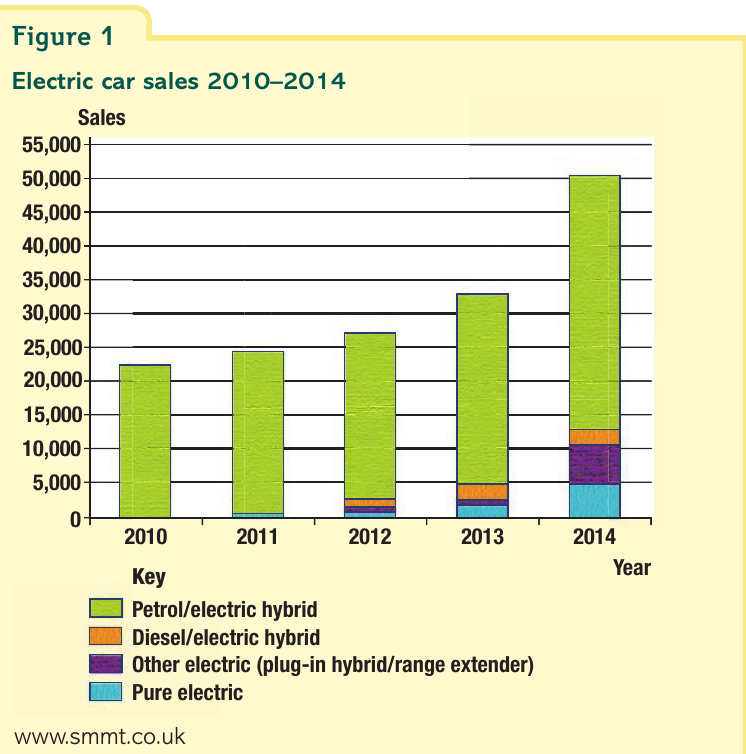
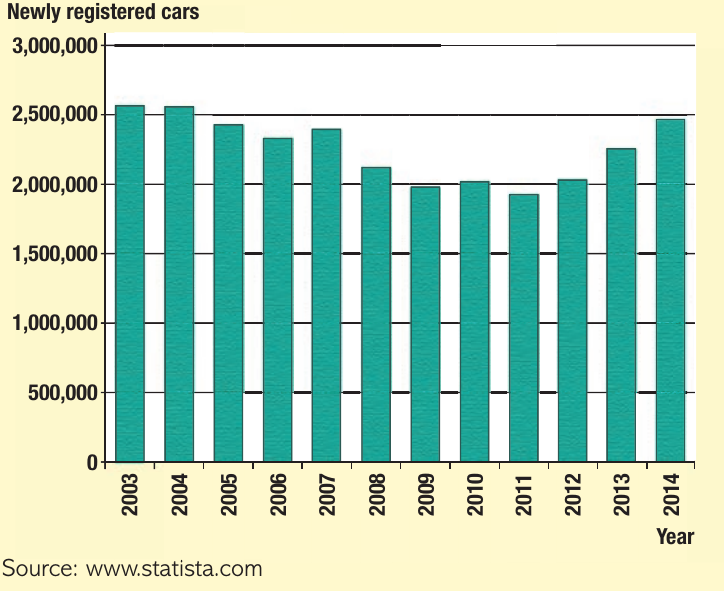
The motor vehicle industry illustrates this well. Recent years have witnessed growing demand for electric and hybrid vehicles driven by environmental concerns and cost advantages. The chart above demonstrates steady growth in electric car sales from 2010 to 2014, with all categories of electric vehicles showing increased adoption.
Example
Strategic Investment Based on Long-term Trends: Nissan's Electric Vehicle Forecast
This consumer shift towards environmentally friendly vehicles influenced major strategic decisions by car manufacturers. For example:
Step 1: Trend identification Nissan identified growing consumer demand for electric vehicles through market research and sales data analysis.
Step 2: Forecasting The company forecast that electric car sales would continue to rise across the European market.
Step 3: Strategic response Based on these forecasts, Nissan invested in its Sunderland factory to produce the Nissan Leaf electric car for the European market.
Step 4: Validation By 2014, the plant had produced 100,000 units, validating the forecast that electric car sales would rise.
Economic variables
Economic variables are measurements of different aspects of economic performance that significantly impact business sales. These macroeconomic factors affect both consumer and business spending behaviour.
GDP and economic growth
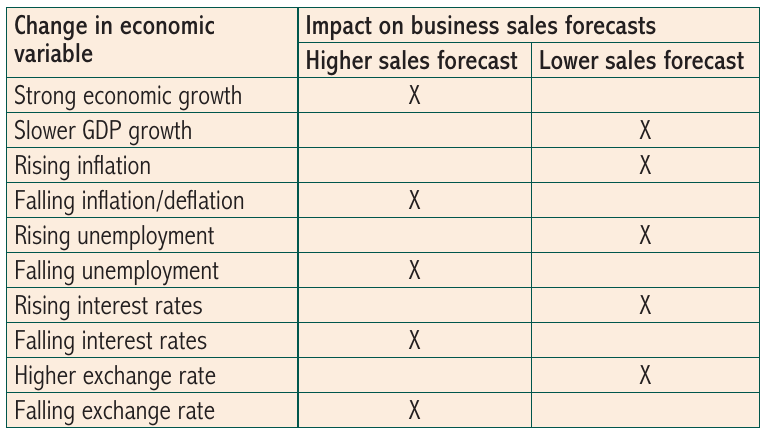
Economic growth is measured using Gross Domestic Product (GDP) – the total output of an economy. When GDP is growing, consumer incomes typically increase, leading to higher spending. During periods of strong economic growth, many businesses increase their sales forecasts. Conversely, economic slowdowns or recessions typically result in reduced sales forecasts as consumer spending contracts.
Interest rates
Interest rates represent the cost of borrowing money from banks and financial institutions. When interest rates are high, loans become more expensive, reducing consumer demand for credit. Since many purchases (such as cars, furniture, or home improvements) are financed through loans, rising interest rates typically lead to lower sales forecasts. When interest rates fall, borrowing becomes cheaper and more attractive, potentially justifying upward adjustments to sales forecasts.
Inflation
Inflation measures the general rise in consumer prices over time. Rising inflation means prices throughout the economy are increasing. During inflationary periods, both consumers and businesses often reduce spending, leading businesses to lower their sales forecasts. Conversely, low inflation or deflation might encourage spending.
Unemployment
Unemployment measures how many people are without work. During recessions, unemployment rises – for example, UK unemployment reached almost 3 million during the 2008 economic crisis. Higher unemployment reduces overall spending in the economy as fewer people have regular incomes, forcing businesses to reduce sales forecasts. When unemployment falls, consumer spending typically increases, supporting higher sales forecasts.
Exchange rates
Exchange rates reflect the value of one currency relative to another. For example, an exchange rate of £1 = $1.45 means one pound buys $1.45. Exchange rate movements affect international competitiveness. If the pound strengthens to £1 = $1.60, UK goods become more expensive for foreign buyers (reducing export demand), but foreign goods become cheaper for UK consumers (potentially reducing domestic sales). Businesses must adjust forecasts accordingly based on exchange rate movements.
Note
The table above summarises how changes in economic variables typically impact sales forecasts. However, this assumes businesses sell products with normal demand patterns – where demand increases as consumer incomes rise (positive income elasticity of demand).
Special case: inferior goods
Important
Some businesses experience opposite effects from economic changes. Value supermarkets like Aldi and Lidl typically grow in popularity during recessions when incomes are falling. As the economy recovers and incomes rise, some consumers shift back to premium retailers. For these businesses, rising incomes might actually lead to lower sales forecasts.
However, the competitive landscape is more complex than this simple analysis suggests. Value retailers have worked hard not just to attract customers during difficult economic times, but to retain them as conditions improve. Many have successfully attracted more affluent customers who continue shopping there even as their incomes rise.
Actions of competitors
Competitor behaviour significantly affects sales forecasting. When competitors implement strategies to capture market share – through pricing, promotion, new product launches, or expansion – businesses may need to adjust their forecasts downward.
The magnitude of the impact depends on the nature of the competitive action. A short-term promotional offer might only affect sales temporarily without requiring changes to annual forecasts. However, a rival opening a new location nearby could have more substantial, long-term effects.
Example
Impact of Competitor Entry on Sales Forecasts
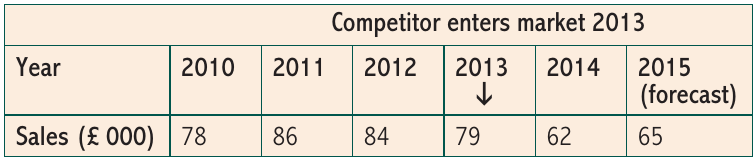
The table above illustrates how a competitor entering the market in 2013 disrupted previously stable sales:
Pre-competition period (2010-2012):
- 2010: £78,000
- 2011: £86,000
- Pattern: Steady growth
Post-competition period (2013-2014):
- 2013: Competitor enters market
- 2014: £62,000
- Pattern: Significant decline
Revised forecast for 2015: £65,000 This reflects the new competitive reality rather than extrapolating pre-2013 growth trends.
Note
How businesses respond to competitive threats is crucial. Rather than passively accepting reduced sales, businesses typically develop counter-strategies. An effective competitive response might mean sales forecasts don't need to be reduced as dramatically as initially feared. However, the true impact of both competitor actions and business responses cannot be fully assessed until sufficient time has passed to observe actual market reactions.
Difficulties of sales forecasting
Despite the importance of sales forecasting, the process presents several significant challenges.
Volatile consumer tastes and preferences
Extrapolation – predicting future trends based on past data – provides a reasonable starting point but is far from perfect. Just because a pattern existed in the past doesn't guarantee it will continue. Consumer preferences can shift rapidly and unexpectedly.
Example
The Crocs Forecasting Failure
The case of Crocs illustrates the danger of over-reliance on historical trends:
Phase 1: Rapid growth (2004-2007) The rubber shoe manufacturer experienced steep sales growth.
Phase 2: Extrapolation error The company extrapolated this trend, forecasting continued strong growth and increased production capacity accordingly.
Phase 3: Market shift Consumer perceptions shifted dramatically – Crocs went from trendy must-have items to unfashionable.
Phase 4: Consequences These inaccurate forecasts nearly caused the company's collapse, demonstrating the dangers of relying solely on historical trends.
Important
Past performance does not guarantee future results. Consumer preferences can change rapidly, making even sophisticated statistical forecasting methods unreliable. Businesses must remain vigilant to early warning signs of changing consumer sentiment.
Range and complexity of data
Businesses today have access to vast amounts of data – their own sales history, plus broader economic indicators like unemployment rates, income growth, commodity prices, exchange rates, and more. Determining which data is most relevant and how to interpret it presents a significant challenge.
Note
Large multinational corporations may have resources to analyse complex datasets, but smaller businesses often struggle to make sense of the extensive information available. This abundance of data, rather than simplifying forecasting, can actually make it more difficult. The challenge isn't accessing data – it's identifying which data matters most.
Subjective expert opinion
Even when businesses use statistical methods and quantitative analysis, final forecasting decisions often rest with business experts such as sales analysts or marketing managers. These professionals incorporate their market knowledge, industry experience, and understanding of broader economic trends – but their judgements remain inherently subjective.
Important
Expert opinion, while valuable, can be wrong. The Crocs example mentioned earlier resulted partly from well-intentioned but ultimately inaccurate forecasts by the company's marketing team. No matter how experienced, experts cannot eliminate uncertainty from forecasting.
Summary
Key Points to Remember:
-
Sales forecasting is essential for planning stock levels, staffing, capacity, and cash flow – it reduces uncertainty and enables effective business planning
-
Time series analysis uses historical data to identify trends, seasonal patterns, cyclical fluctuations, and random variations
-
Three key factors affect forecasts: consumer trends (seasonal variations, fashion, long-term shifts), economic variables (GDP, interest rates, inflation, unemployment, exchange rates), and competitor actions
-
Economic impacts vary by product type: most businesses see higher sales when the economy grows, but value retailers may experience the opposite
-
Forecasting is difficult due to unpredictable consumer tastes, overwhelming amounts of data, and the subjective nature of expert judgement
-
Effective forecasting requires combining quantitative analysis with qualitative judgement, while remaining flexible enough to revise predictions as conditions change