Global Competitiveness (Edexcel A-Level Business): Revision Notes
📚Revision Notes
Global competitiveness
Global competitiveness refers to a firm's ability to compete effectively in international markets. This capability determines whether businesses can succeed when operating across national borders and facing competition from both domestic and foreign rivals.

For firms operating globally, competitiveness isn't just about strategic choices. A company's competitive position is shaped by the global market conditions it faces, particularly exchange rate movements, its ability to build competitive advantages, and access to skilled workers.
Achieving global competitiveness
Operating as a multinational corporation (MNC) creates opportunities for competitive advantages that domestic-only firms cannot access. MNCs typically benefit from several key factors:
Economies of scale: Global operations enable much larger production volumes, spreading fixed costs across more units and reducing average costs significantly.
Global sourcing: International firms can search worldwide for the highest quality inputs at the most competitive prices, rather than being limited to domestic suppliers.
Customer proximity: Operating in multiple countries allows firms to get physically and culturally closer to international customers, improving both pre-sales understanding and after-sales service.
Knowledge and innovation: MNCs can tap into diverse talent pools, research capabilities, and innovative ideas from different regions, enhancing their overall competitive position.
Risk diversification: Spreading operations across multiple markets reduces dependence on any single economy, protecting against regional downturns or market-specific problems.
Note
These five advantages—scale economies, global sourcing, customer proximity, knowledge access, and risk diversification—create a powerful competitive position that purely domestic firms simply cannot replicate. This is why many successful companies eventually expand internationally as they grow.
However, global competitiveness also depends on external factors beyond strategic decisions, particularly exchange rate movements and access to skilled labor.
Exchange rate fluctuations and business impact
Currency exchange rates play a critical role for businesses engaged in international trade. The exchange rate determines how much of one currency is needed to purchase another currency.
Important
Understanding Currency Movements:
Depreciation occurs when a currency falls in value relative to another currency. When the pound depreciates, British exports become cheaper for foreign buyers, potentially increasing demand. However, imports become more expensive, raising costs for raw materials or components purchased from abroad.
Appreciation occurs when a currency rises in value relative to another currency. This makes exports more expensive for foreign customers, potentially reducing demand and harming competitiveness. On the positive side, imports become cheaper, which may lower production costs.
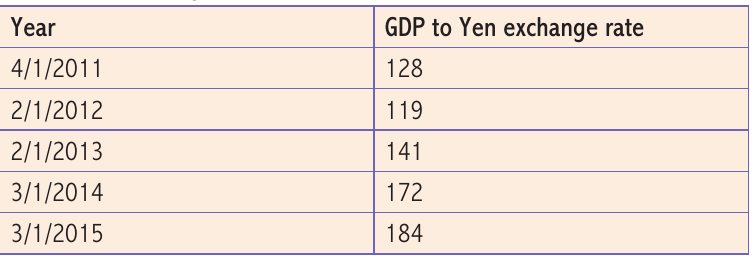
Worked example: exchange rate impact on exporters
Example
Worked Example: British Car Component Exporter
Consider a British manufacturer producing car components in Sunderland. A particular part costs £90 to produce and sells for £100 in the UK domestic market.
The table shows how the pound appreciated against the Japanese yen between 2011 and 2015. In 2011, one pound bought 128 yen. By 2015, one pound bought 184 yen.
Impact on Japanese customers:
In 2011: The £100 component cost Japanese buyers 12,800 yen (£100 × 128)
By 2015: The same component cost 18,400 yen (£100 × 184)

Strategic choices for the British exporter:
Option 1 - Maintain price: Keep the £100 price and emphasize quality advantages to justify the higher yen cost. This preserves profit margins but may result in lost sales volume.
Option 2 - Reduce price: Lower the pound price for Japanese customers to keep the yen price more stable. This maintains market share but reduces profit margins.
Offsetting factor: The pound's appreciation also means the British firm can buy imported raw materials more cheaply. If production costs fall from £90, this creates room to lower prices while maintaining profit margins.
When the pound depreciates, these effects reverse. Export demand may increase as foreign customers find British products cheaper, but import costs for raw materials rise. Businesses must consider all potential implications of exchange rate movements on their competitiveness.
Significance of exchange rate changes
The actual impact of exchange rate fluctuations varies considerably depending on several factors:
Elasticity of demand
Price elasticity of demand determines how responsive customers are to price changes.
If a British firm sells products with price inelastic demand, a depreciation making exports cheaper will generate only a small percentage increase in quantity demanded. If the pound appreciates, the higher prices cause only modest volume losses.
If exports have price elastic demand, customers respond strongly to price changes. Depreciation causes a large percentage increase in demand, while appreciation severely damages sales volumes.
Note
Evidence suggests British exports generally have relatively price inelastic demand. This helps protect exporters when the pound appreciates but limits benefits when it depreciates.
Economic growth in trading partner countries
Exchange rate effects depend partly on economic conditions in export markets. During 2009-2010, the pound depreciated substantially. However, the European Union economy was in recession, creating weak demand for UK exports. The cheaper pound couldn't stimulate sales when customers faced economic difficulties.
Strong economic growth in trading partners amplifies positive effects from depreciation and cushions negative effects from appreciation.
Cause of exchange rate fluctuations
The underlying reason for currency movements matters significantly:
Productivity-driven appreciation: If the pound strengthens because British businesses have improved efficiency and productivity, firms can better absorb the stronger currency. They've genuinely become more competitive, so higher prices are justified.
Speculation-driven appreciation: If the pound rises due to financial speculation or weaknesses in other economies rather than genuine UK improvements, British businesses face competitiveness problems. The currency movement isn't matched by underlying productivity gains.
Fixed contracts
Many businesses use fixed contracts to manage exchange rate uncertainty. These contractual arrangements lock in prices for future transactions, typically 12-18 months ahead.
Raw material purchase prices are often fixed well in advance. Exporters use future options to hedge against dramatic exchange rate swings.
Note
Fixed contracts reduce the impact of temporary exchange rate fluctuations and create time lags between currency movements and business effects. This provides stability but means exchange rate changes don't immediately affect competitiveness.
Economic risk
Important
Economic Risk Definition
Economic risk is defined as the risk that future cash flows will change due to unexpected exchange rate fluctuations. This represents one of the most serious financial risks for international firms because future cash flows determine a business's overall value.
Managing economic risk requires careful analysis of political, regulatory, and cultural environments affecting currencies over time.
China yuan appreciation example: During the 1990s, many firms built factories in China to exploit low production costs. These cost advantages depended partly on China's policy of pegging the yuan to the US dollar. Over time, political pressures led China to relax this peg, allowing the yuan to appreciate steadily. This appreciation eroded the low-cost advantages that initially attracted foreign investment.
US dollar and emerging markets: The US dollar plays a central role in international trade, appearing directly or indirectly in most global transactions. Any dollar movement impacts international business worldwide.
Many emerging market companies borrow in dollars because of lower interest rates or better availability. When the dollar appreciates against their home currencies, these firms struggle to repay dollar-denominated debts even if their revenues remain stable in local currency terms.
For example, Petrobras, the Brazilian state oil company, issued billions in dollar-denominated bonds. When oil prices fell, Petrobras earned less revenue than expected. Simultaneously, the dollar appreciated against the Brazilian real, making dollar debt repayments even more burdensome. This double impact created severe financial stress.
Competitive advantage
A firm possesses a competitive advantage when it has distinctive strengths that competitors lack. These might include cost advantages, superior technology, specialized managerial expertise, or exceptional innovation capabilities.
Having competitive advantage is essential for entering and succeeding in overseas markets. MNCs seek operating locations where they can find resources and capabilities that maximize their competitive advantages.
Two primary types of competitive advantage drive international firm success: cost competitiveness and differentiation.
Cost competitiveness
Cost competitiveness occurs when an international firm achieves economies of scale and scope, creating cost advantages over competitors. The firm delivers the same product or service as rivals but at lower cost, generating higher profit margins.
A cost leadership strategy involves creating the industry's cheapest product while meeting minimum quality standards.
Note
Examples of Cost Leadership in Action
Discount supermarkets: Aldi and Lidli use cost leadership strategies, achieving ever-increasing economies of scale to offer the lowest prices in the grocery market while maintaining acceptable quality levels.
Budget airlines: easyJet stripped costs to the bone by eliminating tickets, check-in counters, in-flight meals, and reducing airport turnaround times. This allowed rock-bottom prices while maintaining adequate safety and service standards.
Cost competitiveness works when firms can sustain cost advantages over competitors while meeting customer expectations for minimum acceptable quality.
Differentiation

Differentiation involves selecting specific product or service attributes and matching these with particular customer segments. The firm commands premium prices by creating genuinely differentiated offerings.
Example - beer industry consolidation and differentiation: Major breweries like ABInBEV, Carlsberg, and SAB Miller merged to gain scale economies and compete on cost. However, facing increasing competition from small craft brewers and cask-conditioned ale makers, most differentiated their brand portfolios by acquiring small independent breweries while allowing them to retain brand names and operational independence.
This differentiation strategy satisfies local market preferences for specific brands while offering choice to traditional consumers. The large breweries maintain cost advantages from scale while capturing premium-priced differentiated segments.
Important
Sustaining differentiation over time requires firms to thoroughly understand their own strategy and customers while staying ahead of competitors pursuing similar approaches.
Barriers to entry become crucial for differentiation strategies. Large established firms have advantages over new entrants who lack brand recognition. Successful differentiation requires brand recognition, intellectual property protection, or protected supply and distribution chains to remain competitive long-term.
Skill shortages and international competitiveness
Many industries require highly trained engineers, scientists, technicians, or professionals to compete effectively. Companies with long-term access to skilled, cost-effective labor have advantages over competitors lacking such access.
When a firm possesses these advantages domestically, it can produce and export more effectively than rivals. When expanding abroad, firms hope to enhance competitive advantages or at least prevent their erosion.

Different perspectives on skill shortages
Government perspective: From a national comparative advantage viewpoint, governments worry when other countries' relative education and skills make them more competitive internationally.
Business perspective: Employers are most concerned when they cannot fill specific vacancies or cannot recruit at the required skill level for particular roles.
Impact on UK competitiveness
Castle Precision Engineering example: This firm began making sewing machine parts in 1951, then expanded into car parts, medical equipment, and aerospace engineering. Success depends on a skilled workforce. The company produced wheels for the 'Bloodhound' car attempting a 1,000 mph land speed record.
Despite exporting at least one-third of production, Castle may remain small-to-medium sized because of persistent skilled worker and engineer shortages in Britain. The company became involved in the Bloodhound project specifically to attract talent to its apprenticeship scheme.
Note
Castle faces strong competition domestically and internationally for a limited pool of highly trained engineers. Expanding by locating production abroad could tap into larger talent pools. In 2013, the USA, India, and China produced the most engineers globally, potentially offering good expansion locations.
Food and drink manufacturing: A 2015 survey by recruitment agency JAM revealed widespread concerns that skills shortages could cause the UK to lag behind international rivals, particularly the USA. The shortage of talented candidates threatened future competitiveness. UK firms struggled to recruit shift managers and product development specialists, with experts concluding the sector was failing to attract new talent.

UK shortage occupation list
The UK Border Agency maintains a shortage occupation list guiding work visa grants. The list shows experienced worker salaries for various shortage occupations, ranging from £17,000 for ballet dancers to £75,000 for medical practitioners, with most technical and scientific roles between £27,000-£34,000.
Occupations facing shortages include production managers in mining and energy, various scientists and engineers (civil, mechanical, electrical, design and development), business analysts, software developers, medical practitioners, specialist nurses, and teachers in maths and science.
Global competition for skilled workers
Skills shortage is a global problem affecting both developed and developing nations. Malaysia implemented programs to encourage UK-based Malaysian graduates to return, offering career fairs and five-year tax breaks. Similar brain drain issues affect India (costing $17 billion annually in lost revenue from students abroad), African nations, and European countries like Germany (23,000 scientists working abroad).
Over 1.3 million UK university graduates work overseas, and the USA faces IT specialist shortages, demonstrating that skills shortages affect competitiveness worldwide.
Remember!
Summary
Key Points to Remember:
MNC advantages: Global operations create economies of scale, sourcing flexibility, customer proximity, innovation access, and risk diversification that domestic-only firms cannot match.
Exchange rate impacts: Currency depreciation makes exports cheaper but raises import costs; appreciation makes exports more expensive but lowers import costs. Actual business impact depends on:
- Elasticity of demand
- Economic conditions in trading partners
- The cause of currency movements
- Use of fixed contracts
Economic risk: Unexpected long-term exchange rate fluctuations threaten future cash flows and overall business value, requiring careful analysis of political, regulatory, and cultural factors affecting currencies.
Competitive advantage types: Firms compete internationally through:
- Cost competitiveness - achieving lowest costs through economies of scale
- Differentiation - commanding premium prices through unique attributes protected by barriers to entry
Skills shortage impact: Access to skilled, cost-effective labor creates competitive advantages. Persistent shortages force businesses to compete for limited talent pools or relocate to access larger pools in countries like the USA, India, or China. This is a global problem affecting both developed and emerging economies.